
Analog, Amplified
2009 Mercedes-Benz SLR McLaren Stirling Moss
STORY | Stein Broeder
Photography | Motofish
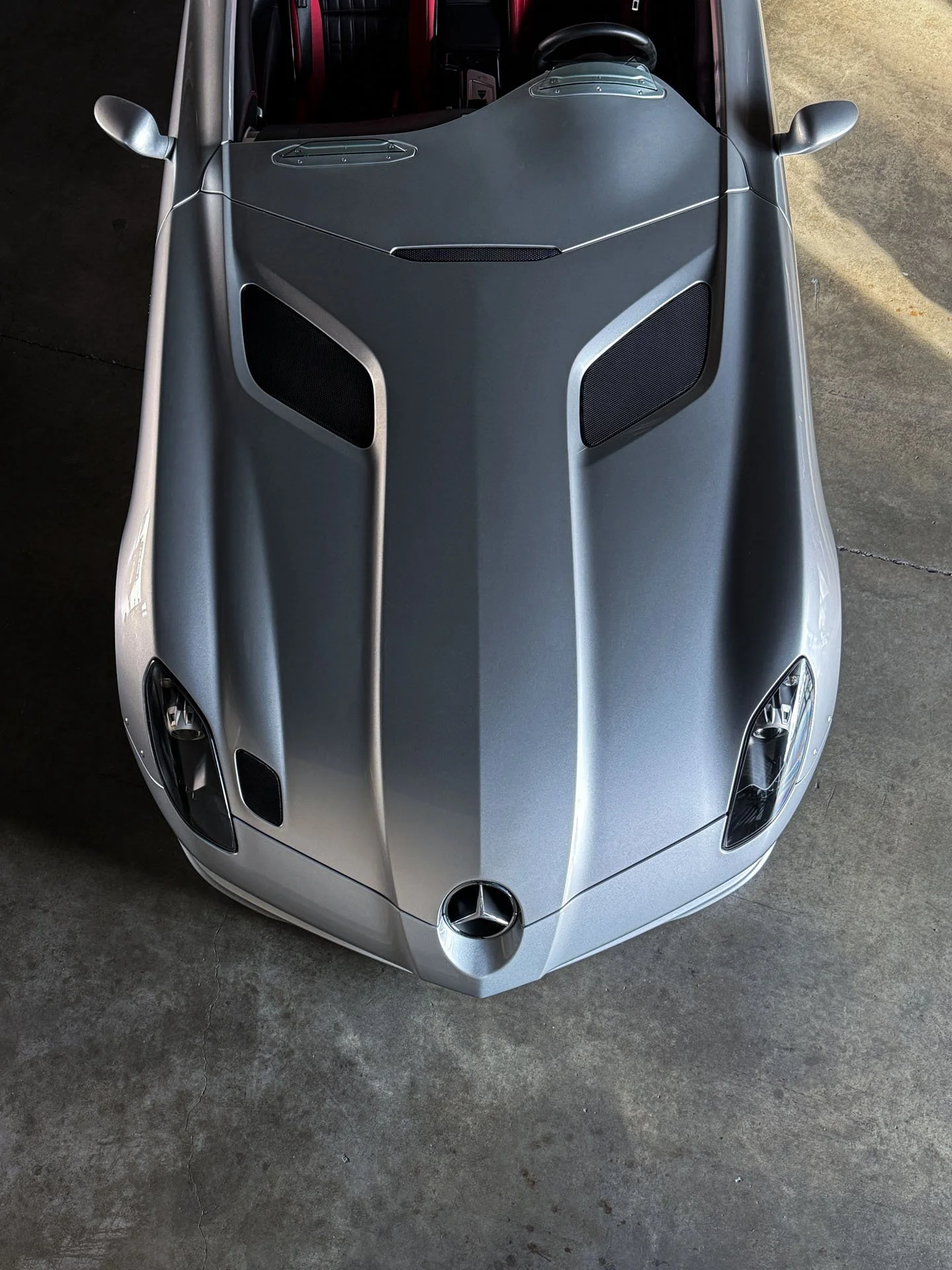
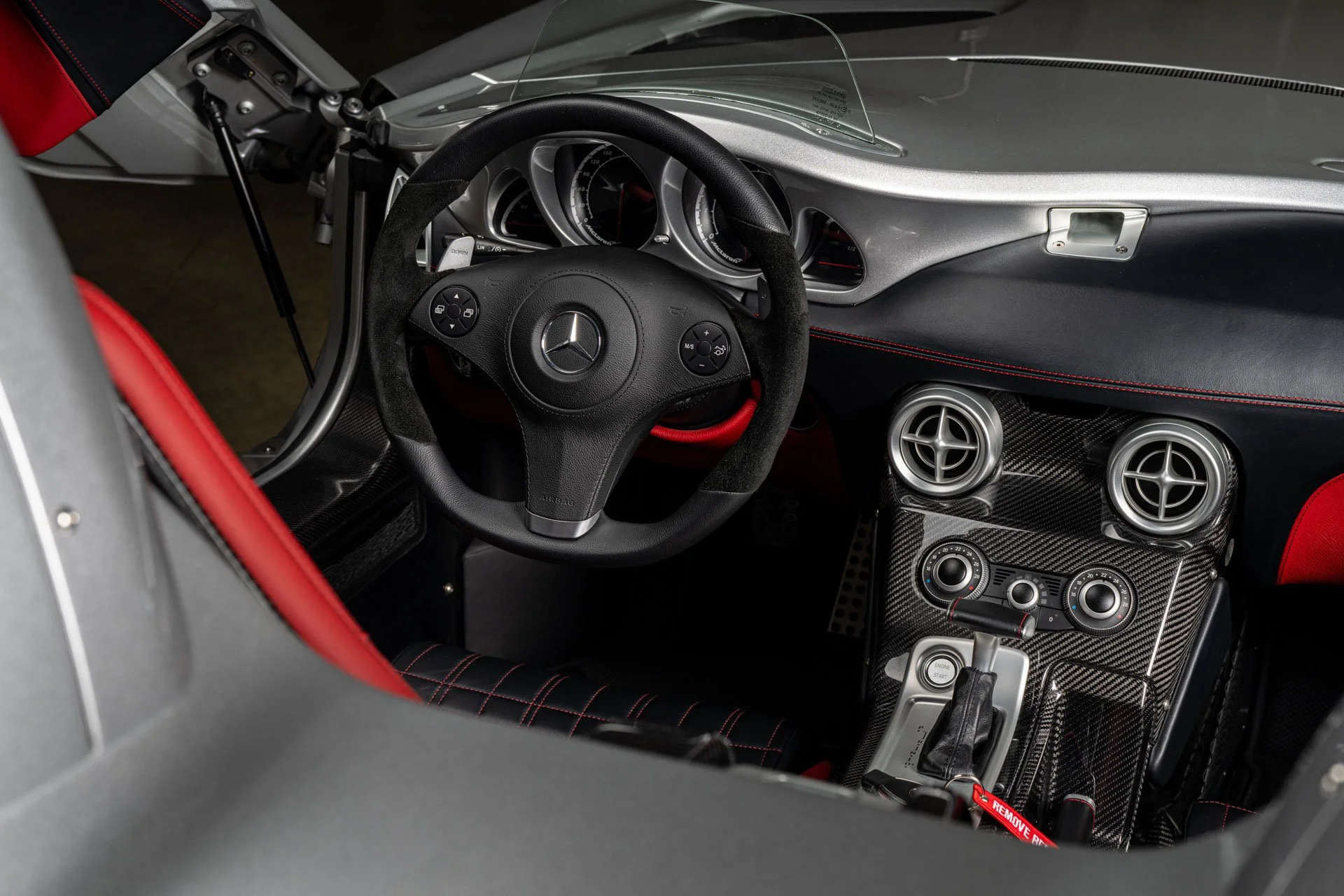
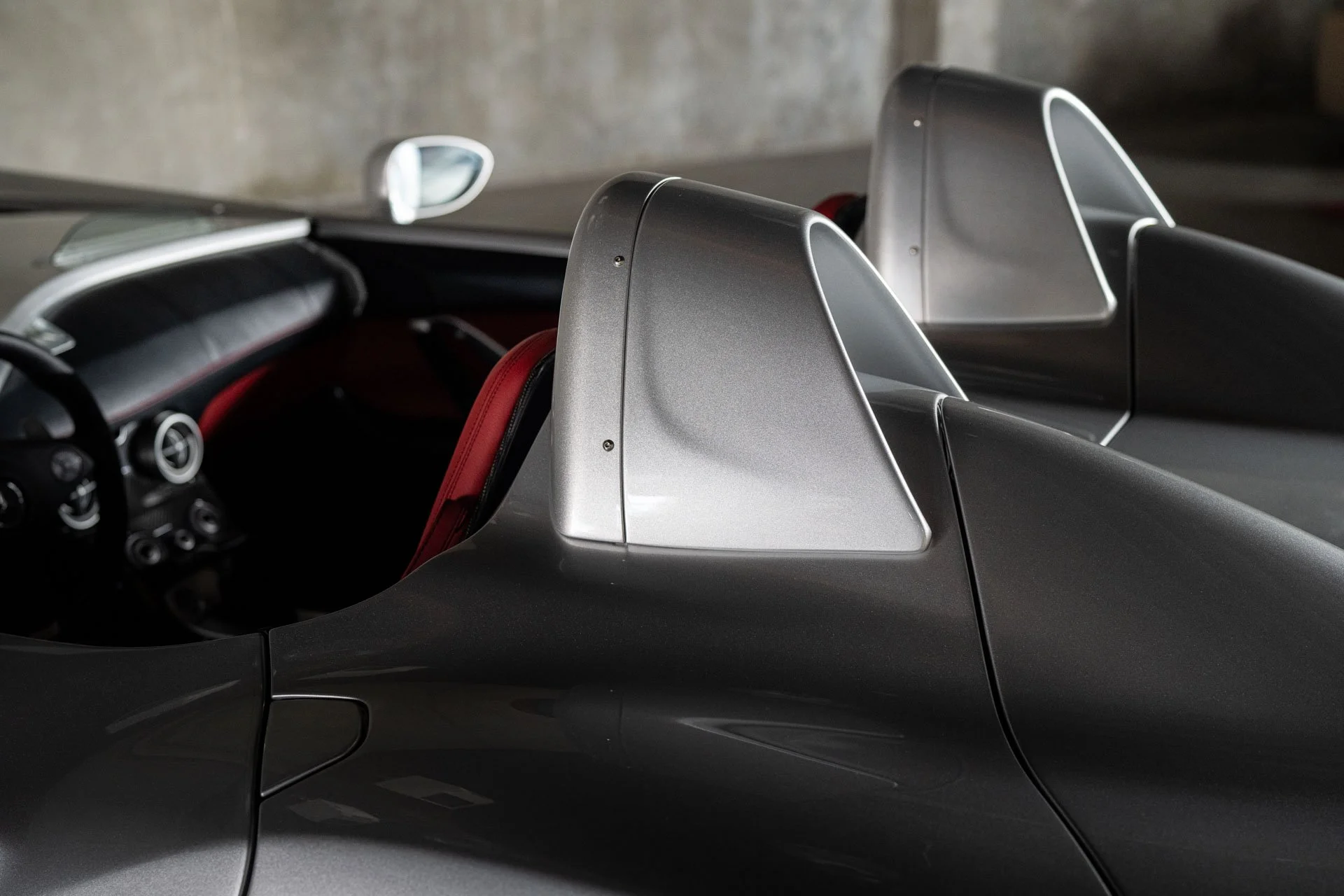
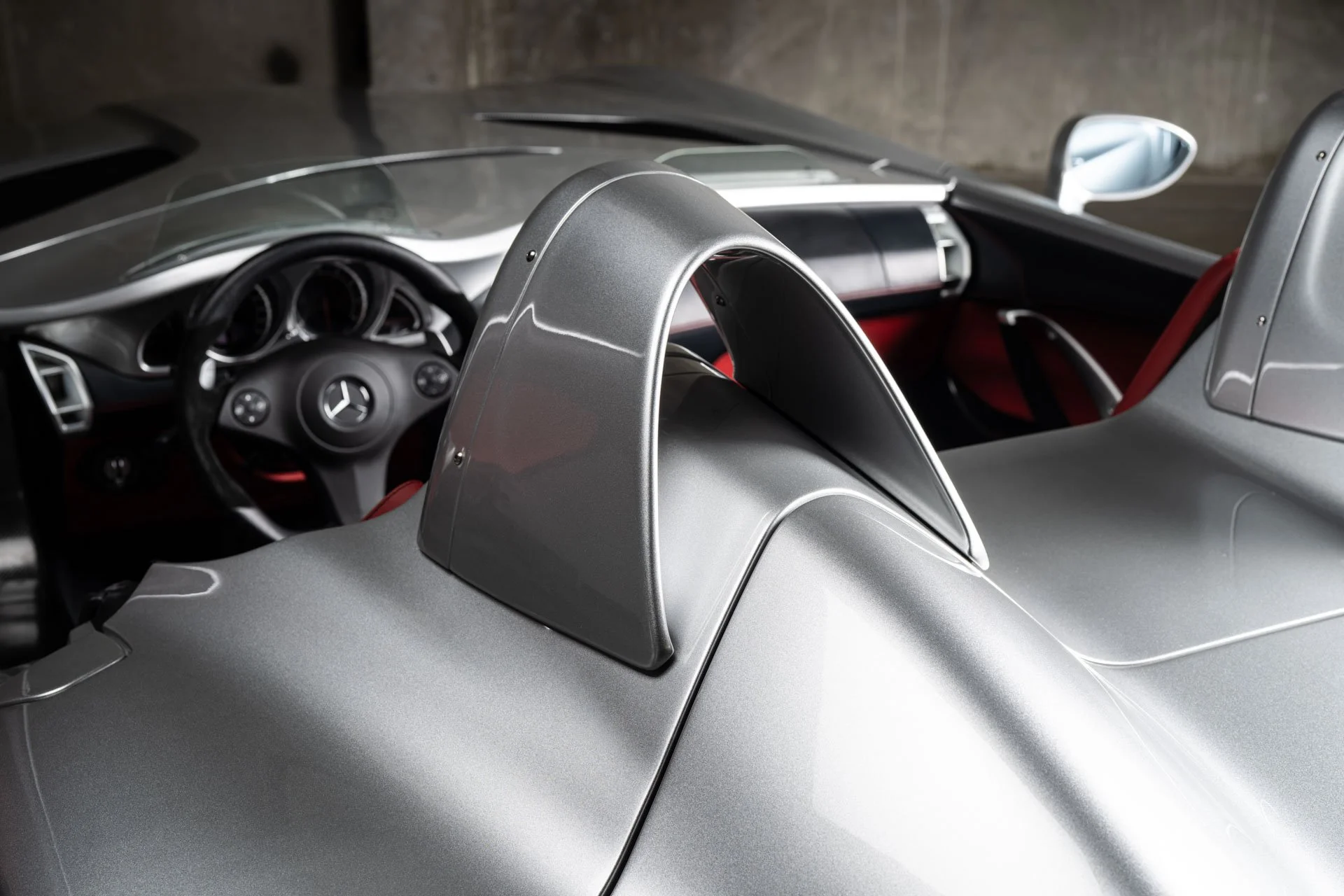
The first time you see the SLR McLaren Stirling Moss, your brain struggles to categorize it. It sits impossibly low and improbably long, its endless bonnet stretching forward like the nose of a pre-war Grand Prix car, interrupted only by vents and carbon-fiber cutlines that look more aerospace than automotive. There is no roof. No windshield. Just two minimal wind deflectors rising from the scuttle panel like afterthoughts, and twin nacelles sweeping back behind the cockpit in a shape that feels lifted from black-and-white Mille Miglia photographs.
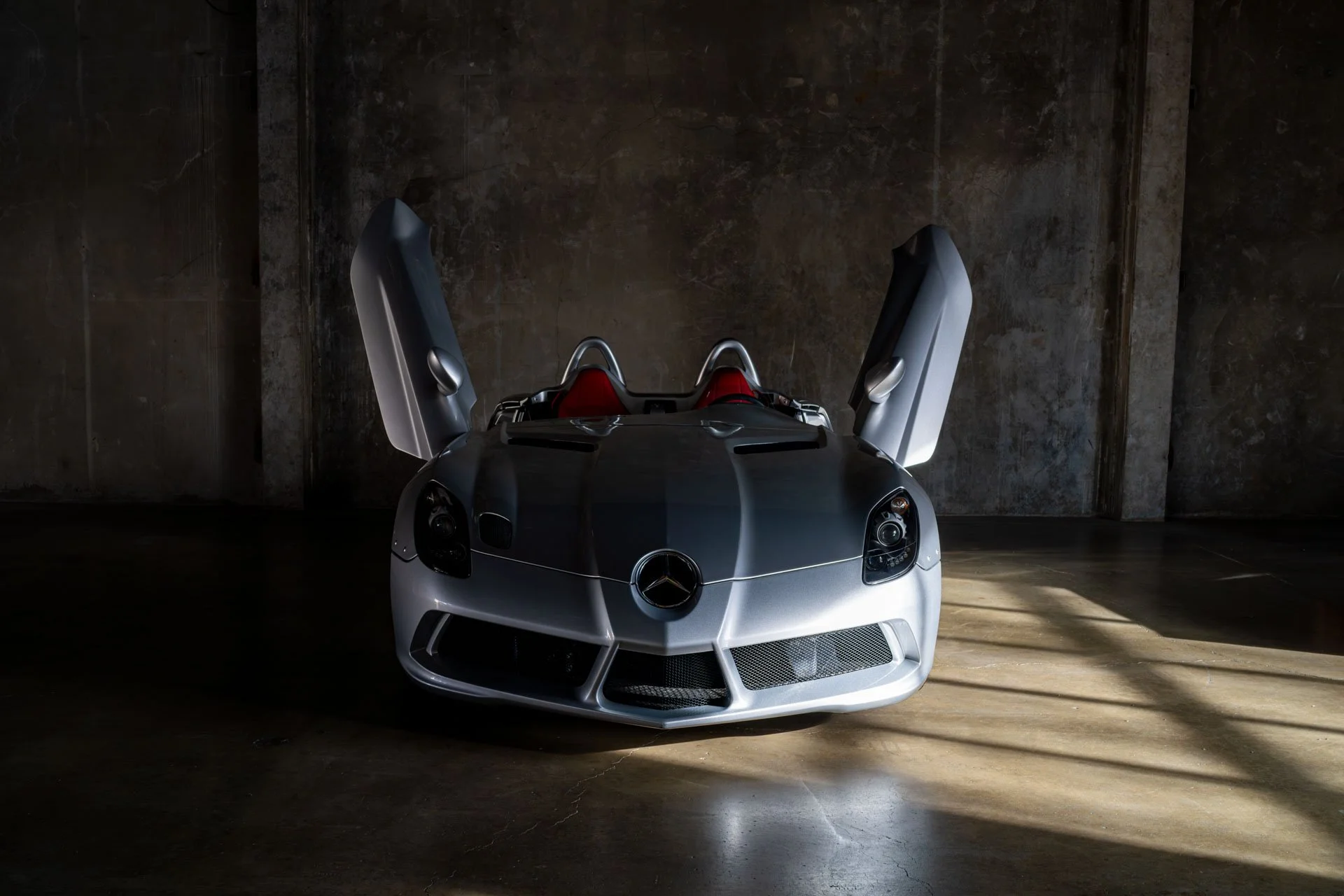
There are supercars, there are hypercars, and then there are machines that exist entirely outside the usual taxonomy of performance. The 2009 Mercedes-Benz SLR McLaren Stirling Moss belongs firmly in the last category, a car so uncompromising in its vision that it feels less like a road vehicle and more like a time machine linking Mercedes-Benz’s most glorious racing past with the technological swagger of the early 21st century.
Parked among contemporary supercars, the Stirling Moss doesn’t merely stand out, it appears unfinished, almost confrontational in its refusal to acknowledge basic expectations of what a million-dollar road car should be. It looks less like something designed for the showroom floor and more like something that escaped from a pit lane at Le Mans sometime around 1955 and was accidentally infused with modern carbon fiber and 650 horsepower along the way. Even stationary, it gives the impression of motion, as though the slightest disturbance might send it ripping toward the horizon in a blur of exposed mechanical fury.
This was no mere limited edition with carbon trim and special badging. The Stirling Moss was Mercedes-Benz and McLaren’s dramatic farewell to the SLR program, a roofless, wind-shield-less carbon-fiber speedster built to honor one of the greatest racing drivers of all time and one of the most important victories in motorsport history.
To understand the Stirling Moss, you must go back to 1955, to the Mille Miglia, and to Sir Stirling Moss and Denis Jenkinson’s legendary victory in the Mercedes-Benz 300 SLR. Covering nearly 1,000 miles of Italian public roads at an average speed of 98.53 mph, Moss delivered a drive that many still consider the greatest in racing history.
Fast-forward more than 50 years, and Mercedes had the rare opportunity to pay tribute not with a museum piece, but with a modern interpretation of that same spirit. The SLR Stirling Moss debuted at the 2009 North American International Auto Show, immediately drawing comparisons to its namesake predecessor thanks to its open cockpit and minimalist form.
The design is no coincidence. The Stirling Moss intentionally references the 300 SLR’s long bonnet, low beltline, twin fairings behind the driver and passenger, and complete absence of traditional weather protection. In an era defined by increasingly insulated performance cars, this was a deliberate rejection of comfort in favor of sensation.
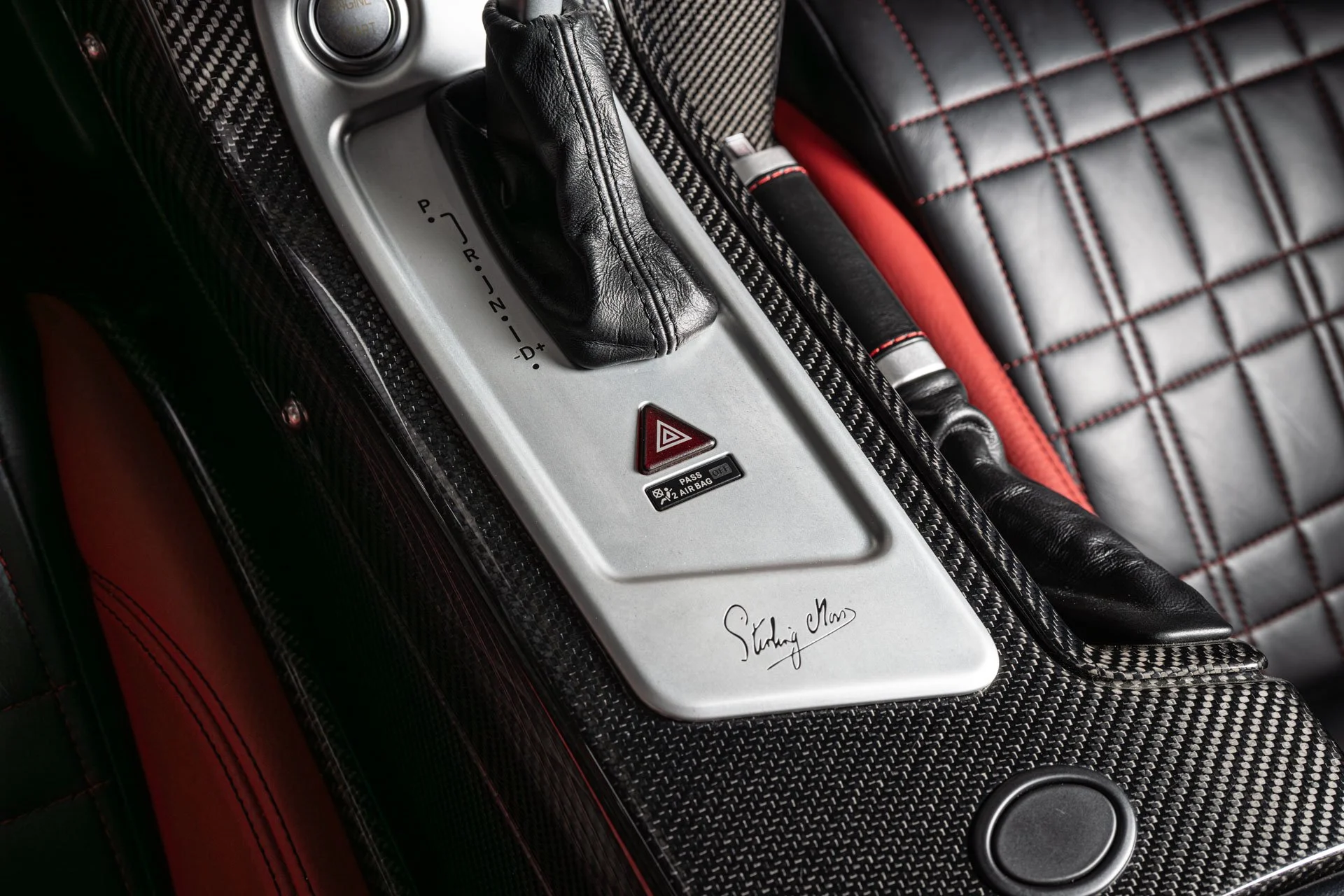
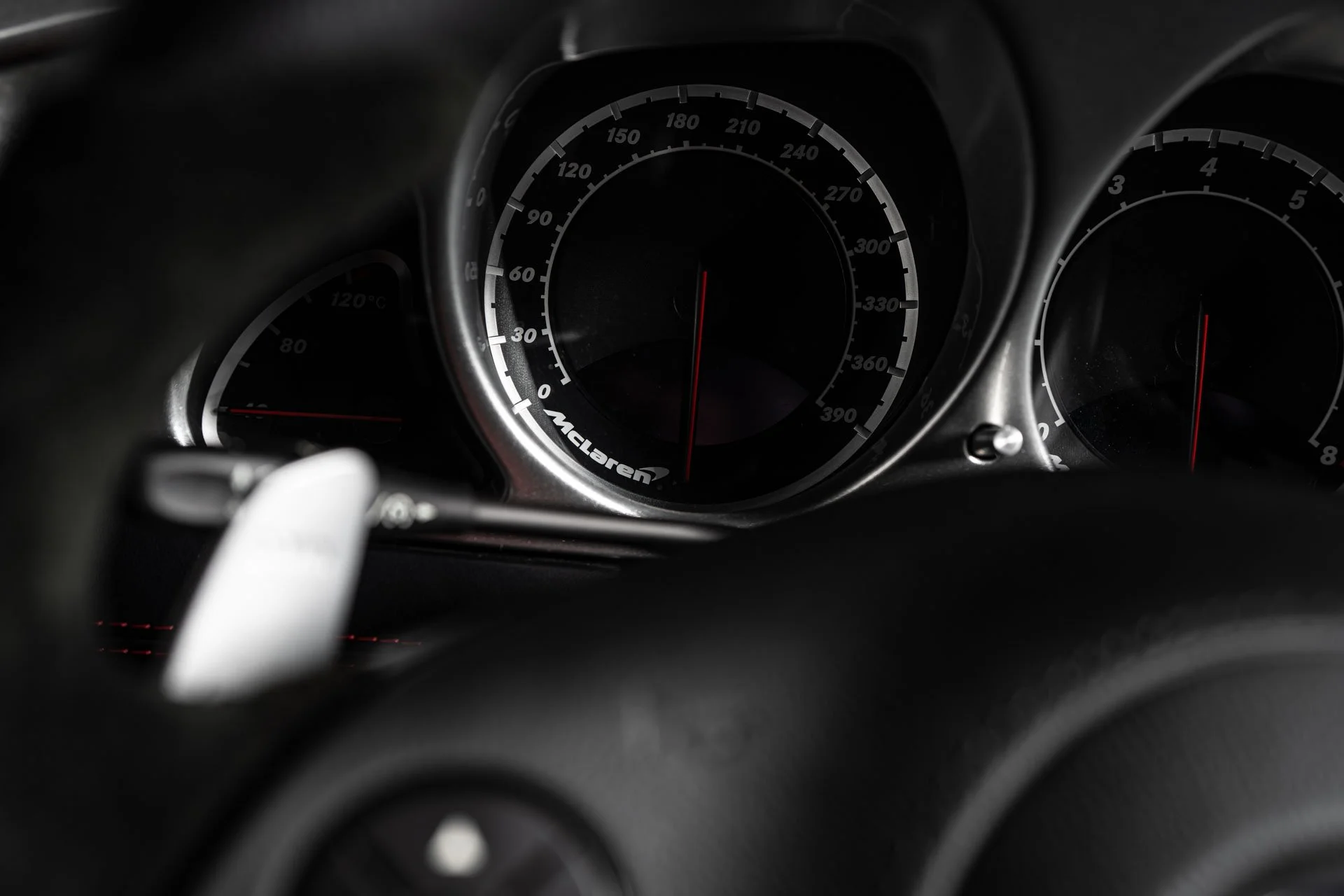
Most speedsters provide at least a token nod toward usability, a removable soft top, perhaps, or a vestigial windscreen. The SLR Stirling Moss offers neither.
Instead, drivers are presented with a pair of small wind deflectors and the expectation that they will don helmets if they intend to exploit the car’s performance envelope. At speed, airflow is channeled over and around the cockpit using carefully sculpted aerodynamics, more Le Mans prototype than grand tourer.
The absence of a roof and windshield isn’t just theatrical, it’s structural. The car utilizes a heavily modified version of the SLR’s carbon-fiber monocoque, optimized for rigidity despite the complete removal of its upper structure. The result is an open-top car that is more than 440 pounds lighter than the standard SLR Roadster.
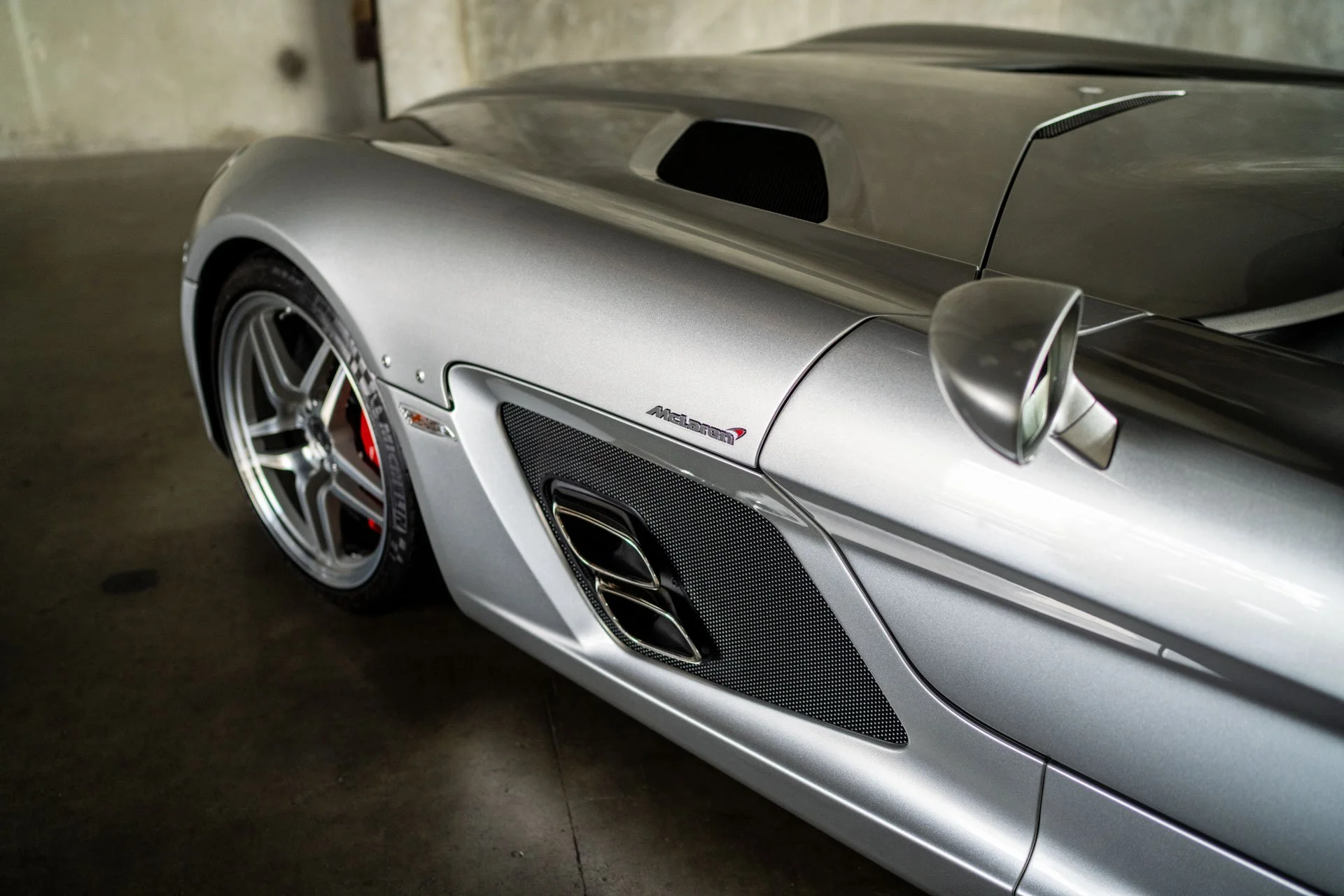
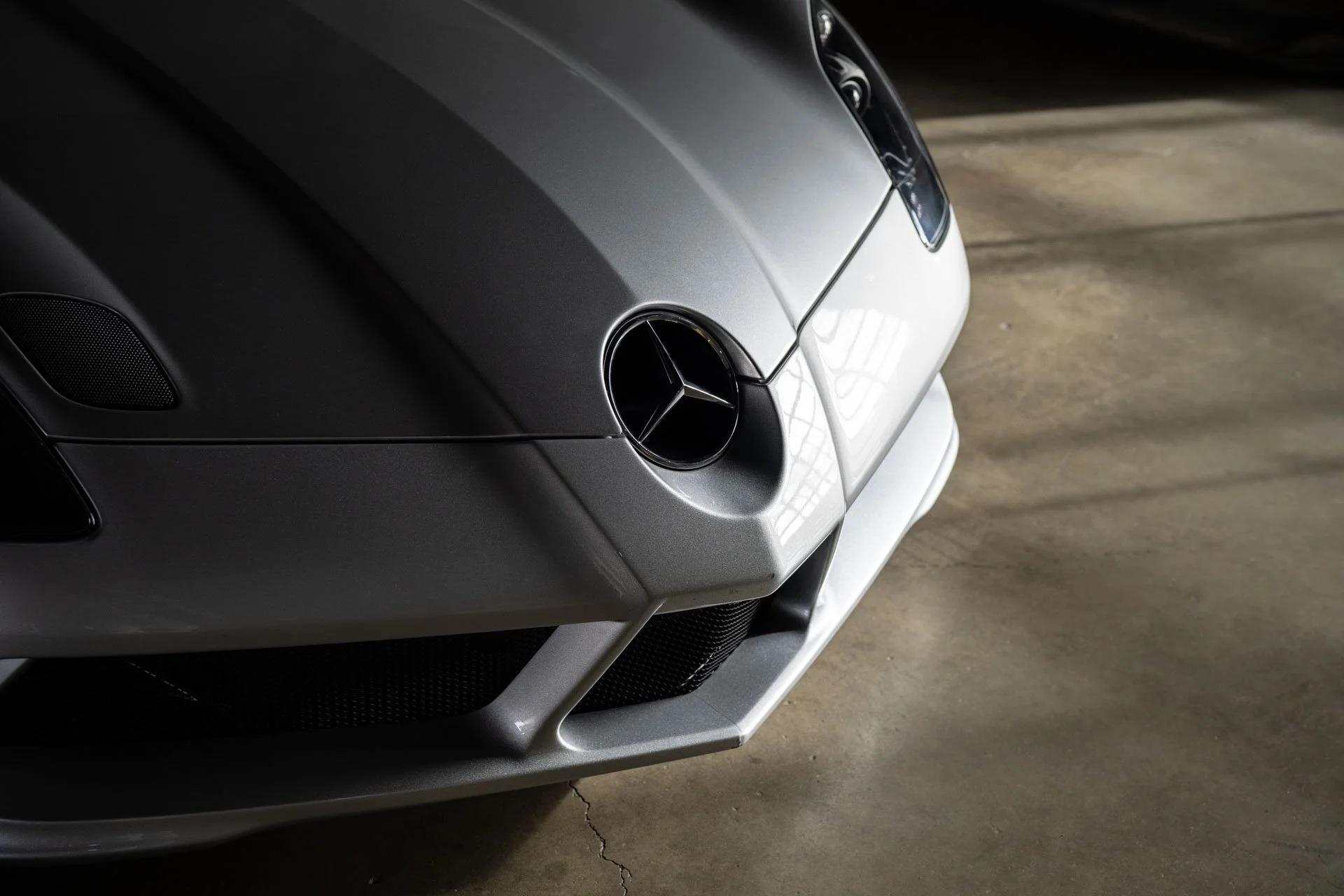
Every surface serves a purpose. The front splitter and sculpted side intakes manage airflow to the intercoolers. The rear diffuser stabilizes the car at high speeds. The twin “speed humps” behind the cabin smooth airflow while providing rollover protection. It’s form dictated entirely by function, an ethos very much in keeping with the 300 SLR.
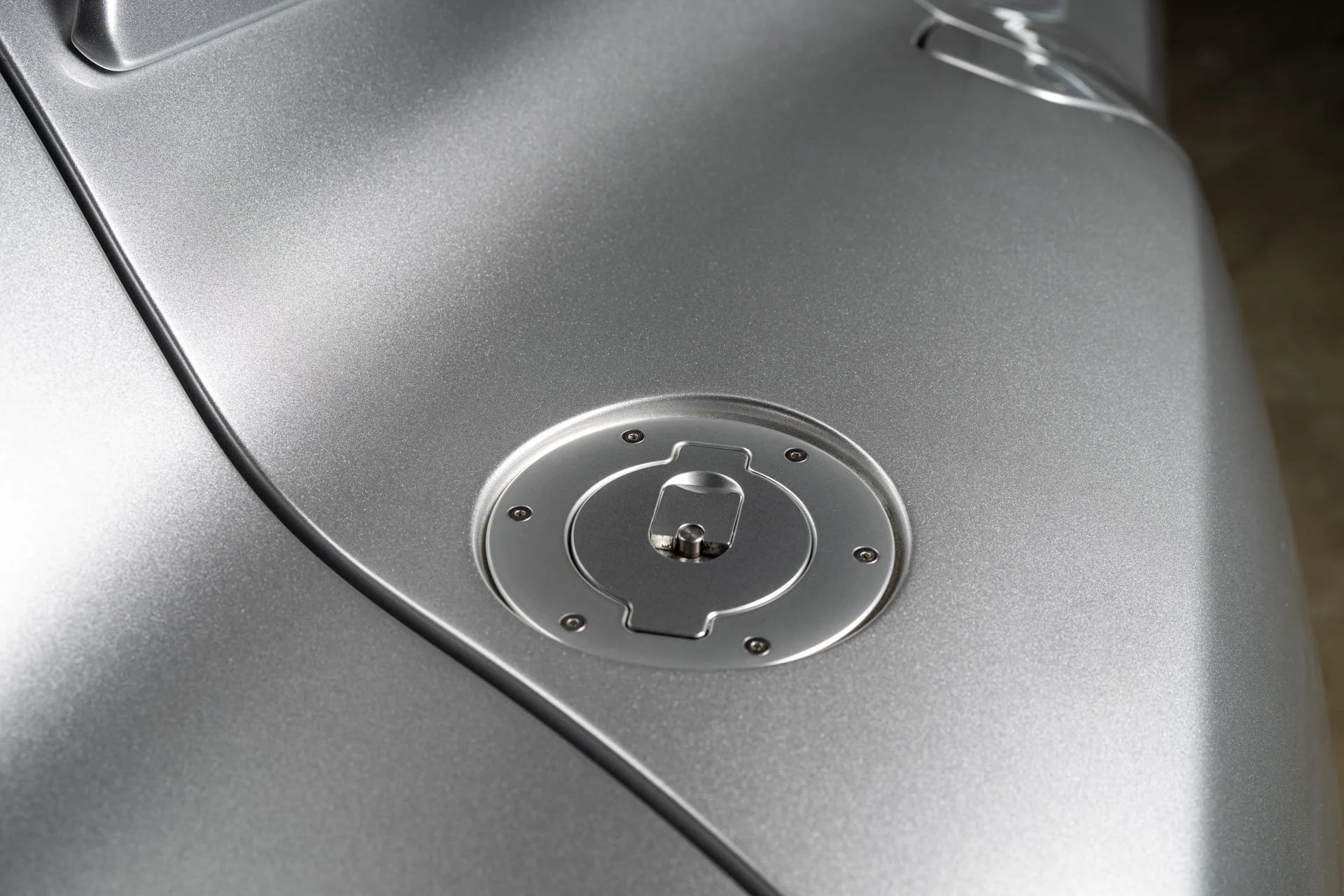
Under that impossibly long bonnet lies a familiar but uprated powerplant: the AMG-built 5.4-liter supercharged V8 (M155), tuned here to produce approximately 650 horsepower and 605 lb-ft of torque.
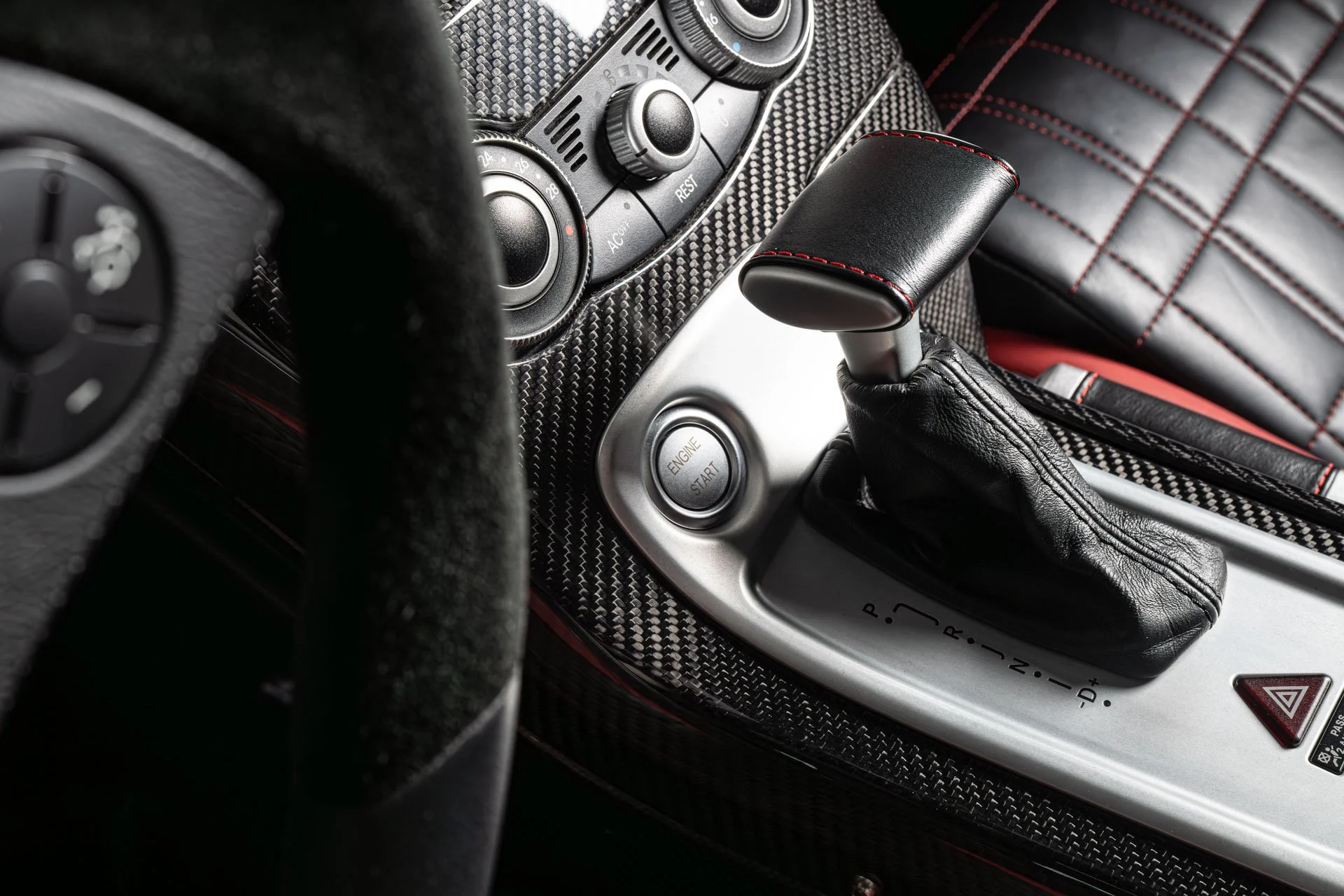
Power is delivered exclusively to the rear wheels via a five-speed AMG Speedshift R transmission, no dual-clutch trickery here, launching the Stirling Moss from 0–60 mph in 3.5 seconds, 0–125 mph in under 10 seconds and onward to a top speed of approximately 217 mph.
That top speed matters. With nothing but open sky between driver and atmosphere, exceeding 200 mph becomes an almost surreal act of mechanical defiance.
Carbon-ceramic brakes, recalibrated suspension geometry, and revised steering all contribute to what is arguably the most visceral iteration of the SLR platform. Where the standard SLR was often criticized for feeling more GT than supercar, the Stirling Moss removes every remaining filter between driver input and road response.
Mercedes-Benz limited production to just 75 examples worldwide, and ownership came with an unusual prerequisite: you could not buy one unless you already owned an existing SLR. With an original price tag north of $1 million, the Stirling Moss wasn’t just rare, it was deliberately inaccessible. This wasn’t a car for aspiring collectors; it was a reward for the brand’s most loyal clientele.
Each example was assembled largely by hand, representing the final chapter in the collaboration between Mercedes-Benz and McLaren, a partnership that began with the ambitious but sometimes controversial SLR program in 2003.
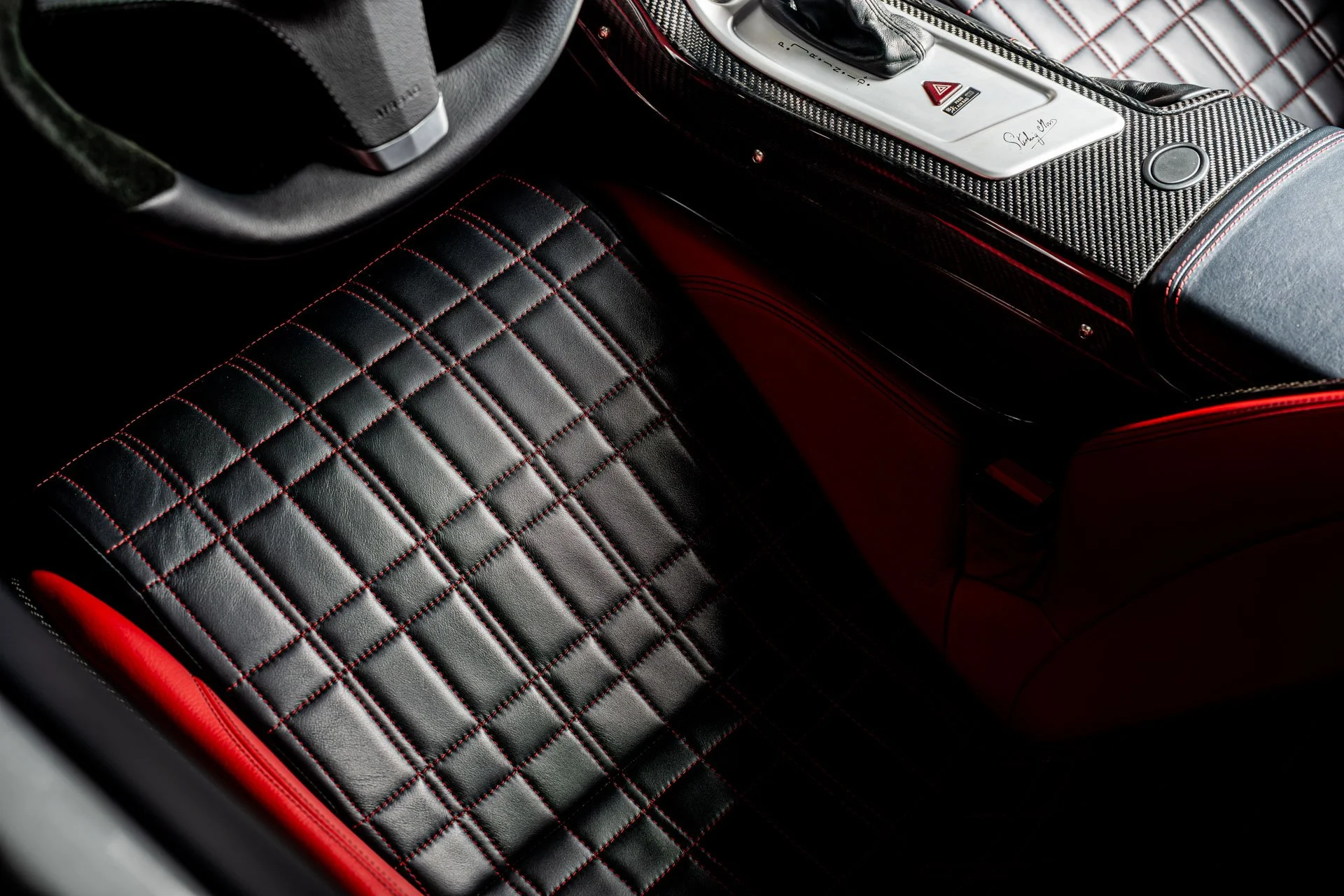
In many ways, the Stirling Moss is the SLR that enthusiasts always wished Mercedes would build, lighter, more aggressive, unapologetically focused on driving experience rather than luxury.
It stands apart not only from the rest of the SLR lineup, but from nearly every modern performance car that followed. Even today, amidst a marketplace crowded with hybrid hypercars and digital driver aids, the notion of a 217-mph production car with no roof and no windshield feels almost rebellious.
And that’s why the SLR Stirling Moss is more than a tribute: performance isn’t just numbers, but sensation, wind, noise, and the raw immediacy of motion.
That is also why it matters as the final punctuation mark on the Mercedes-Benz and McLaren partnership. The SLR program was never a simple badge-engineering exercise; it was a genuine cross-pollination of Stuttgart’s muscle and durability with Woking’s carbon-fiber know-how and racing-bred obsession with structure and detail. At times the marriage produced something hard to categorize, part grand tourer, part supercar, but in the Stirling Moss it found absolute clarity: a no-compromise machine that distilled the collaboration’s best ideas into one last, unforgettable statement.
Historically, the car is more than an SLR variant, it’s a modern echo of the 300 SLR legend, proof that heritage can be honored with engineering bravery rather than nostalgia alone. Long after the numbers have been eclipsed by hybrids and software, the Stirling Moss remains influential because it dared to delete the obvious and amplify the essential: exposure, immediacy, risk, and reward. In that sense its impact is lasting and outsized; it helped cement the idea that the rarest modern performance cars should chase feeling as much as speed, and it stands today as a rolling reminder that the boldest collaborations don’t just build faster cars, they build new categories.

