
1965 Citroën 2CV AZAM
STORY | Stein Broeder
Photography | Gooding Christie’s, Mathieu Heurtault
There are faster cars, prettier cars, and certainly more expensive cars. Yet few automobiles have left a mark on automotive history quite like the Citroën 2CV. It is a machine that transcends simple transportation, a car whose enduring appeal comes not from performance figures or luxury appointments, but from an almost unmatched commitment to cleverness, practicality, and human-centered design. By 1965, the concept had evolved into the Citroën 2CV AZAM, a more refined interpretation of France’s beloved people’s car, proving that sophistication need not come at the expense of simplicity.
The story of the 2CV begins decades before the 1965 AZAM rolled from the factory. During the 1930s, Citroën launched a project known internally as the TPV, short for Toute Petite Voiture or “Very Small Car.” France at the time remained largely rural, and much of the population still relied on bicycles, horses, and carts for daily transportation. Citroën’s engineers were tasked with creating an affordable vehicle that could carry four people and a modest load across rough farm tracks while consuming as little fuel as possible. Legend has it that the suspension was expected to be supple enough to carry a basket of eggs across a plowed field without breaking them.
The resulting machine was unlike anything the automotive world had seen. Although World War II delayed its introduction, the 2CV finally appeared at the 1948 Paris Motor Show. Journalists ridiculed its appearance and questioned whether anyone would want such a basic automobile. The public responded differently. Ordinary French families immediately recognized its brilliance. Long waiting lists developed as buyers flocked to a car that was affordable, economical, and remarkably practical.
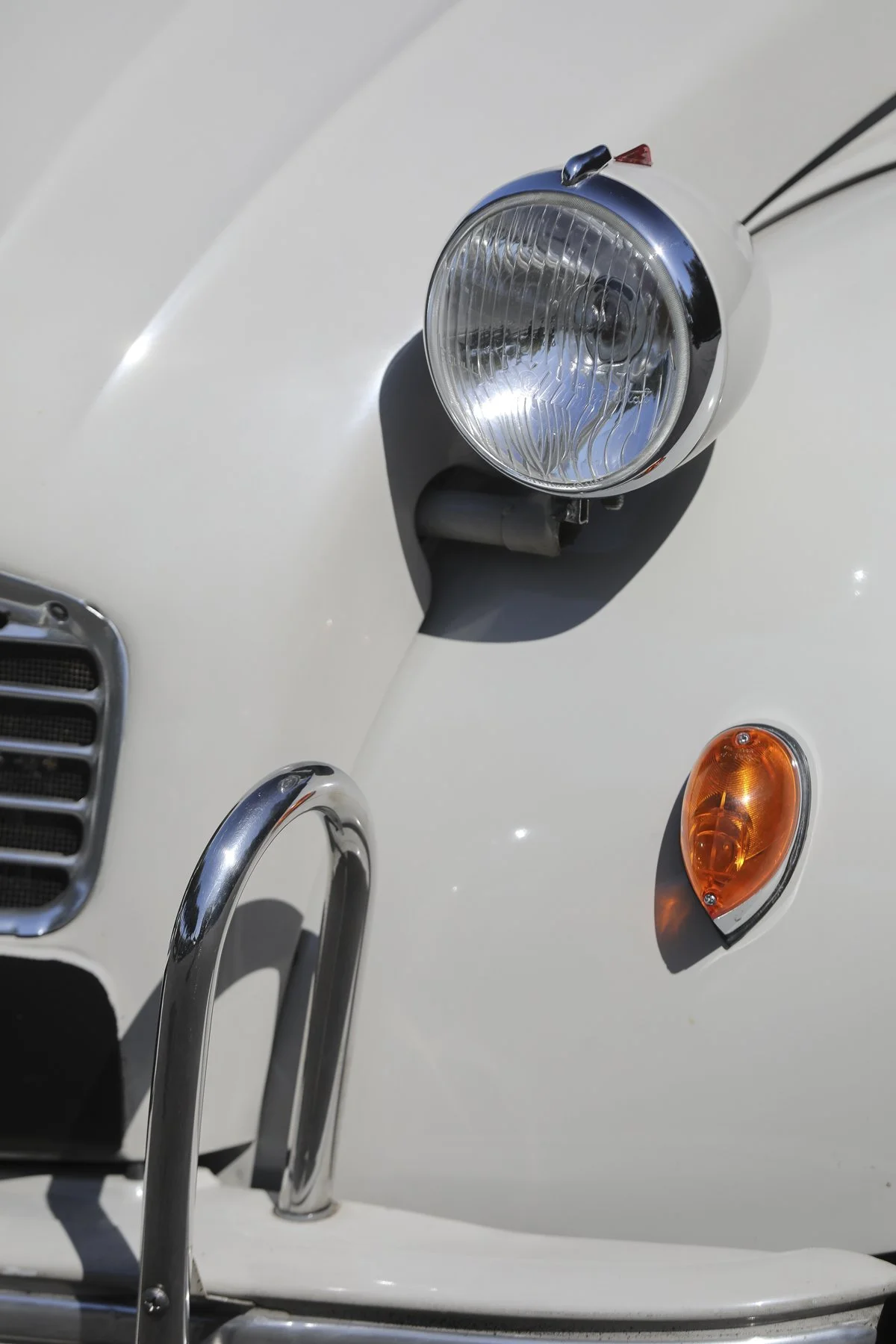
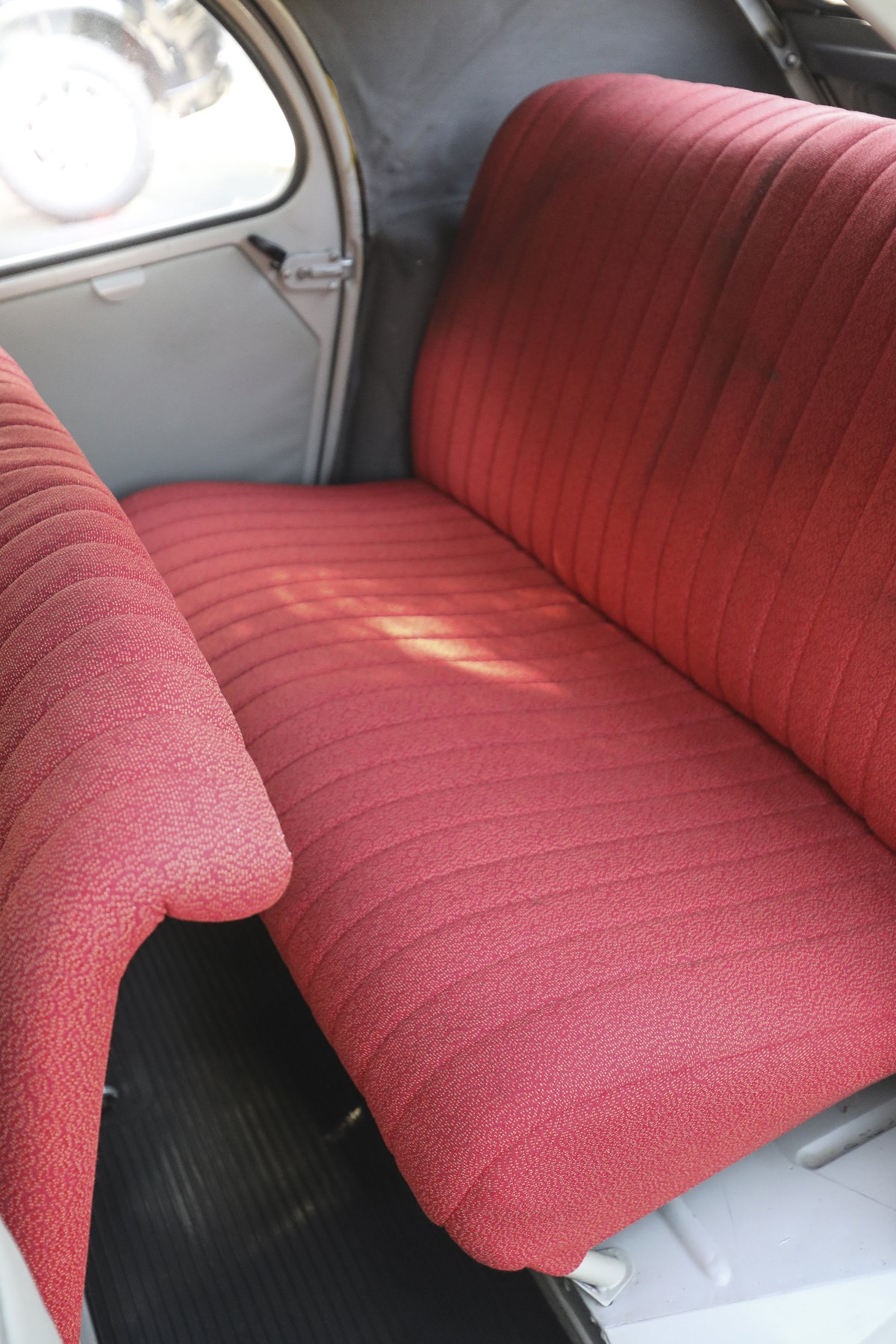
By the mid-1960s, France was enjoying increasing prosperity, and customer expectations had evolved. Drivers still appreciated the utility and economy of the 2CV, but many sought a touch of comfort and elegance as well. Citroën answered with the AZAM, which represented the most upscale version of the 2CV then available. While no one would confuse it with a luxury car in the conventional sense, the AZAM introduced tasteful chrome trim, more attractive upholstery, improved interior finishes, and a greater sense of occasion. It retained the simplicity that made the 2CV famous while acknowledging that buyers appreciated a few creature comforts.
The beauty of the 2CV AZAM lies in its honesty. At first glance, its narrow body, separate fenders, and canvas roof can appear awkward, even comical. Spend more time with the car, however, and its design begins to reveal an extraordinary degree of purpose. Every curve, every panel, and every detail was shaped by practicality. The upright glass created a surprisingly airy cabin. The lightweight body helped maximize fuel economy and performance from the tiny engine. The full-length roll-back canvas roof reduced weight while allowing large cargo to be carried when necessary. Even maintenance was simplified using accessible mechanical components and easily repaired bodywork.
Power comes from one of the most endearing engines ever fitted to an automobile: a small air-cooled flat-twin mounted at the front. By 1965, displacement had grown to 425 cubic centimeters with output checking in at around 18 horsepower. Such figures seem almost laughable today, but outright performance was never the 2CV’s mission. Instead, the little twin-cylinder engine delivered character in abundance. It buzzes and chatters with a distinctive mechanical soundtrack that forms an essential part of the driving experience.
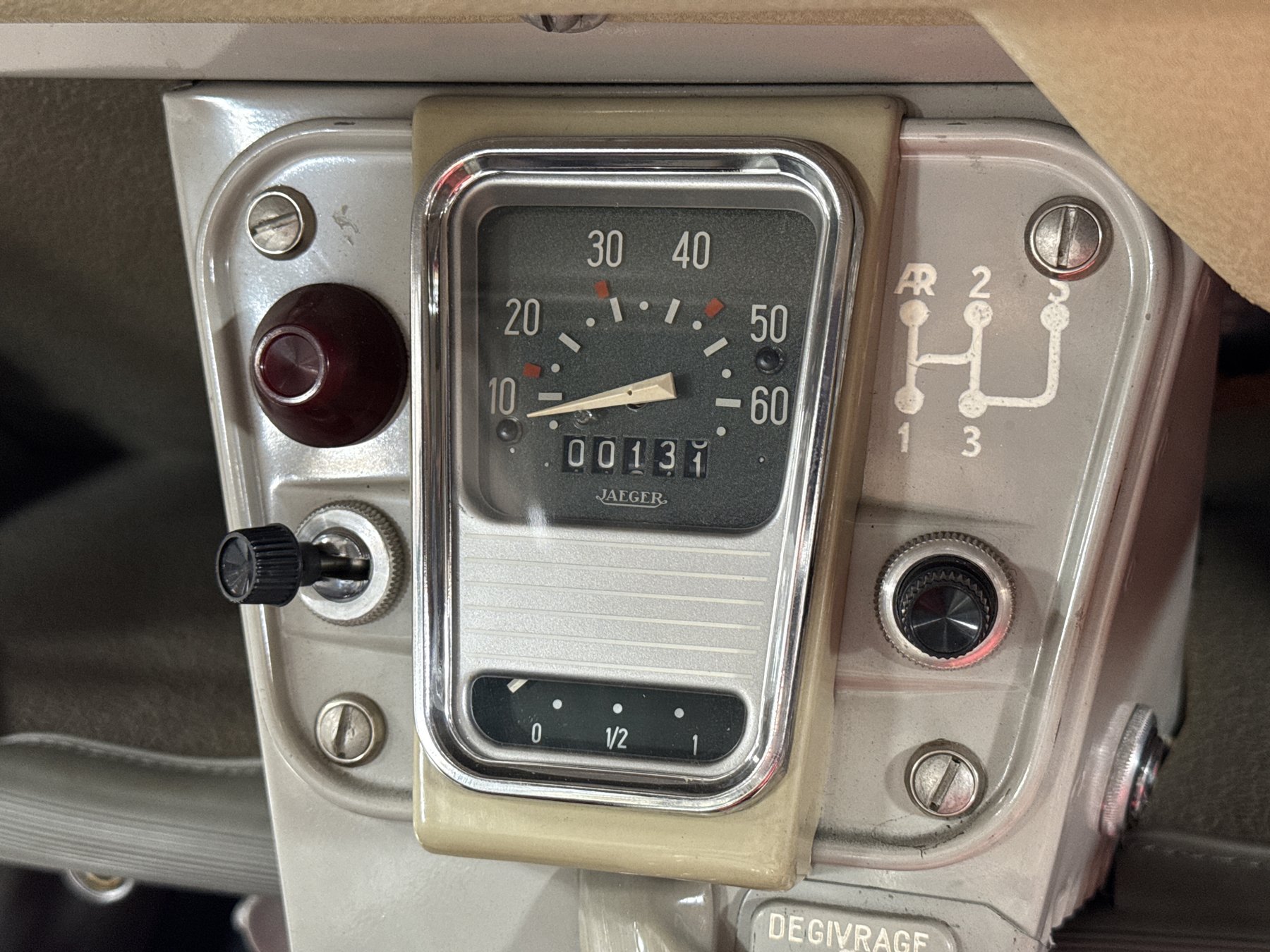
That sense of participation extends to every aspect of operating the car. The dashboard-mounted gear lever protrudes from the firewall like the handle of a curious agricultural tool, requiring a unique shifting technique that becomes second nature only after a period of acquaintance. The steering provides a constant stream of feedback, and the controls demand genuine involvement. Nothing is isolated or filtered. The driver feels every action and hears every mechanical response. The experience is refreshingly direct, creating a connection between person and machine that is increasingly rare in the modern automotive world.
No feature better embodies the ingenuity of the 2CV than its suspension. Designed to provide exceptional comfort on rough rural roads, the system employed interconnected springs mounted horizontally within tubes running along the chassis. The result was a ride quality unlike anything else on the market. The little Citroën seems to float over broken pavement and rough surfaces with an ease that defies its humble origins. Body roll is generous, and the car sways dramatically through corners, often to the amusement of first-time passengers. Yet beneath this theatrical movement lies remarkable effectiveness. The wheels maintain contact with the road, and the car traverses poor surfaces with a composure that many larger and more expensive vehicles struggle to match.
What makes the 1965 AZAM especially compelling today is its unapologetically analog nature. Modern vehicles are marvels of technology, but they often insulate their drivers from the mechanical processes taking place beneath the surface. The 2CV takes the opposite approach. Every experience is mechanical and immediate.
This 2CV was purchased new in January 1965 from Citroën’s showroom in Beverly Hills, California, by none other than famed casino magnate and automobile collector William F. Harrah. Understanding the significance of the 2CV as a piece of French automotive manufacturing history, Harrah placed this AZAM in his museum immediately after purchasing it. Since then, it has been passed through several owners and included a stay in the National Automobile Museum. Showing just 131 miles at the time of cataloguing, it was recently sold at auction by Gooding Christie’s.
More than 60 years after it was built, the AZAM remains one of the automotive world’s most charming contradictions: a car that is humble yet innovative, simple yet sophisticated, inexpensive yet priceless in character. In an age increasingly dominated by algorithms, automation, and digital interfaces, the little Citroën offers something genuinely rare. It offers authenticity, and that may be the finest luxury of all.

