
Carl Ledbetter’s Defender 90 & 110
STORY | Chris Seely
Photography | Cole McKnight
There is a famous barn in the Grand Tetons of Wyoming; if you have seen a photo of it before, you may be picturing it now.
Sitting proudly in front of snow-capped mountains, the T.A. Moulton Barn was built in the early 1900s to shelter horses from the harsh Wyoming winter. The grey boards that make up the barn lay vertically in sections where the barn needs to stand tall, and horizontally where the barn must reach wide. The wood is dry and weathered. The roof is steep to shed heavy winter snow. The barn has been fixed, rebuilt, and expanded over the years, growing organically to serve just one purpose: to protect the animals inside.
But today, the status of the Moulton Barn is not just one of function. People flock from all over the world to take photos of it; they buy calendars and prints of the barn to hang on the walls of their homes. In photo galleries across America, breathtaking photos of the barn are sold. However, the barn’s appeal and beauty were never planned. Its status has grown from years of intended use.
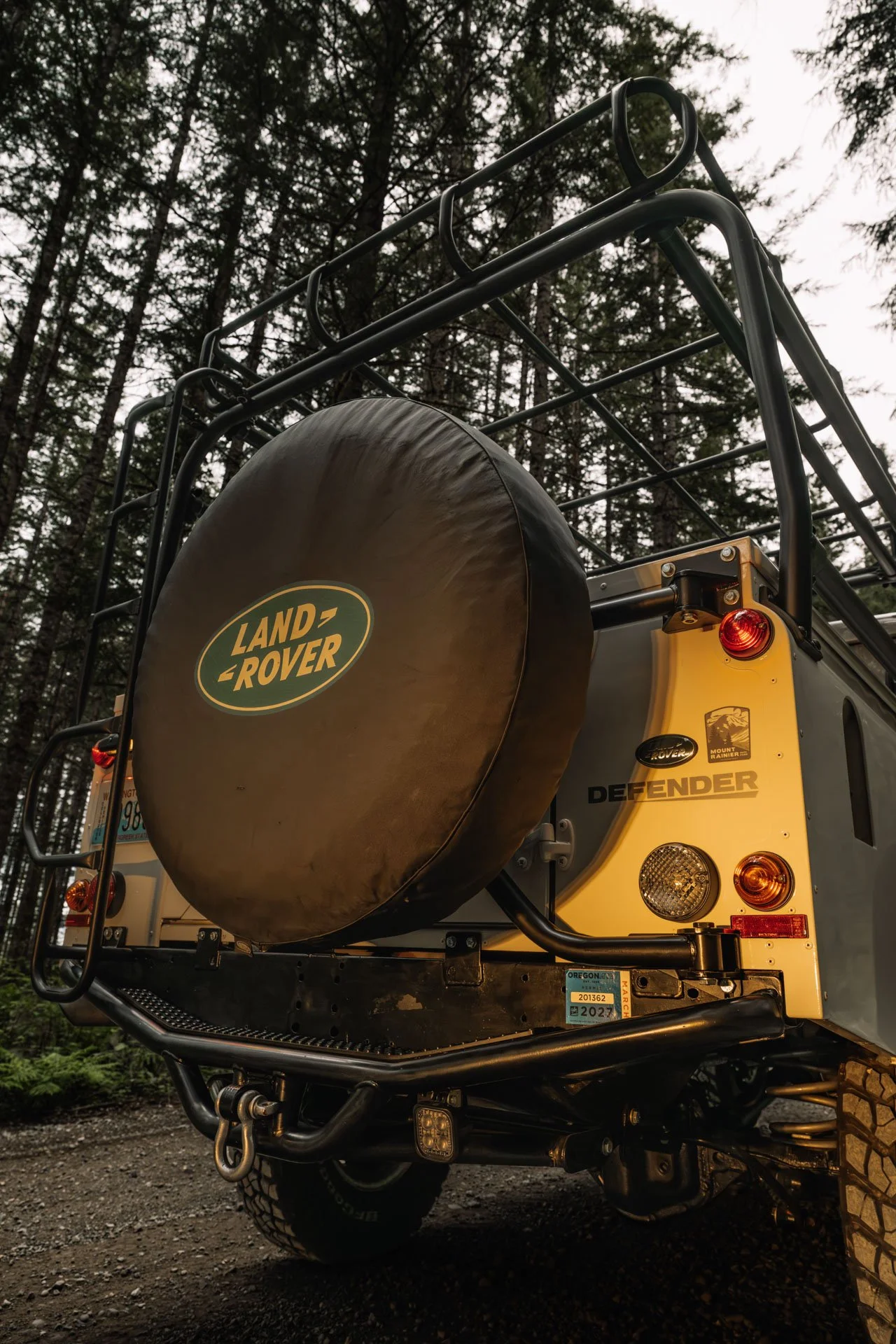
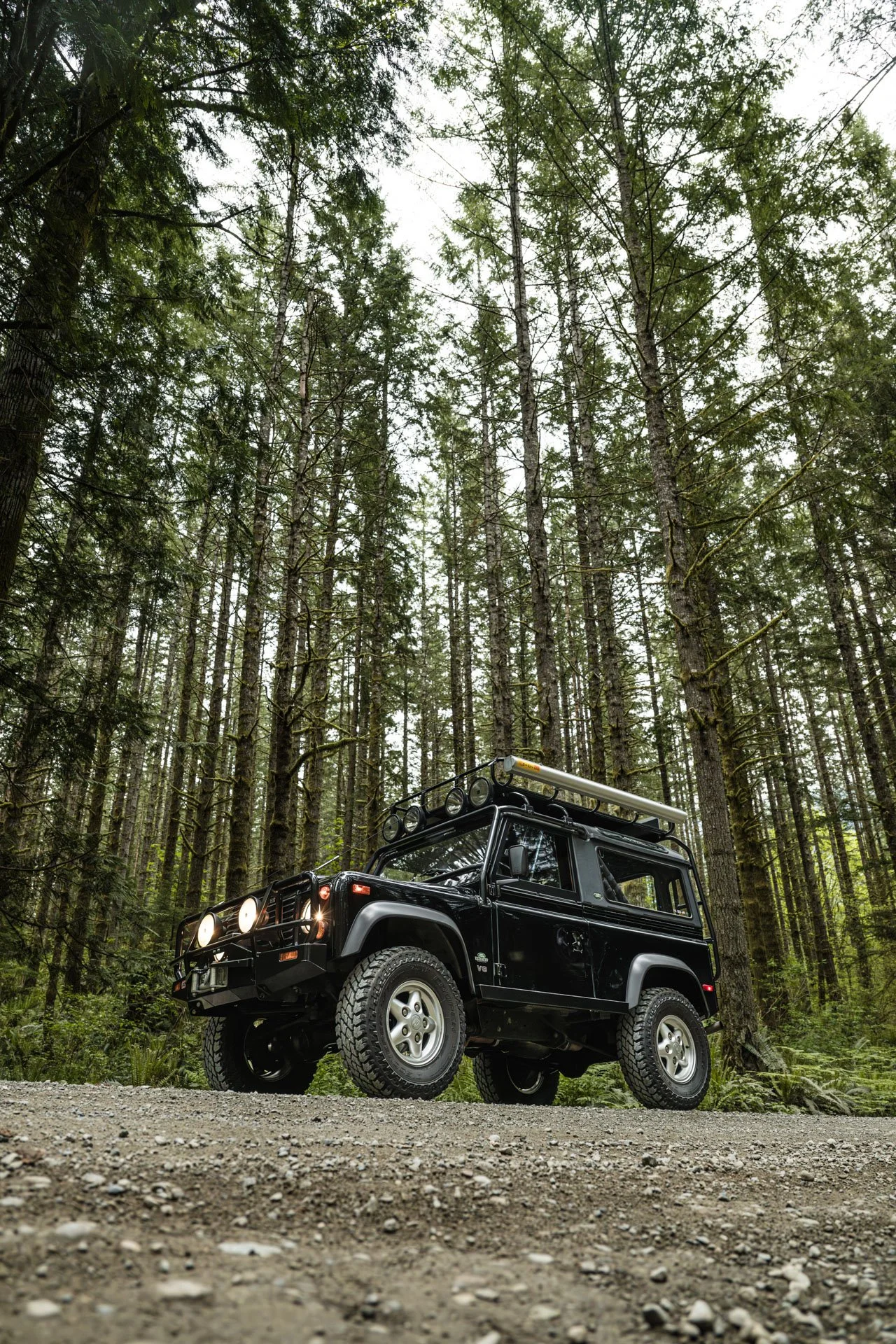
Just like the Moulton Barn, the beautiful design and character of Carl Ledbetter’s (@5ive2wo9ine) Land Rover Defender 90 has been shaped through use and intent.
Purchased in 1999 with fewer than 3,000 miles on the odometer, Carl has shared over 100,000 miles with his black, short wheelbase Defender. Along the way they crossed rivers, crawled through mud, explored remote corners of Oregon, camped beneath a solar eclipse, and ensured that nobody was left behind. The Land Rover is more than a car to Carl, it’s a tool, a work of art, and a beloved friend.
The striking presence of these old Land Rovers is one of the greatest in history. They are purposely shaped with balanced proportions, and look stunning yet approachable from any angle. Even today, modern cars like the Ineos Grenadier are copying the Defender’s famous form. However, these infamous square lines were not created in a famed design house, they weren’t drawn with the pen of Giugiaro or Bertone. Every cue and component was sculpted through necessity, they wear a patina coat earned through formidable wear and tear. The Defender’s sole purpose is to take you to the farthest corners of the world and bring you back home in time for dinner.
This purpose is built into every aspect of the Land Rover Defender’s design. Its boxy silhouette is not a stylistic choice. The shape maximizes cargo space and packability. The aluminum body panels and windshield are flat because flat panels are easy to replace when a rock or tree inevitably leaves its mark. The wheels sit at the very corners of the truck, allowing you to fjord valleys and scale mountains that would bottom out any Jeep or G-Wagon. Even the exposed hinges, visible rivets, and recessed door handles are utilitarian beauty; all needed so the doors can be removed easily and to prevent brush from snagging on protruding hardware.

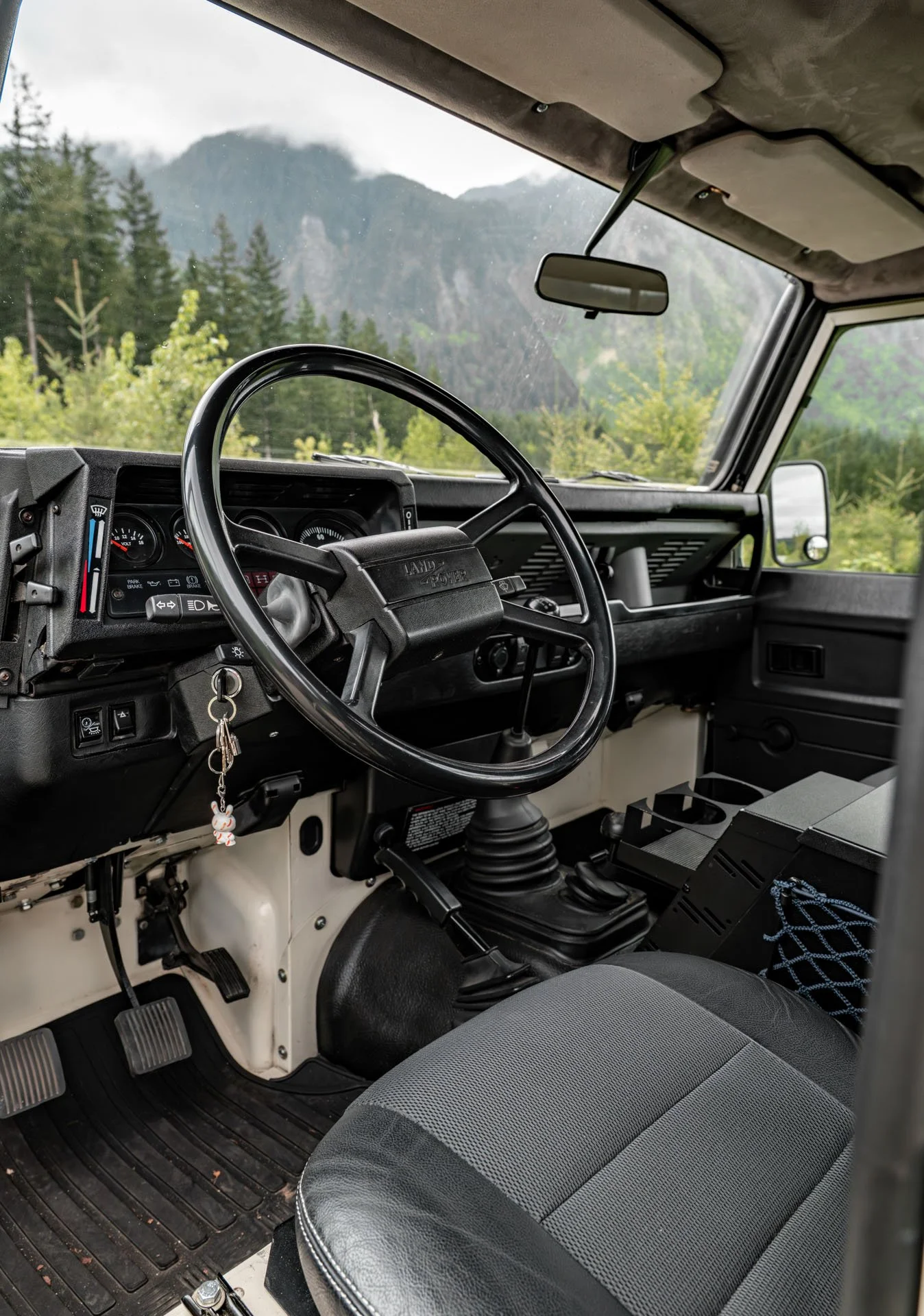
The same philosophy extends beneath the bodywork. The drivetrain is simple, mechanical, and robust; torque via V8 or diesel, those are your two choices. Live axles provide articulation over boulders that would eat a normal car, and low, mechanical gears help the truck to creep over obstacles where patience and precision could mean life or death. Inside, controls and gauges are mechanical and left to just the necessities; ergonomics an afterthought. The interior would break any brush that tried to detail it; it is designed to be flooded and flushed with a hose.
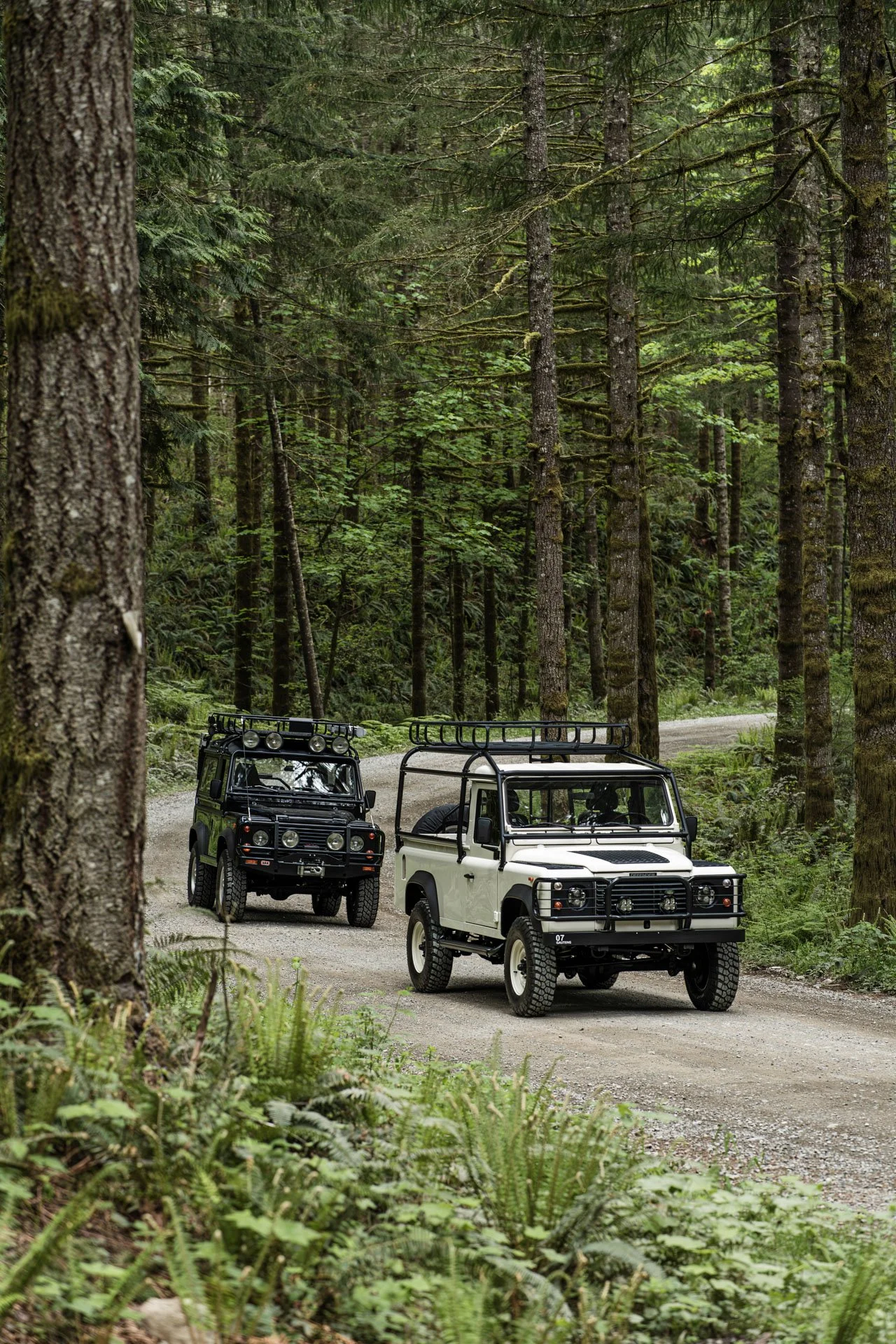
As a career-long designer, there is a reason Carl was drawn to the Defender. Every component, every piece, every part is shaped for utility, and this joint mission has created something truly beautiful; not beautiful through flowing curves or provocation, beautiful through its dedication to utility. So stunning in fact, that Carl owns not one, but two; his black Defender 90, and a white Defender 110 that he restored into a pickup truck. As intended by design, he regularly drives both. “For me, the appeal is definitely function, then form,” says Carl. He has long been a perfect match for the Defender’s utilitarian beauty. As a child, he grew up watching “Dakatari” on television and driving a 1940s Jeep through muddy trails on the family farm. Off-roading is one of his first loves, and the Defender is one of the few cars that can meet his off-road ambitions and satisfy his designer’s eye.
“They aren’t garage queens, I just love driving them” Carl said, as he flipped through countless photos on his phone. “The 90 gets seriously used” he said as we scoured photos of the black SUV at various campsites. “It’s been up to the doors in the river… it’s been in some sketchy places.” On why he loves his Land Rovers, he commented, “There is no pretense. Everything about it is just kind of raw, but they are super accessible; anybody can work on them.”

Neither the Defender nor Moulton Barn was built to become an icon. Neither was created to be photographed or written about in a magazine. They were simply built to solve problems.
The barn’s sole task was to shelter horses from Wyoming winters. The Defender was built to carry people and supplies to places most would never dare go. Both performed those jobs so well, and for so long, that something unexpected happened. People began to realize their beauty.
More than a century after it was built, the Moulton Barn still stands proudly through Wyoming blizzards. Nearly three decades after Carl bought his Defender, he is still adding miles and dents to it.
This is the true beauty of both. They never spent a day trying to become something special. They simply went to work.

