
France’s Defiant Supercar
The Venturi 400 Trophy
STORY | Stein Broeder
Photography | Gooding Christie’s
In the early 1990s, when the supercar world revolved around Italy, Britain, and an increasingly confident Germany, a small French manufacturer decided it would not merely compete, it would provoke. The result was the Venturi 400 Trophy, and few examples illustrate that moment of exuberant ambition better than the 1993 car bearing chassis number 0066, recently offered at auction by Gooding Christie’s.
Founded in Monaco in 1984 by engineers Claude Poiraud and Gérard Godfroy, Venturi set out to create a truly French “Grand Tourisme” capable of challenging contemporaries from Aston Martin, Ferrari, and Porsche. Venturi Automobiles was founded with a clear mission: apply aerospace thinking and Formula One sensibilities to road cars.
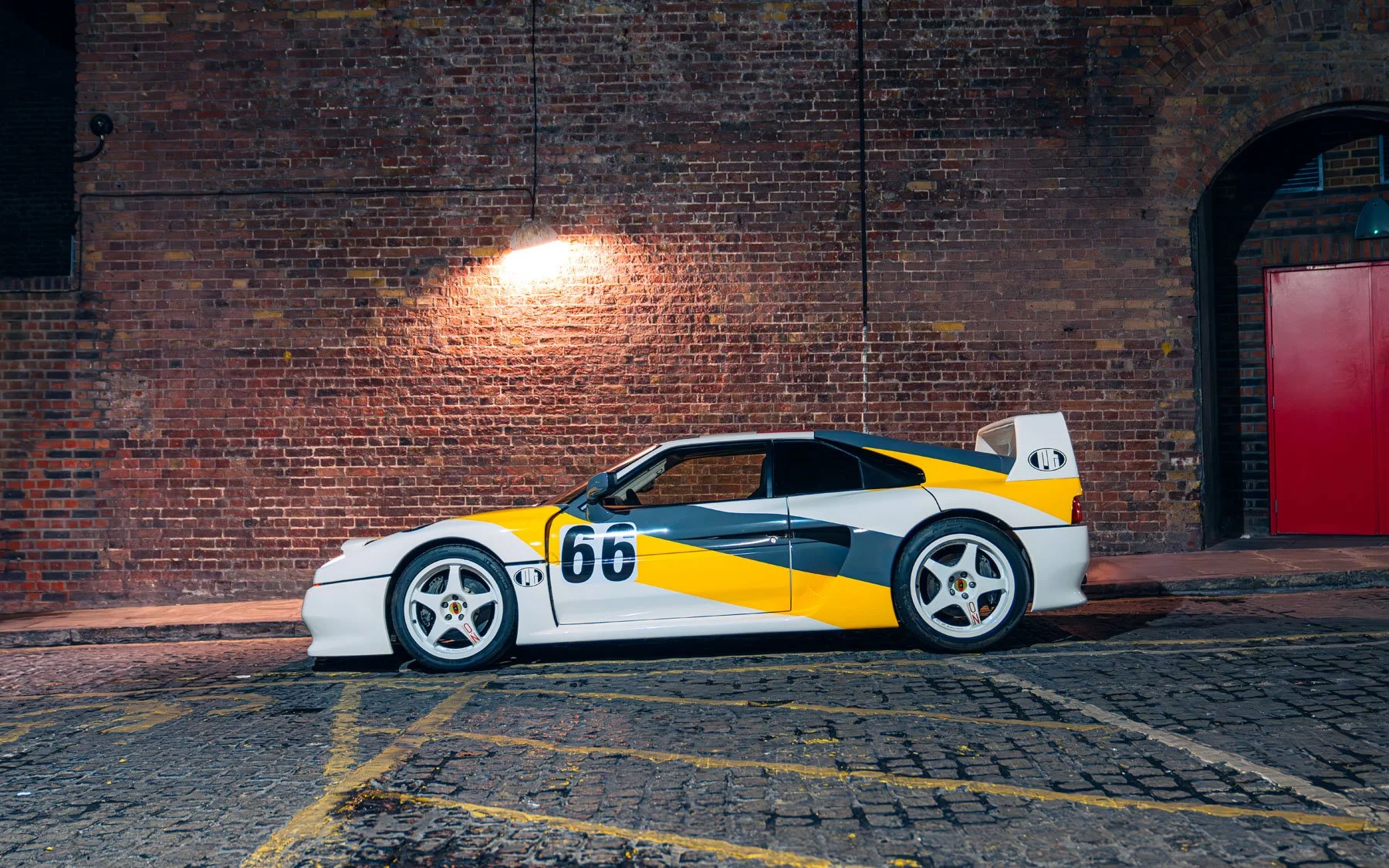
When media magnate Jean-Pierre Michel Hommell purchased Venturi in 1991, the ambition escalated dramatically. Hommell didn’t want conservative growth; he wanted headlines. The answer was a one-make racing series modeled on Ferrari’s Challenge program but executed with far less restraint. Thus, the Venturi 400 Trophy Championship was born.
Launched in 1992, the Venturi Gentlemen Drivers Trophy offered a turnkey, one-make championship built around the bespoke 400 Trophy and ran for four competitive seasons.
The 400 Trophy formed the technical foundation for the later 400 GT, one of the most advanced and highest-performing French production cars of its era.
Only 72 Trophy cars were built, each combining an advanced carbon composite body shell weighing just 1,200 kg with a potent 407-horsepower twin-turbo V6, reflecting the marque’s uncompromising commitment to performance engineering.
The 400 Trophy is not simply a rare supercar. It is the physical embodiment of Venturi’s audacity at its absolute peak, an era when the company believed, with complete sincerity, that France could build a world-class racing supercar and invite customers to do the same.
Unlike many homologation efforts, the 400 Trophy was conceived first as a race car and only then adapted, in small numbers, for road use. The result was something ferociously uncompromising.
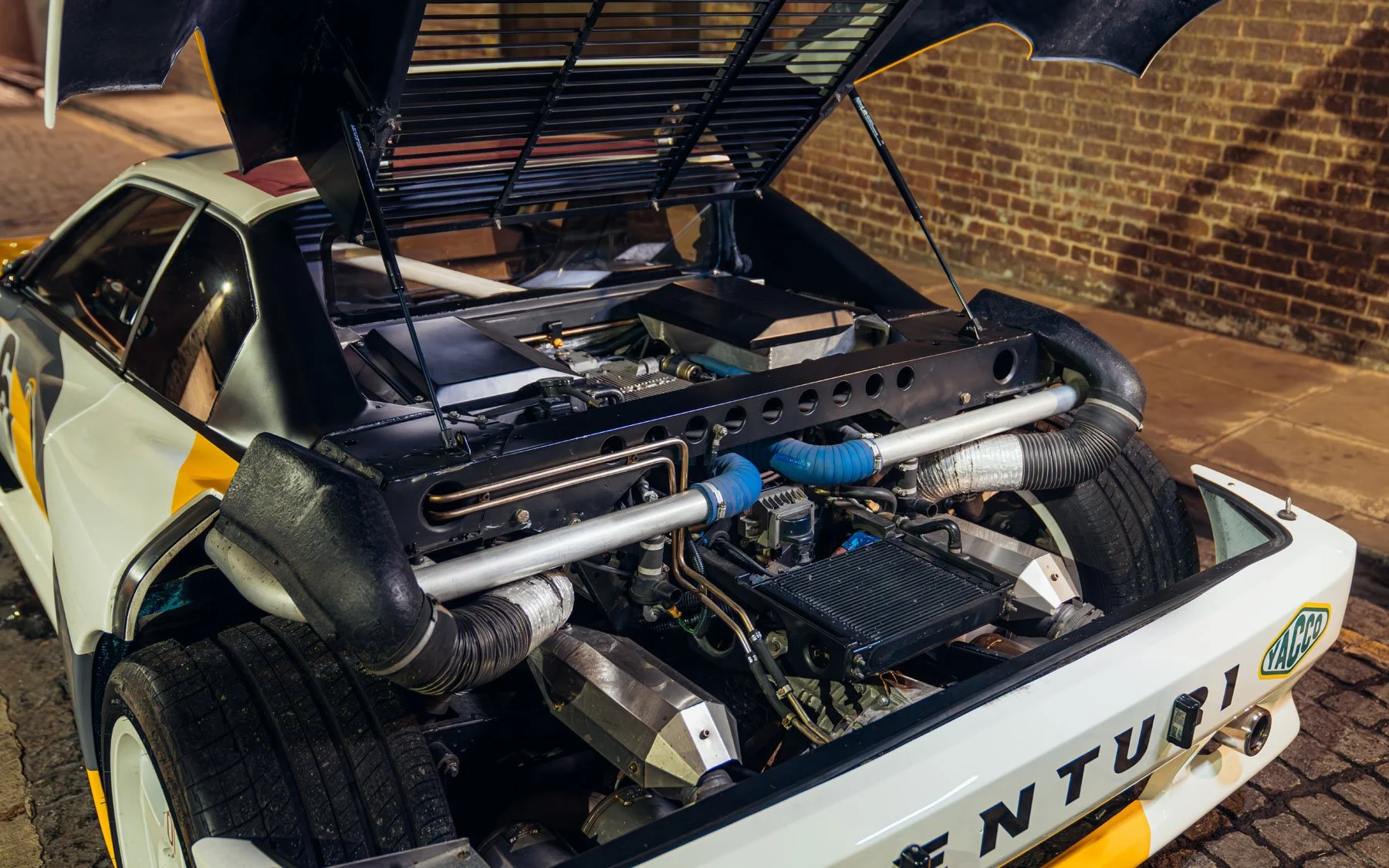
Under the rear deck sat the familiar PRV 3.0-liter V6, but here it was transformed with twin turbochargers, upgraded internals, and race-spec cooling.
Output was quoted at around 400 horsepower, a staggering number for the early 1990s, especially in a car weighing approximately 1,200 kg in competition trim.
The chassis was a lightweight steel spaceframe clothed in carbon-Kevlar composite bodywork, dramatically widened to accommodate massive wheels and race suspension. The look was shocking then and remains so today: box-arched, aggressively vented, unapologetically functional. Subtlety was never part of the creative brief.
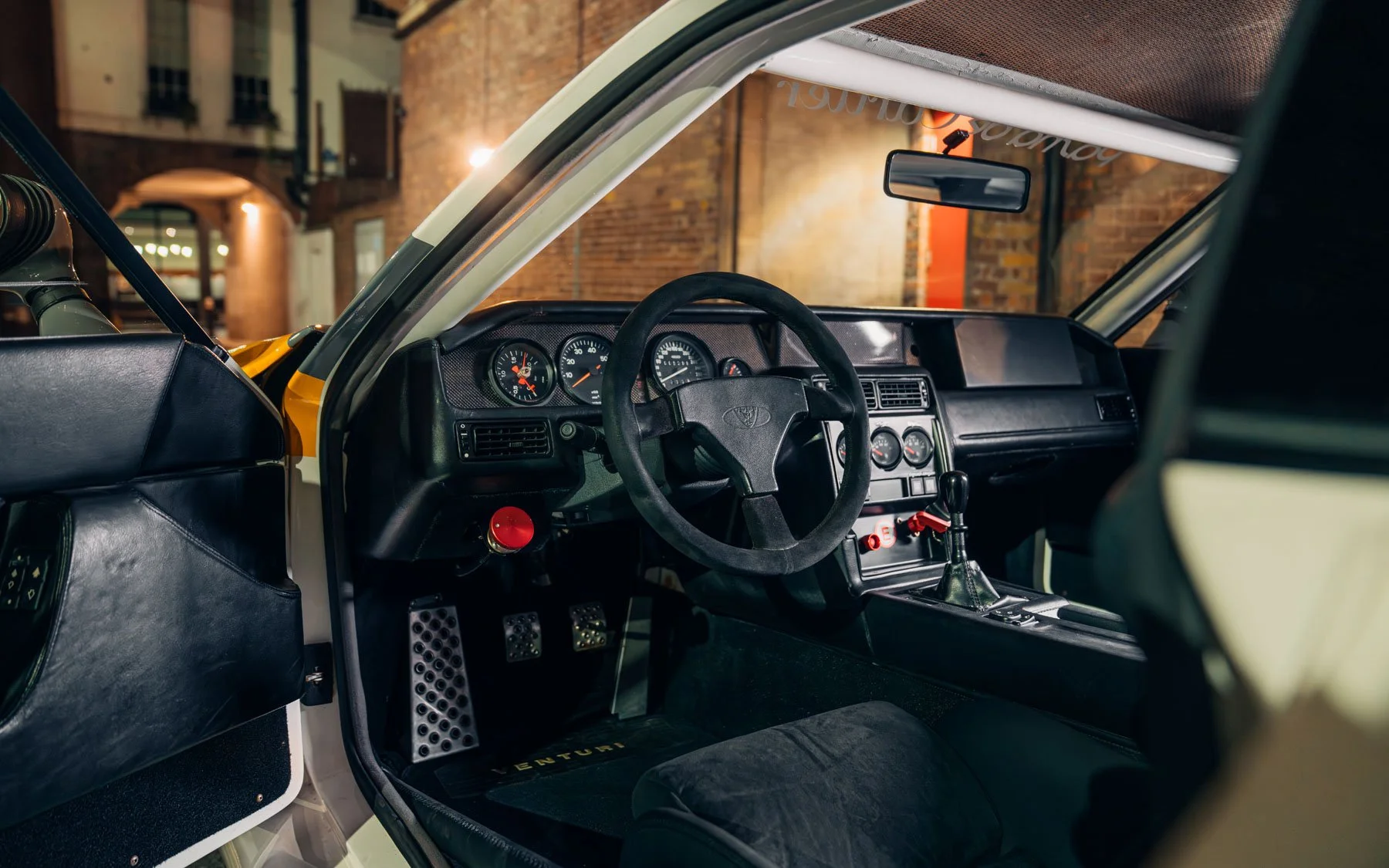
Inside, the Trophy abandoned luxury almost entirely. Racing seats, a pared-back dash, and a roll cage reminded drivers that this was a car meant to earn its keep at speed—not idle under café lights.
Venturi’s vision was simple and daring: sell customers a turnkey race car and give them a championship to run it in. Throughout the early 1990s, the Venturi Trophy series crisscrossed Europe, featuring full grids, professional organization, and genuine performance parity.
Drivers didn’t need factory contracts — only the nerve to climb into something brutally fast and fundamentally honest. That democratic spirit is part of what makes the 400 Trophy so compelling today. These cars weren’t trophies in name; they were tools.
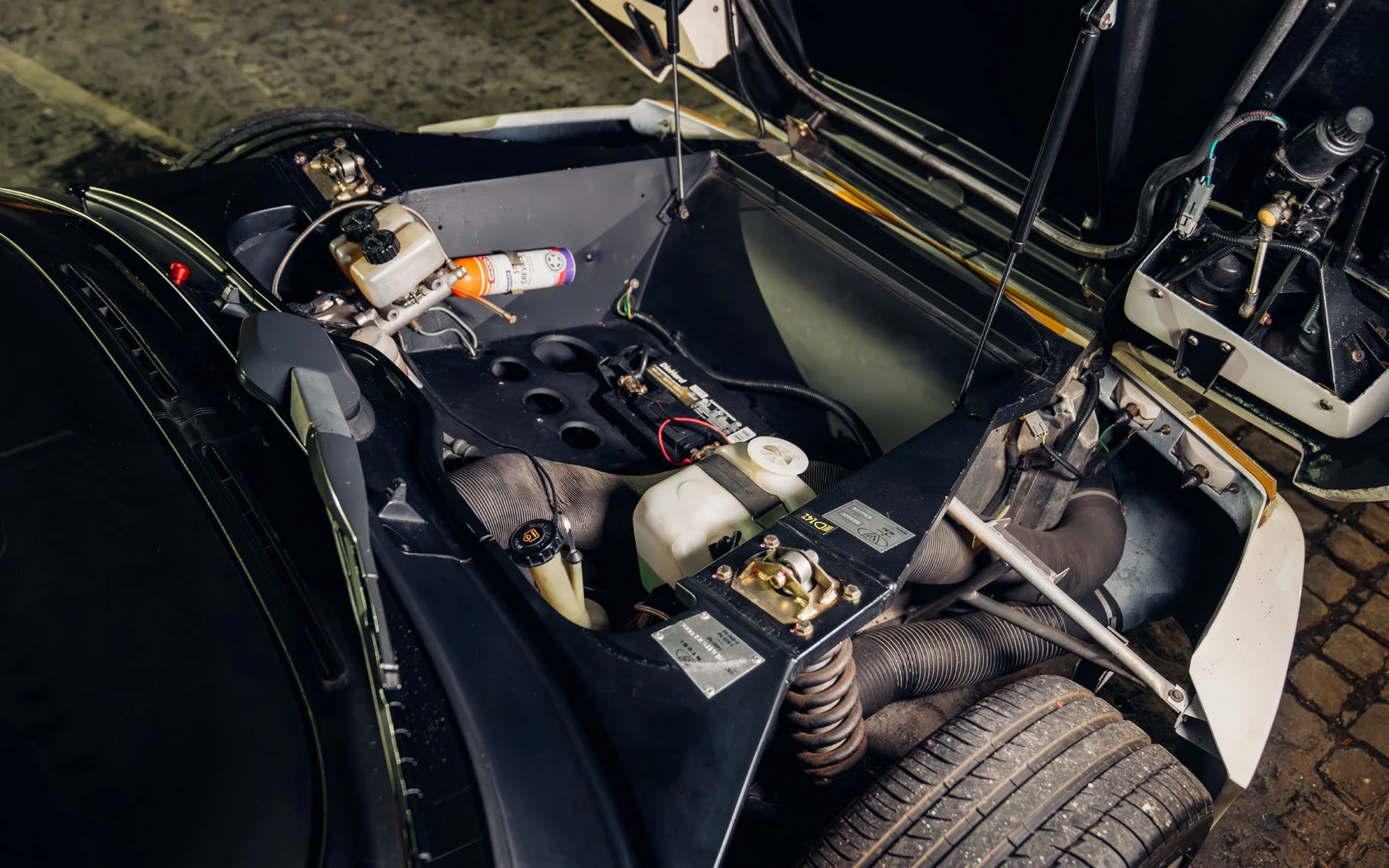
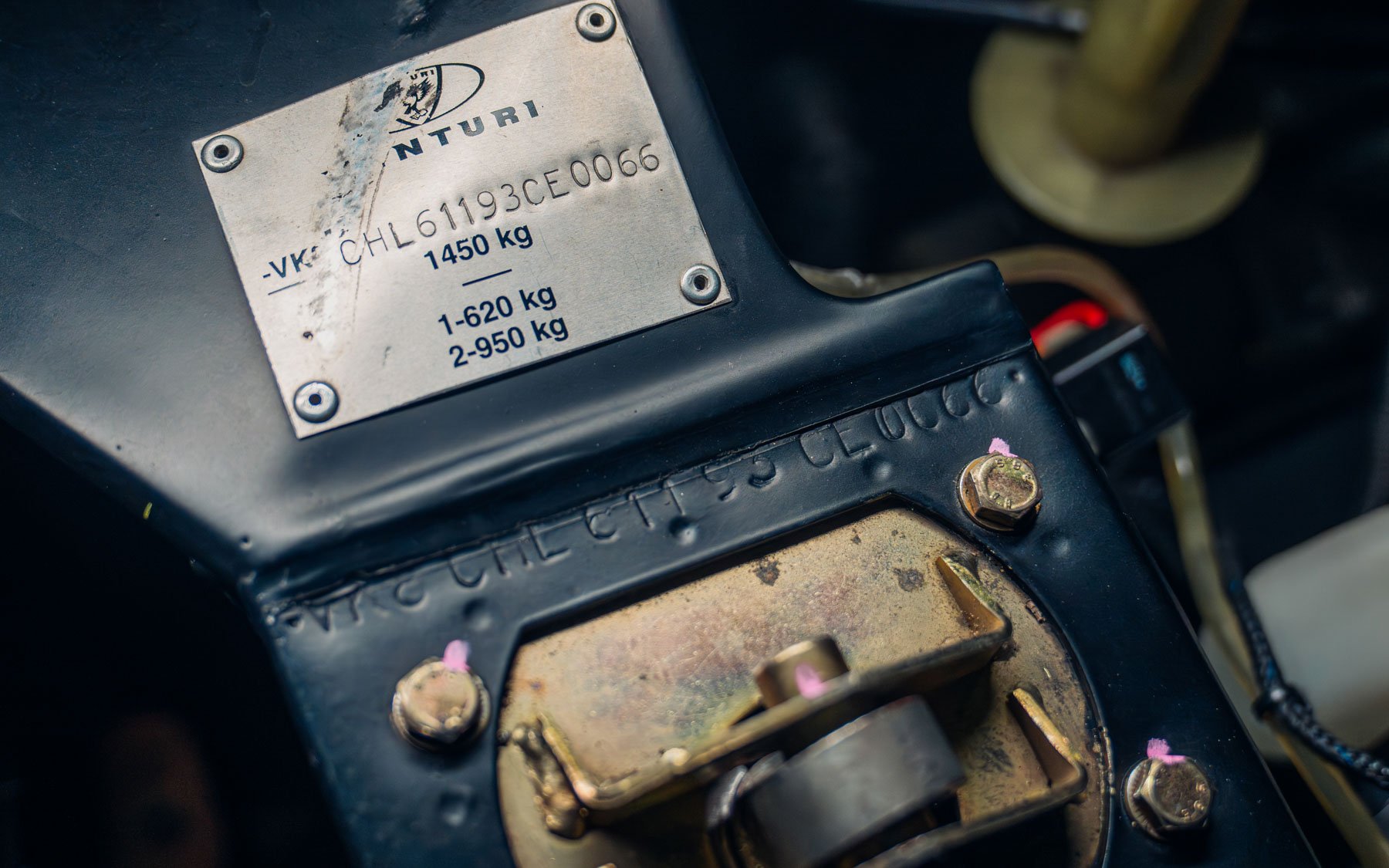
Only a handful were later converted for road use, and fewer still survive in well-documented condition. Each chassis number, including 0066, represents a fleeting moment when Venturi believed racing customers, not mass-market buyers, were the future.
Chassis 0066 raced two full seasons of the Gentlemen Drivers Trophy in 1993 and 1994 before returning to the factory for Venturi’s exclusive road-conversion program, offered only to existing owners.
Fewer than 10 examples are believed to have been converted, each individually configured through a factory options scheme.
It ended up receiving one of the most extensive upgrade packages, including the GT-specification hood and bumper, pop-up headlamp assemblies, revised doors with electric windows in place of the sliding competition units, and a modified rear clamshell incorporating side-visible indicator recesses.
The cabin was enhanced with air-conditioning and Recaro SPG bucket seats, while, most unusually, the full internal roll cage was retained. Only two road-converted Trophy cars are known to have preserved this feature.
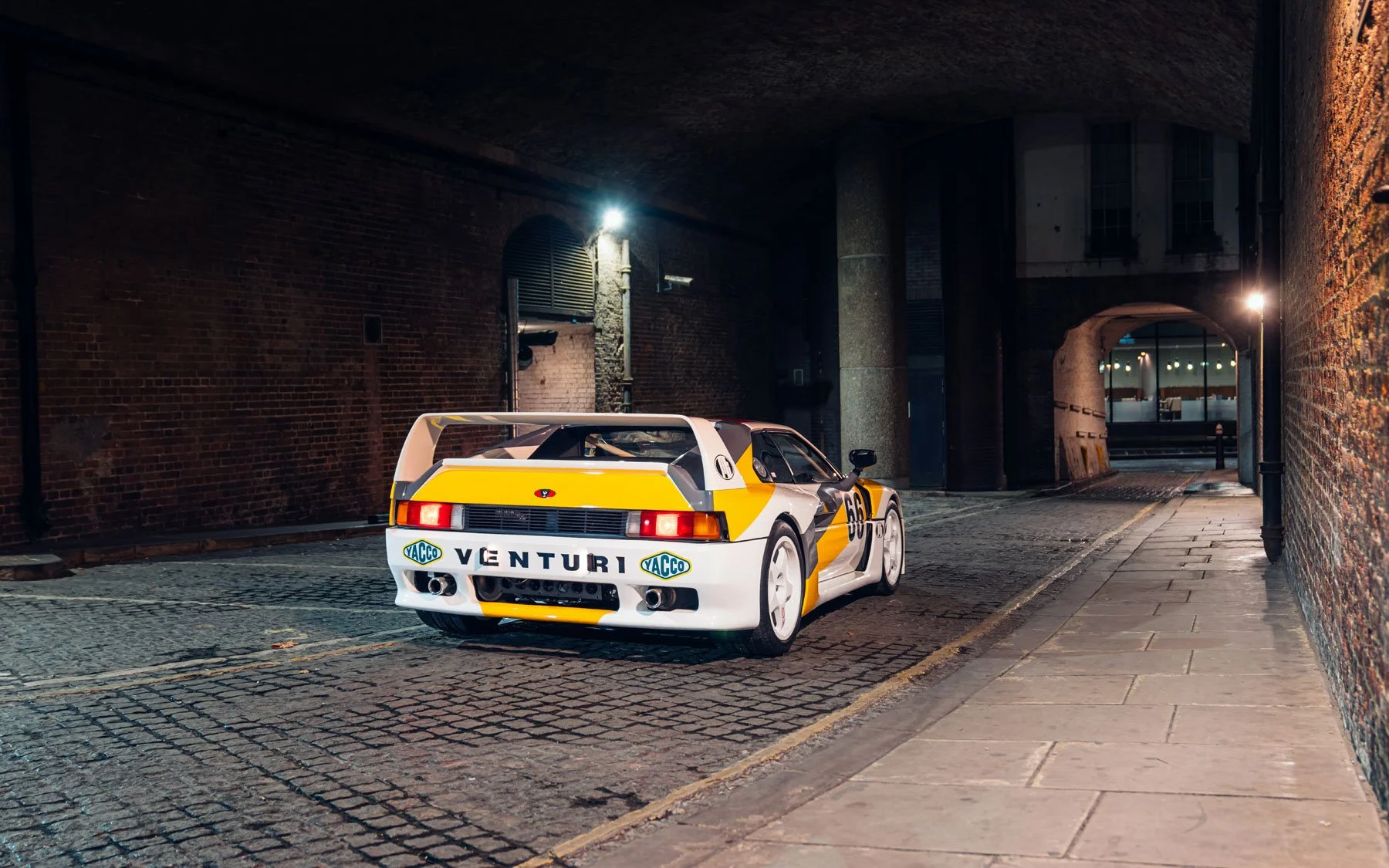
Seen through a modern lens, the Venturi 400 Trophy looks almost impossibly bold. It predates Porsche’s customer GT programs, foreshadows Ferrari’s track-focused special series, and embodies a level of risk that few manufacturers, even niche ones, would dare take today.
It also marks the beginning of the end.
The Trophy program was technically successful but financially ruinous. By the mid-1990s, Venturi was overstretched, and ownership would eventually change hands again. The marque’s later evolution, ultimately becoming an electric racing and road car specialist, makes the 400 Trophy feel like a message from an entirely different universe.
Chassis 0066 stands as a reminder of what happens when optimism, engineering talent, and competitive fire briefly align. The Venturi 400 Trophy was never meant to be safe, sensible, or eternal. It was meant to be fast, fast enough to make Ferrari nervous and to prove that France could build a no-excuses supercar.
Three decades later, that defiance still radiates from every vent, every squared-off fender, every spool-happy surge of boost. In an era of increasingly sanitized performance, the 400 Trophy remains thrillingly, gloriously unfiltered.

