
Serious Sleeper
911-Powered Joest Porsche B36
STORY | Rhys Haydon
Photography | Stephen Mitchell
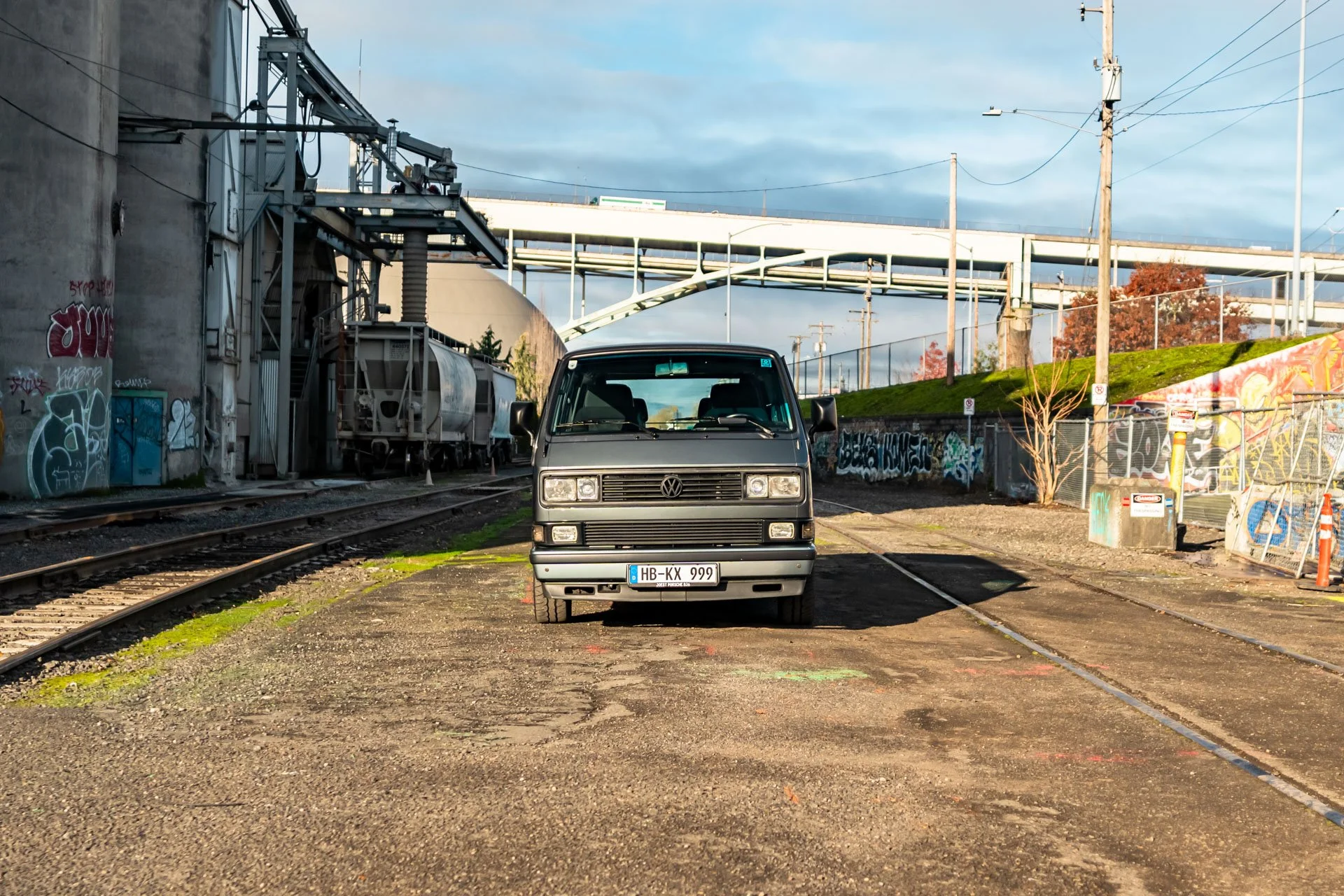
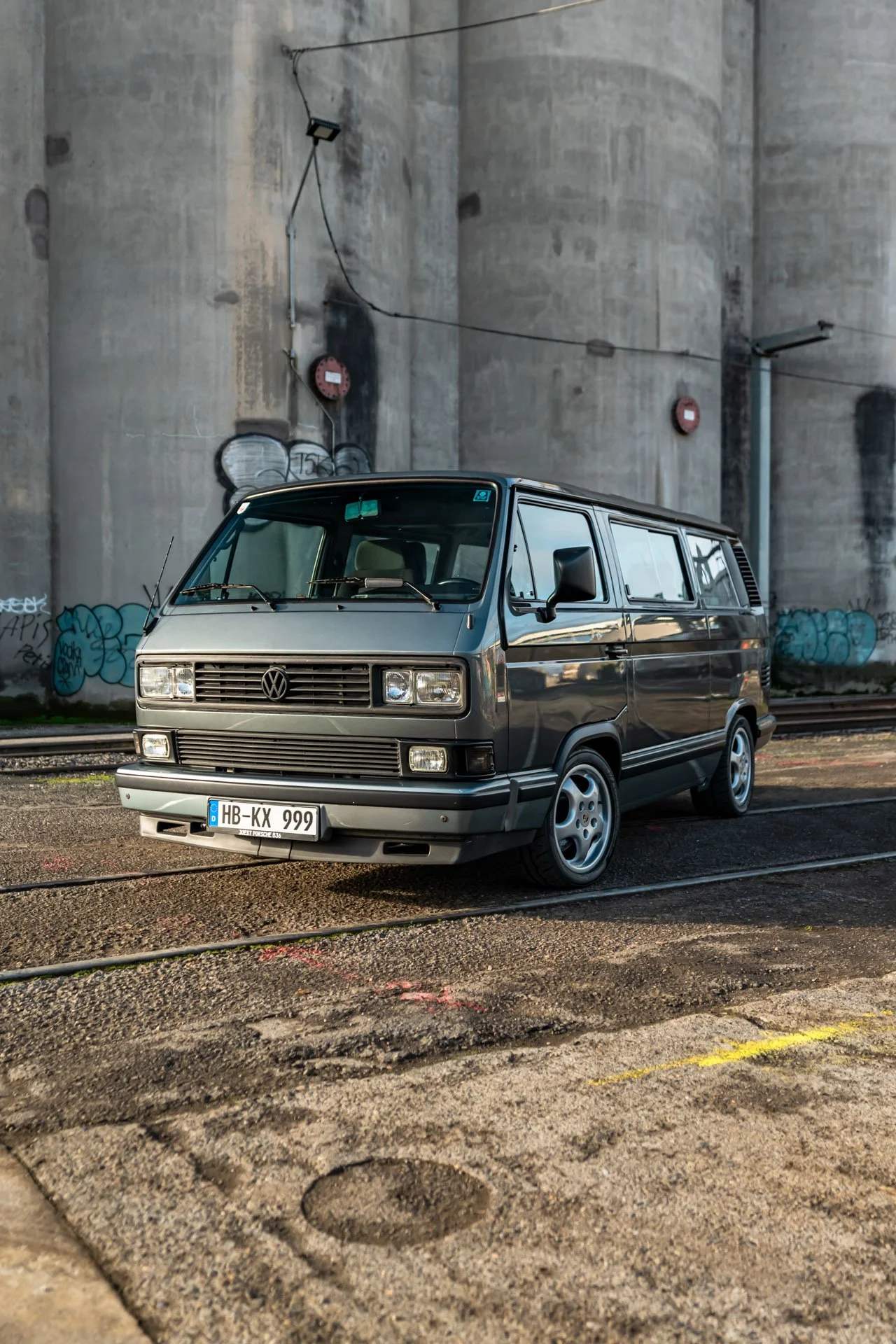
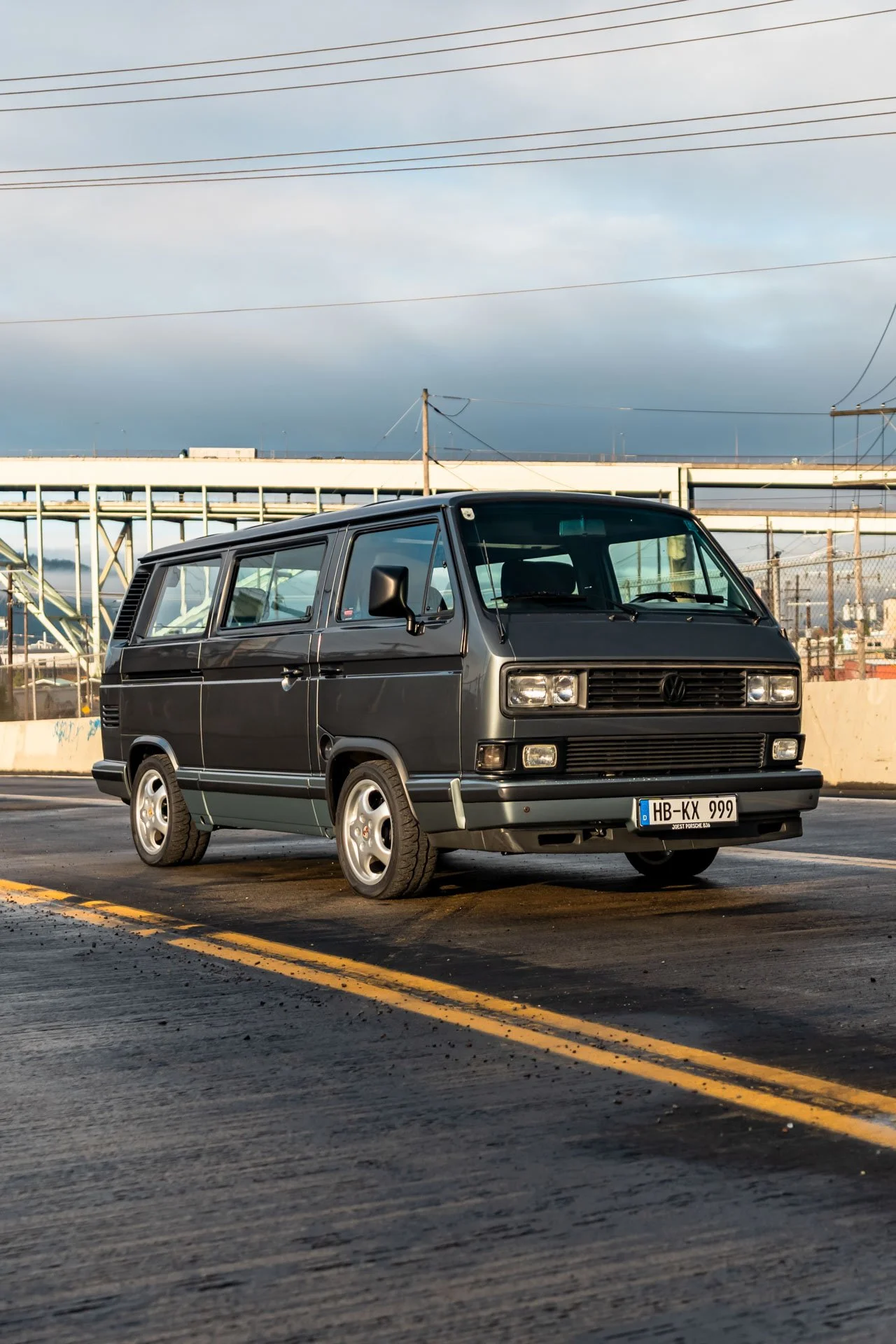
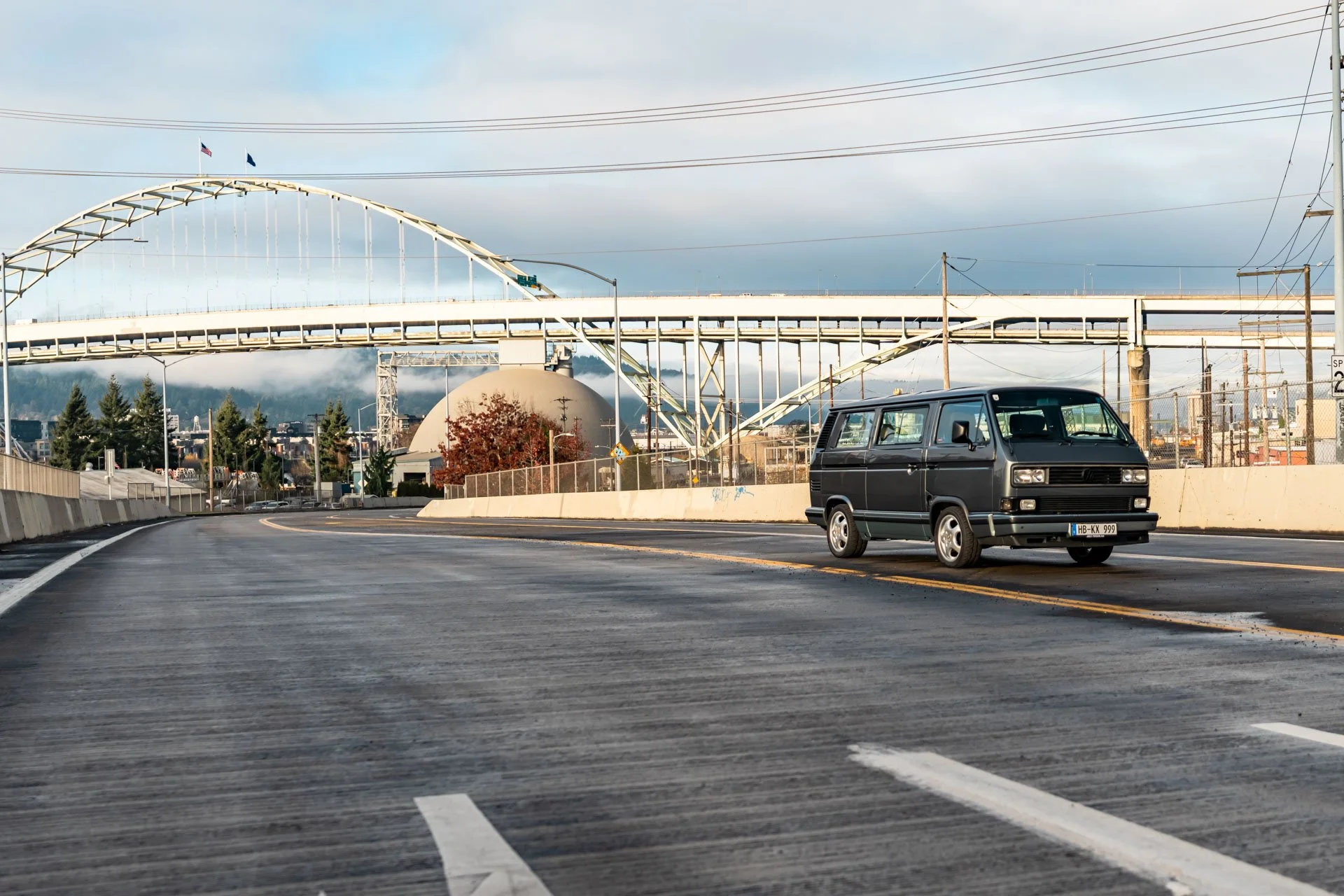
Long before “sleeper builds” became a trend, race driver Louis Krages and team owner Reinhold Joest created something that didn’t make sense on paper — a one-off vehicle combining an unassuming Volkswagen Vanagon shell with true Porsche performance DNA.
Not as a concept. Not as a prototype. Just because they could.
Its origin — and how it eventually found its way to the Pacific Northwest — is less about coincidence and more about what happens when a team that has already won at the highest level decides to build something for itself.
Unlikely PArtners
Krages wasn’t supposed to be a race car driver. Born into a prominent German family rooted in the lumber industry, his path seemed set — until he chose speed over expectation, even racing under the alias “John Winter” to keep it from his family, mainly his mother.
The alias didn’t last. Talent rarely stays hidden.
Krages aligned himself with Joest Racing, one of the most successful privateer teams in endurance racing. Led by Reinhold Joest, the team had already built a reputation at Le Mans, competing as early as 1968 in a Ford GT40 and earning a podium in 1971 in a Porsche 908.
Krages initially leveraged his personal wealth to earn a seat in Joest Racing’s Porsche 956 — a Group C prototype powered by a turbocharged flat-six. By 1985, alongside Klaus Ludwig and Paolo Barilla, he won the 24 Hours of Le Mans outright in the Joest Racing #7 956B.
His cover story was gone, but so was any doubt. His mother came around, and Krages went on to a long career in endurance racing. In 1991, Joest Racing added another milestone: overall victory at the 24 Hours of Daytona. After Daytona, they built something entirely different.
A Fun Off-Season Project
Racing seasons end. Even at the highest level, there are quieter months between campaigns.
For Joest Racing, those months came with an unusual advantage. As a registered manufacturer in Germany, the team could assign its own VIN numbers — as long as it built the vehicle.
After their Daytona win in 1991, Joest and Krages decided to build something for themselves. Not another race car. Not a road-going 911. Instead, they built a Porsche-powered van.
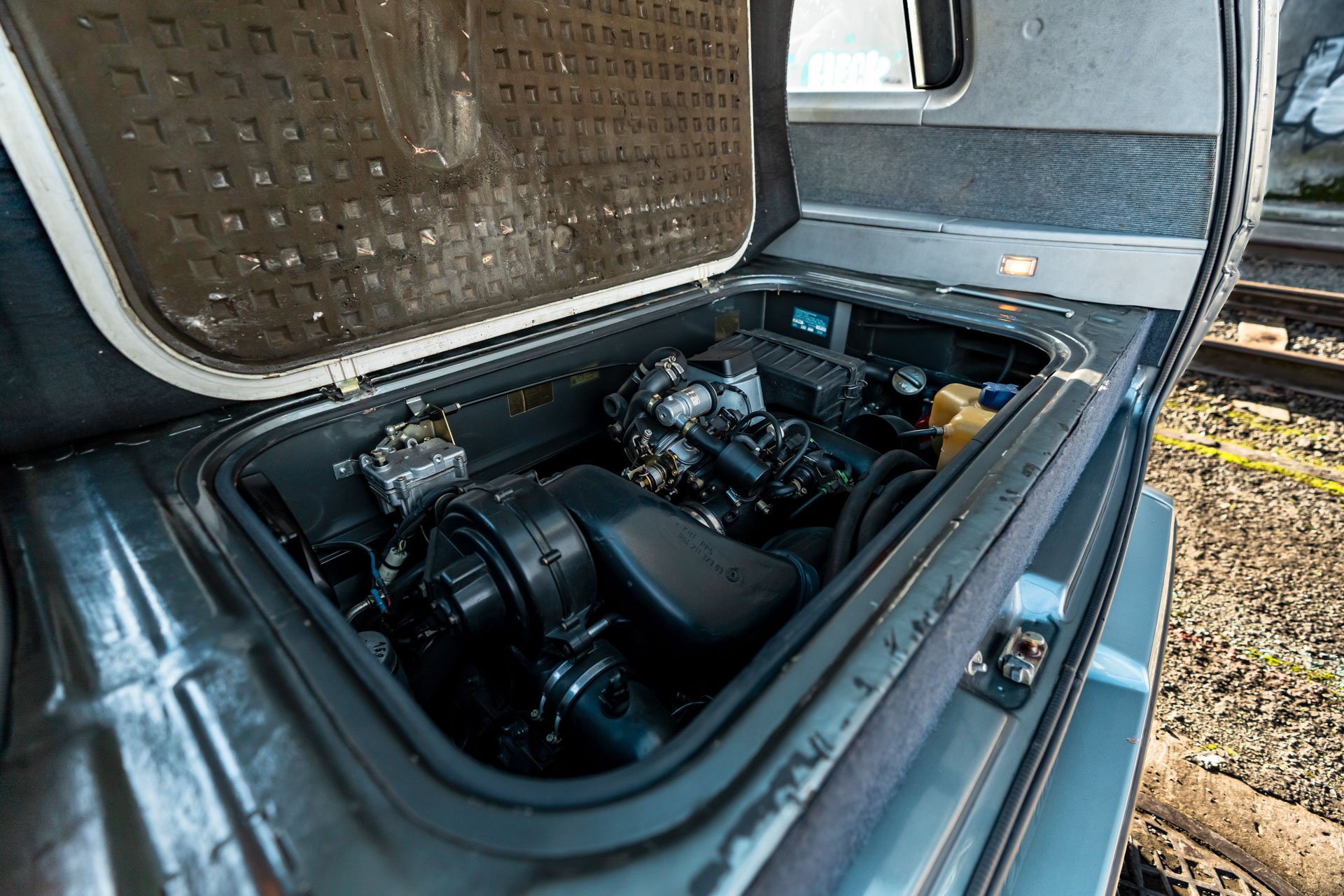
The sharp van historian might point to Porsche’s earlier B32 — built in 1984 using a 3.2-liter 911 engine and 915 gearbox, with fewer than 20 examples believed to exist. Joest Racing took the idea further.
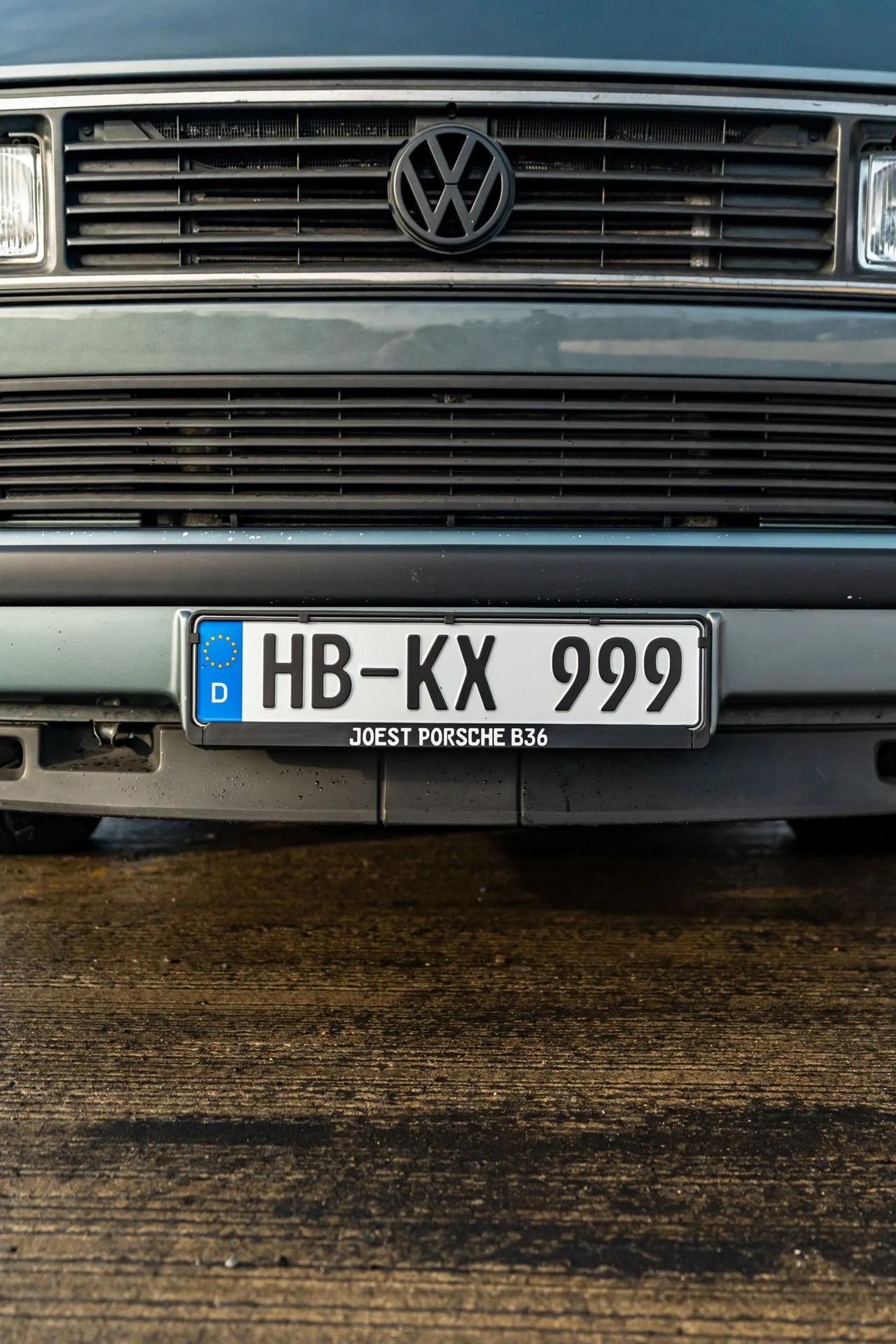
BUILDING THE JOEST PORSCHE B36
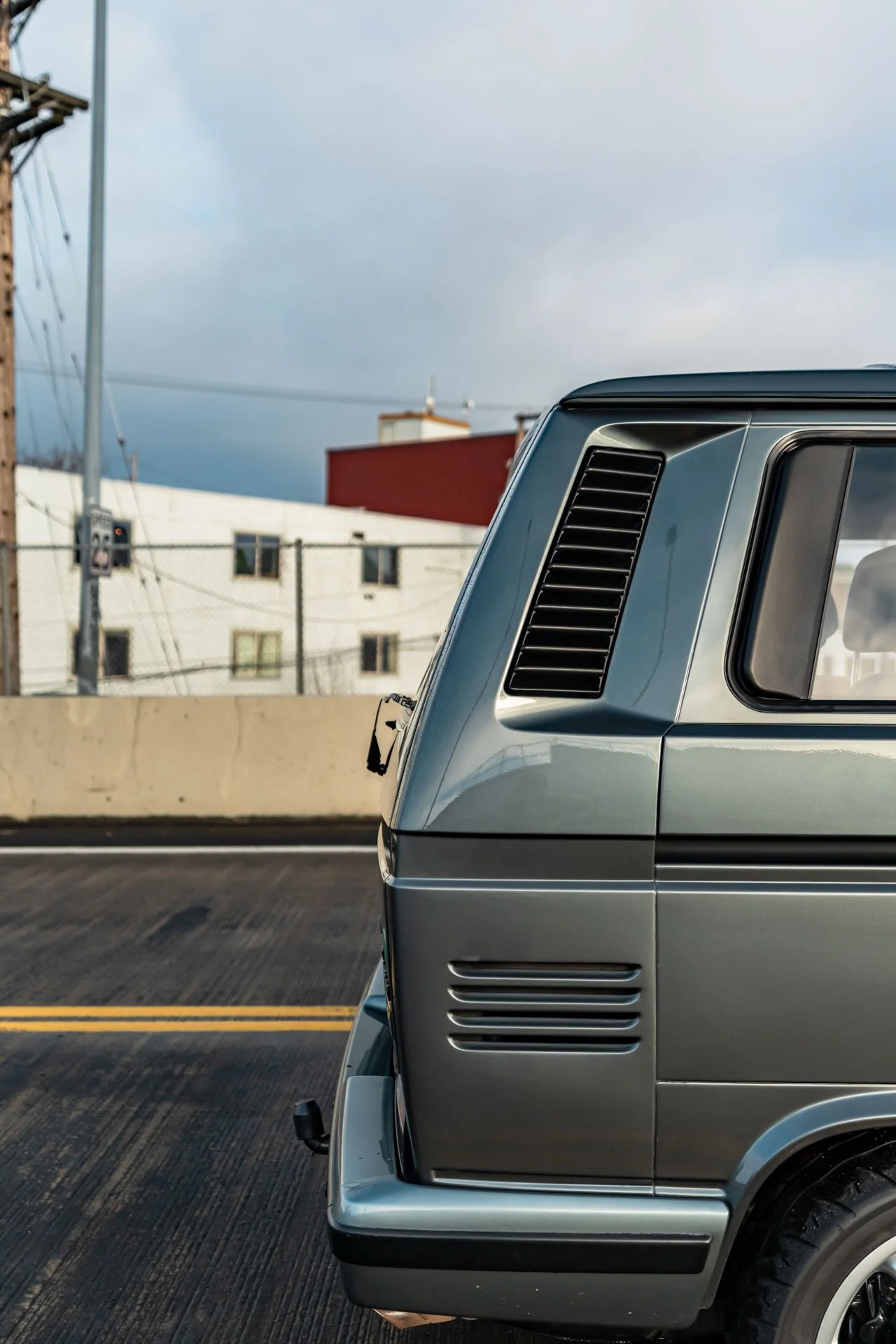
Starting with a T3 Vanagon Carat — the top-of-the-line model — the project evolved over two years into something far removed from its origins.
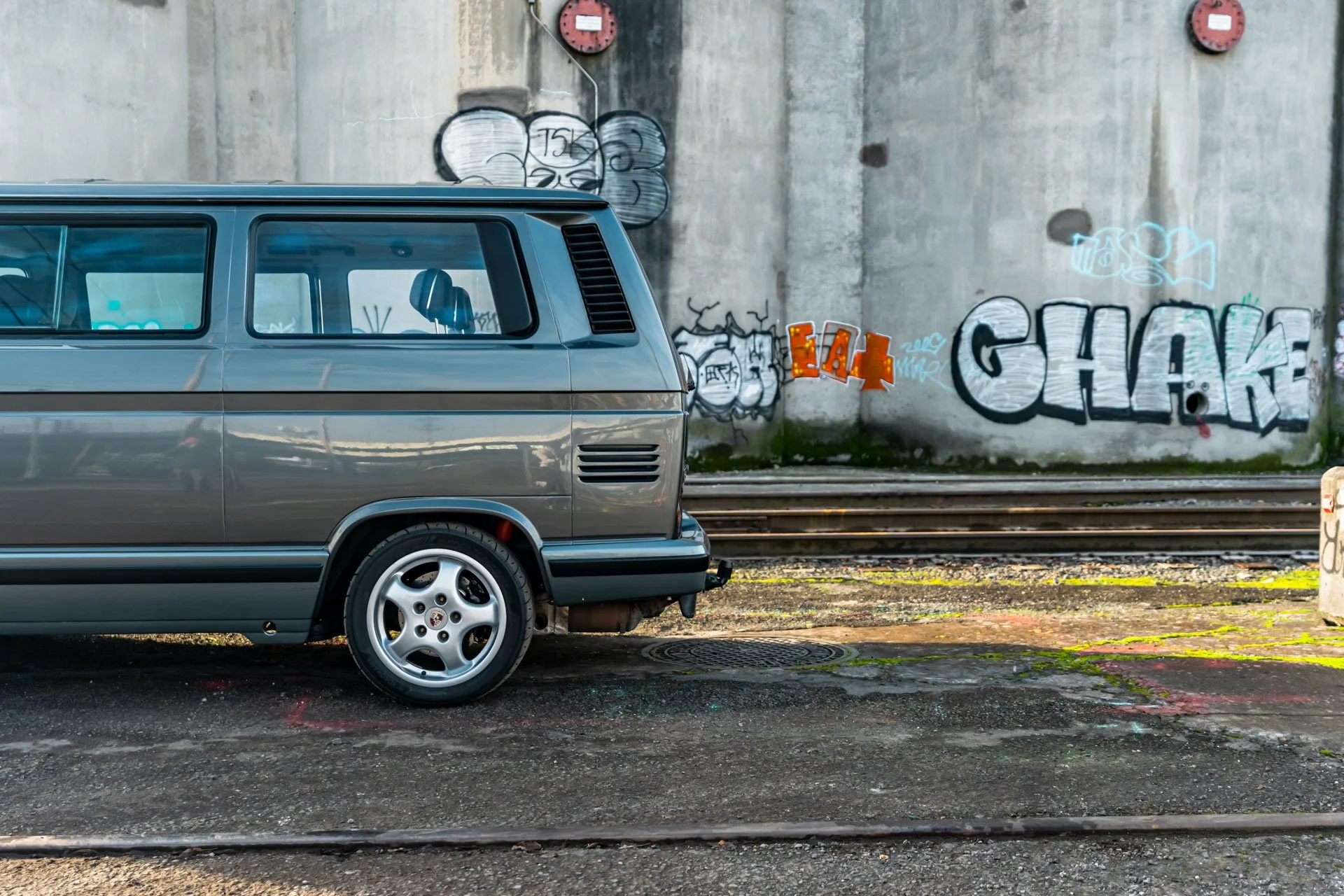
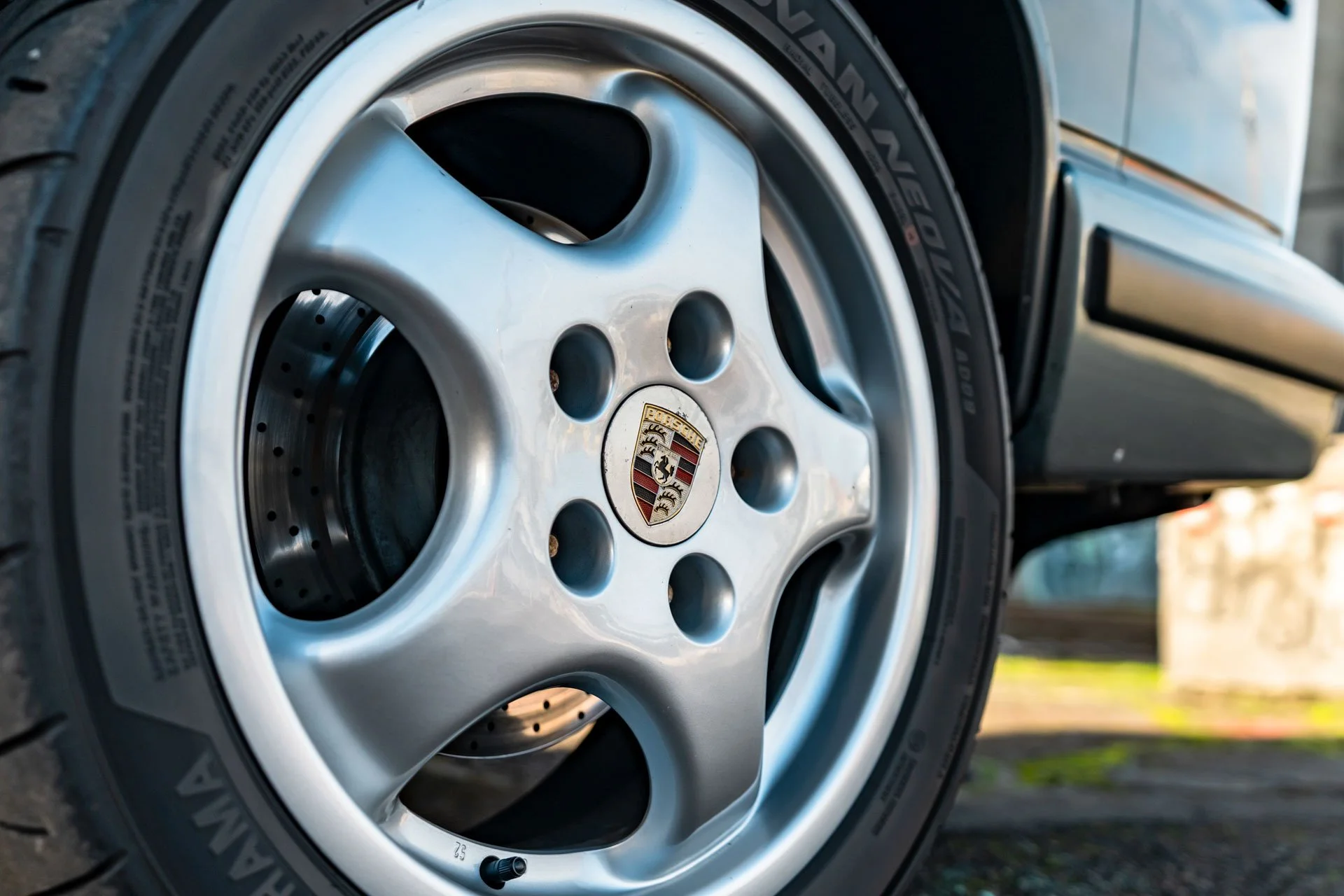
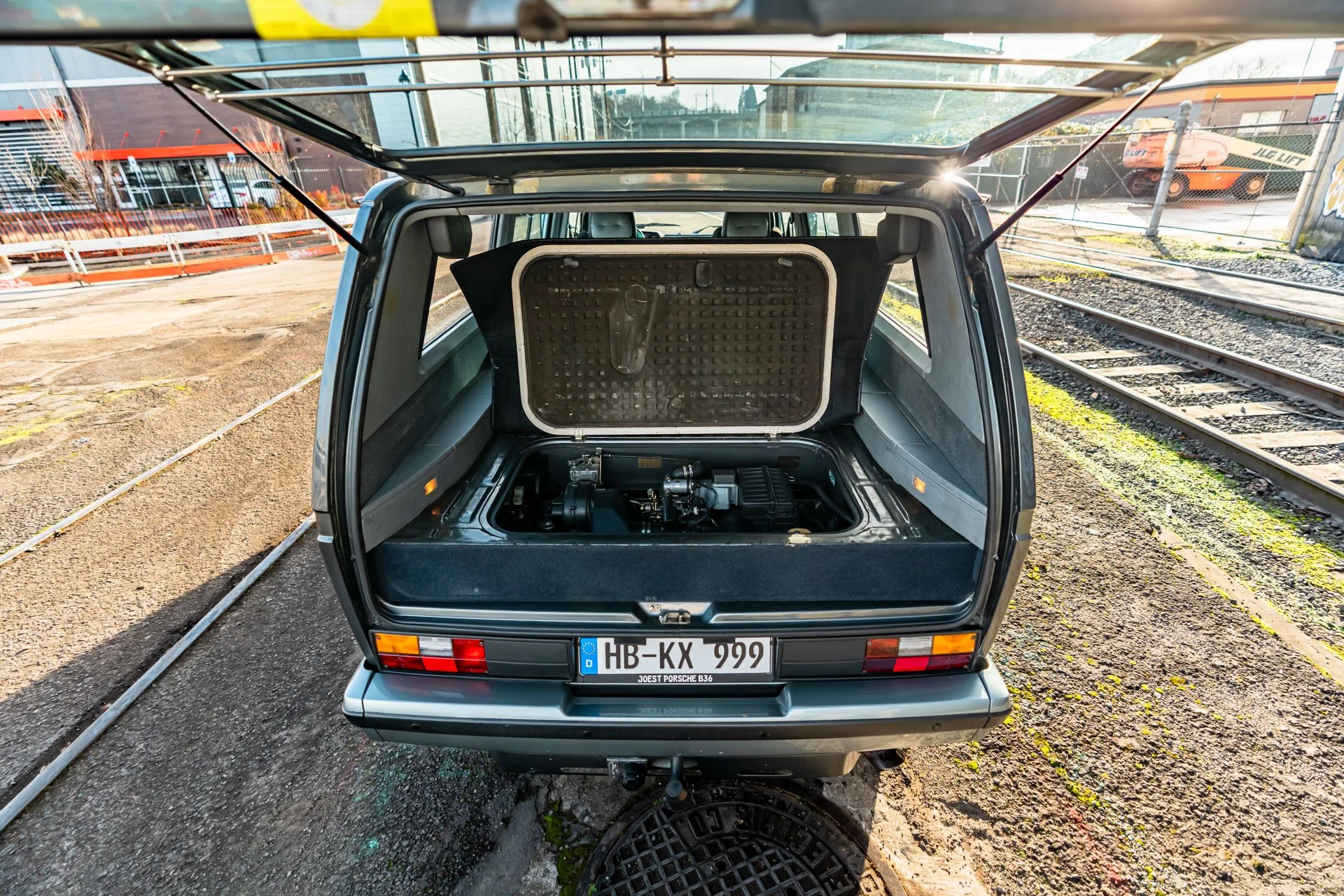
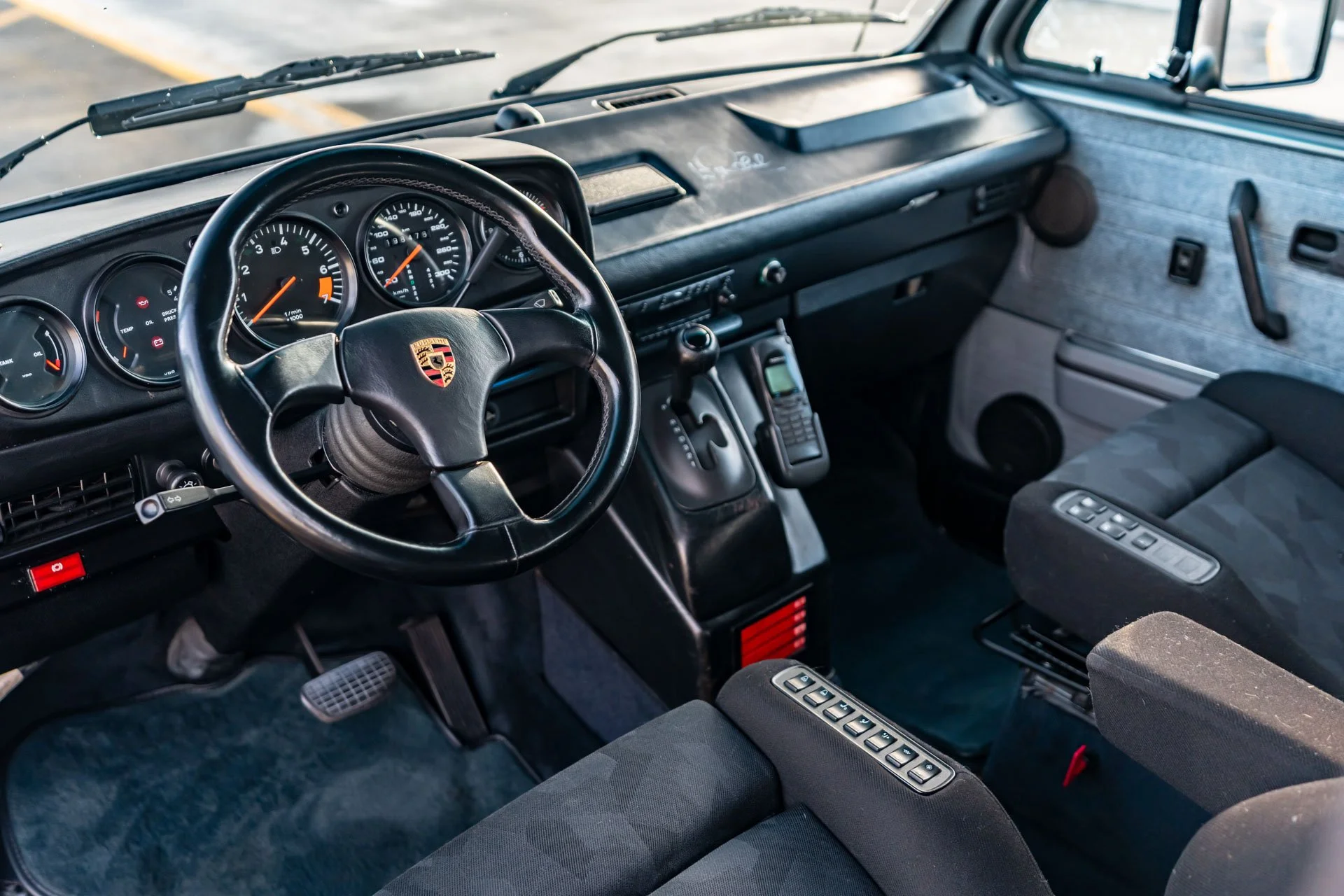
The original 2.1-liter flat-four was replaced with a 3.6-liter 964 flat-six, paired with a Tiptronic transmission. Suspension and handling components were reworked entirely, while braking came from a 993.
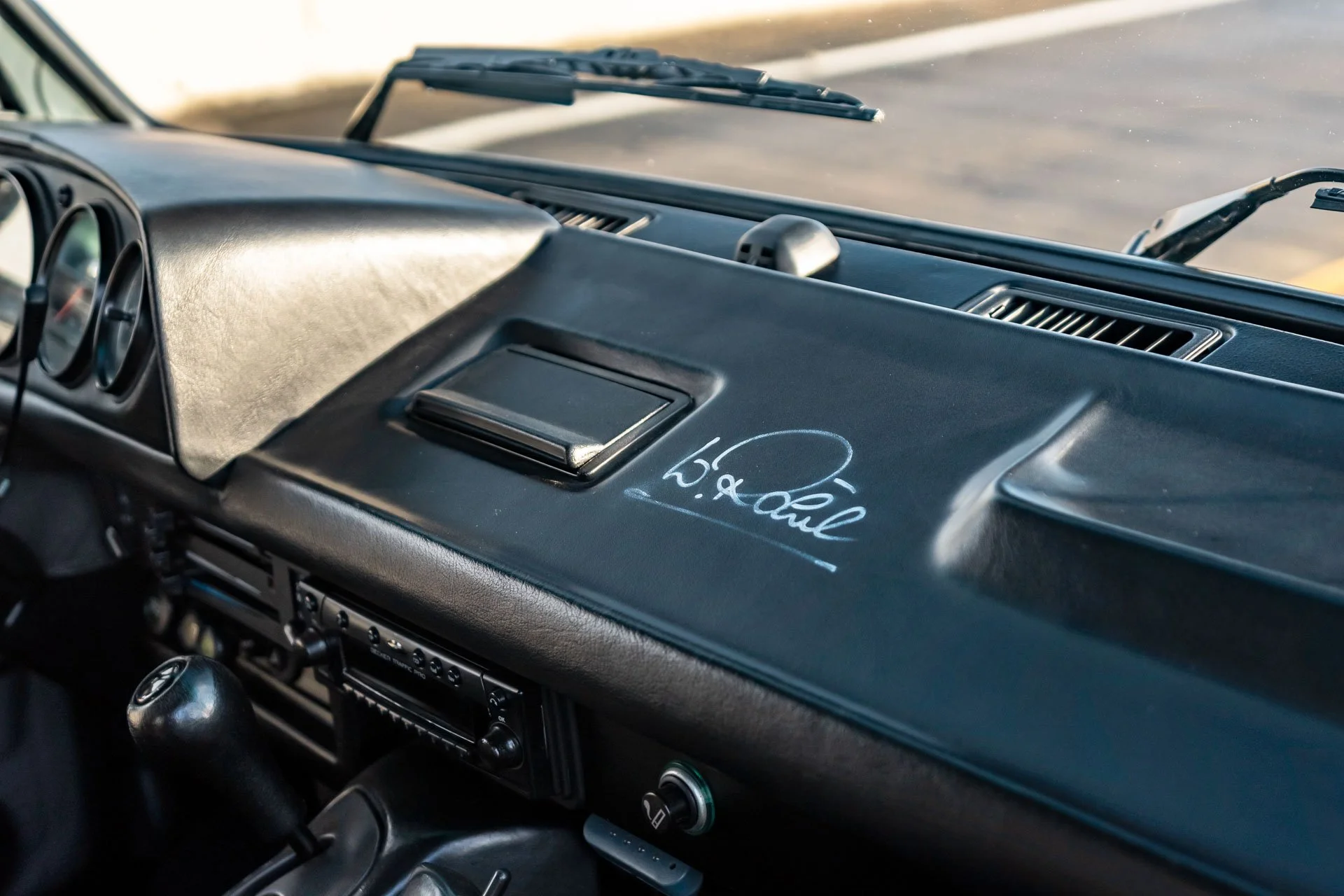
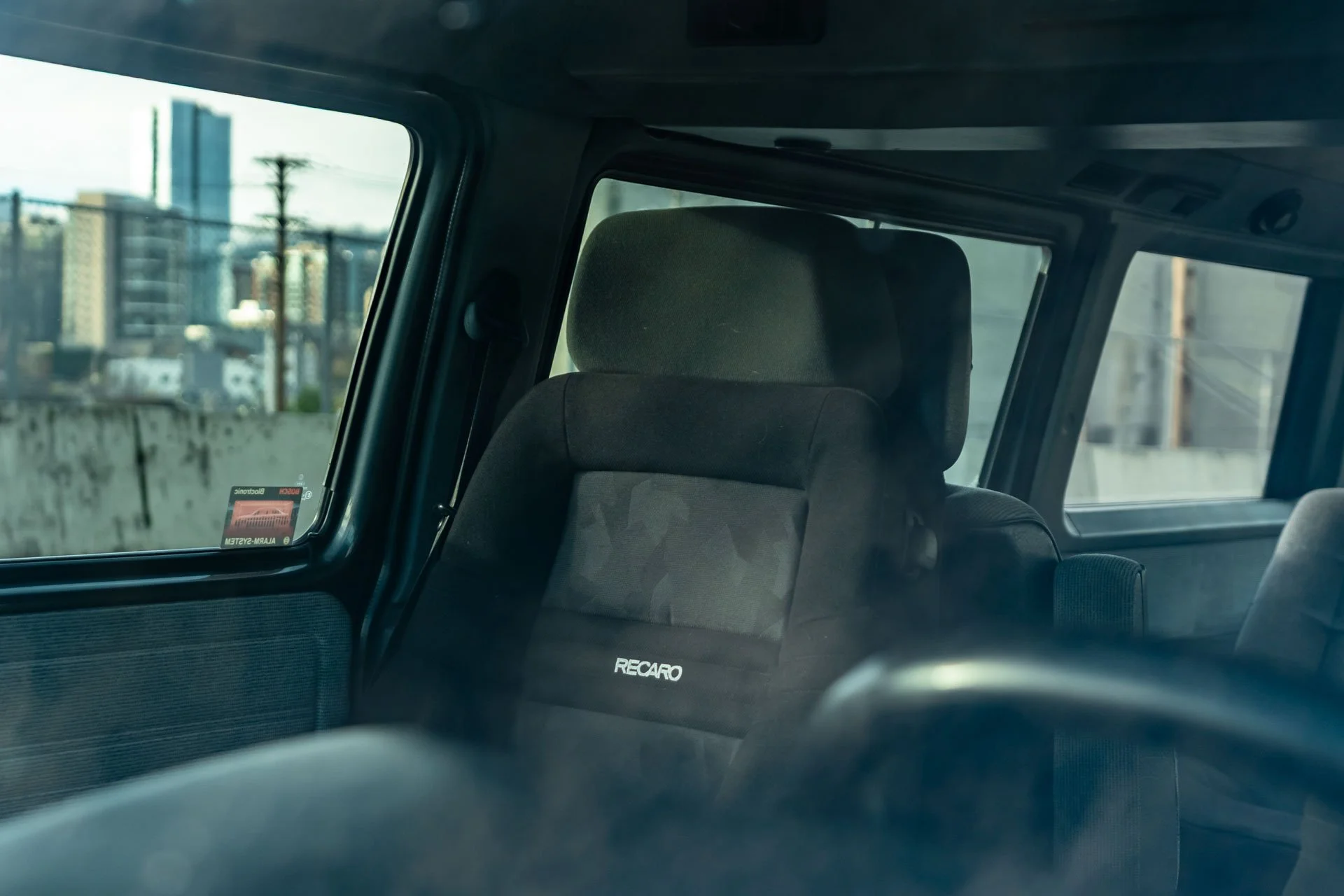
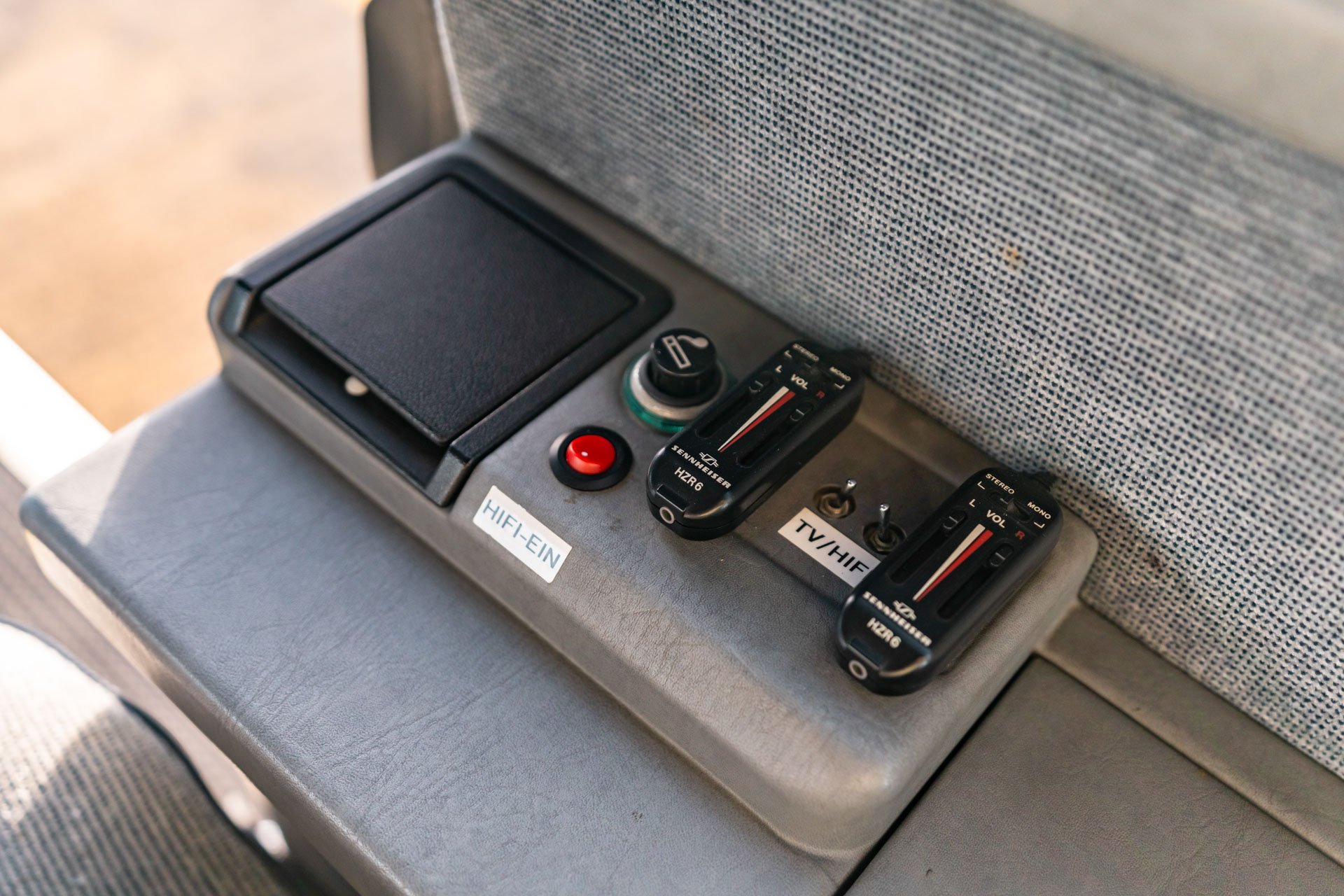
Inside, the transformation is even more complete. A 964 five-gauge cluster sits ahead of the driver, surrounded by a fully re-trimmed blue leather interior. The dashboard, switchgear, and overall fit and finish align far more closely with Porsche than Volkswagen.
It doesn’t suggest a 911 — it borrows directly from one. Completed in 1993, the van was given a VIN as deliberate as the build itself: 962129JR001. 962 references the 962-129 race car, JR stands for Joest Racing, and 001 marks the first — and only — example
THE JOEST PORSCHE B36 COMES TO AMERICA
Krages used the van as intended, driving it on unrestricted German highways. Over time, it passed through several owners before appearing on the radar of van specialist Eric Didier in 2023.
From his home in Portland, Oregon, Eric traveled to Austria to see it in person. The language barrier was real — the buyer’s Austrian German is limited, the owner’s English nonexistent — but the experience needed little translation.
On the test drive, the owner accelerated hard, pushing the van beyond 200 km/h before braking into a gas station.
“It feels familiar,” Eric recalls. “Not just fast—but everything about it. The way it smells, the way it builds speed… it’s pure 911, just in the wrong shape.”
That contradiction stayed with him. Not just the speed, but the intent behind it — something built without a requirement, without compromise, and with no need to exist beyond the satisfaction of creating it.
A banking holiday complicated the purchase, but the deal went through. The van made its way to the Pacific Northwest, where it now appears at enthusiast events, including Porsche’s Air|Water show, displayed among far more obvious exotics.
Even there, it’s easy to miss. And that’s the point. Because this isn’t just a modified Volkswagen.
It’s what happens when a team operating at the highest level of endurance racing decides to build something unnecessary to anyone else — something personal — at a moment when they had already proven everything that mattered on track.
The Joest Porsche B36 exists for no reason other than that they could build it. And that might be the most compelling part of all.

