
The Road Less Traveled
How French Cars Became Pioneering Misfits
STORY & Photography | VIJAY SANKAR ANIL
For the better part of the last century, French cars pushed the frontiers of innovation in industrial design, engineering, and styling. Their efforts were often labeled offbeat and risky, and rightly so, resulting in a slew of cars that were highly distinguished from the rest of the automotive world. A surprising number of automotive technologies that are ubiquitous today were either introduced or early adopted by the French.
With Citroën, the French showed the world a vision of the future that is infinitely optimistic and audacious. With Peugeot and Renault, they made joyful motoring affordable. With Alpine, they pursued purist motorsport glory. And with Bugatti, they set the high watermark for exclusive luxury and sophistication. In the present world populated by cookie-cutter, cost-optimized, badge-engineered, and platform-shared automobiles, it’s a breath of fresh air to glance back at the golden age of French automobiles. Equal parts fascinating and baffling, the avant-garde of French cars offer a treasure trove of details to obsess over.
Citroën and the Suspension of Disbelief
Automobiles Citroën was founded in 1919 by the exuberant businessman André Citroën, who established his products upon the pillars of engineering and mass production. The twin chevron logo of Citroën is an homage to the double helical gear mechanism that the company produced and sold across Europe since 1902.
After supporting France during World War I, Citroën shifted efforts to building its first car, the Type A, which was heavily inspired in form and function by the Ford Model T. The Traction Avant unveiled in 1934 was so advanced for the time that it remained in production for more than two decades, debuting features like front-wheel drive and rack-and-pinion steering (1936) in a mass-produced passenger car. It was also an early adopter of independent suspension and monocoque chassis design. The later DS unveiled at the 1955 Paris Auto Show was the first to bring disc brakes and movable headlights that swiveled with the steering system to high-volume production cars. Since Michelin produced the radial tire and was part owner of Citroën, the innovative tires debuted on the 2CV in 1948. Looking at this era, no one moved the needle further in one single leap as Citroën. Since then Tesla and its Model S stand out as being in the same league of innovation.
Citroën acquired Maserati in 1968 with the objective of using Maserati’s engine technology to create an exotic GT car. The outcome was the SM unveiled in 1970, combining Citroën’s suspension wizardry with a 90-degree Maserati V6 engine by Alfieri and an aerodynamically slippery body penned by chief designer Robert Opron. The SM packed all the tech from the DS, and a great deal more.
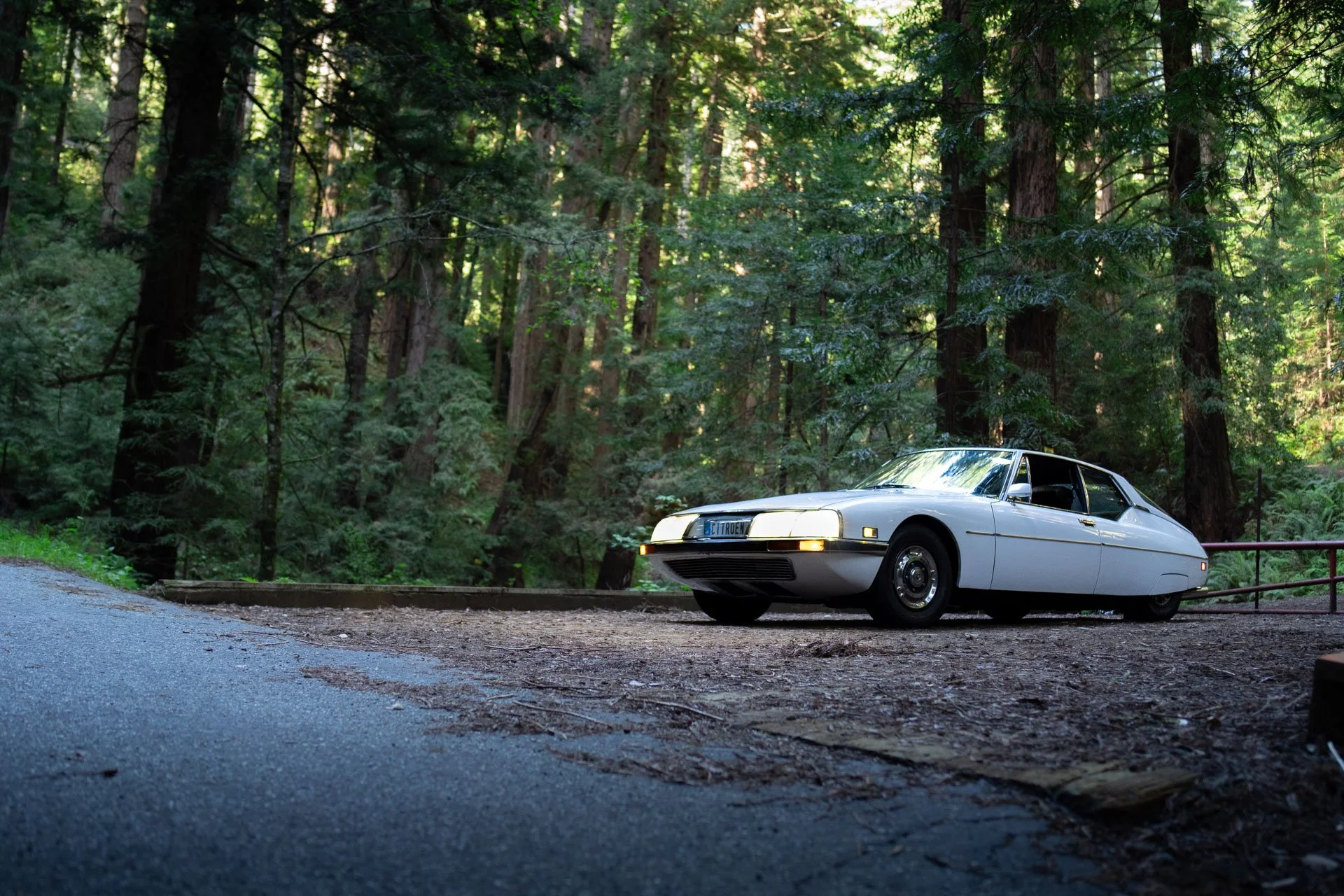
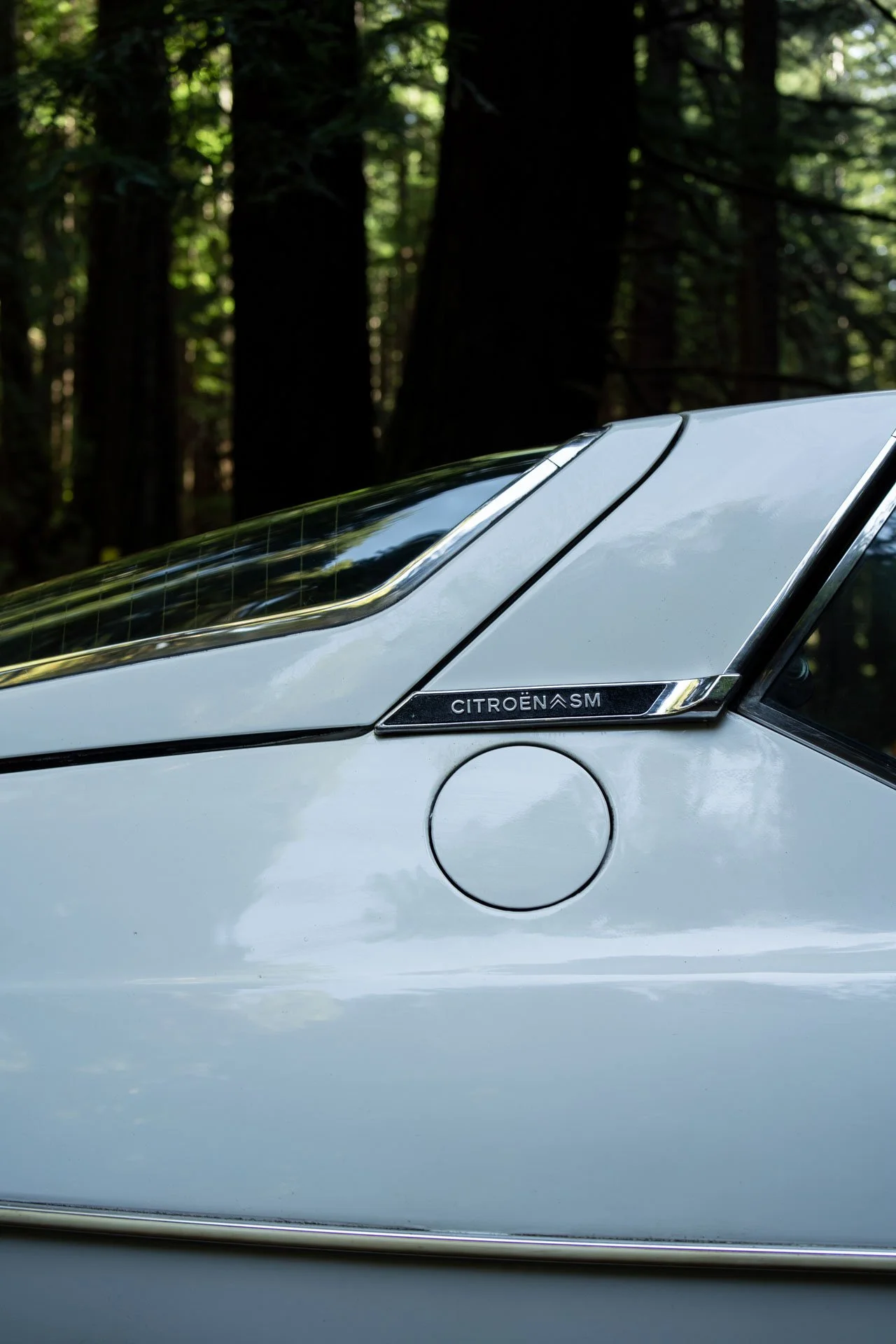
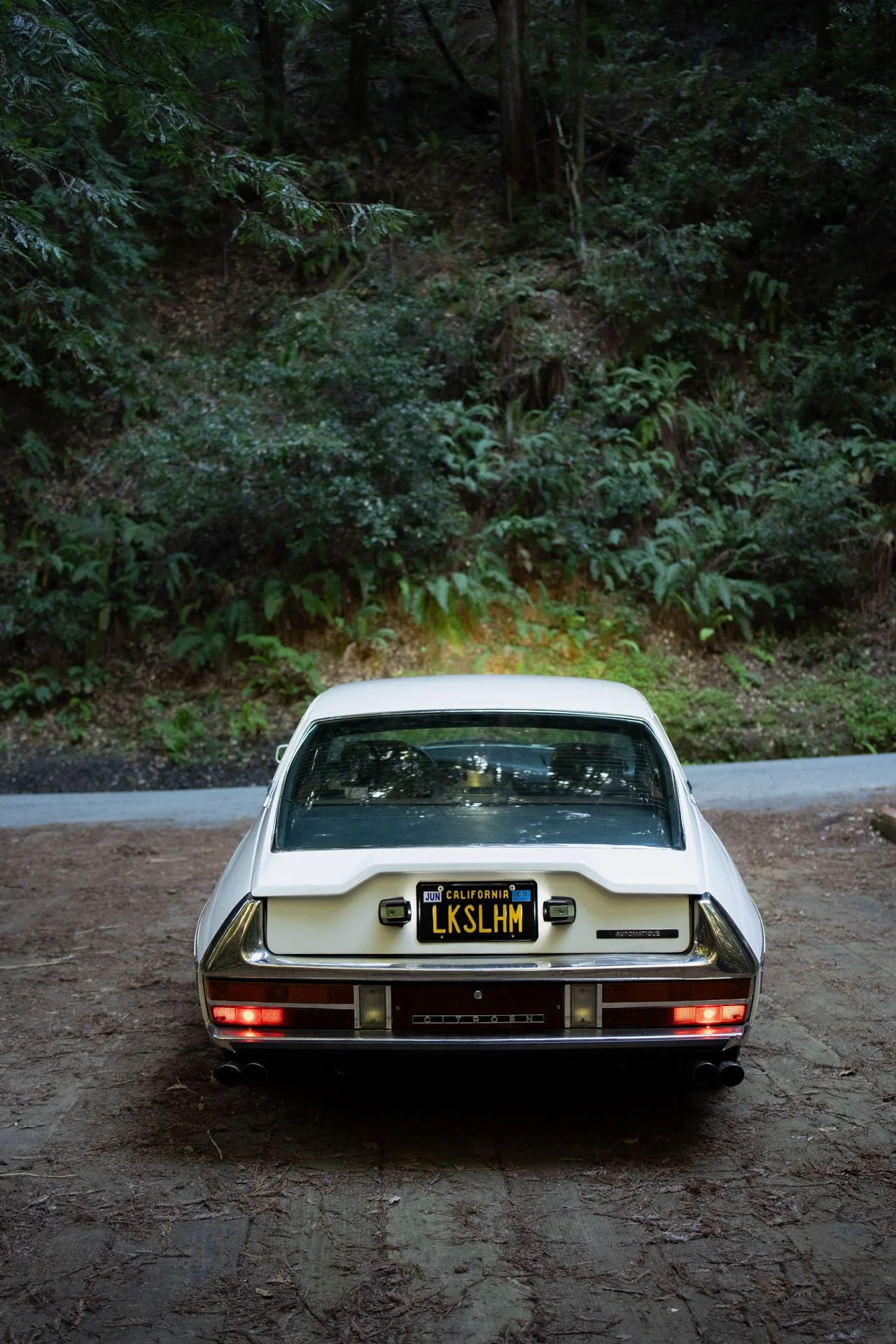
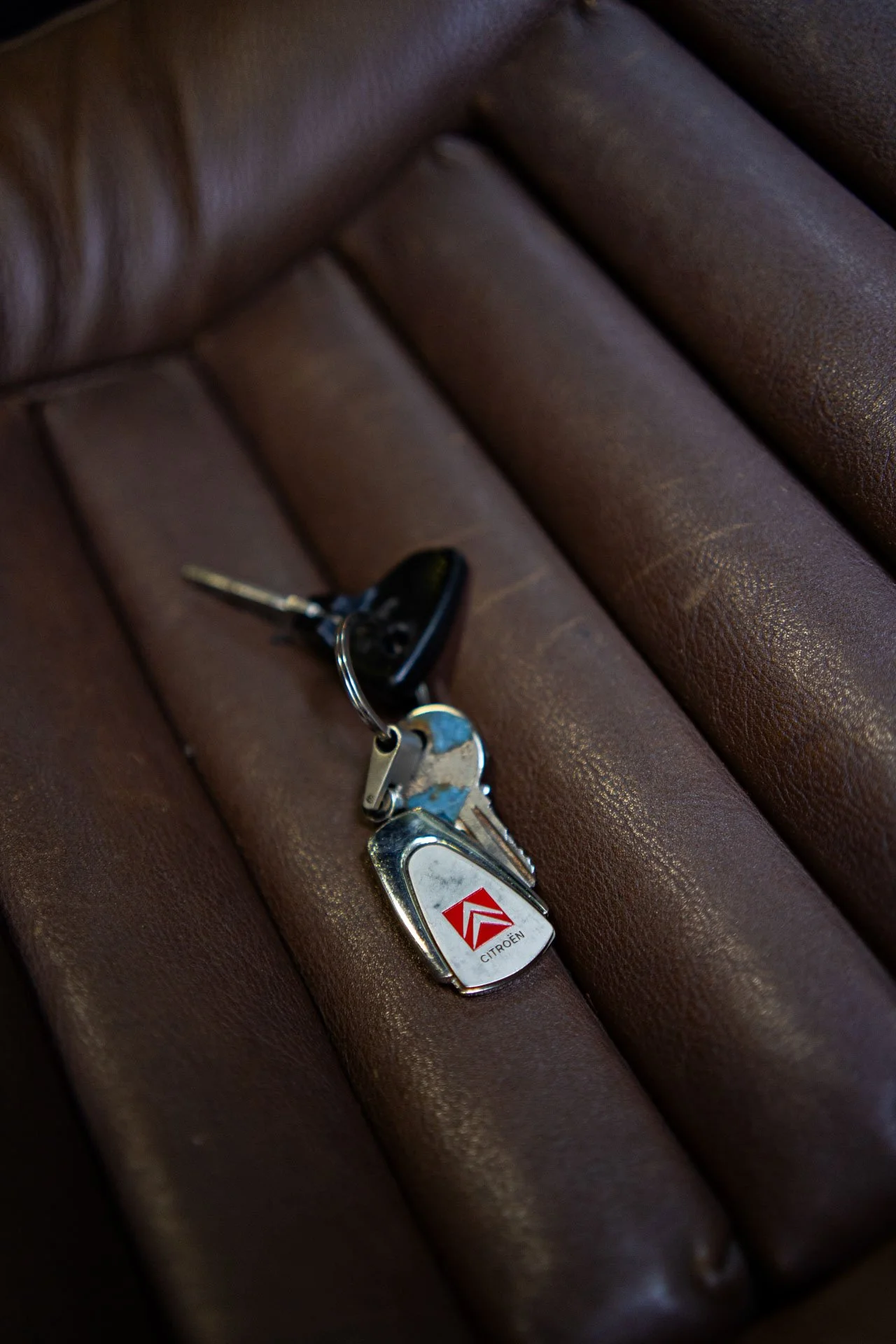
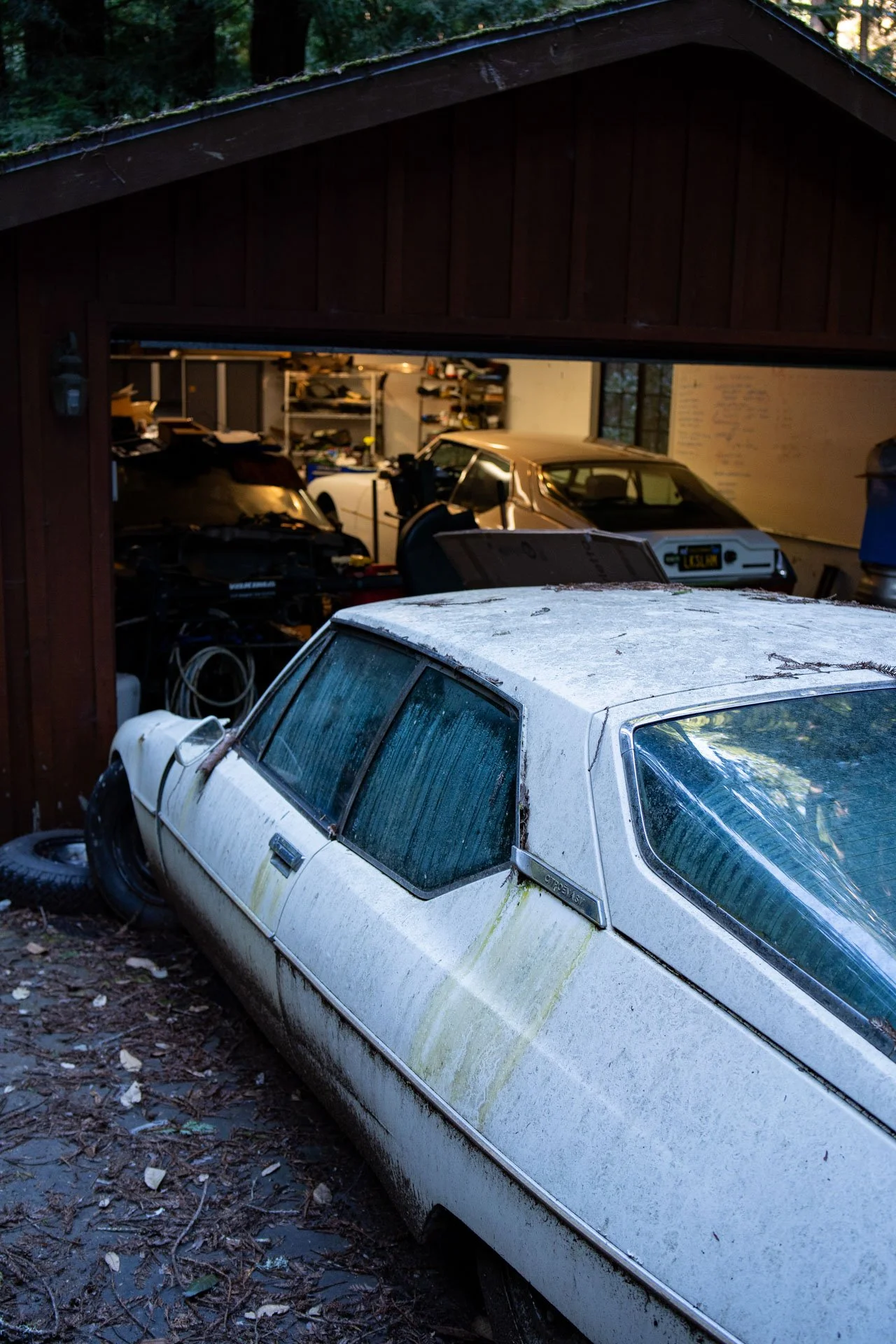
Frank Havlak’s 1972 Citroën SM
Frank’s car featured here is a 1972 model with the automatic swapped out for a manual gearbox. He is truly hands-on with the car, and appreciates every nerdy detail. When asked about previous owners of his SM, Frank jokes, “I’m unaware of notable previous ownership, but rest assured everyone before me was weird in some way.”
The famous party trick of the SM is the self-leveling hydro-pneumatic suspension, which Frank was eager to demonstrate in action. The established knowledge of the day stated that a supple ride quality cannot go hand in hand with good handling. The inventor of Citroën’s new-fangled suspension, Paul Magès, begged to differ. Interestingly, he may never have solved this conundrum, had he received better technical training. Magès kept a copy of this famous quote on his desk, “Everyone thought it was impossible, except an idiot who did not know, and who created it.”
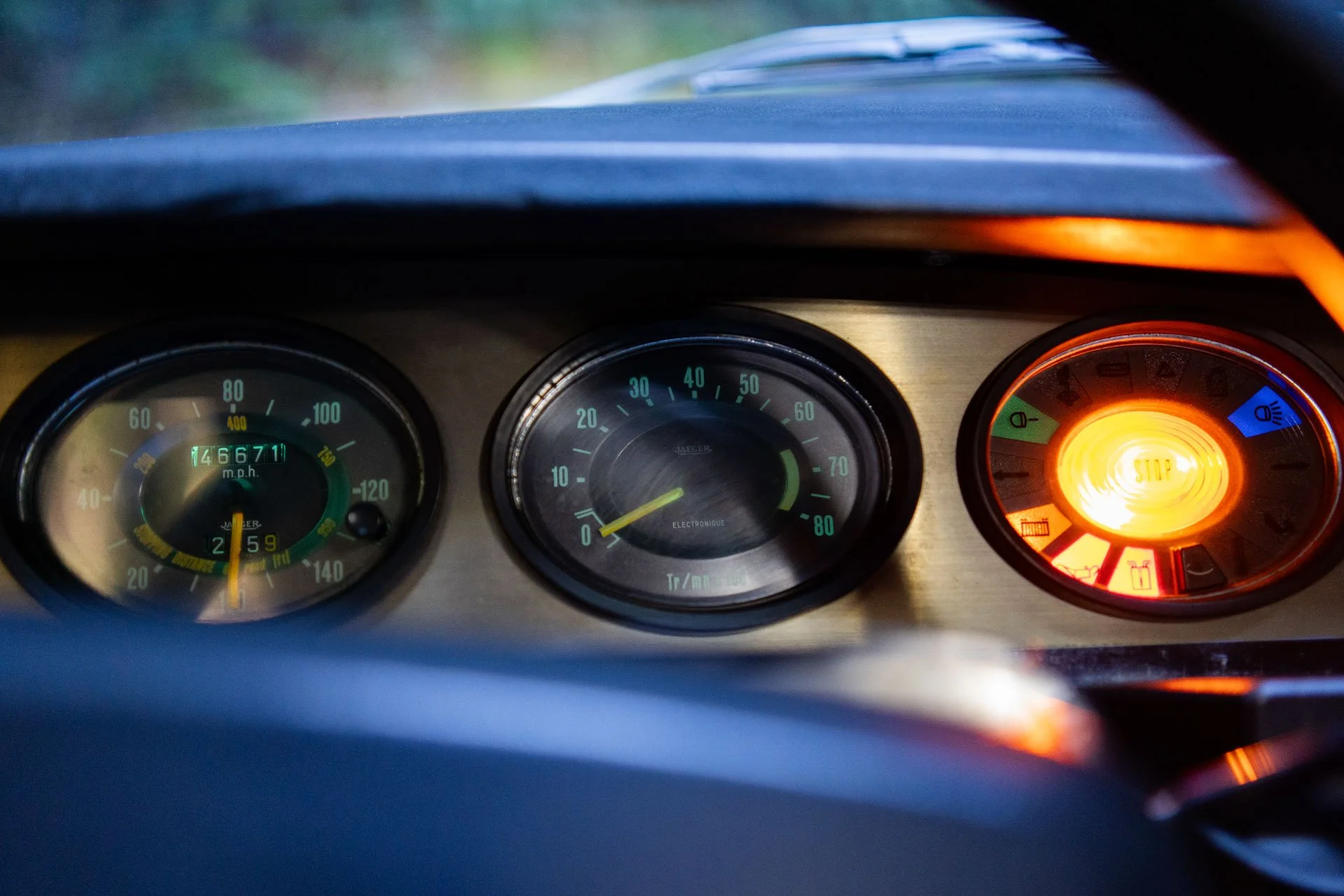
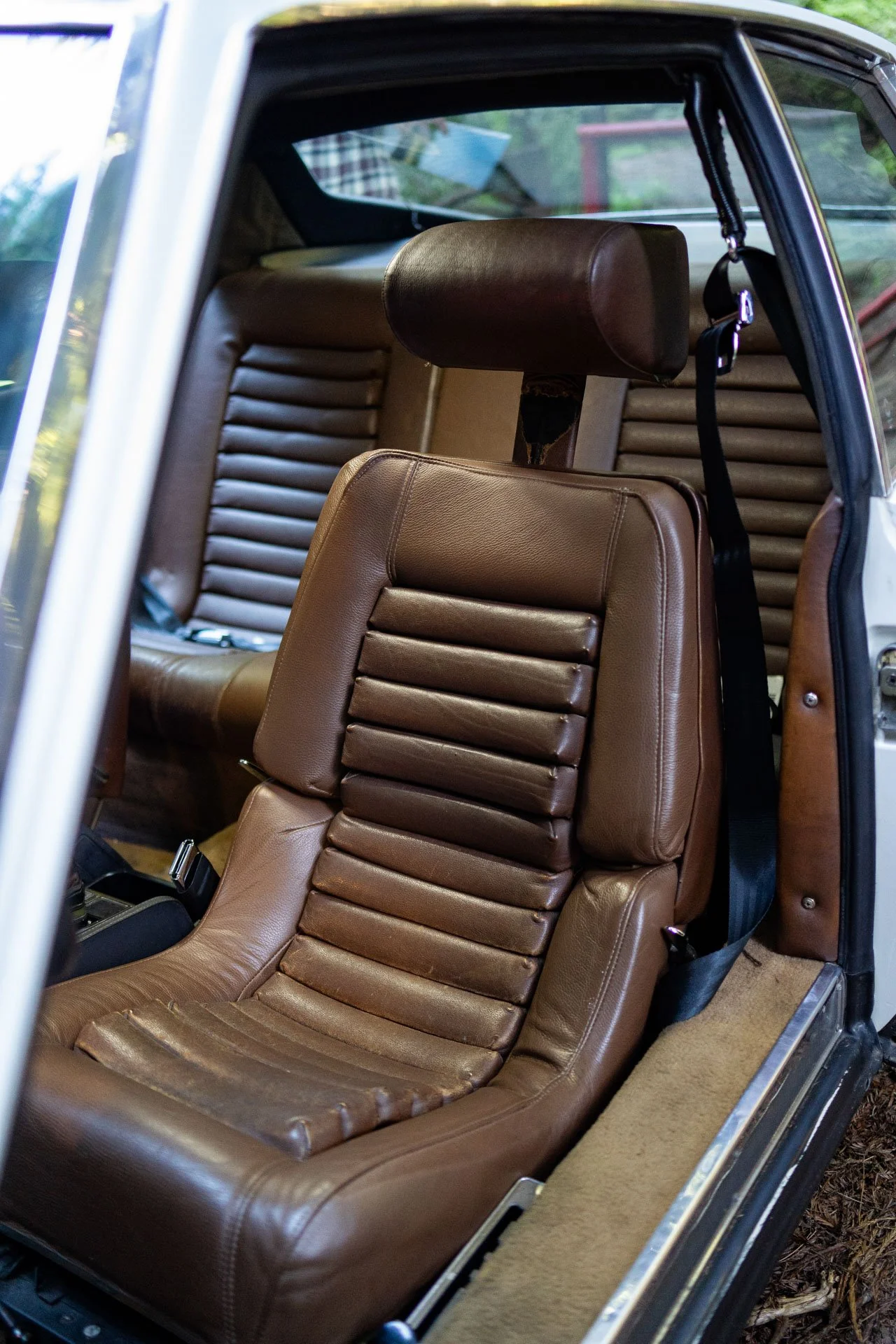
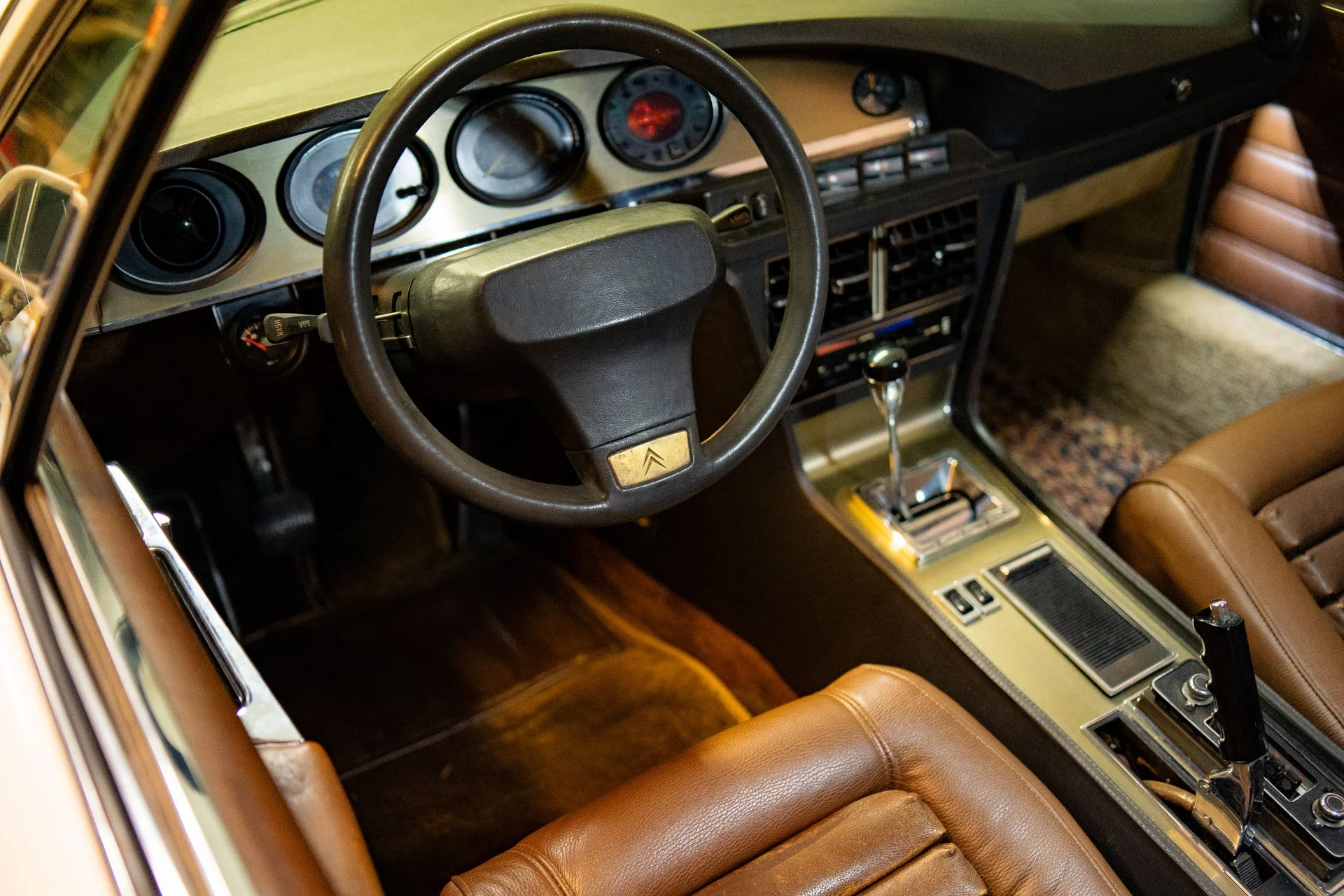
Inside the otherworldly body of the SM, the aura is airy, delicate, and calm, with a center console that smacks of Art Deco. The seats are essentially lounge chairs laid across the cabin, and the control efforts are light. On the left of the driver’s seat is a lever for raising and lowering the static setting of the suspension. The car floats so smoothly over imperfections of the pavement, it’s uncanny. Citroën is perhaps the only marque that truly deserves the claim ‘magic carpet ride.’ This car compels you to find the prettiest route, and waft along, enjoying the scenery in exquisite comfort.
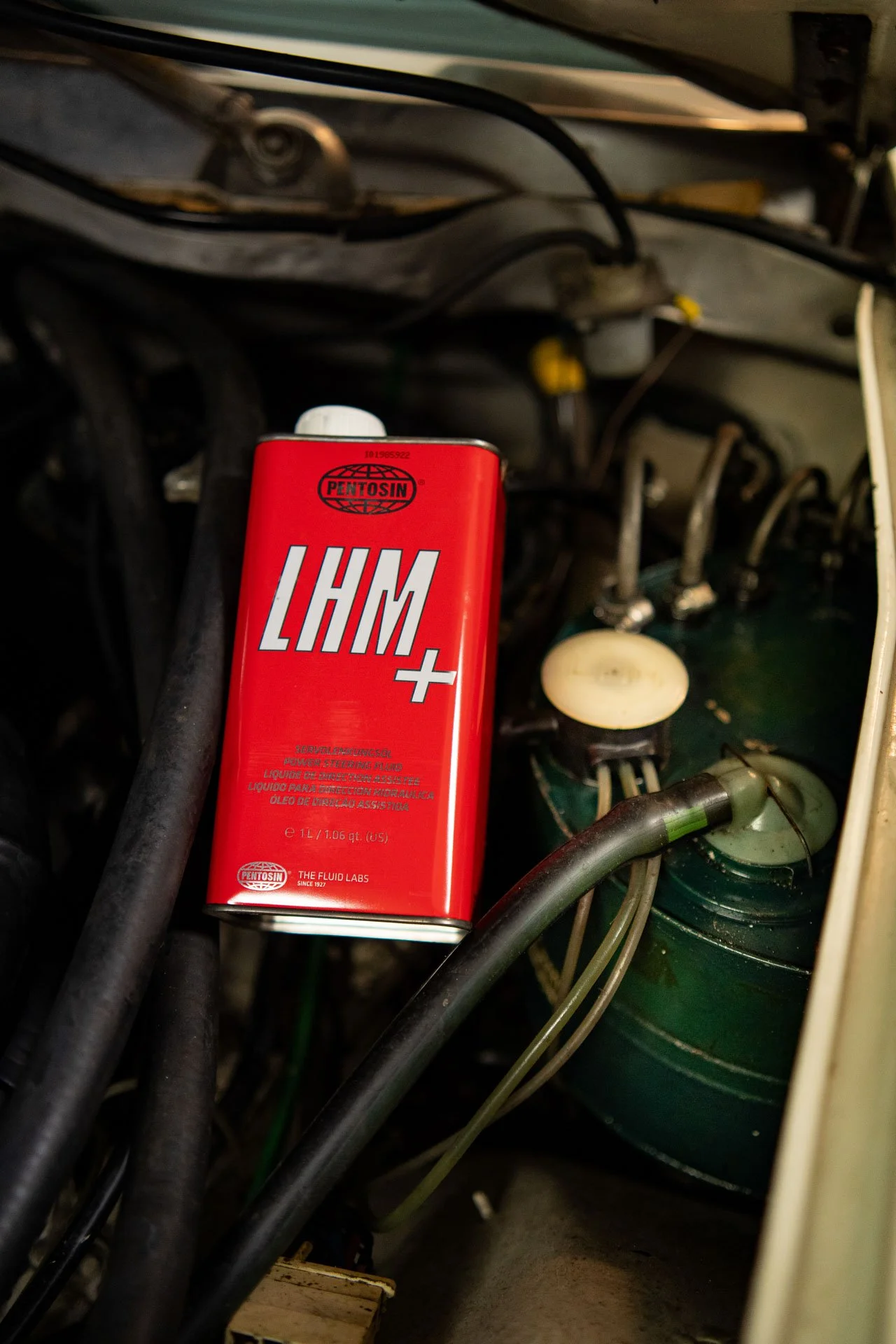
The same central hydraulic system controls the suspension, power steering, brakes, and transmission. One might say Citroën put all their eggs in one basket when it comes to reliability. This system is so capable that it allows you to drive the car on three wheels–something that came in handy for French President Charles De Gaulle to escape an assassination attempt wherein two of his Citroën’s tires were blown up, but he was still able to drive away to safety. This was a marketing gem for the ages. The brakes in the SM are no less bizarre, being operated by a pressure-sensitive mushroom-shaped button on the floor, offering very little travel, which can be unnerving for a novice.
By far among the most advanced cars of its time, the SM is often singled out and blamed for Citroën’s bankruptcy in 1974, but it was a combination of the oil crisis, the doomed rotary engine project, and reliability issues that pushed them over the line. The result was its acquisition by Peugeot, and creation of PSA (Peugeot-Citroën), which yielded relatively less innovation over the following decades.
Peugeot: The Democratization of Fun
Peugeot cars presented much more conventional designs than Citroëns of the era, and were safer bets as a result. Armand Peugeot incorporated the Peugeot automotive company in 1896, although its industrial roots go back to the early nineteenth century, which makes Peugeot one of the oldest automotive companies in the world. With an illustrious motorsport history, Peugeot is best known among enthusiasts for bringing accessible fun to the masses with their sporty cars.
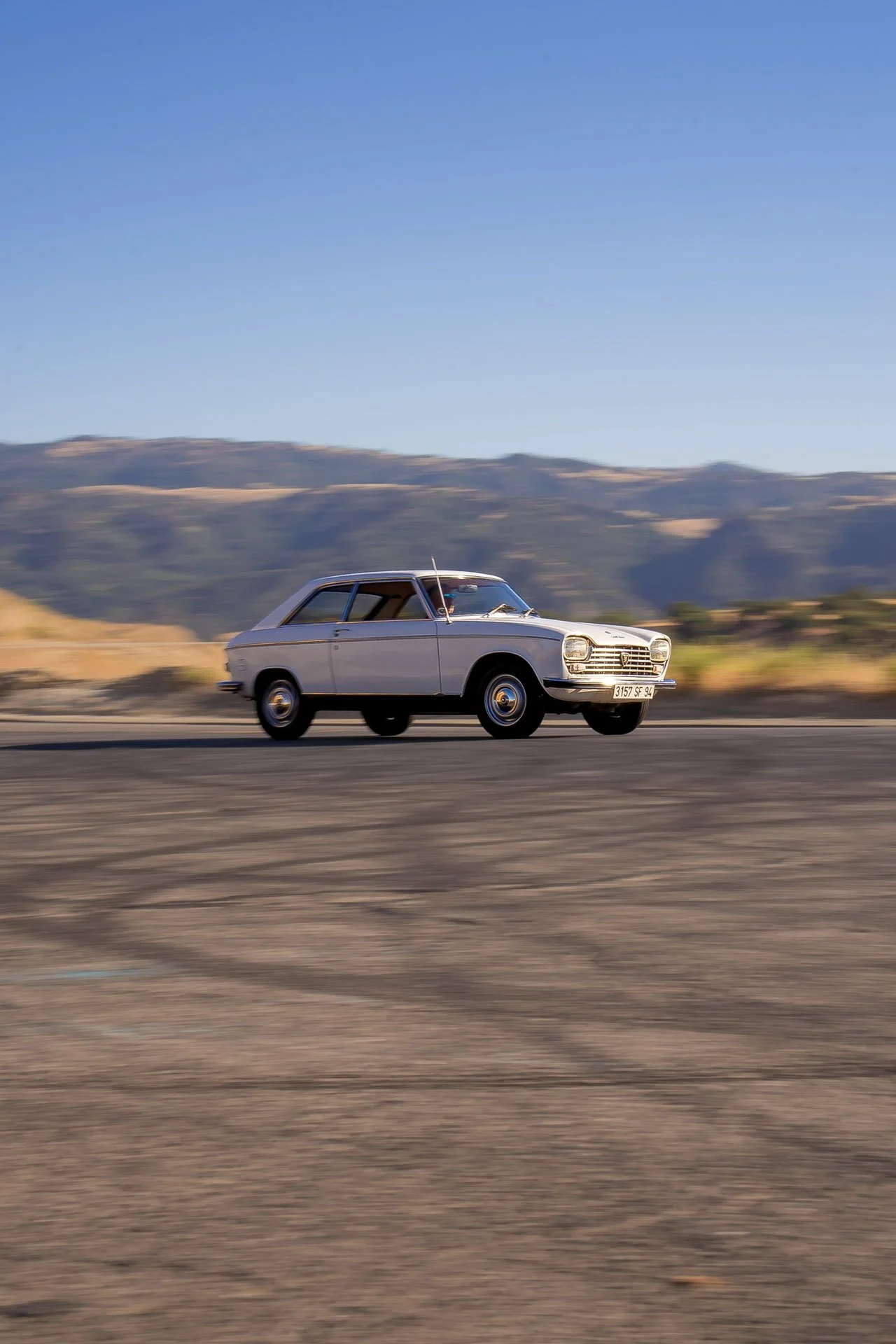
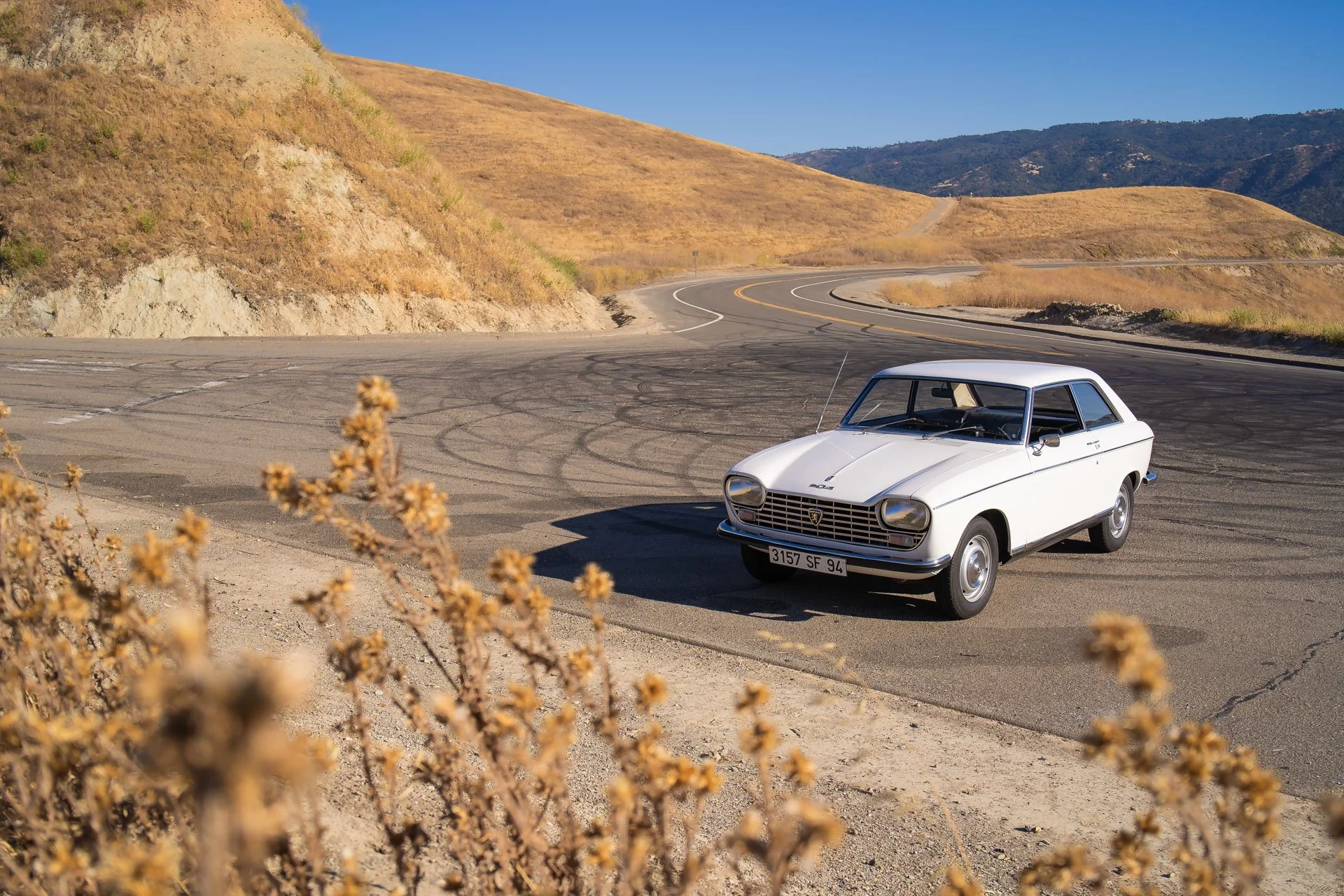
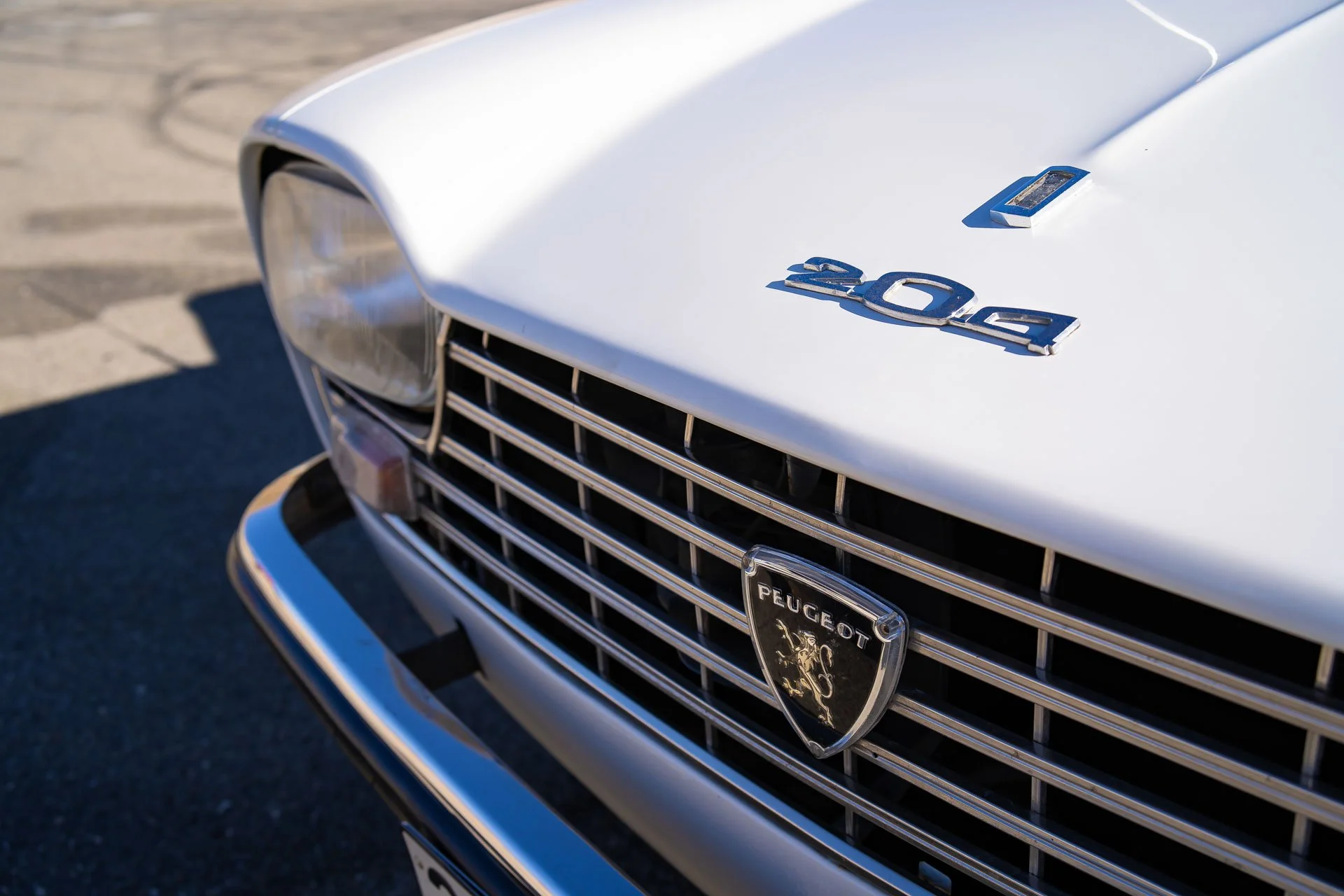
The 1968 204 Coupe sums up the philosophy of Peugeot well—light, graceful, sprightly yet comfortable on long drives. The Peugeot 204 was launched in 1965 in Paris, and soon became the best-selling car in France. It was compact, sensibly packaged and offered in a range of body styles, including sedan, wagon, coupe, and cabriolet.
Ace’s 1968 Peugeot 204 Coupe
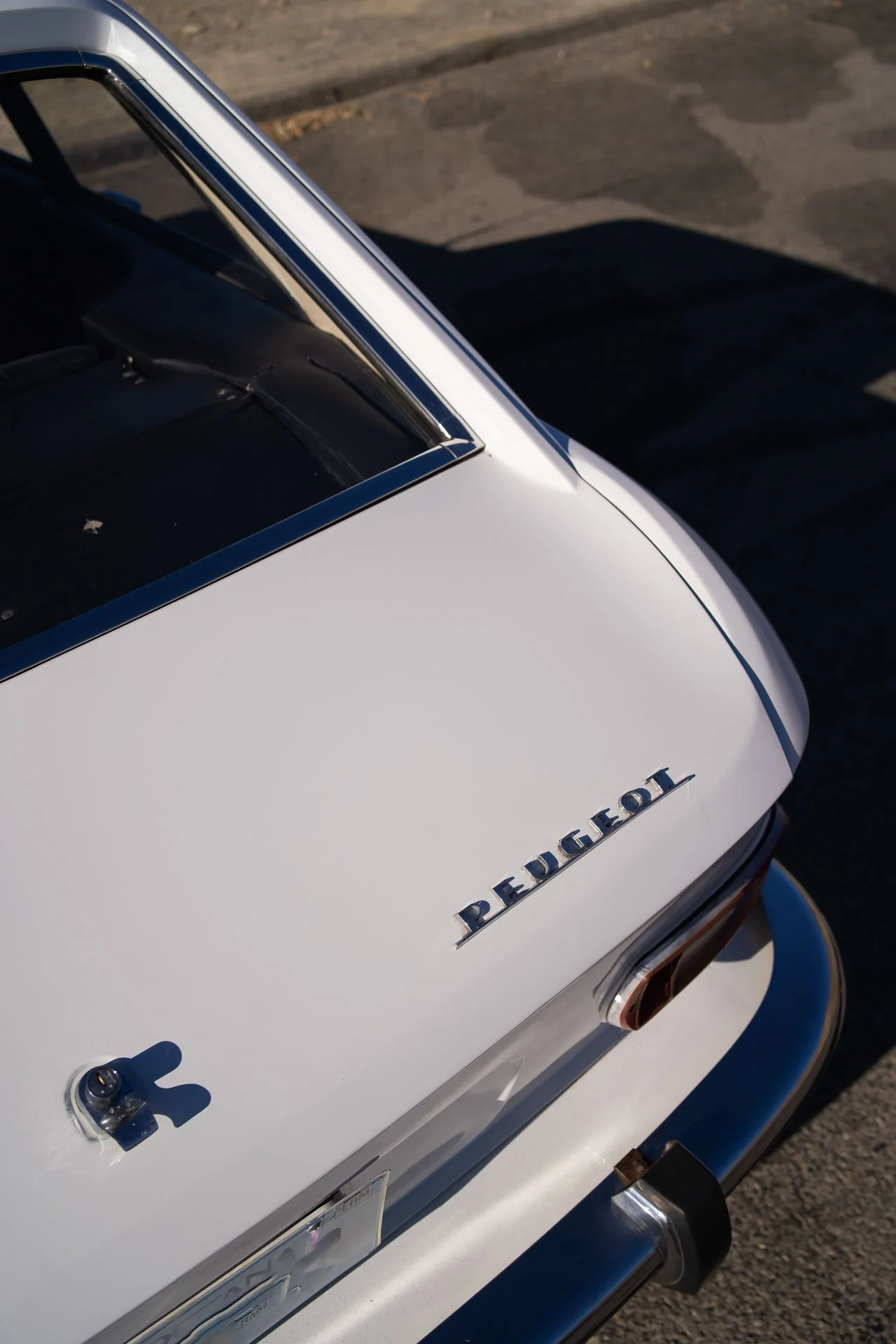
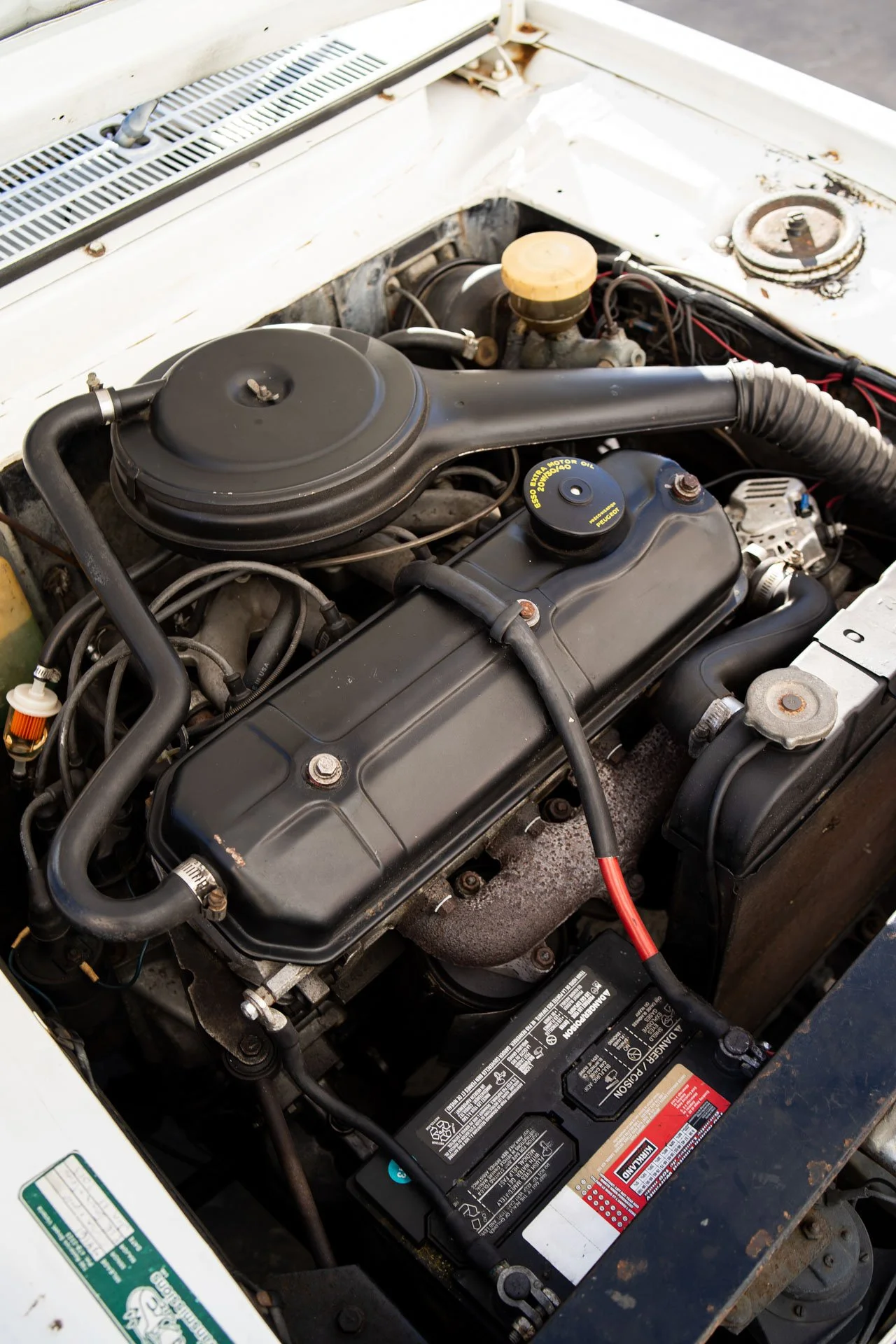
This elegant white 1968 model, owned by Ace of Retro Sporting, rides on a short wheelbase spanned by a restrained Pininfarina design. A curb weight of only 1,876 pounds means that the little 1.1-liter carbureted inline-four gives it enough punch to be fun on a twisty road.
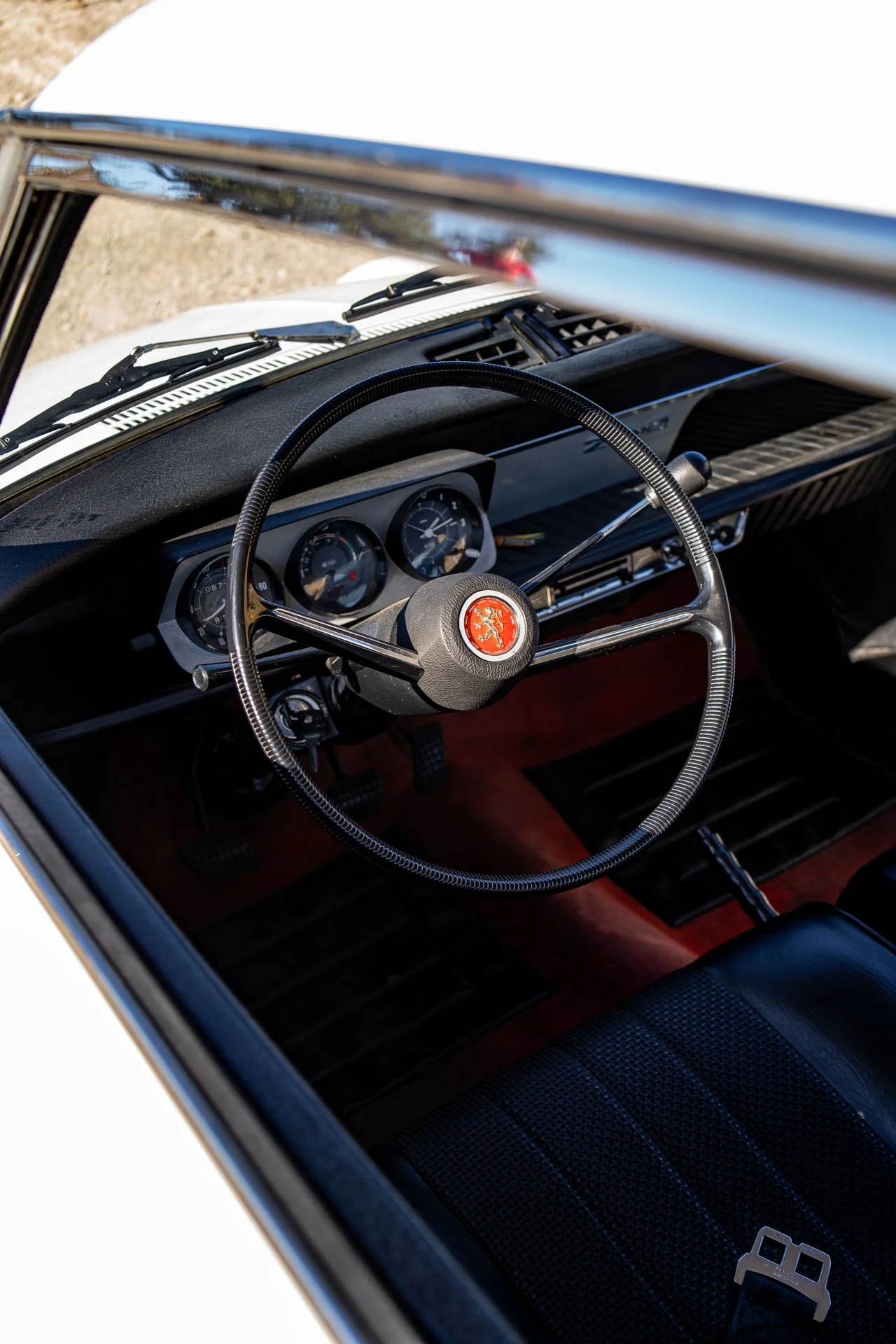
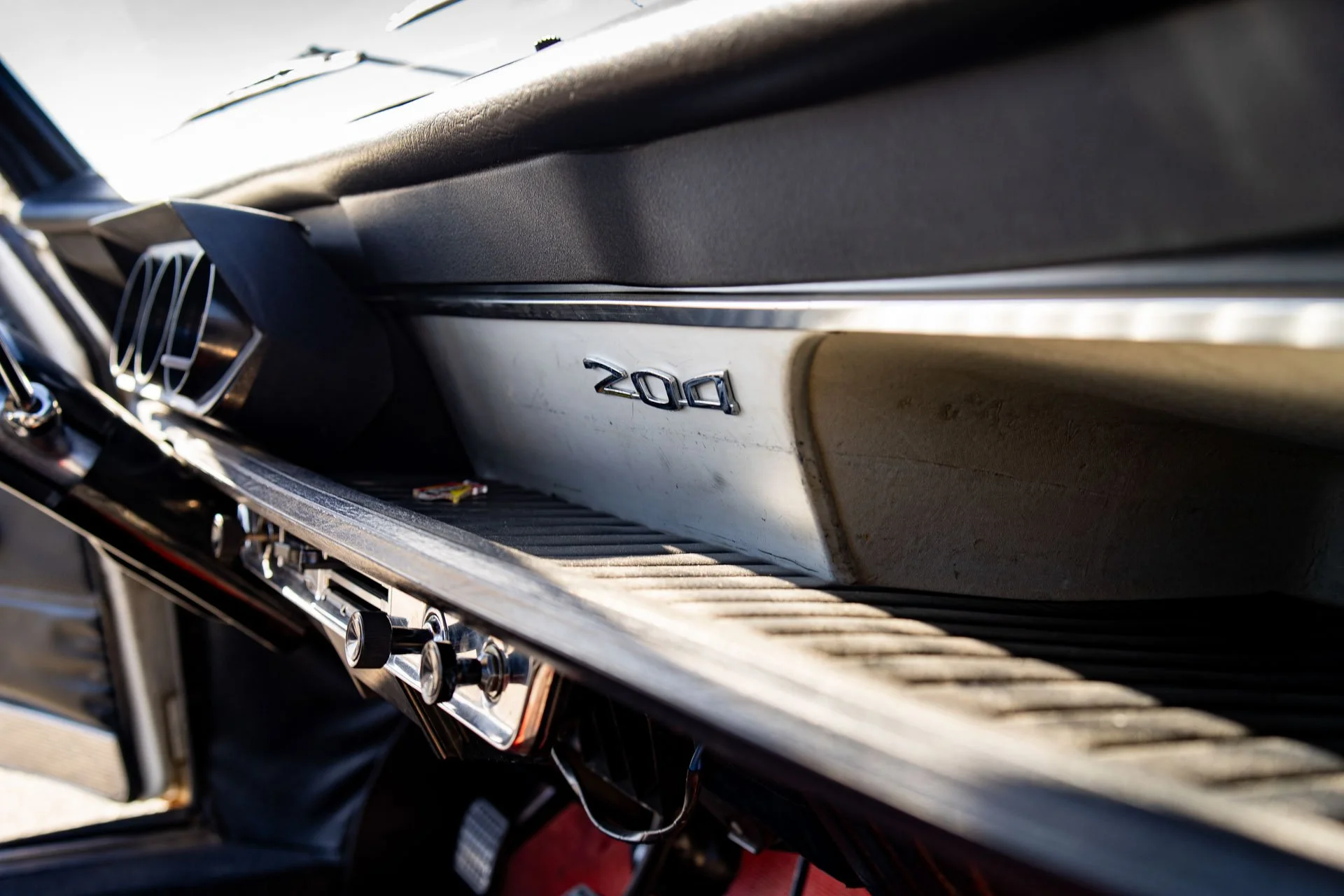
Ace frequently exercises this little car in the heavily snowed roads of Lake Tahoe, underlining how delightful it is even in those conditions. Open the dainty doors, and you’re welcomed by a white-overblack interior, an austere dash, and a thin, two-spoke steering wheel flanked by a column-shifted four-speed manual. The minimalist instrumentation with a 100-mph speedometer, a combination gauge, and an analog clock remind you of simpler times.
Ace’s penchant for obscure and interestingly flawed cars led to him establishing Retro Sporting, which caters to like-minded individuals seeking the same. The 204 features a peculiarly oriented alternator driven by an accessory belt that wraps around the engine block to the cooling fan pulley. Such traits are often hard to deal with when it comes to servicing the car, and Retro Sporting specializes in acquiring and working on these orphans.
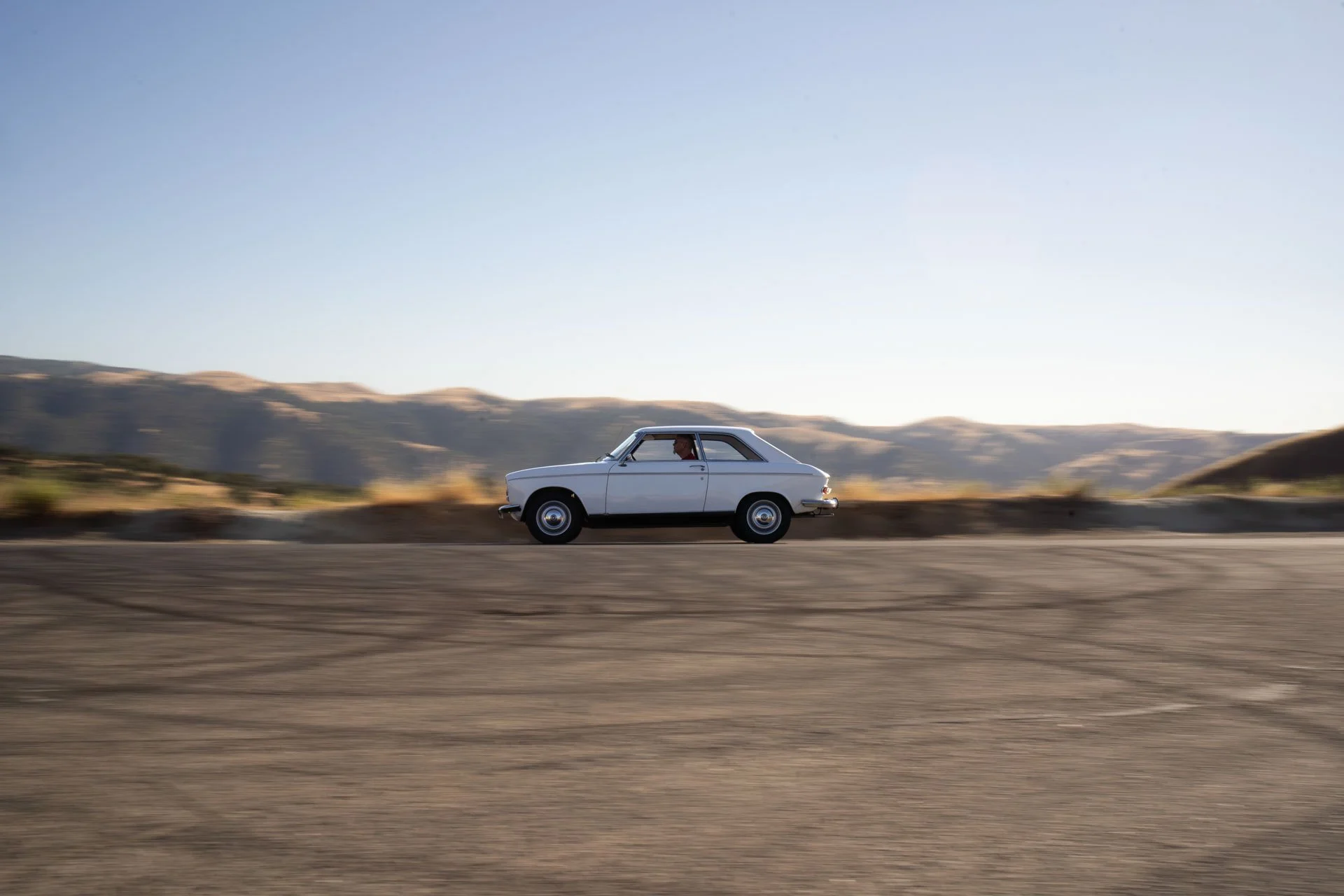
The ride can be described as quintessentially French: comfort and handling hand-in-hand, with neither compromised. Its 53 horsepower doesn’t seem much, but the little coupe maintains its composure through switchbacks, camber changes, and undulations, carrying a surprising amount of speed. It’s a pleasure to take on a relaxed road trip to the mountains, or even a picnic trip to the beachside with a woven basket in the back, while a radio on board plays leisurely French music.
Renault and the Road Less Travelled
Renault exhibited its penchant for innovation very early on, with its fair share of quirky and sporty cars that enjoyed success both on road and track. The Renault corporation was founded in 1899 by Louis Renault and his brothers Marcel and Fernand. A uniting theme across French cars is their uncompromising dedication to maintaining excellent ride quality and comfort.
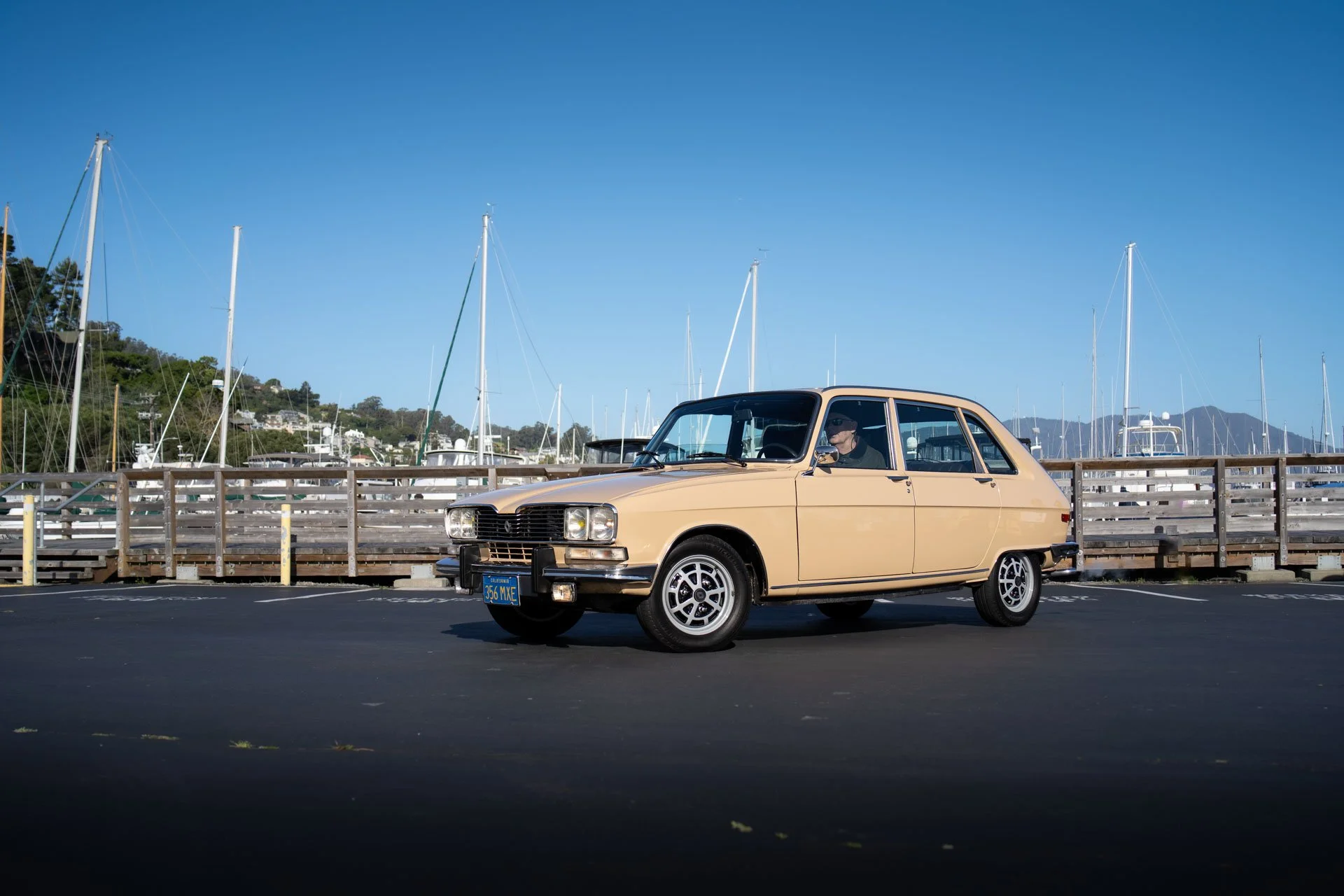
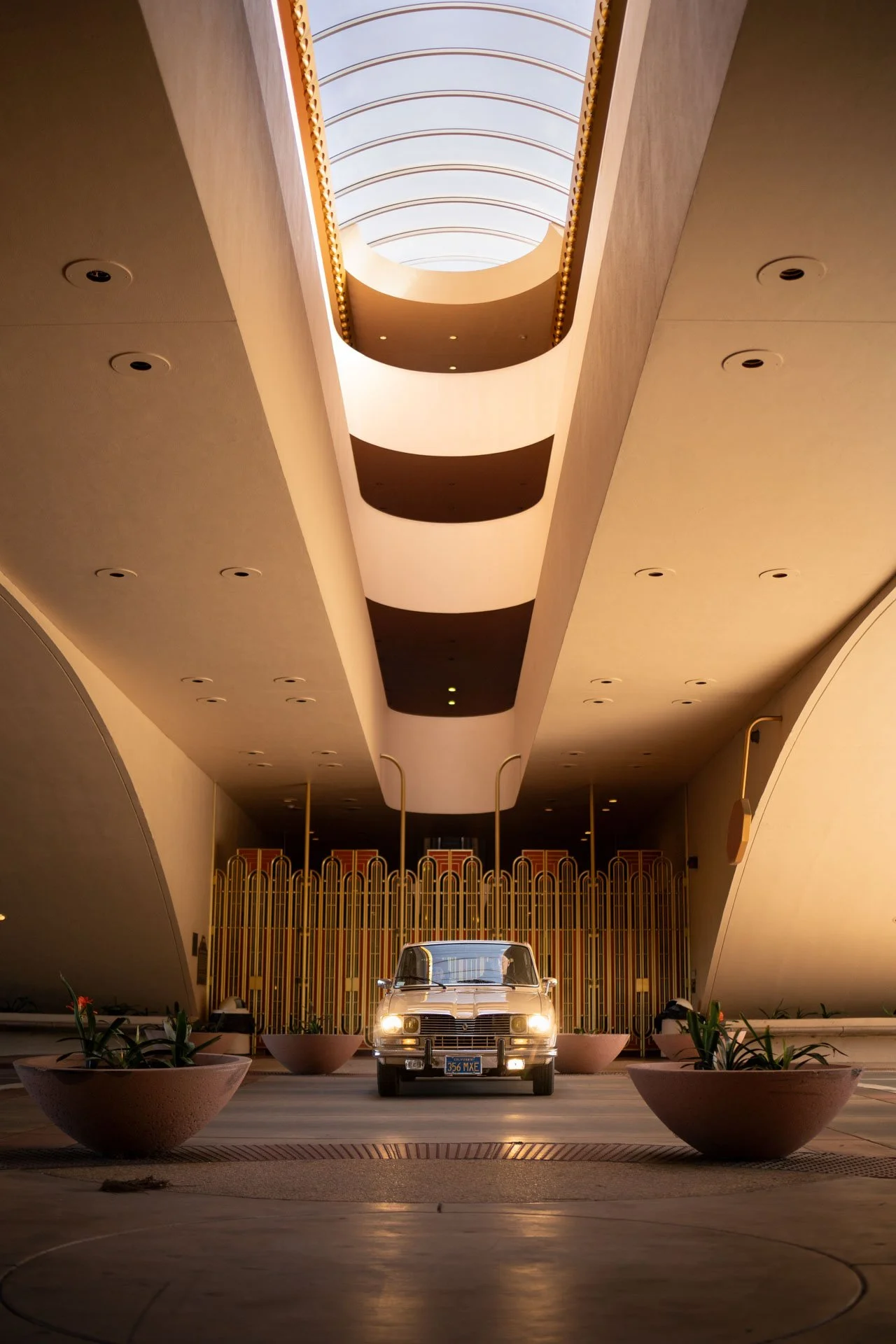
The Renault 16 was introduced in 1965 to compete with the Citroën ID and DS range of models, while being less expensive, less complicated, but more versatile as a family car with a body style that bridges the gap between saloon and estate. It is credited with introducing the hatchback body style to the mid-size segment, and was also the first French winner of the European Car of the Year award in 1966.
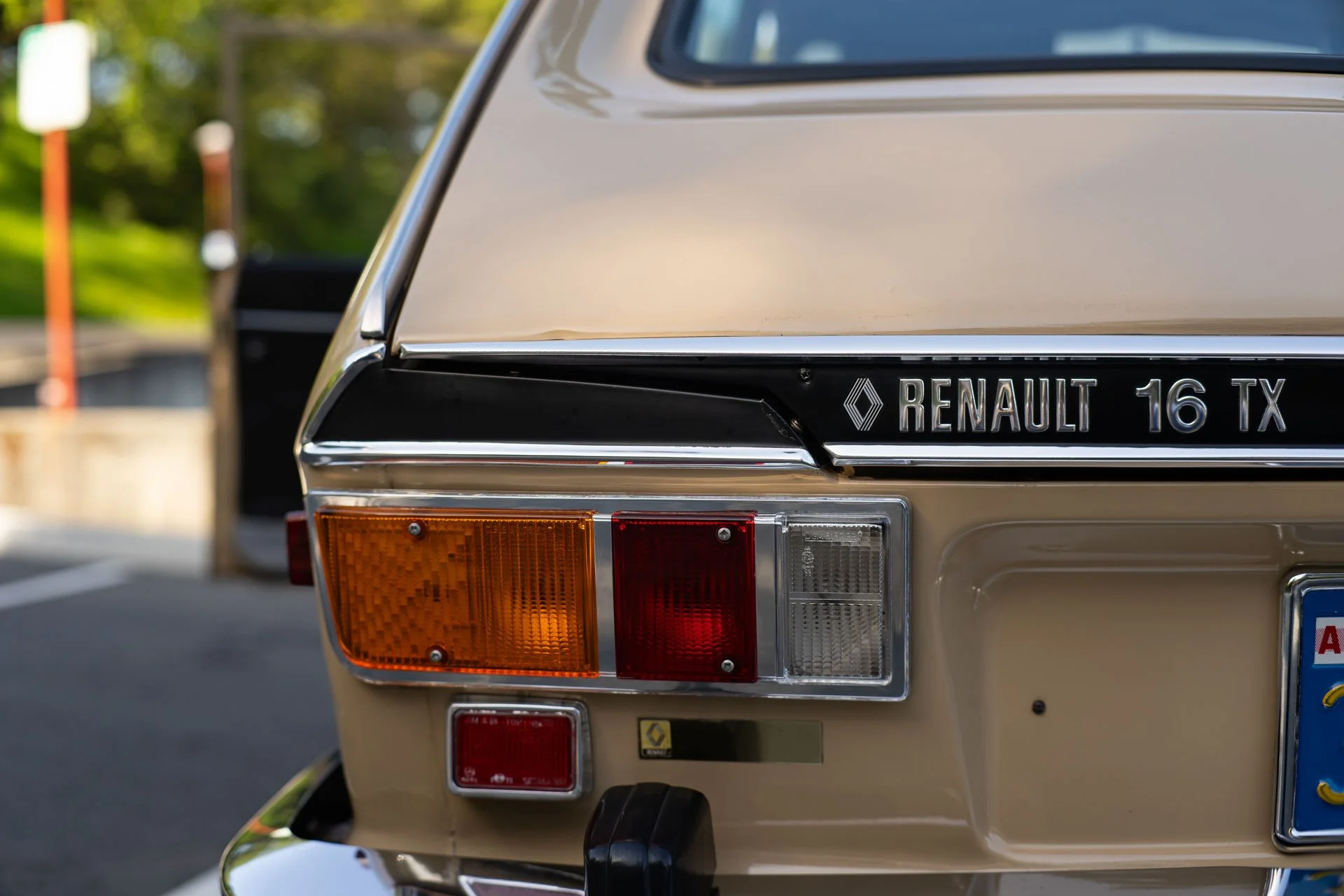
The quirkiness of the 16 TX is most evident in the unequal length wheelbase left to right—the two rear wheel axle shafts are not in-line; rather the left wheelbase is 2.76 inches longer than the right wheelbase to accommodate the transverse torsion bar suspension. This gives the car a particularly smooth ride over bumpy roads.
Kevin Palmer’s Renault 16 TX
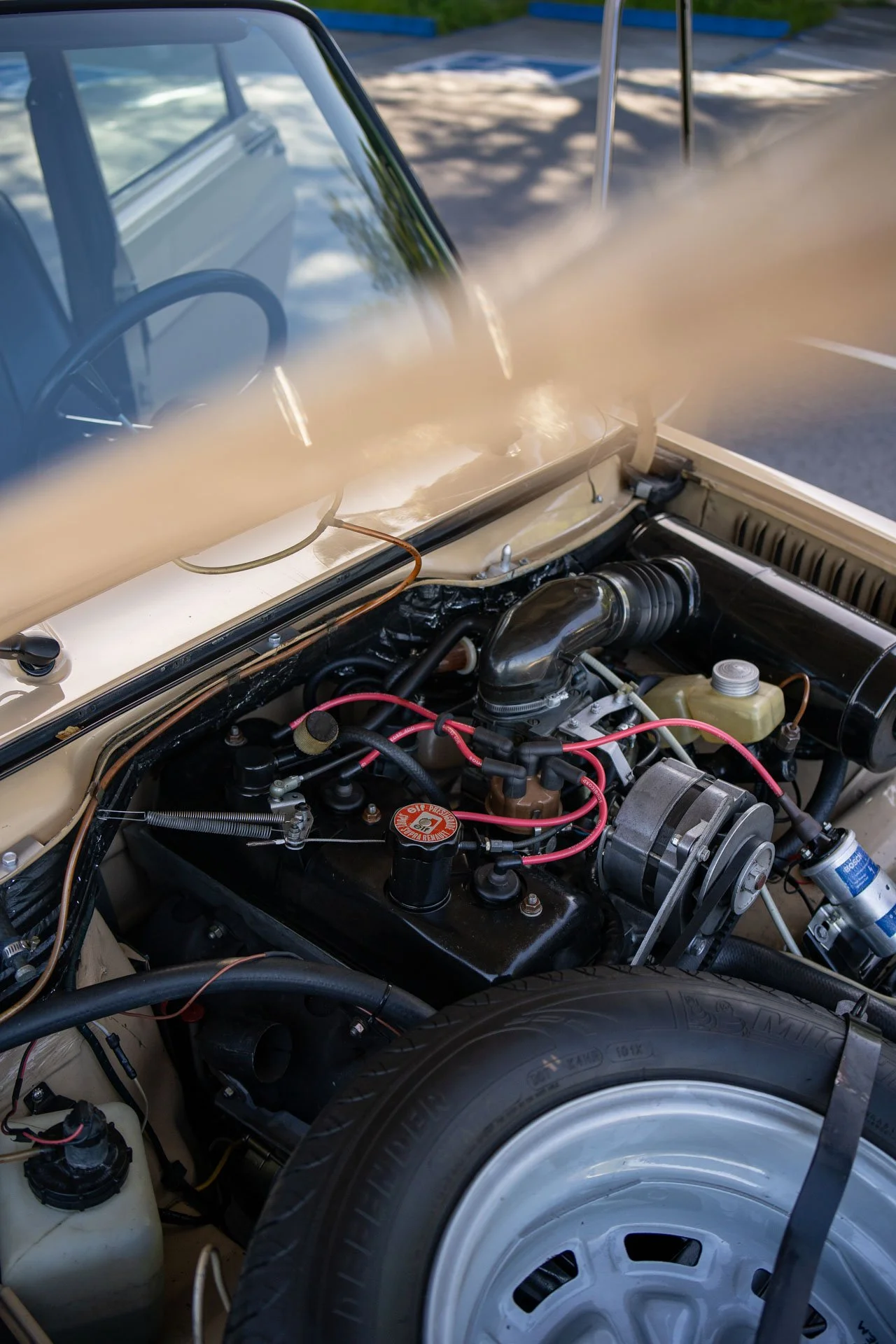
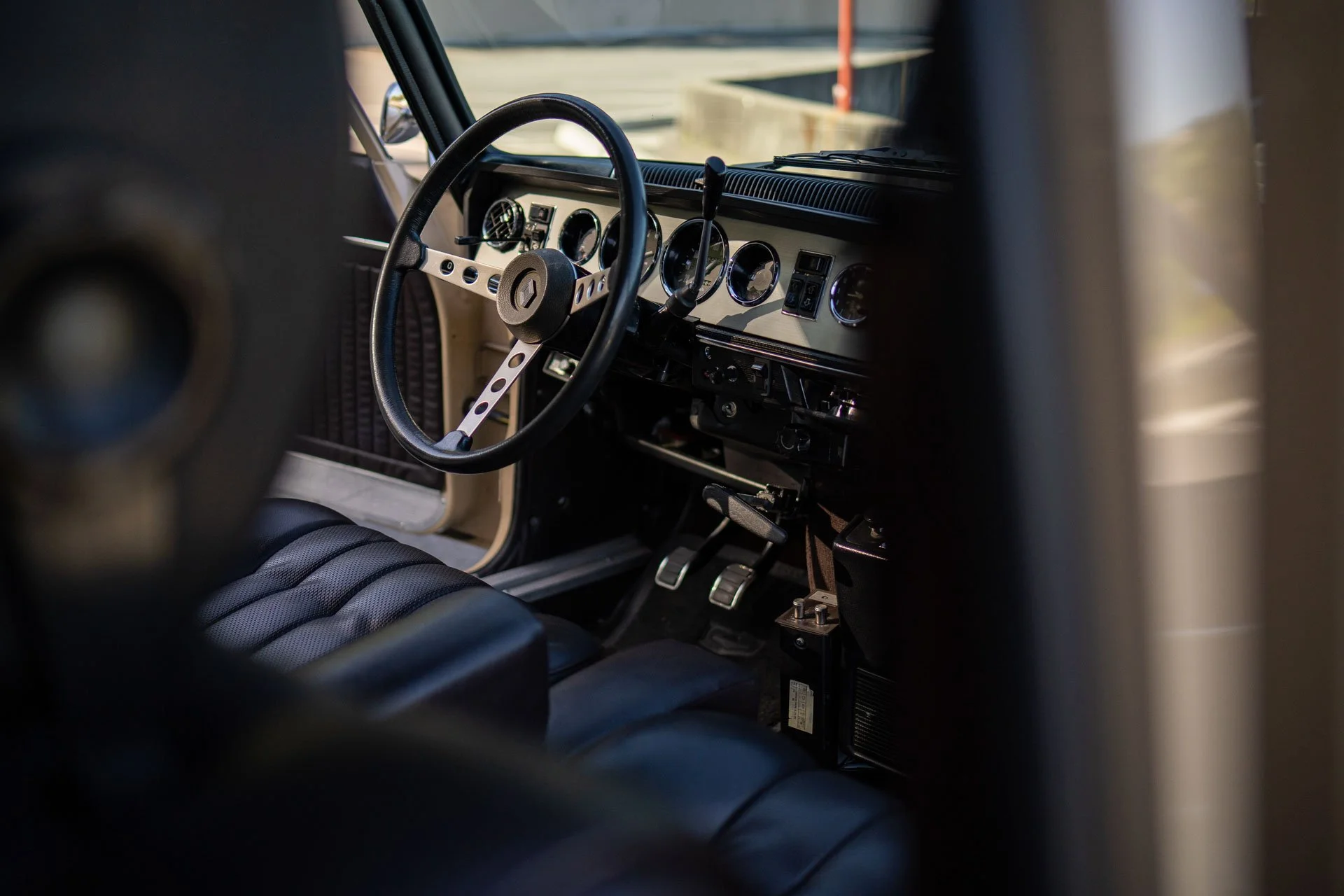
This example was purchased in France by an executive, and is currently being cared for and enjoyed by Kevin in the SF Bay Area. Kevin was eager to demonstrate the 16 TX’s handling on a twisty stretch of road, throwing the car into tight corners, which it handled with great poise and comfort. The seats are exceptionally plush and well-cushioned, with this example optioned in a rare shade of brown. Your passengers will thank you. He points out that the car goes down an inch when loaded, at which point the level of the headlights can be adjusted with a knob.
The powertrain layout is reverse front mid-engine, with the motor pushed all the way up to the firewall. The rear seats can be adjusted to six or seven different configurations, adding to the car’s comfort and practicality quotient. This car managed to win at the Best of France and Italy awards in 2018 at Woodley Park in Los Angeles, after being driven by Kevin all the way down from the Bay Area, which attests to its comfort on long drives.
The Renault 16 encourages you to be gentle with your inputs and offers a slight delay in response. If you ask for too much steering angle in too little time, the weight transfer may cause oversteer. Otherwise, the car is very neutral and highly refined with a near 50/50 weight distribution, promising exceptional comfort at all speeds. It truly shines on bumpy roads where it maintains an impressive pace without breaking a sweat.
Alpine and the Pursuit of Purity
Alpine has been closely linked with Renault throughout its history, and was acquired by the latter in 1973. The company made its mark in history by winning the 1973 Monte Carlo Rally and World Rally Championship with the A110, thus cementing lightweight as its brand identity.
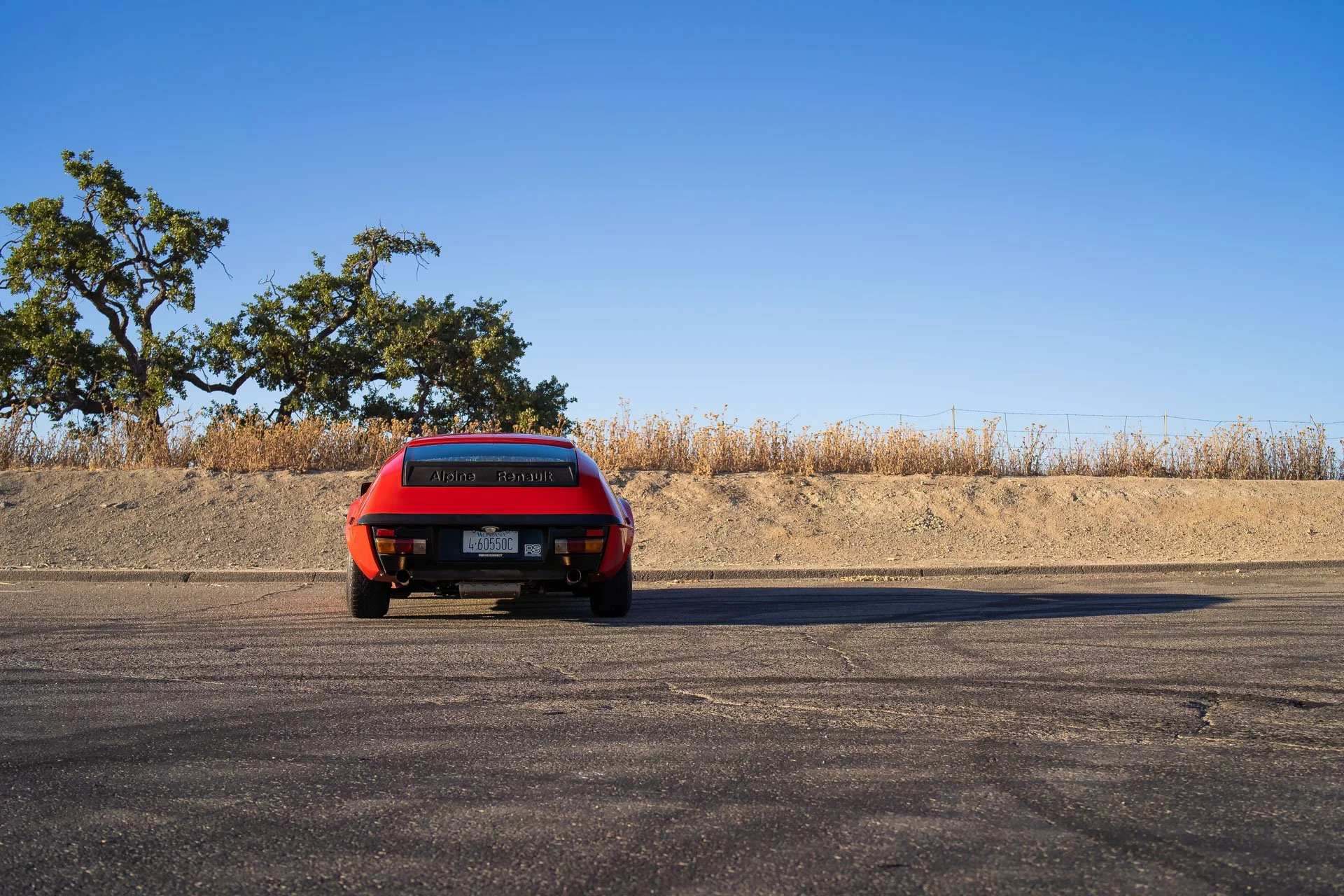
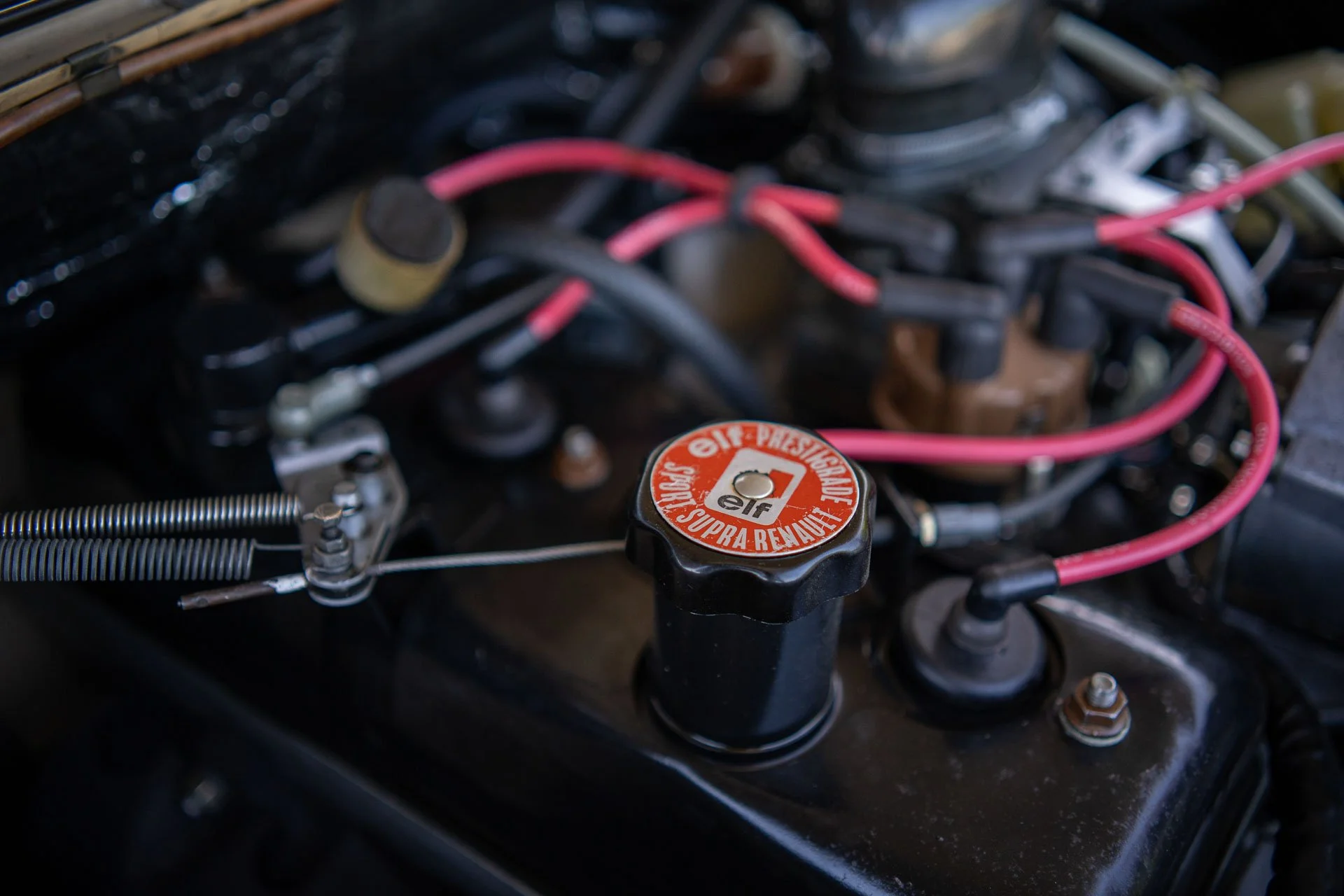
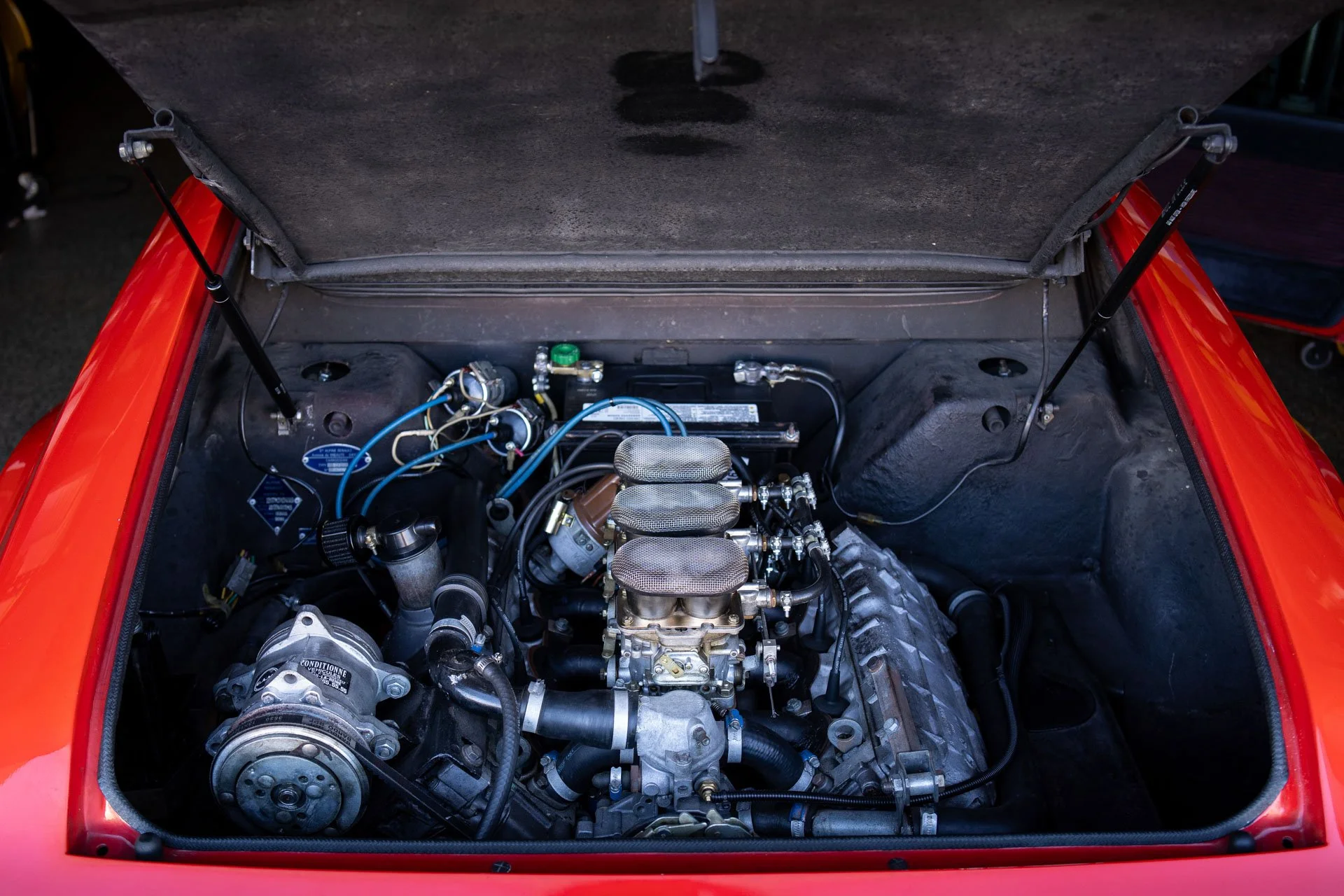
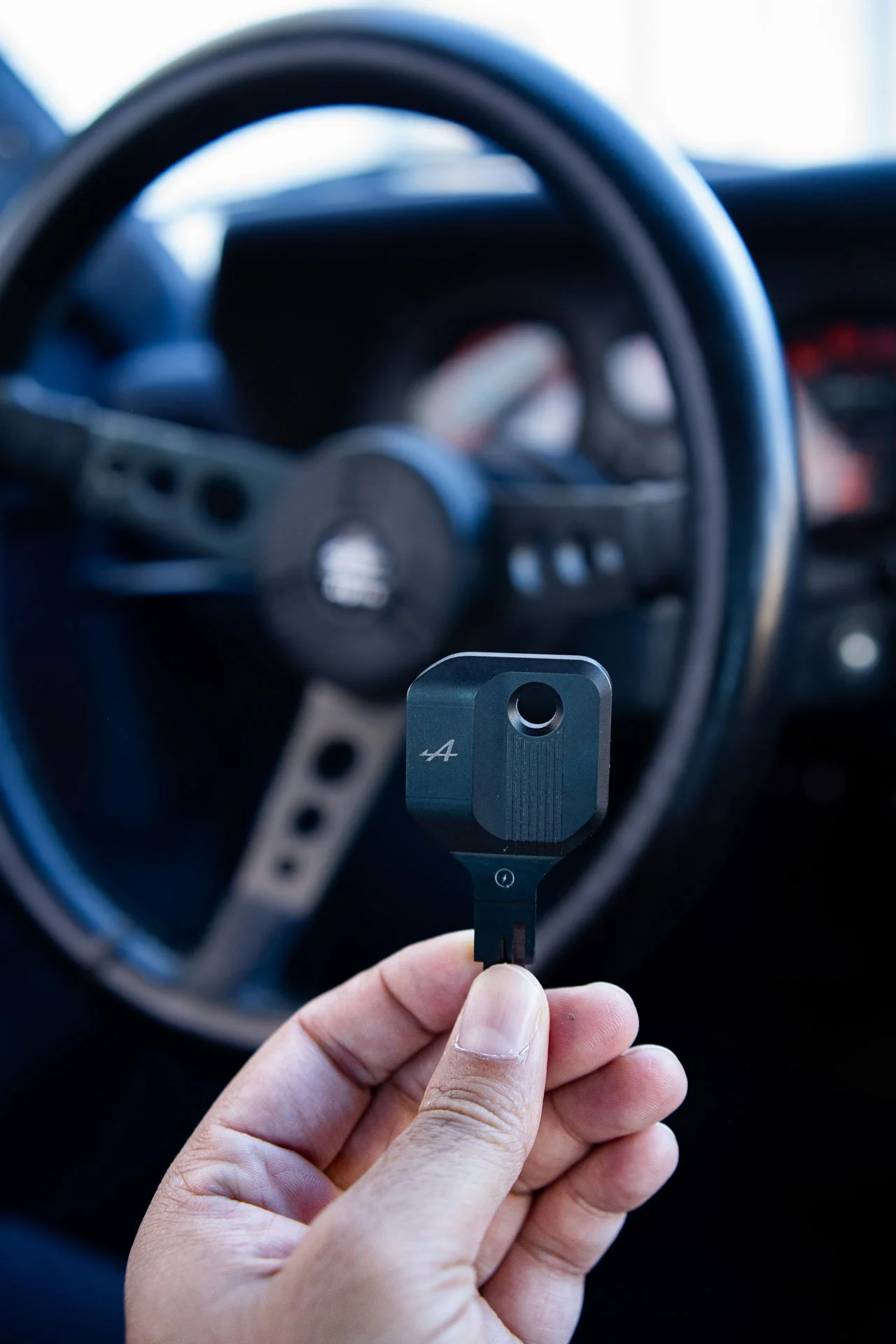
The A310 was first displayed at the 1971 Geneva Motor Show as France’s answer to the Porsche 911. Its Renault PRV engine, shared with the famed DeLorean, is mounted longitudinally behind the rear axle, sending power to the wheels through a five-speed manual gearbox. Stepping into the car, you are met with a low-slung and sporty driving position, which tilts your feet towards the center of the car. The quirkiness quota is filled by its bright orange dials and the bizarre wipers, which sweep out of phase with each other while being pivoted at the center of the windshield.
Exterior design is far removed from the preceding A110, as the A310 leans into an aggressive wedge shape, drawing influences from Italian exotics like De Tomaso Mangusta and Ferrari Daytona. However, the striking flush headlights consisting of six fixed lamps and a plexiglass cover in the early cars, as seen in the Citroën SM, point to its French allegiance.
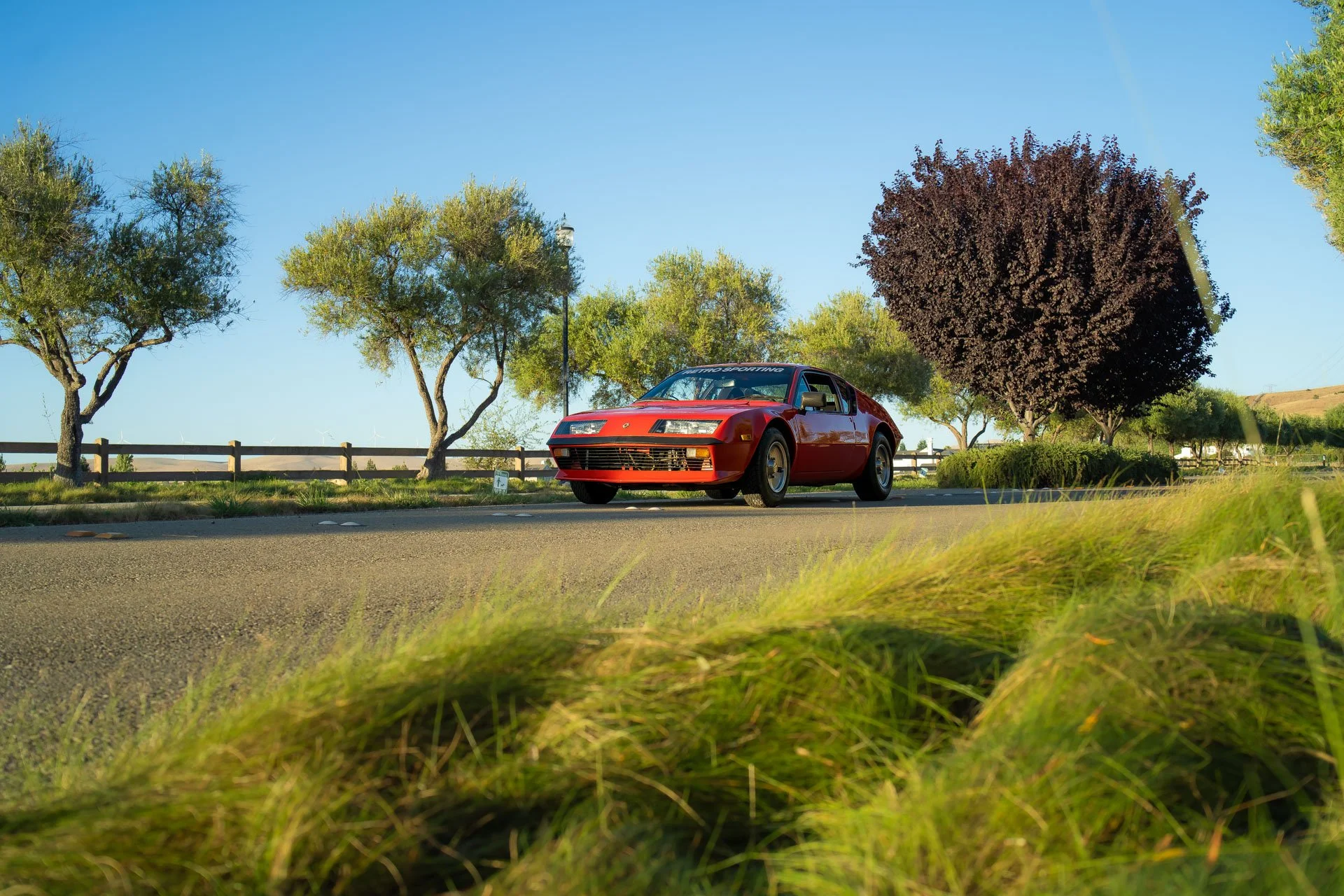
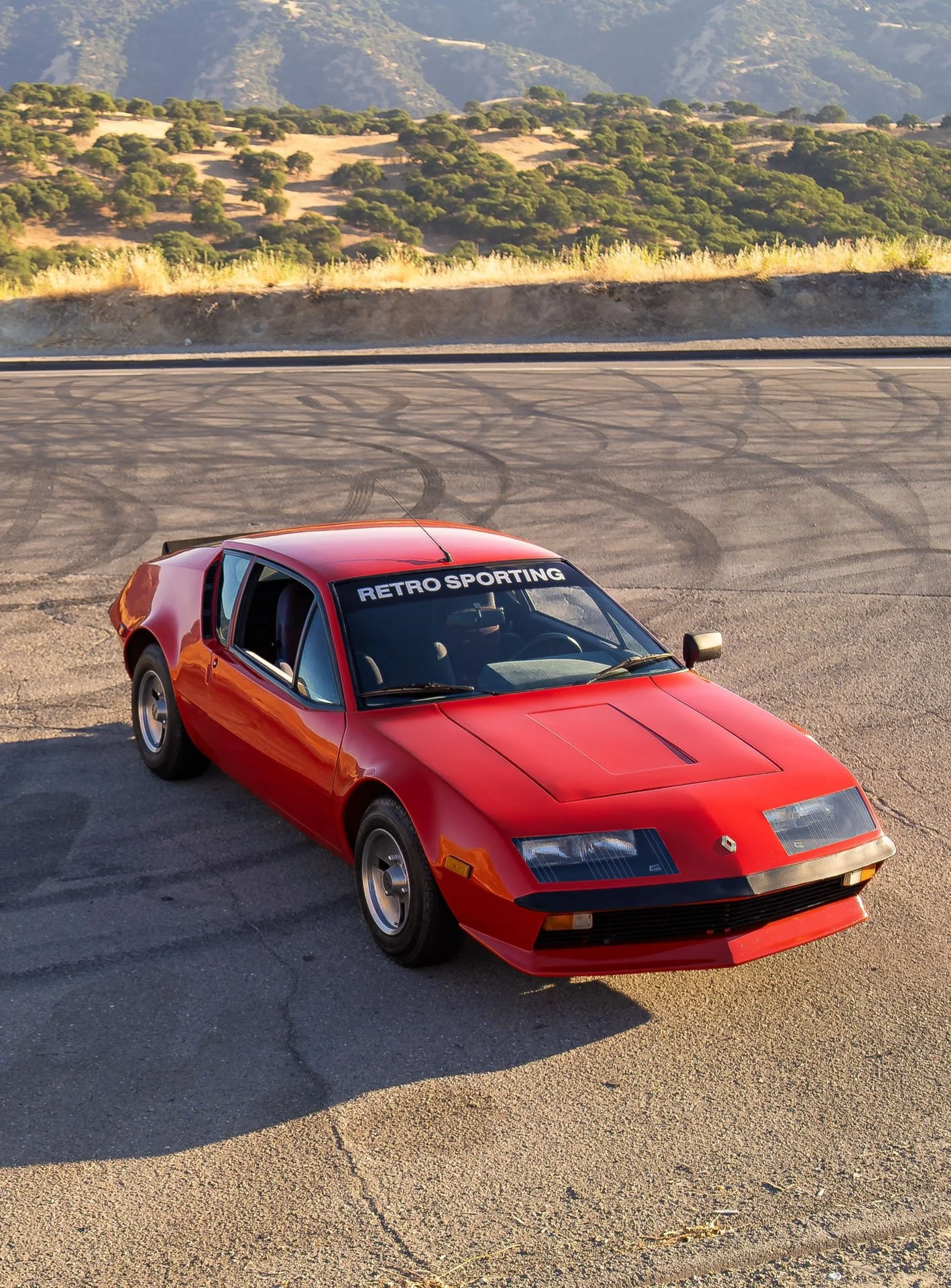
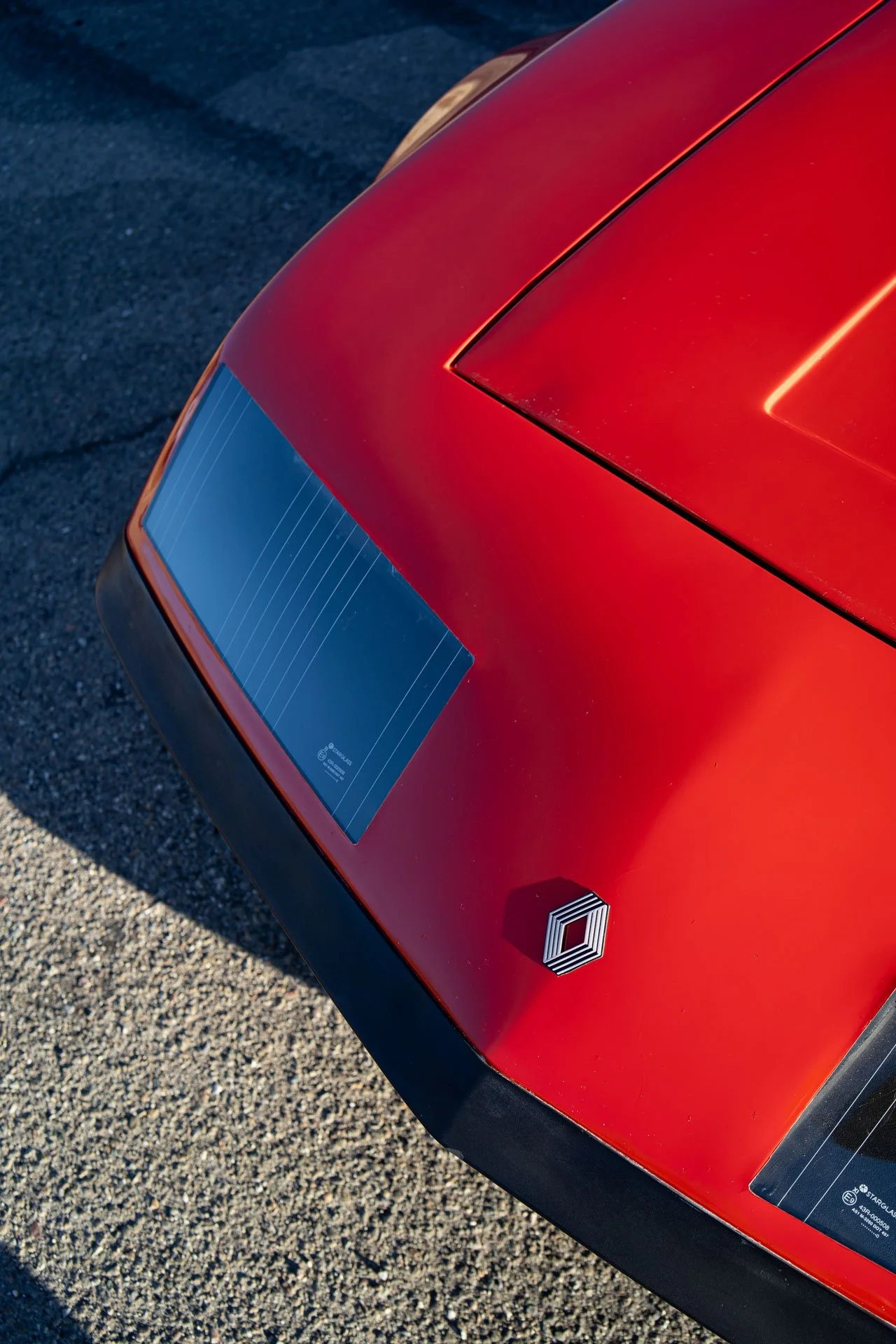
The A310 is a whopping 500 pounds lighter than the contemporary 911 SC, staying true to its predecessor, the A110. This was achieved in part with a fiberglass glass body draped over a steel spine chassis. Typical of a French car, the seat comfort and the ride quality are fantastic for a highly sporting car—it is not the tiniest bit unsettled by bumps, which makes for a great long-distance GT car that also comes alive on twisty mountain roads.
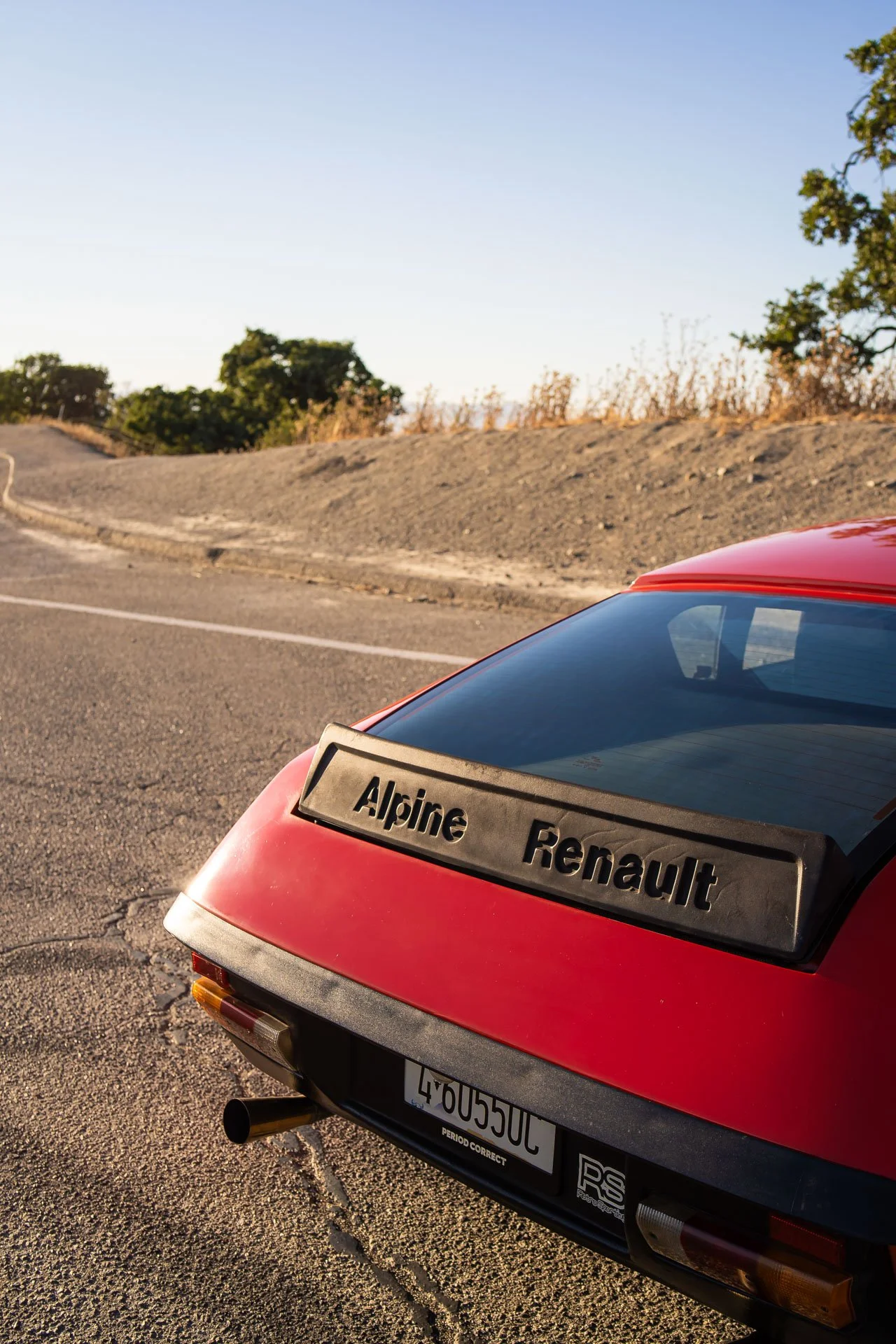
Ace Robey’s 1980 Alpine A310
This example is a 1980 model with the V6 engine, also owned by Ace Robey, outfitted with tuned-up Weber carburetors, enhanced suspension, and a custom exhaust. Ace is all praise for the Alpine, “I love the sound it makes above 3,000 rpm, not to mention it has better handling characteristics than a classic 911 due to double wishbone suspension geometry and low curb weight. It deserves so much more love and recognition than it gets.”
Bugatti: The Pinnacle of Luxury
Automobiles Ettore Bugatti was founded in 1909 by the Italian-born designer Ettore Bugatti. Bugatti cars are known for their jewel-like detail in engineering, for the artistic manner in which the designs were executed, and their prolific success in racing. Ettore was also highly selective of his customers, whom he ensured would also uphold the values of the company.
Given the artistic nature of Ettore’s family, he obsessed over the details of not just the components in his cars, but even the tools used to manufacture them, going so far as to fabricate their own tooling in-house. Everything down to the nuts and bolts had to be beautiful. Engine blocks were hand-scraped to ensure that the surfaces were flat so that gaskets were not required for sealing, and many of the exposed surfaces of the engine featured intricate finishes.
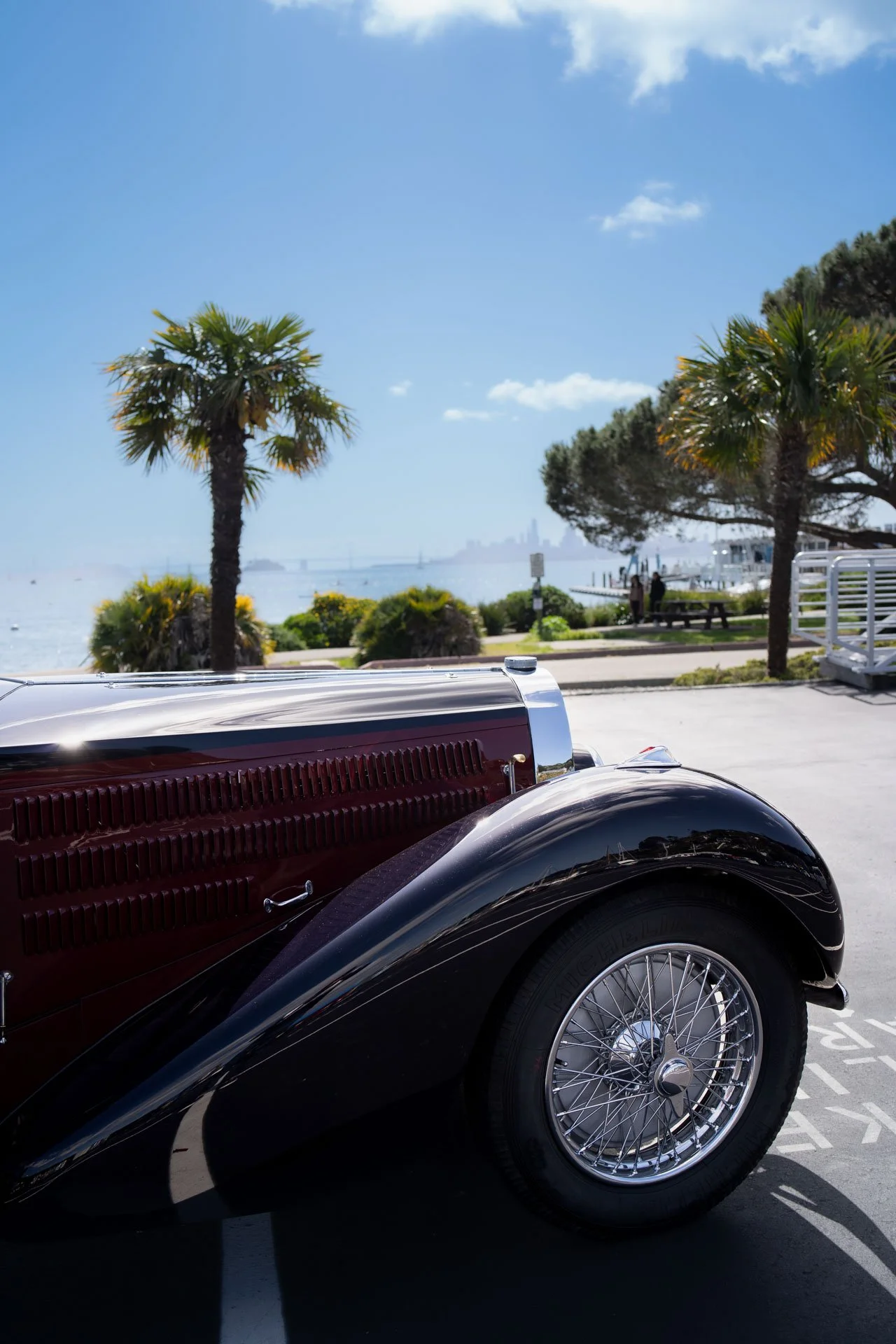
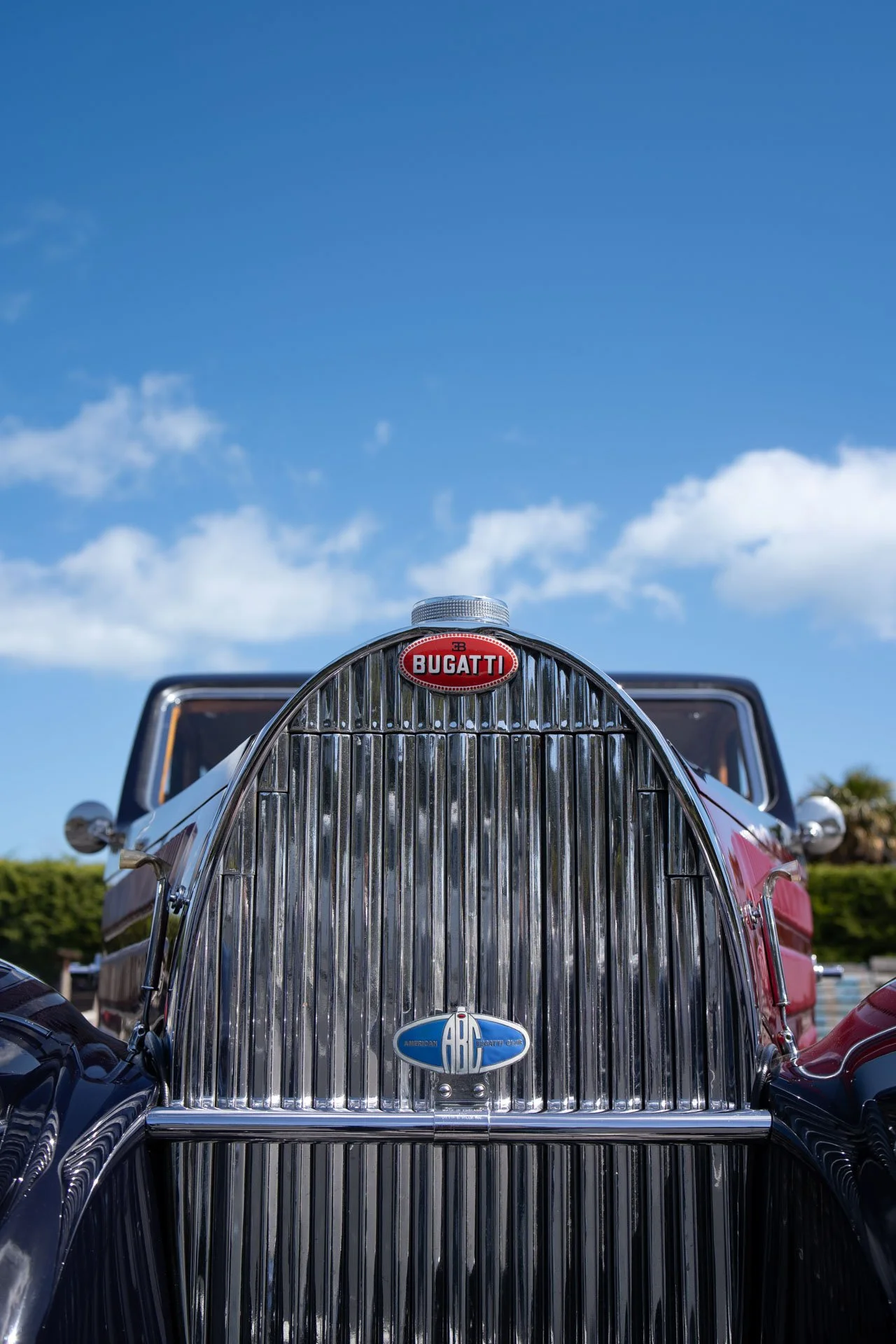
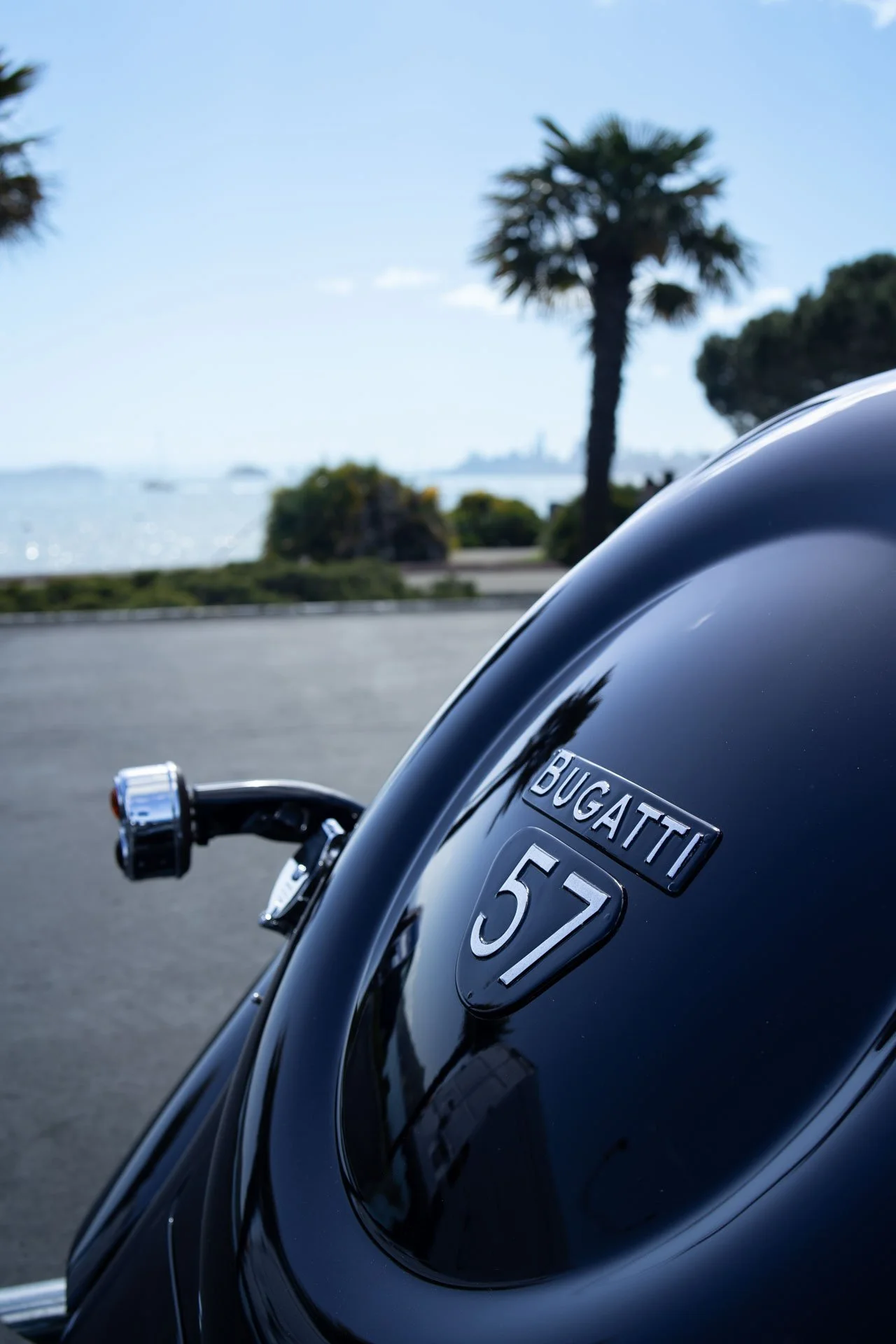
The epitome of Ettore Bugatti’s vision is the Type 57 and its variants, including the famous Atlantic and Atalante, which is a grand tourer built from 1934 through 1940. With its Miller-inspired twin-cam straight eight engine, the Type 57, designed by Ettore Bugatti’s son Jean, was available with a variety of coach-built bodies.
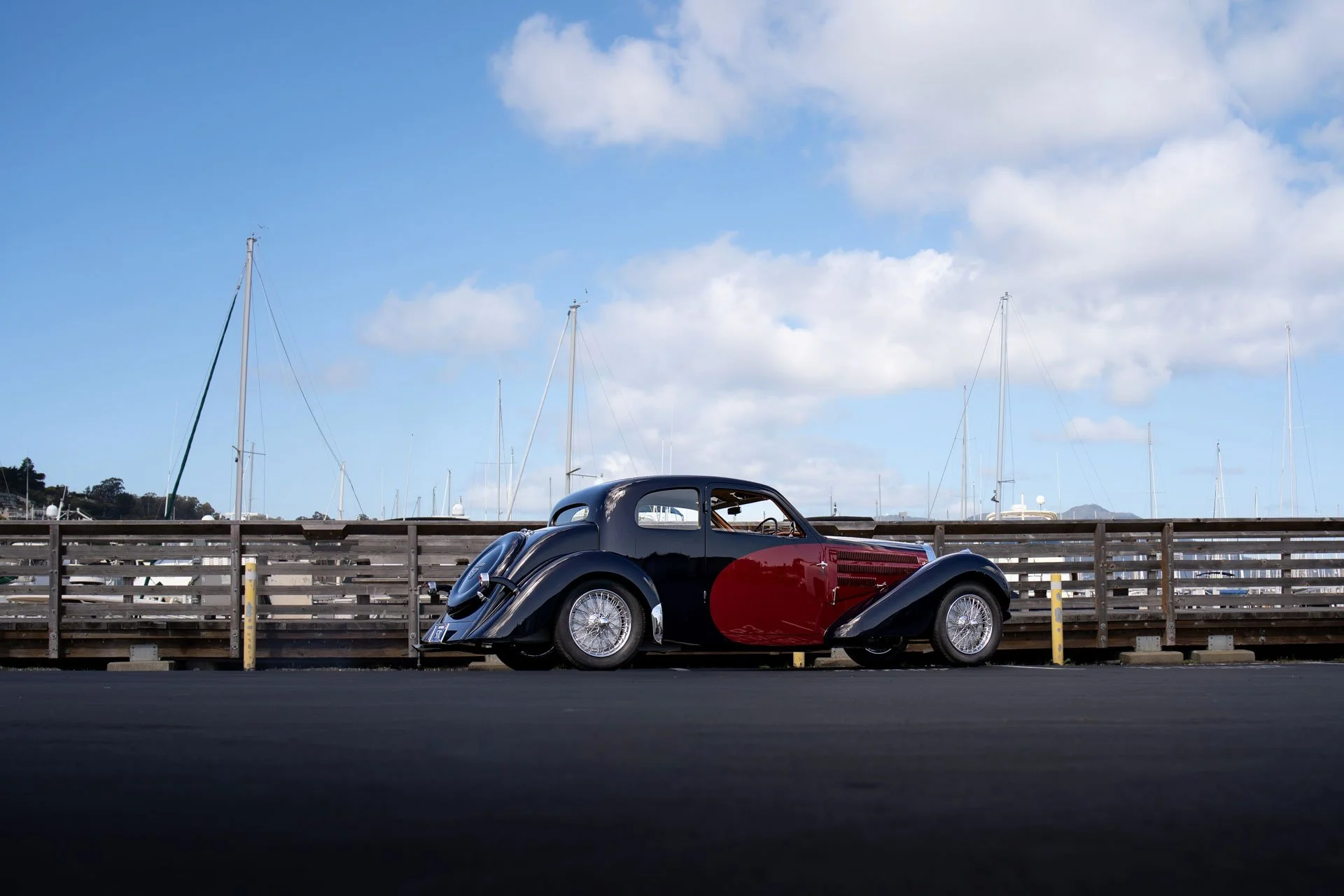
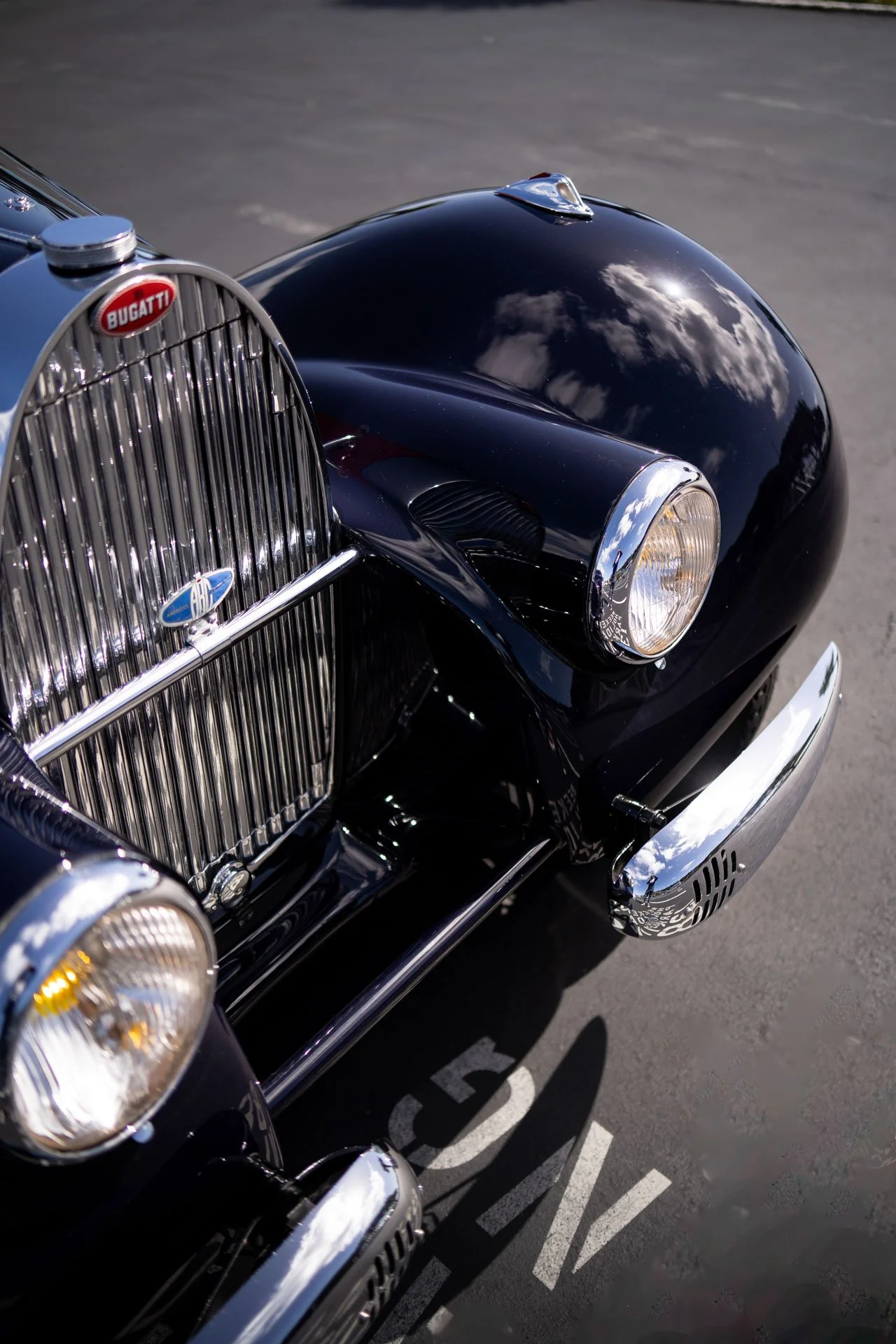
Peter Irlenborn’s 1937 Type 57C
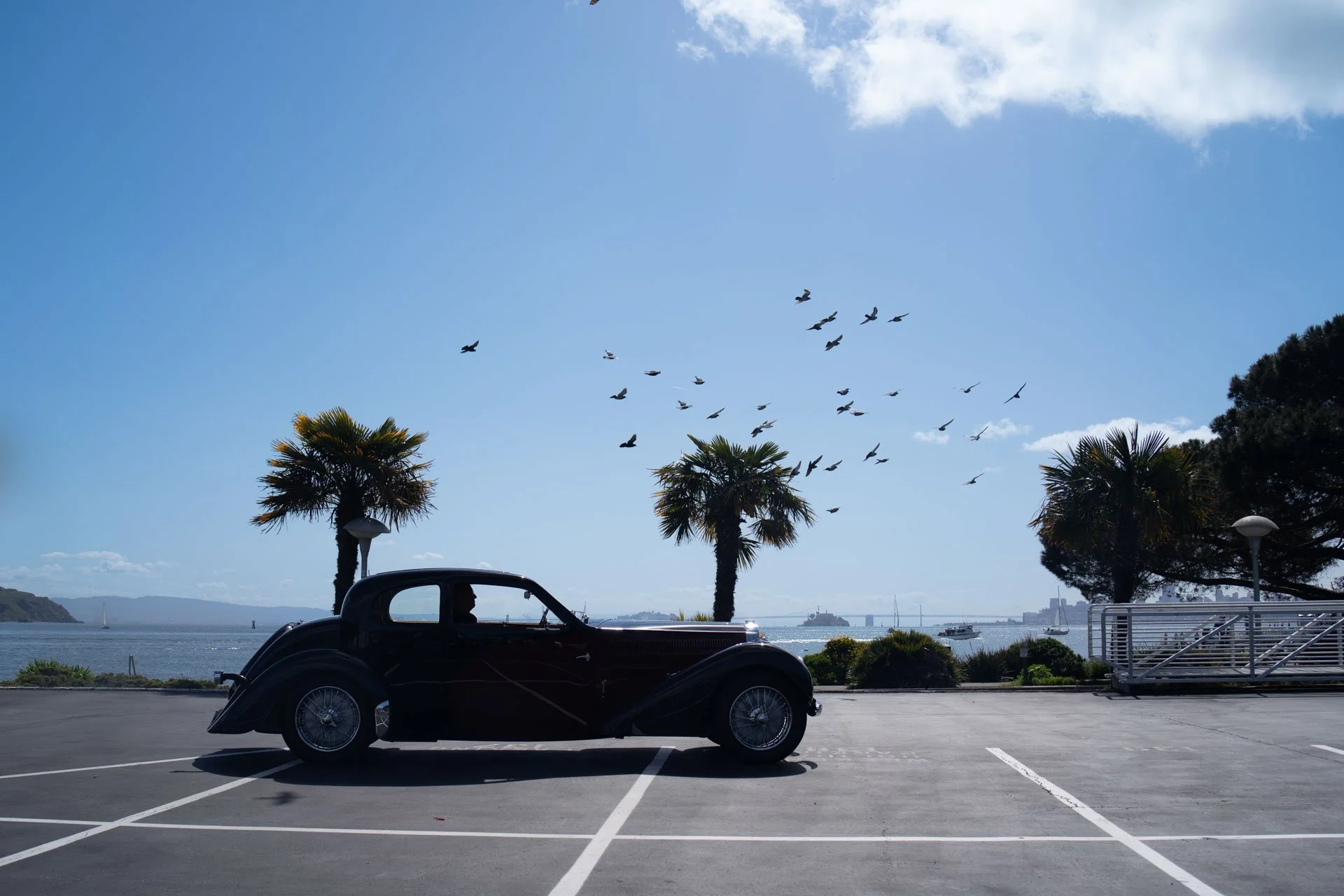
Peter remarks that the twin-cam straight eight pulls like a train, especially in supercharged form. The handling and steering were exceptional for the late 1930s, and still feel great today, according to him. The cable-operated brakes on early cars aren’t very reassuring, but the later hydraulic system is much better. Peter is known for frequently bringing out his Type 57 to car meets, not afraid to put it through its paces once a month, offering a rare sight on the roads of Northern California.
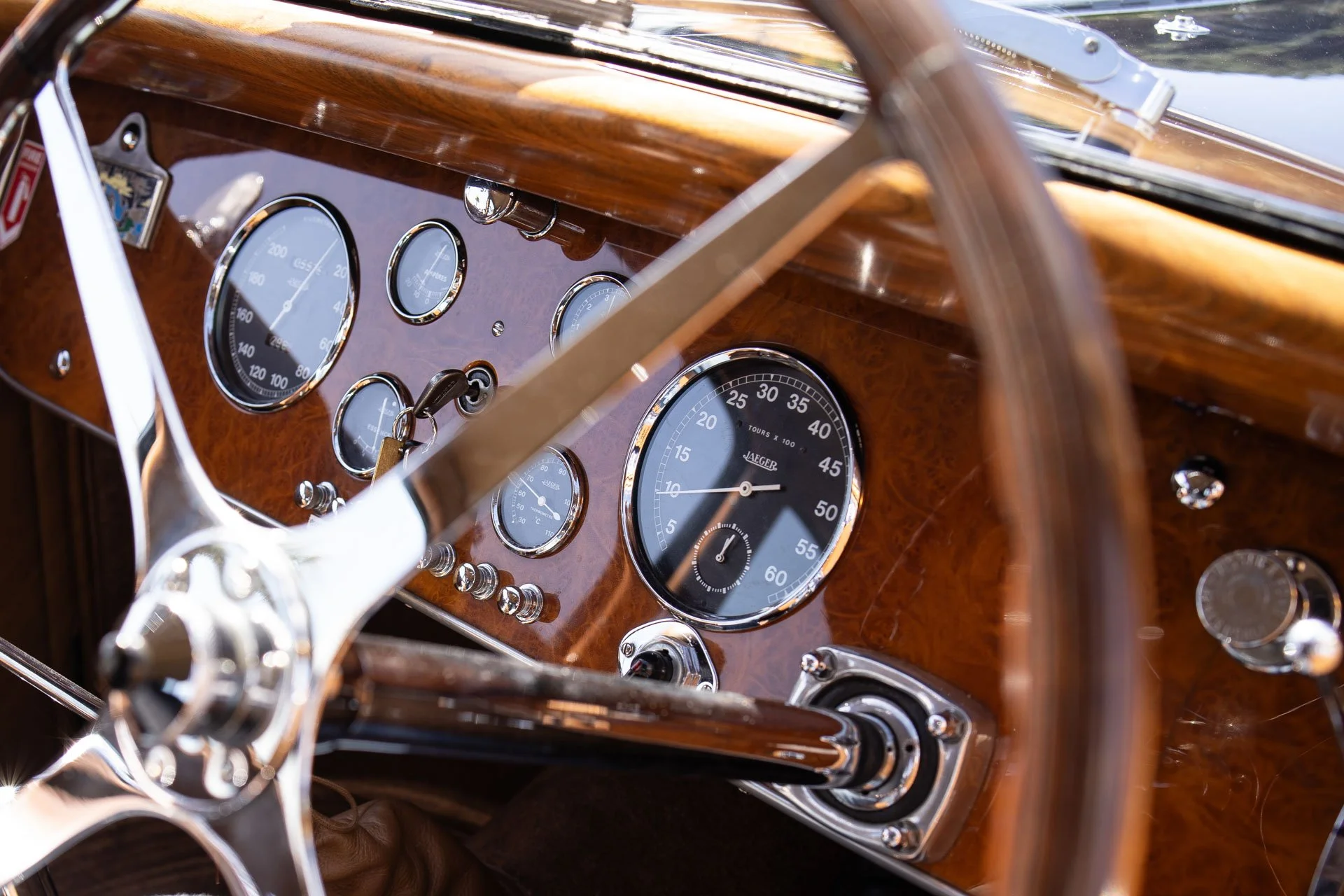
The engine is the centerpiece of the car—an all-alloy monobloc design. To avoid blowing a head gasket, the engine block and head were cast as one unit, with no removable head, which made valve adjustment an awkward affair. The interior of the car is a cocoon of utmost luxury and craftsmanship, hailing from the golden era of coachbuilding and customization. Unifying rarity, sophistication, and technological superiority, these pre-war Bugattis have endured the passage of time to be celebrated widely as marvels of automotive design and artistry.
The twentieth-century visionaries of the French car industry looked fearlessly into the future, giving us cars that directly reflected their place of origin, and often chose paths less trodden. Not only did they dream of futuristic and stylish transportation, but they also had the courage to put them into production in a way that was accessible to the public. No matter what strata of the automotive universe interest you, French cars made landmark achievements in them. Even though driving and owning these cars today is certainly a leap of faith, their appeal and relevance are timeless.

