
Joining Forces
Lotus and Ford Reinvent the Family Saloon
STORY | Chris Seely
Photography | Karl Noakes
Sebring, Florida, 1964. Heat radiates from black asphalt as the sun hovers high in the sky. The air is thick and humid, each breath dense enough to chew as storm clouds, dark and saturated, loom menacingly in the distance. Spectators fill rickety wooden stands wearing freshly pressed slacks while drinking Coke from sweating glass bottles.
The tarmac below is littered with people and cars from all around the world. Ferraris, Austin Healeys, MGs, Porsches, and Fords sit patiently on one side of the track, while their respective drivers ready themselves for a Le Mans style start on the other.
In this busy scene, there are two standouts. First is a short, young man with dark hair; 28-year-old Jim Clark, driver for Lotus, who had just been crowned the Formula One Drivers World Champion of 1963. Second is the car he will be piloting. This race car is not the low-slung, green and yellow F1 car the world knows him by. Instead, it is an unassuming white and green sedan that looks more at home in a grocery store parking lot than on the starting line of Sebring.
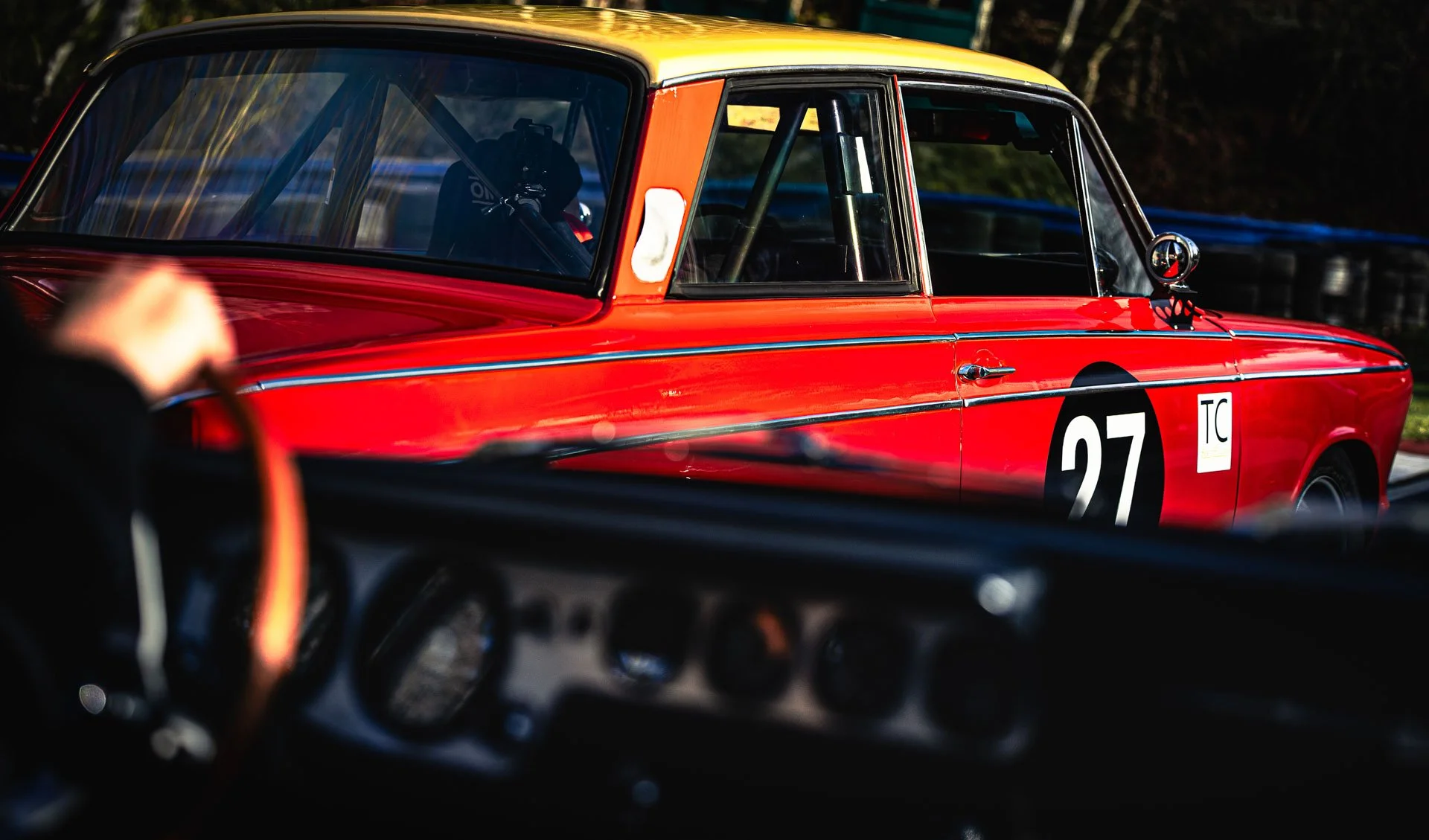
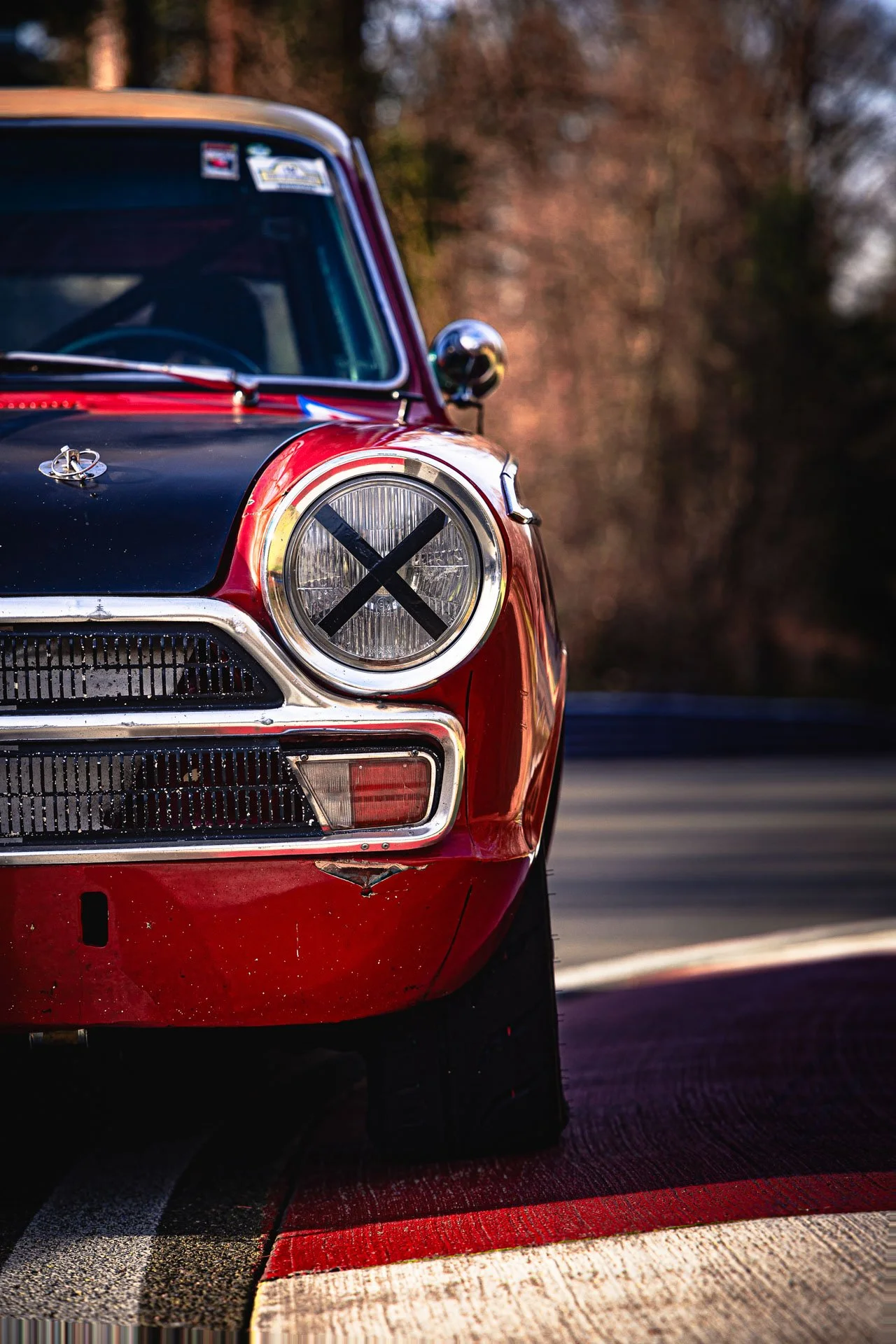
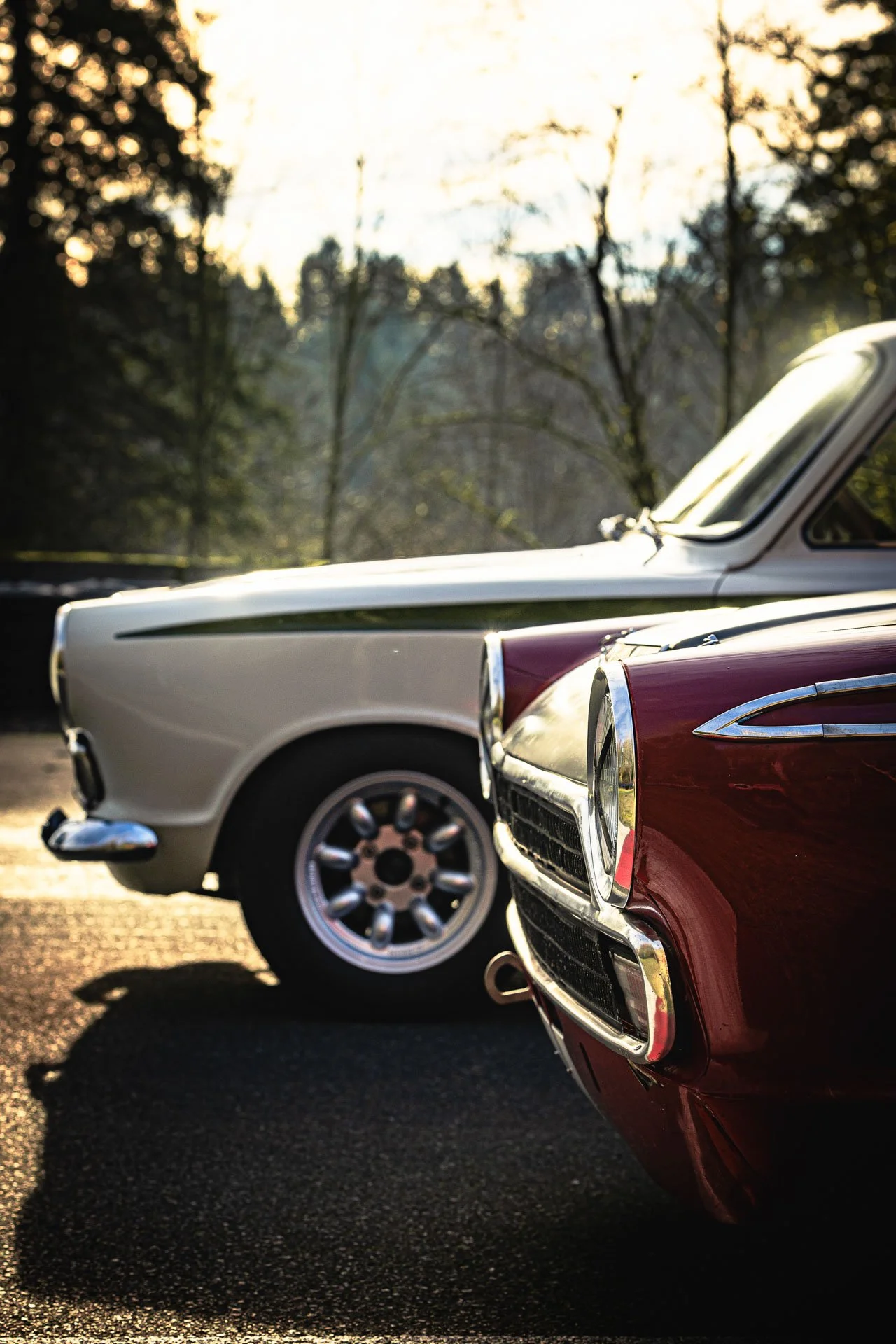
The green flag drops, and the line of drivers explodes in a sprint like bees exiting a hive under attack. As Jim Clark slides into the white sedan, he turns the key, bringing the twin-cam four-cylinder under the hood to life. Gasping for air, twin Weber carburetors pop and snort as he dumps the clutch and accelerates down the front stretch.
This is the Americans’ first taste of history’s greatest racing sedan. A car that will lead to millions of worldwide sales and become one of the most popular automobiles ever built. A partnership that will prove Lotus and Ford can win on any stage. A little white family car that will soon be considered the grandaddy of the greatest race cars of all time. This is America’s first taste of the Mk1 Lotus Cortina.
Every car enthusiast knows the story of the Ford GT40, but long before Henry Ford recruited the help of Carroll Shelby to beat Ferrari at Le Mans, Ford of England executive Walter Hayes, was working with Colin Chapman to put the “Race on Sunday, sell on Monday” theory to the test. The Lotus Cortina was the lovechild of Hayes and Chapman. In previous years, their relationship had grown strong. Lotus bought Ford motors for their top-tier race cars and had just signed a deal to use Ford Kent short blocks in the all-new Lotus Elan. That same year (1962), Hayes proposed the next big step in their relationship. The two would go racing together.
It was a symbiotic relationship from the start. Ford wanted to highlight their little family car as part of their “Total Performance” campaign. Lotus was quickly rising to the top of sports car design and knew that with a little support and marketing expertise, they could be seen as the tuning virtuosos they are today. The Cortina was Lotus’s opportunity to show how their engineers could transform even a mundane family car into a dominant racer. It was Ford of England’s opportunity to show that even a mundane family could own a race car.
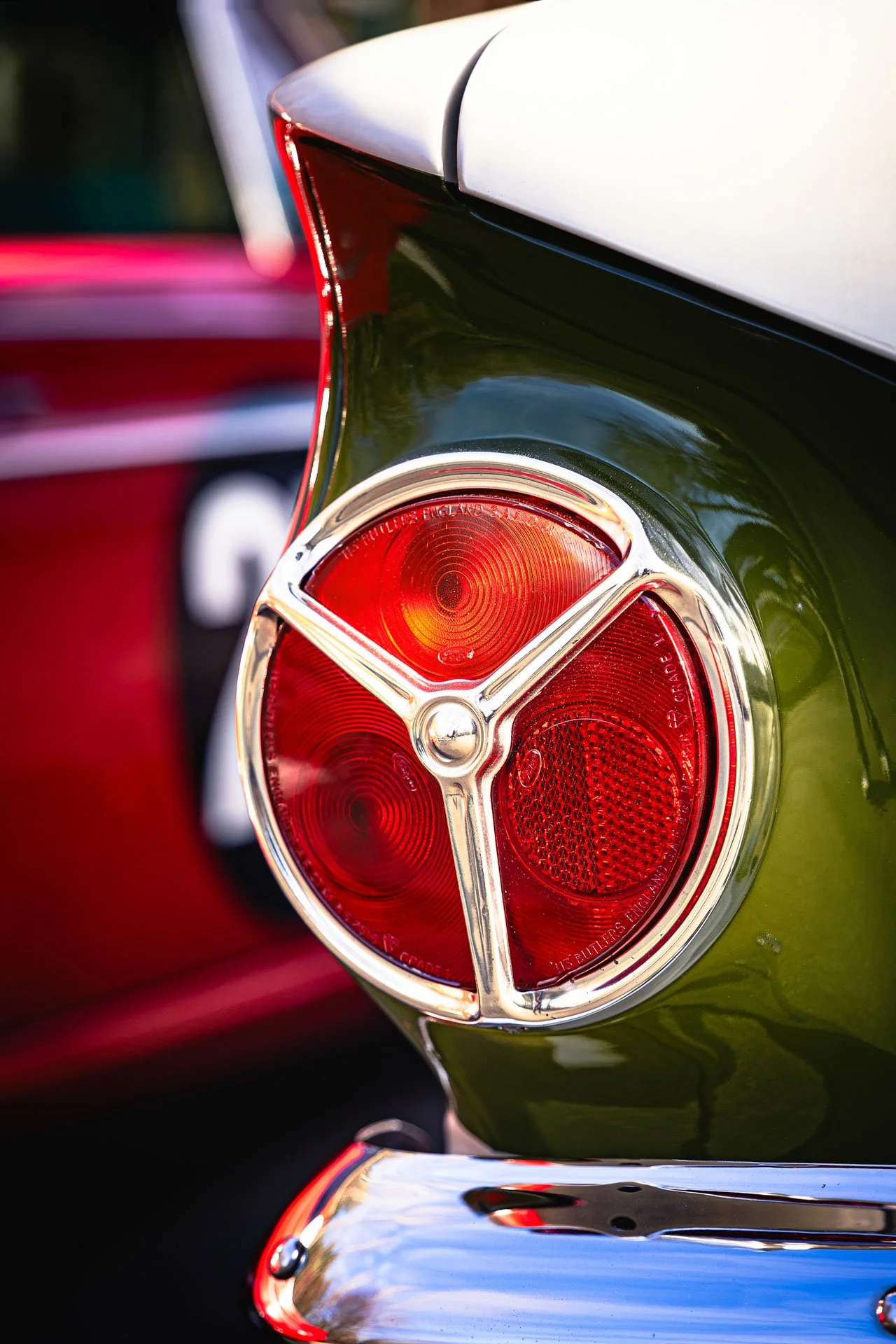
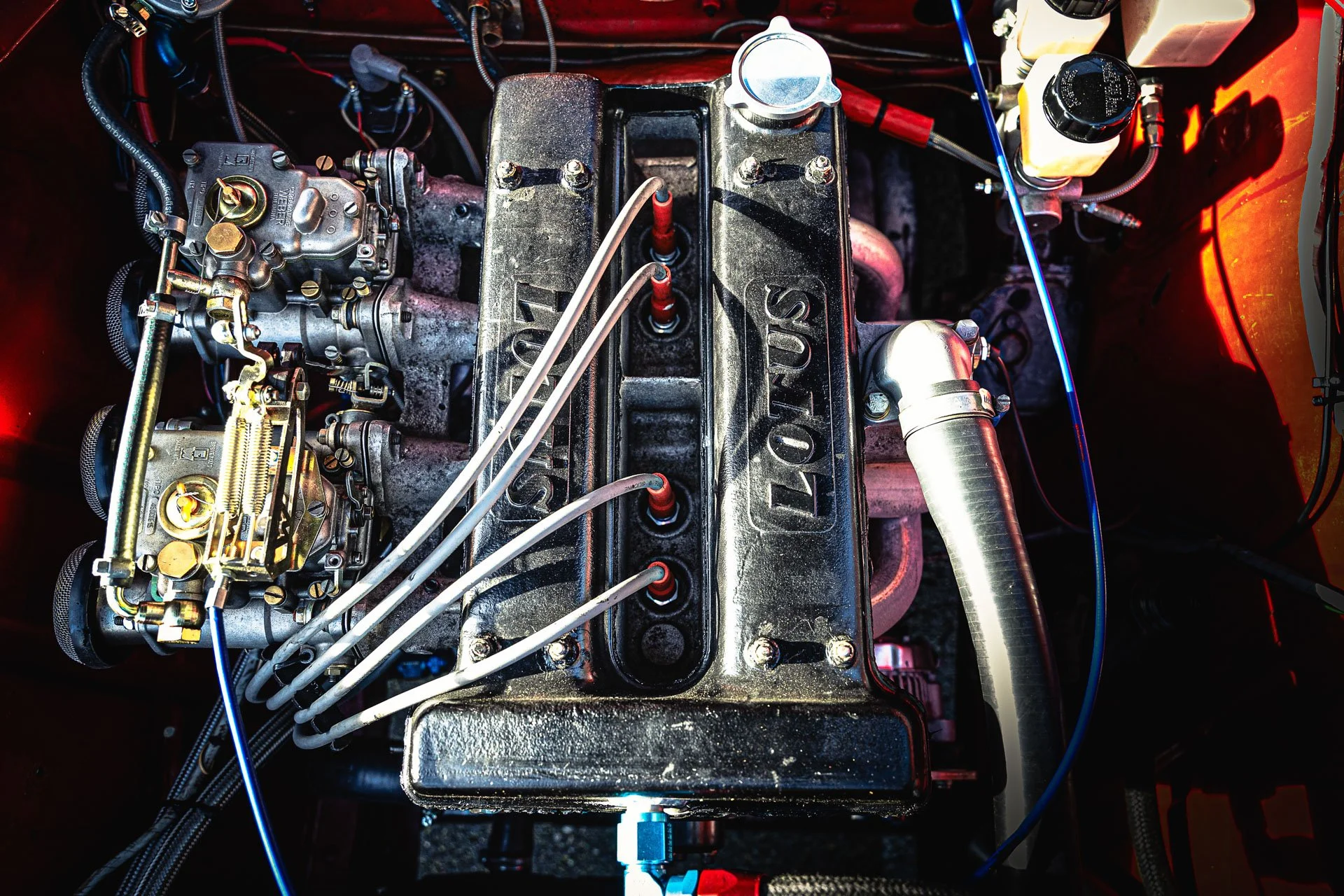
The Type 28 Cortina that hit the track was completely redesigned from the average Mk1 Ford Cortina. Ford provided body shells and managed all sales and marketing, but the brilliance under the steel and aluminum skin was strictly Lotus. The heart of the car was the Ford-Lotus 1.6-liter, twin-cam found in the Lotus Elan. The overly square four cylinder featured a robust, five-bearing, cast-iron block, with a 16-valve aluminum head. In stock form, the motor was capable of 105 horsepower, but with a little massaging and old school tuning, the race cars saw over 140 at a screaming 8,000 rpm. In traditional Lotus fashion, the Type 28 was lightened as well. Custom aluminum panels replaced the otherwise steel bonnet, trunk, and doors, and even the close-ratio transmission and differential received lighter-weight casings. The suspension approach was simple. Stiff in the front, soft in the back. To achieve this, engineers at Lotus pulled a recipe from the new Elan. Custom rear trailing arms resembling A-frames paired with vertical coilovers, inboard disc brakes, and shortened struts were paired with a girthy sway bar up front. Extensive chassis bracing ensured that the monocoque shell would stay together when the likes of Jim Clark and Jackie Stewart put the car on three wheels around the track.
The result of this engineering brilliance was pure performance in a small and lightweight package. At 1,900 pounds filled with fluids and soaking wet, the Lotus Cortina dominated its competition. At its first-ever outing at the Oulton Park Gold Cup, it beat every car in every class apart from the monstrous 7.0-liter Ford Galaxie. For the first time in years, the hairy-chested 3.8-liter Jaguars had been dethroned by a little family car with less than half the engine capacity. Between the Cortina and the Galaxy, the battle for gold was David vs Goliath, but both legends were fighting for team Ford. In 1964, Jim Clark and his Mk1 Cortina swept all seven races of the British Saloon Car Championship with no clear competition. Around the world, the Lotus Cortina showcased the value of agility and lightweighting, not just on the racetrack but in rally too. The most notable performance was in 1964 when Cortinas placed first and third overall in the grueling 3,000-mile East African Safari.
Through its seven-year race career, the design of the Lotus Cortina was seldom stagnant. Early models were known to have weak rear suspension, especially when pushed on rally stages. As a result, later cars used leaf springs, rear drum brakes, and radius arms from the more commonplace Cortina GT. Changes that Colin Chapman surely hated, but contributed to tremendous success and increased reliability in 1965.
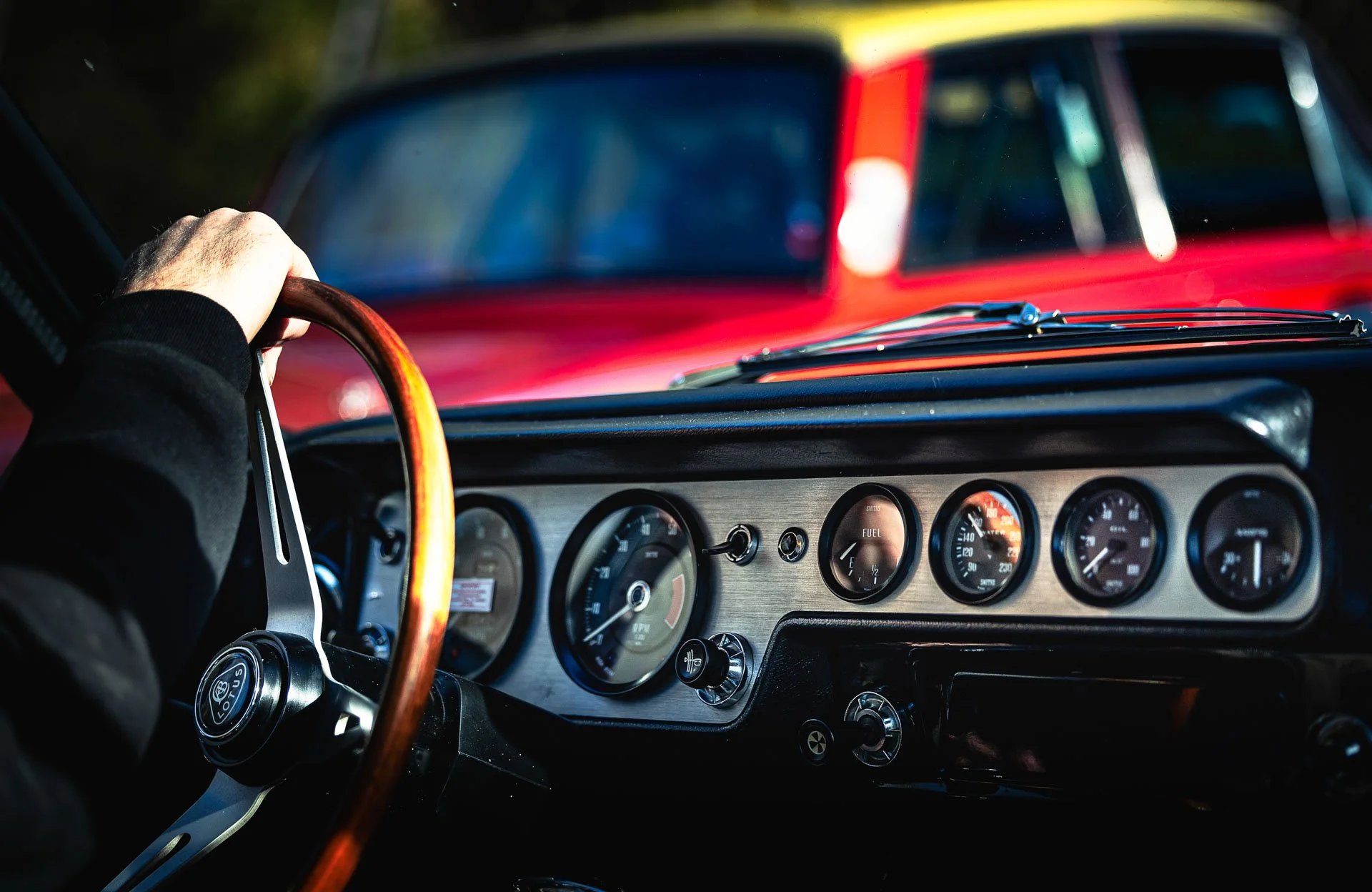
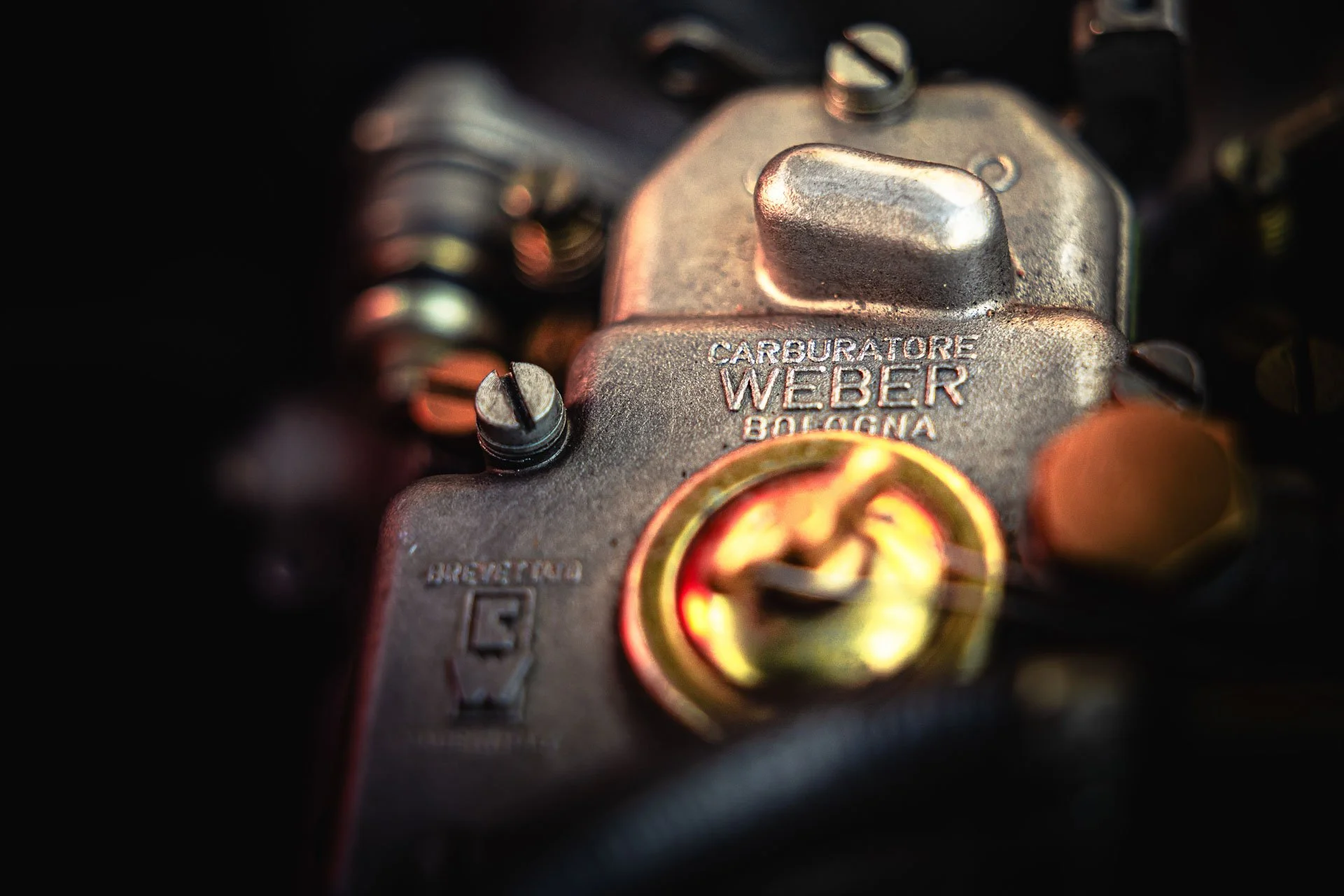
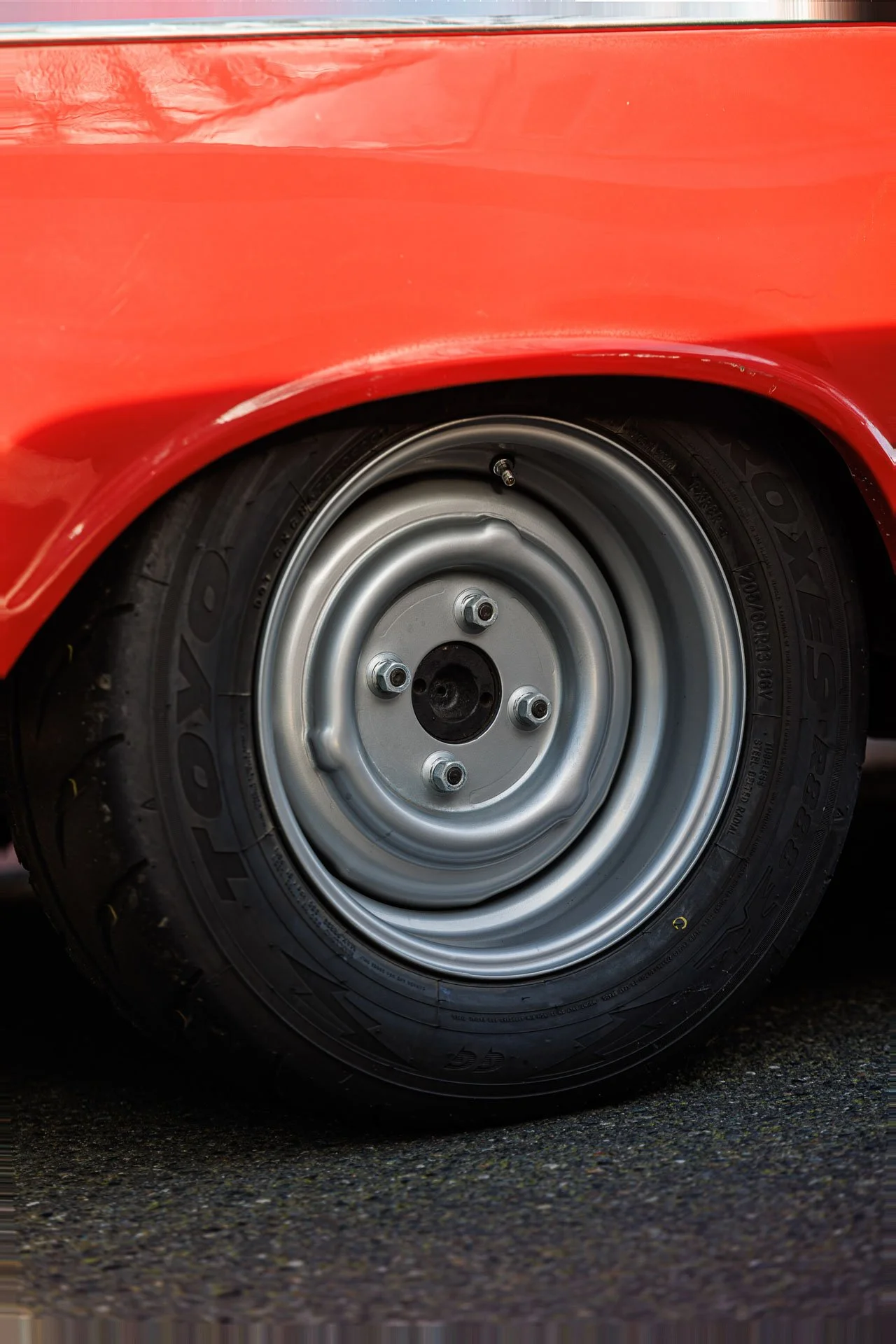
Lotus Engineers worked around the clock to optimize the Cortina wherever they could. Gear ratios were often changed, and to optimize weight distribution, the spare tire and battery were removed frequently as other adjustments to the car were made. In 1967, the original Mk1 Cortina made way to the Mk2. These cars are often touted as more Ford than Lotus, as several changes were made to make the race cars more robust and easier to build with standard Cortina parts.
At the dealership, the Ford Cortina was a wild success. The Lotus version of the little sedan represented the pinnacle of Cortina performance. However, after the extensive Lotus modifications, the Type 28 was too expensive, fragile, and scarce for the family sedan market. Most Ford dealerships didn’t even know how to service the few that did see regular road use. Sales instead spread to the more common variants of the Cortina, such as the Standard, Deluxe, Super, GT, and 1600E. In Europe, the badge you had on your Cortina represented your level of car enthusiasm. While these mass-produced versions were rarely raced, they portrayed motorsport greatness and filled driveways all over Europe. Over the Ford Cortina’s 20-year production run, 2.8 million cars were sold, constantly breaking sales records in the UK.
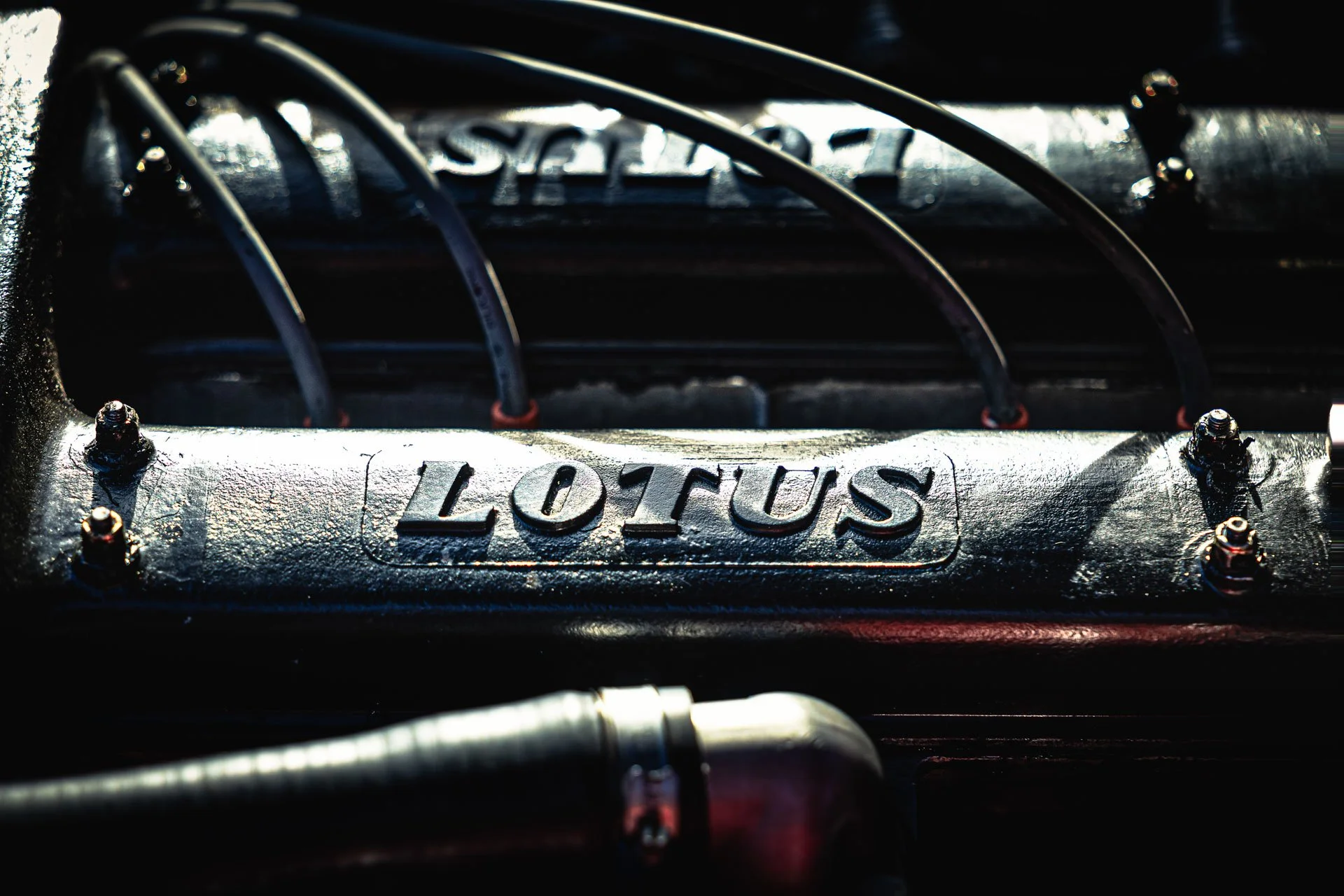
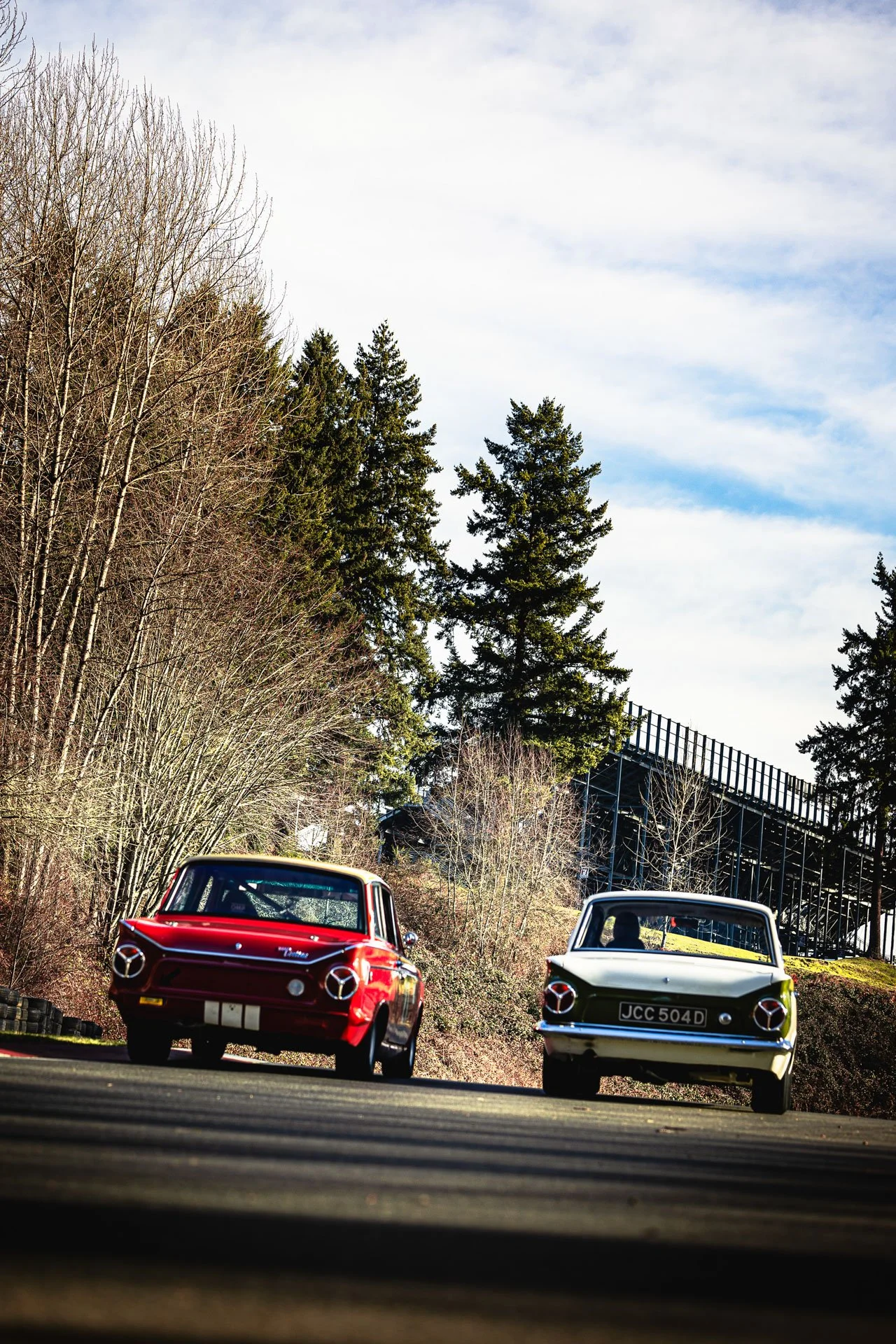
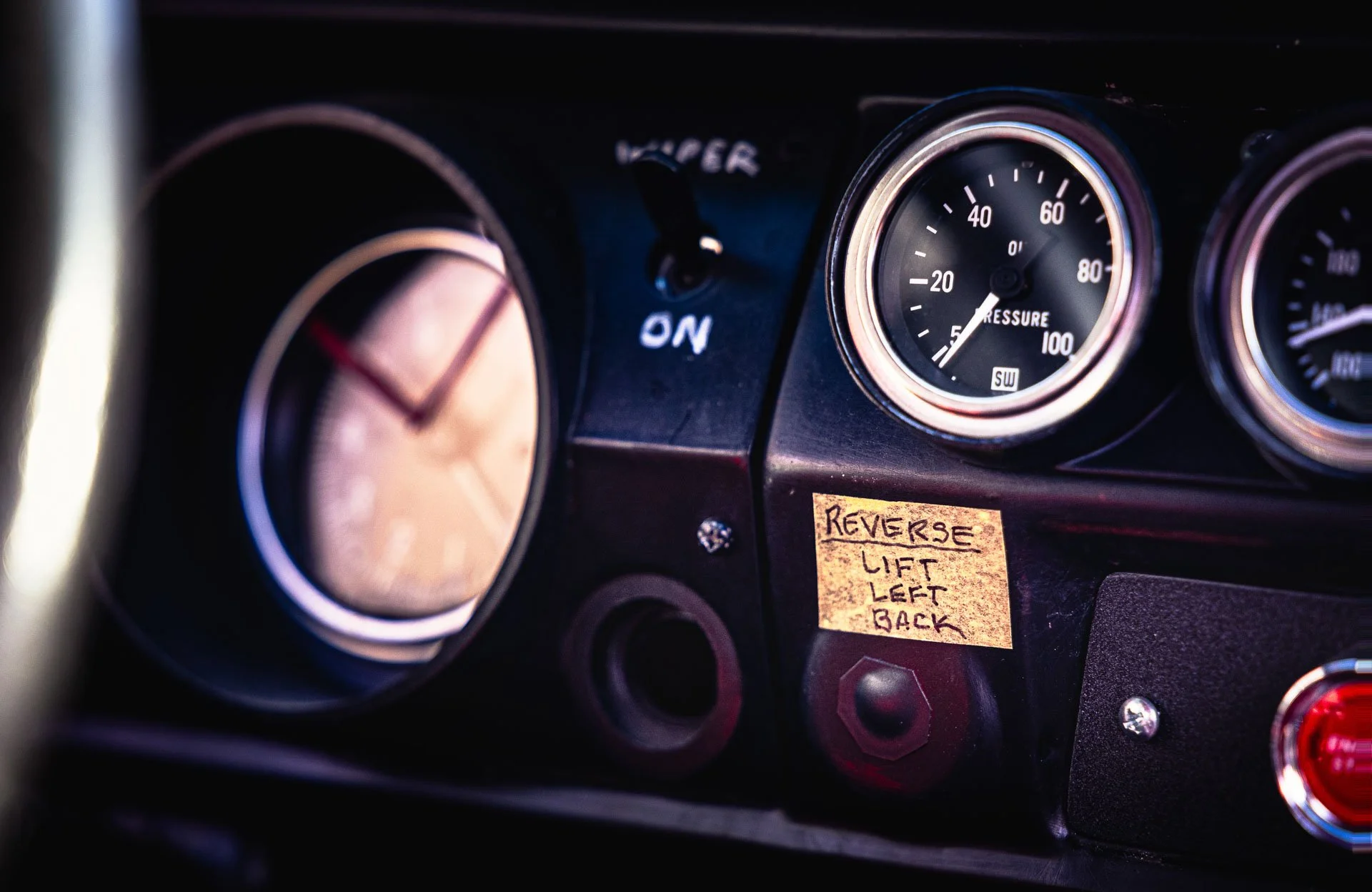
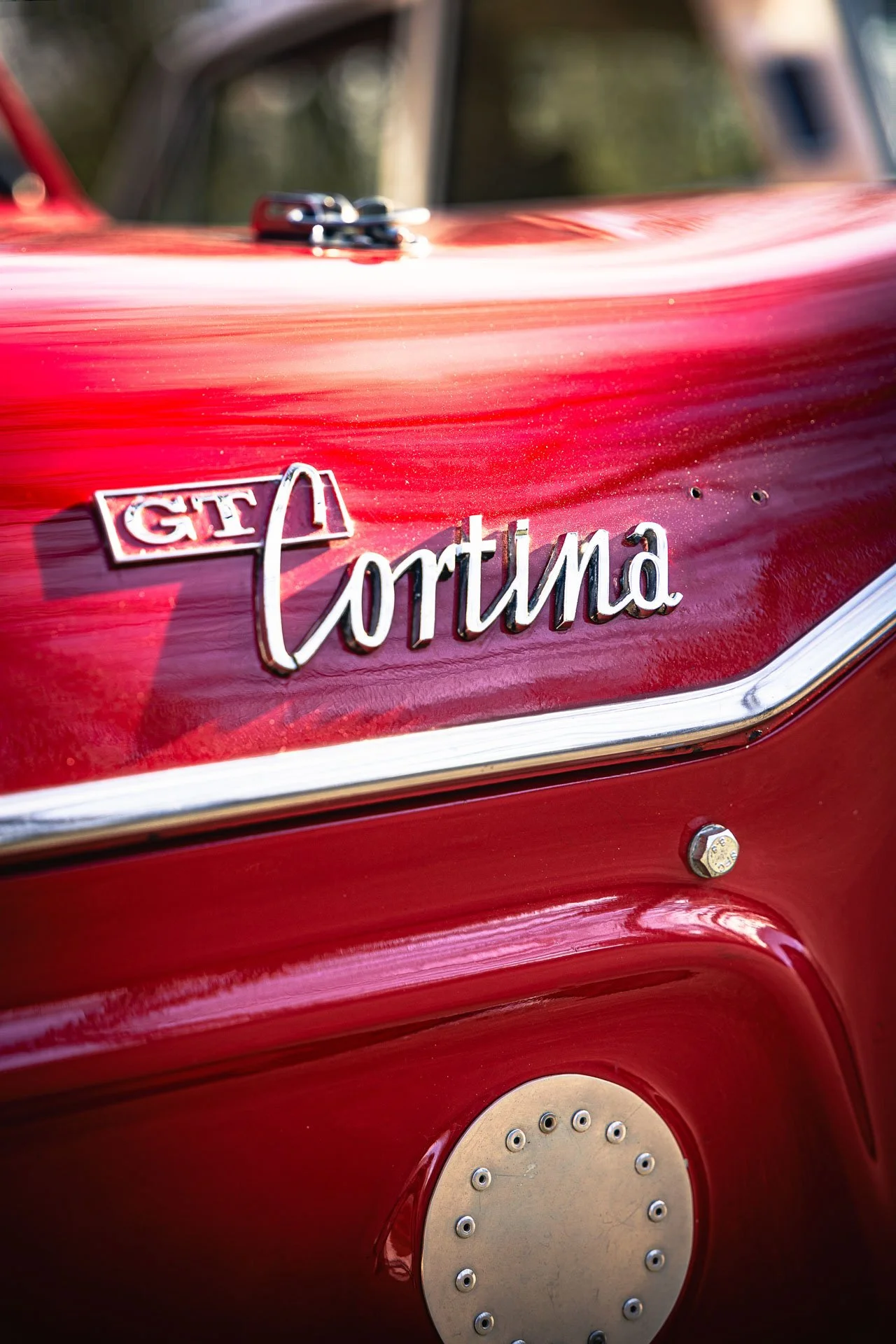
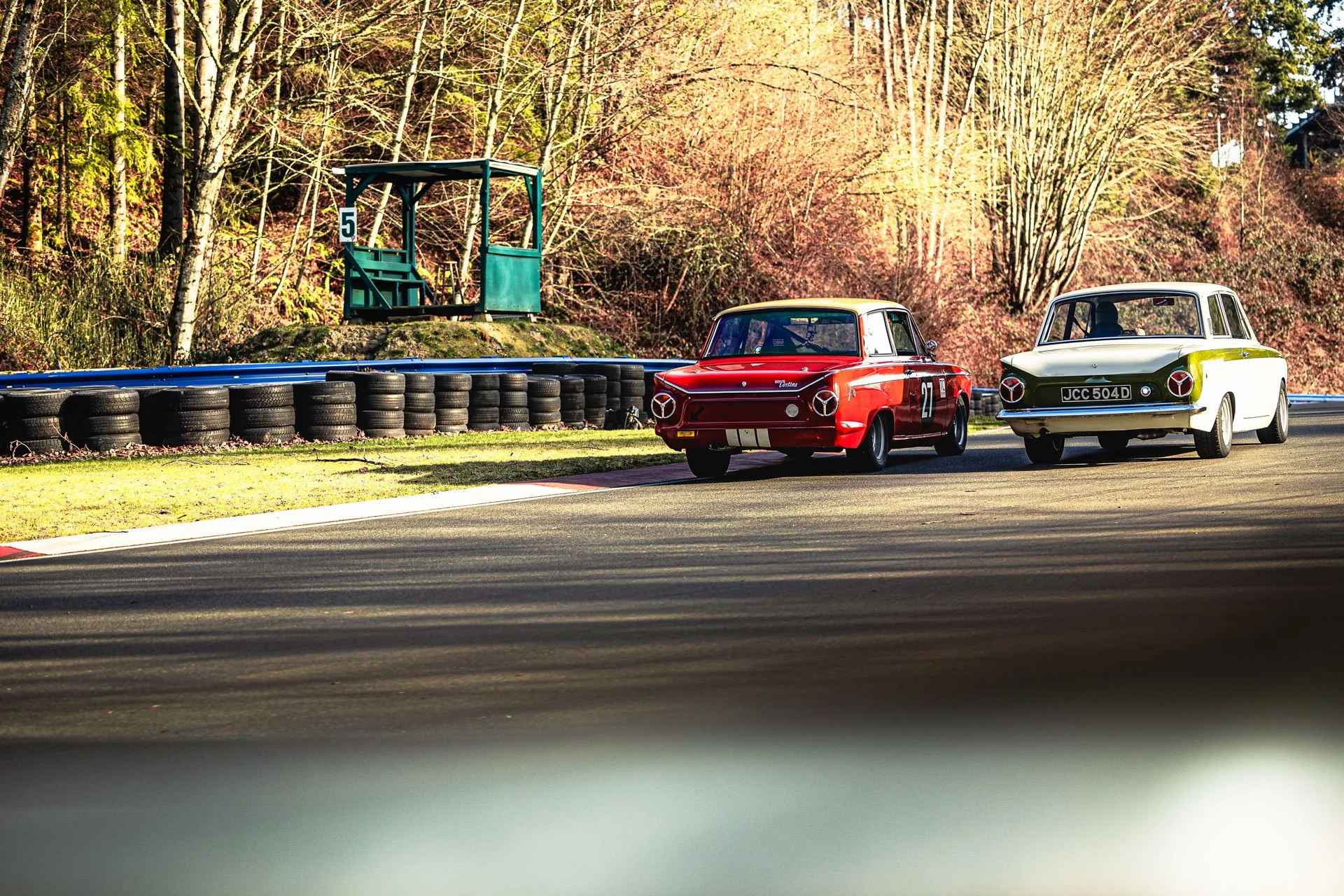
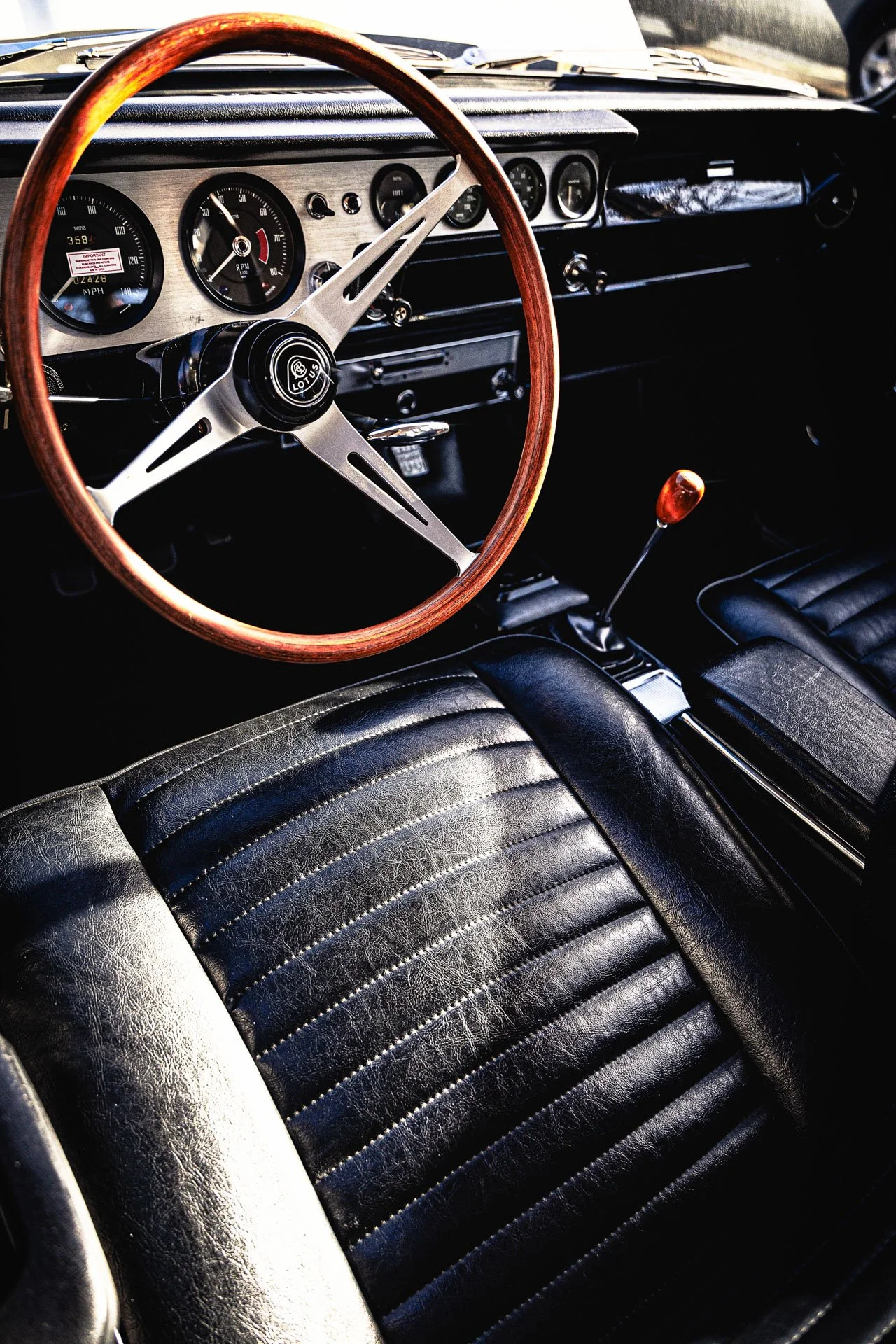
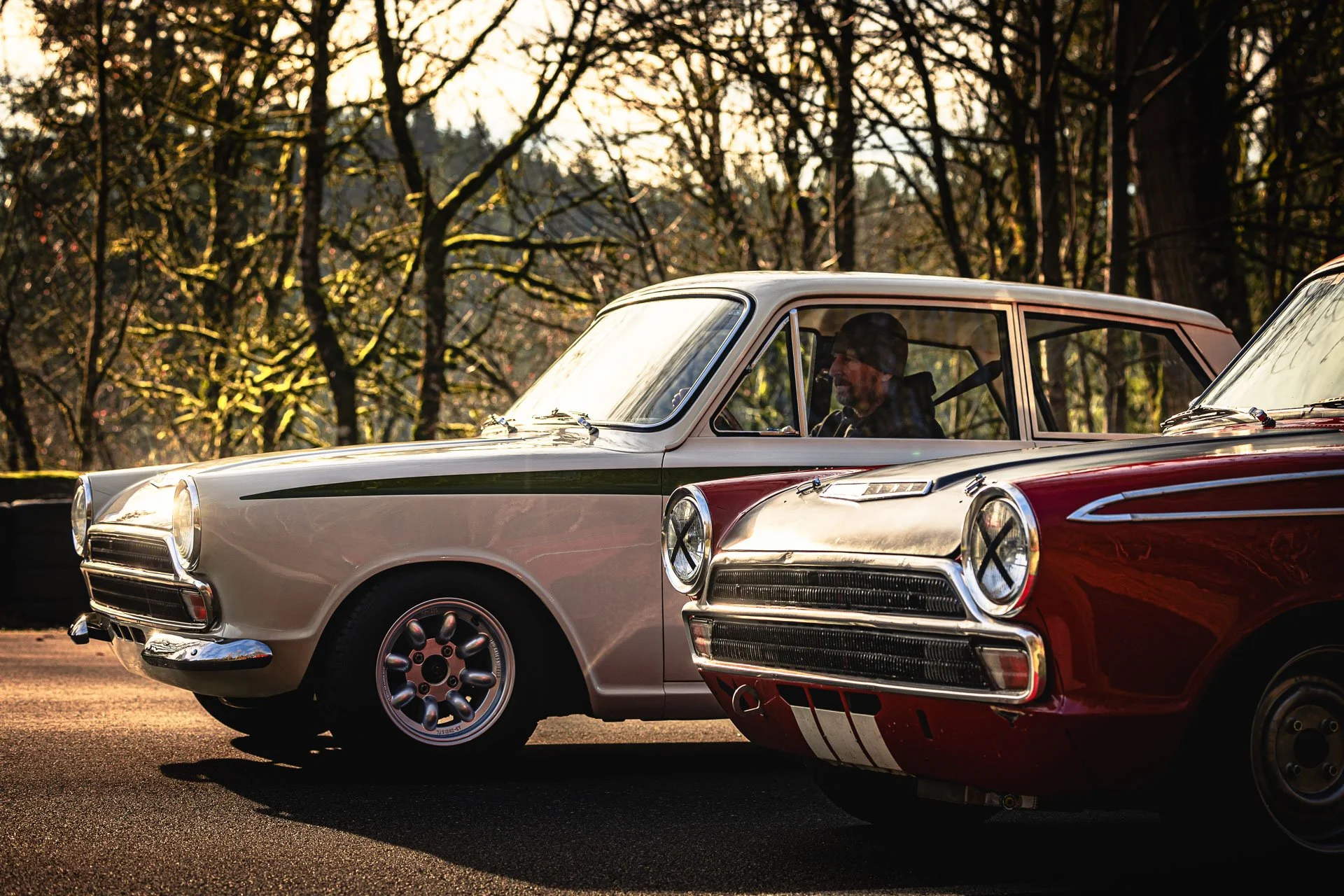
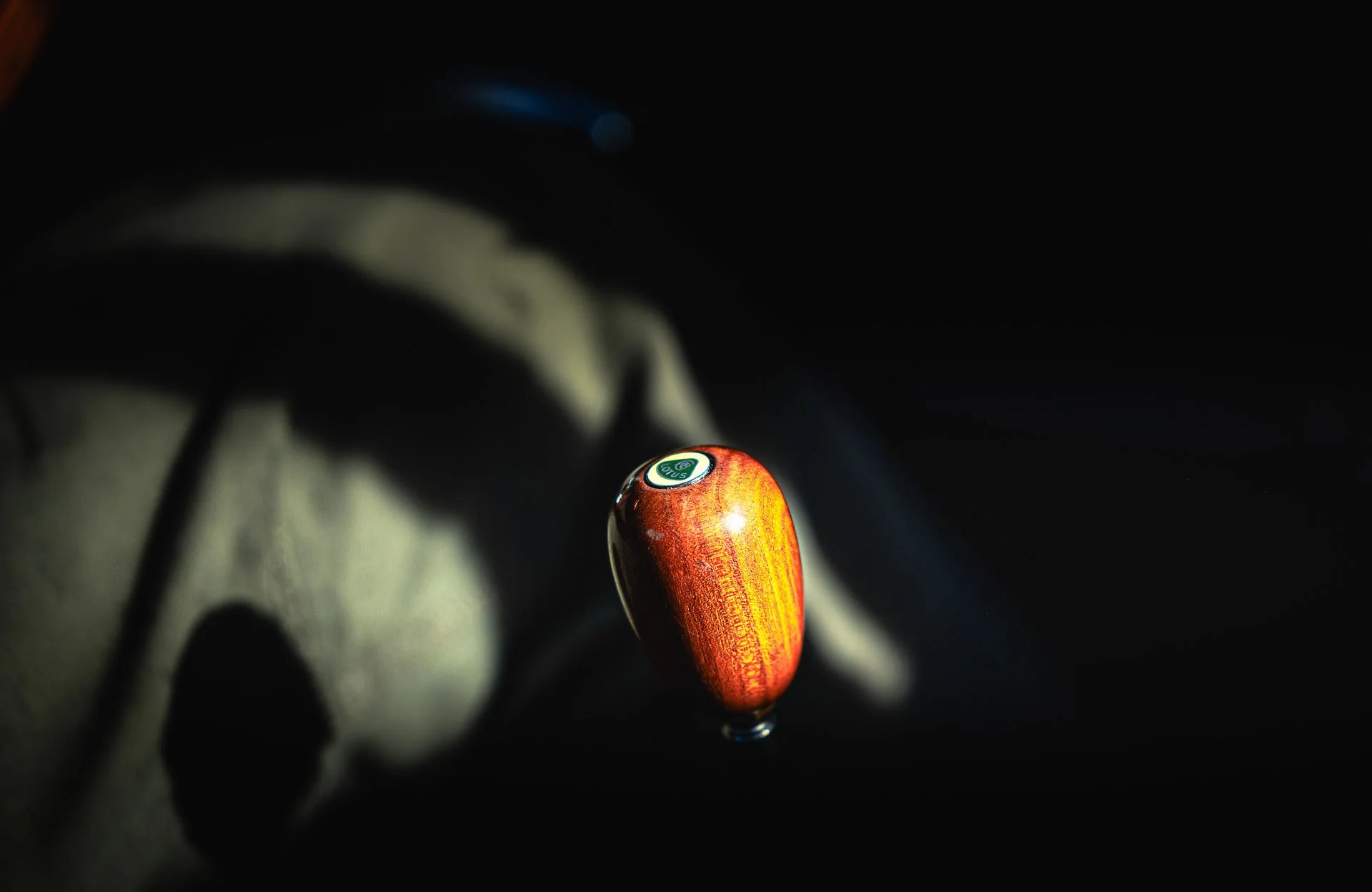
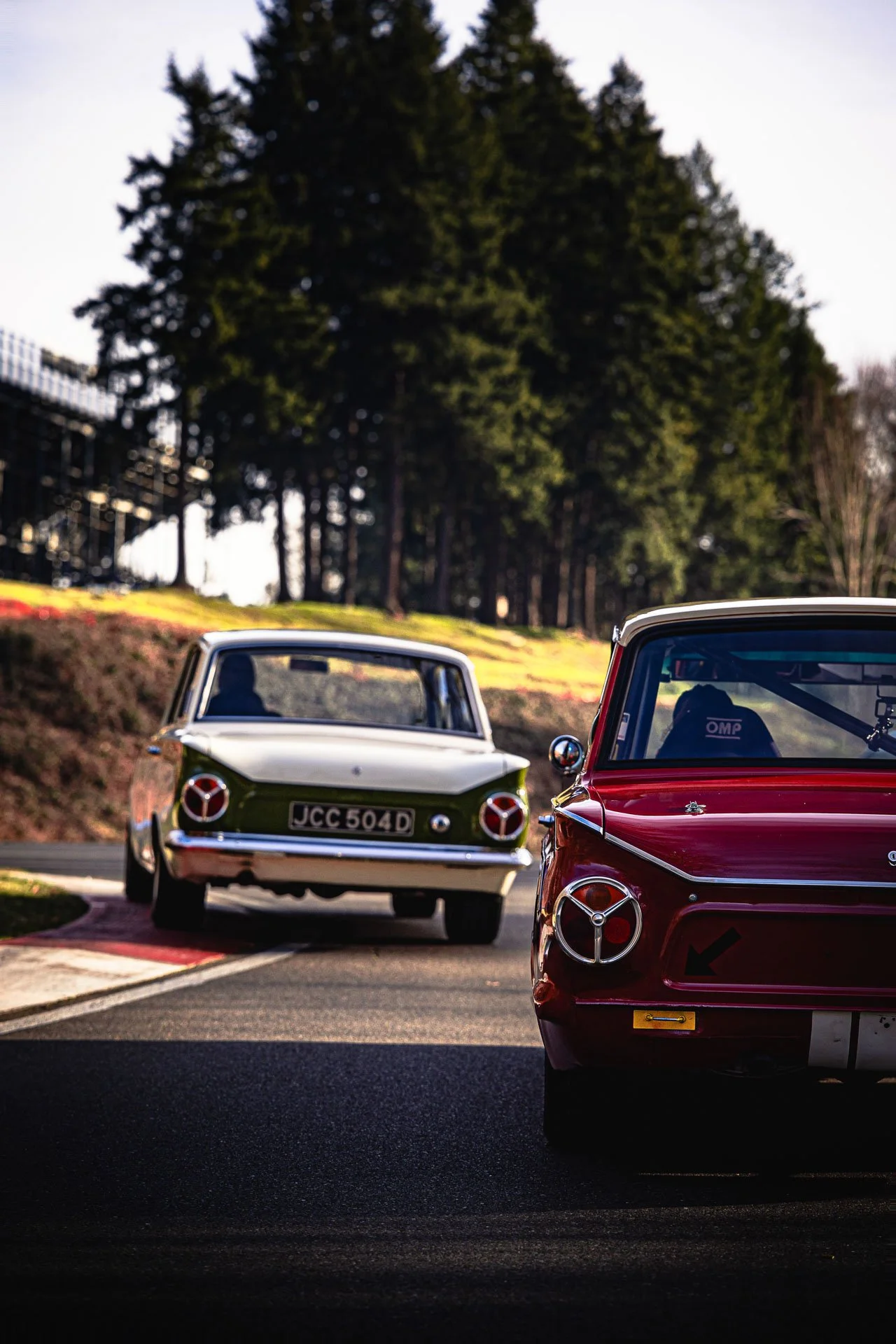
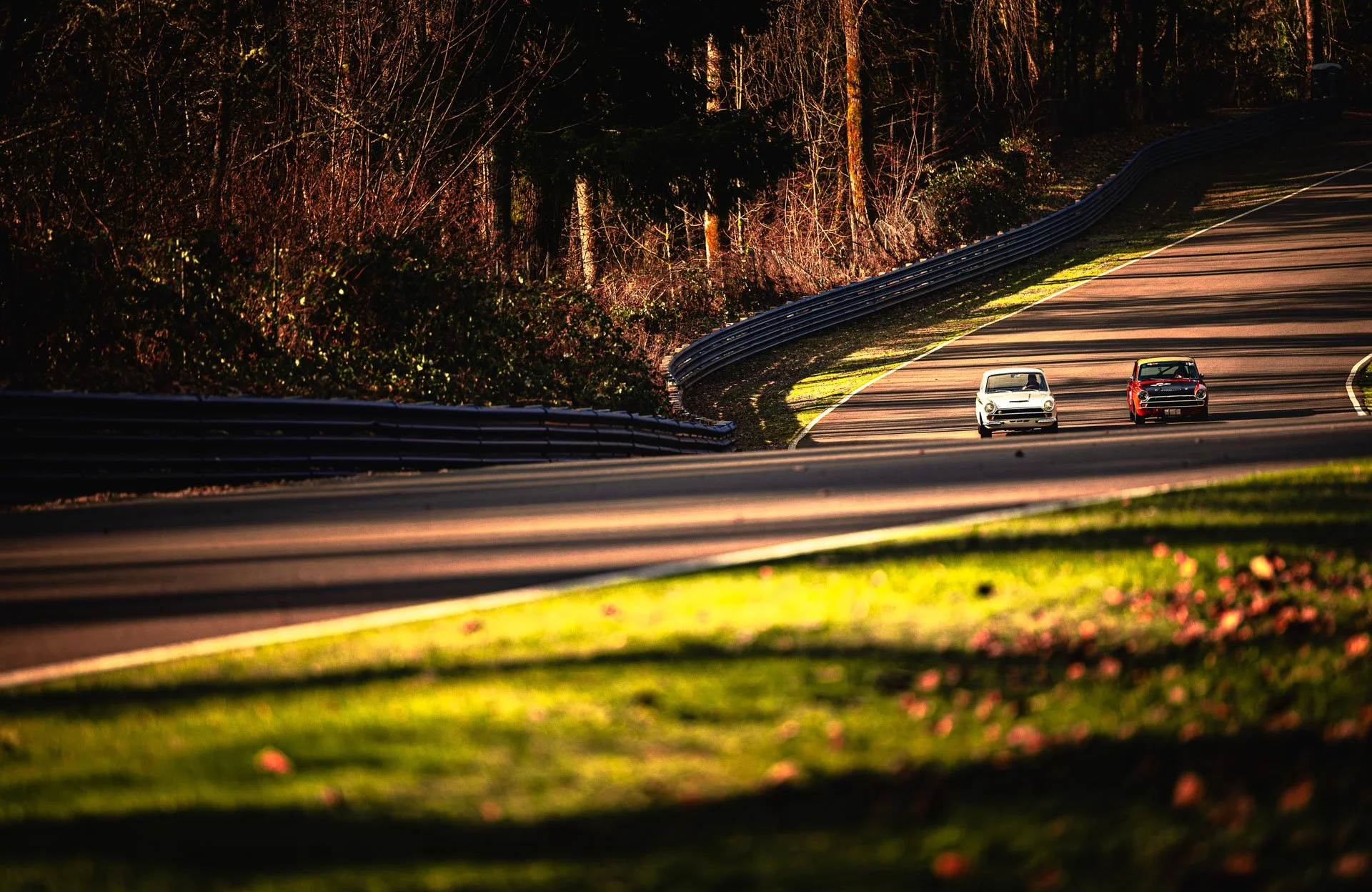
The two Cortinas featured in this article represent this intense enthusiasm for motorsport. Owned by Steve Rimmer, the White and Green Mk1 is an authentic, low-mileage, perfectly restored, 1965 Type 28 as seen by the Lotus interior, rear drums, leaf springs, and location of the spare tire. The red, black, and gold Cortina owned by Debbie and Brad Briscoe is the opposite. Their car is a purpose-built racer which started life as a humble Cortina GT before being stripped out and thrashed in hill climbs and grands prix around Europe. In 2020, they bought the car and brought it to the States for a well-deserved Lotus twin-cam conversion. Debbie still races this car frequently in some of the country’s favorite vintage races, including The Velocity Invitational and Rolex Monterey.
“It’s fun because it is not easy to drive, it’s a momentum car, but it also feels like I am driving grandma’s car on a race track,” Debbie said during our photo shoot. Steve agreed that a race Cortina in any form can be a handful. “For the period, it is pretty agile, but without power steering and with wider tires, it takes some effort to drive spiritedly.
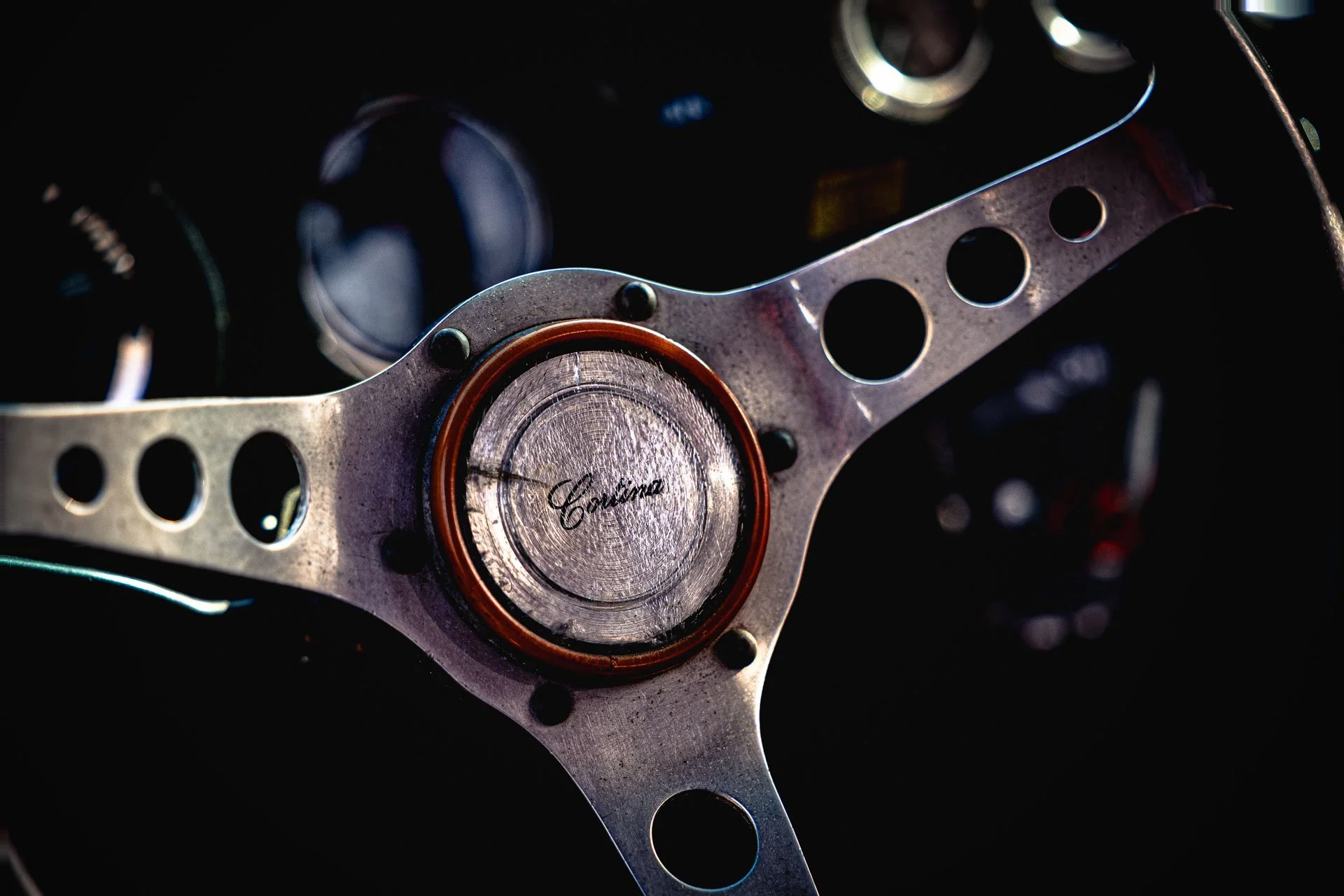
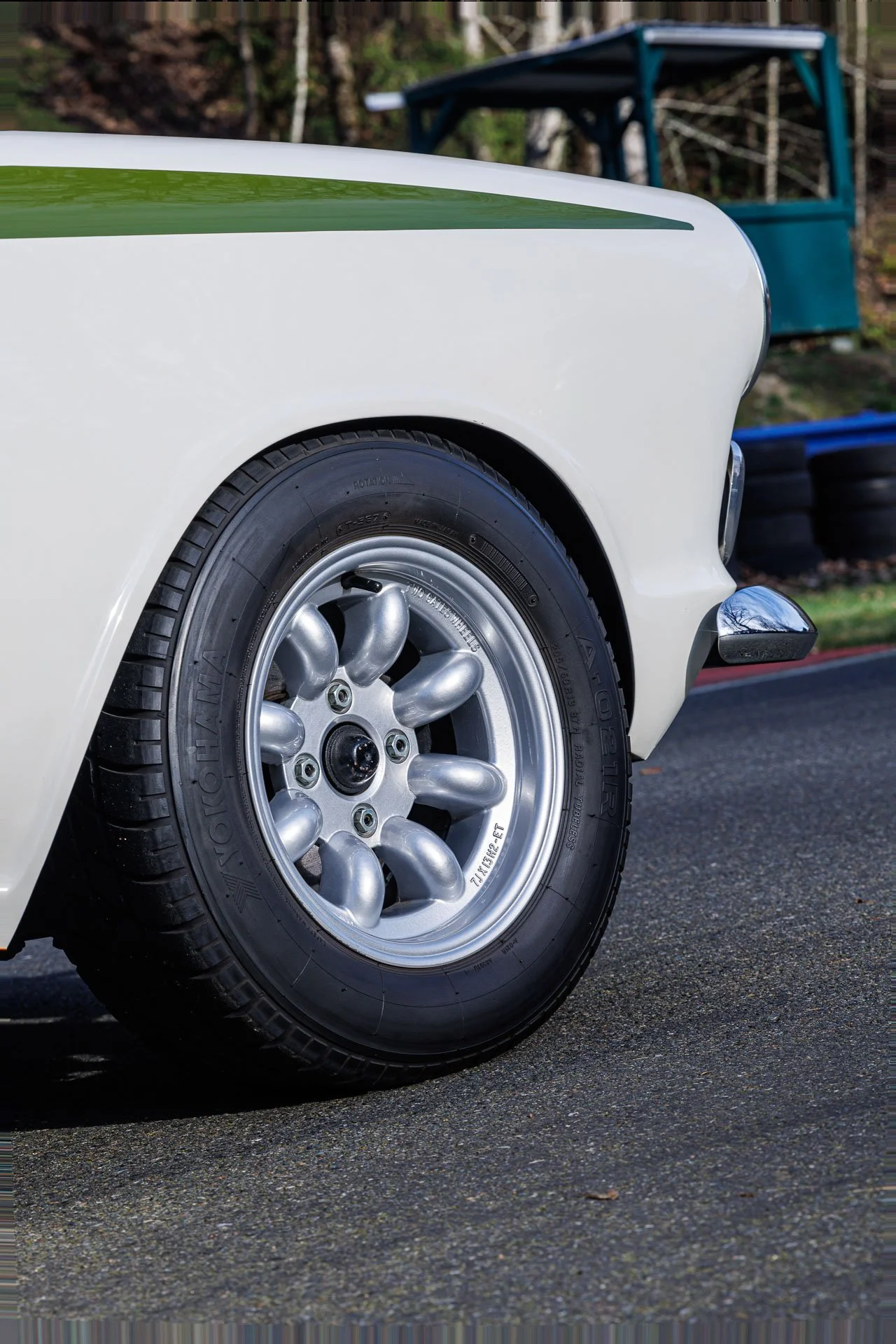
The Lotus Cortina was born in an era of hand-rolled cigarettes and backyard baseball. A time when carburetors were tuned by ear, distributors used points and a condenser, and drag coefficients were more myth than science. But the evolution it created was bigger than its own success. The Lotus Cortina was the genesis of the lightweight racing sedan. It laid out the groundwork for future road and rally greats like the Ford Escort, Mercedes 190E, and RS200. It was the car that Jim Clark, Jackie Stewart, Dan Gurney, Graham Hill, and Alan Mann first cut their teeth on, and it proved that the Lotus approach of “simplify then add lightness” could prove successful in any form and on any stage. It may not have as many wins as other legends like the E30 M3, or Audi Quattro, but without the passion it drove for race and rally, neither may have existed in the first place.

