
The Last of the Le Mans Berlinettas
1950 Ferrari 166 MM
STORY | Stein Broeder
Photography | Gooding & Company, Mathieu Heurtault
Under the glass canopy of the 1950 Paris Motor Show, a light blue fastback caught the spotlights — and the imagination — of Europe’s motoring elite. Displayed on Luigi Chinetti’s stand between a 166 MM Barchetta and a 166 Inter Cabriolet, the Ferrari 166 MM Berlinetta Le Mans looked every inch the future of speed: leather bonnet straps, faired-in fog lights, Plexiglas windows, and the purposeful austerity of a cockpit built for endurance racing.
This particular car, chassis 0060 M, would soon cross the Atlantic under the care of Briggs Cunningham, the American gentleman racer who uniquely understood how to blend European engineering with the rising energy of American motorsport. Weeks after its Paris debut, the Berlinetta returned to the factory for upgrades to full 195 S specification — more displacement, more power, more authority — before being shipped to Connecticut and pointed directly at Florida for its first major test.
That test was the Sam Collier Memorial Sebring Six Hour Grand Prix on December 30, 1950. With Chinetti himself at the wheel, 0060 M ran a fierce, calculated race. The result: seventh overall, first in class, and a decisive statement that Ferrari’s closed-cockpit experiment offered more than style — it could deliver under pressure, distance, and darkness.
The Tipo 166, first unveiled in 1948, was Ferrari’s thunderclap announcement to the world. Powered by Gioachino Colombo’s jewel-like V12 — compact and operatic — the 166 lineup quickly became synonymous with winning. The 166 MM alone secured an unmatched triple crown: Le Mans, Targa Florio, and Mille Miglia, a feat no other model has repeated.
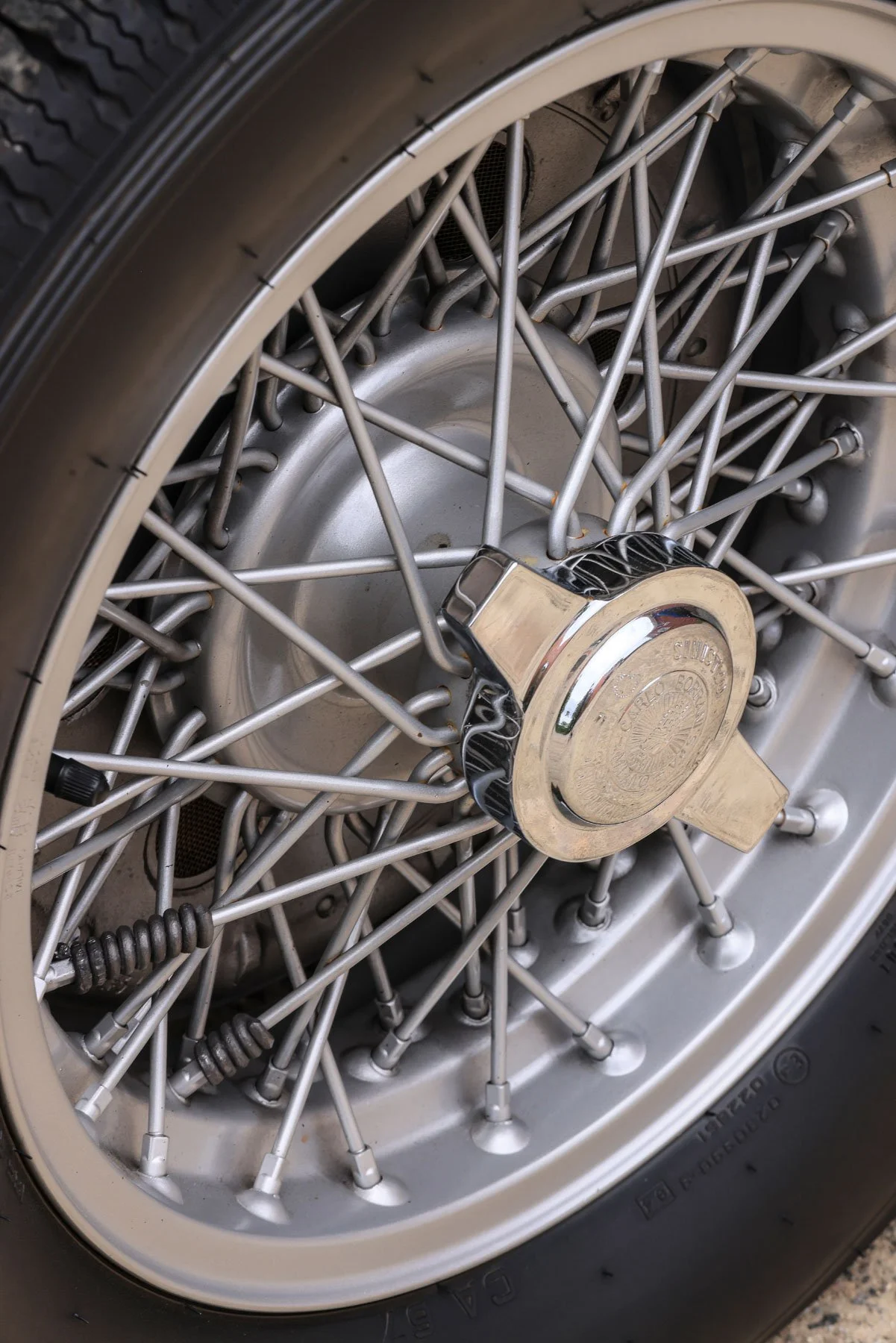
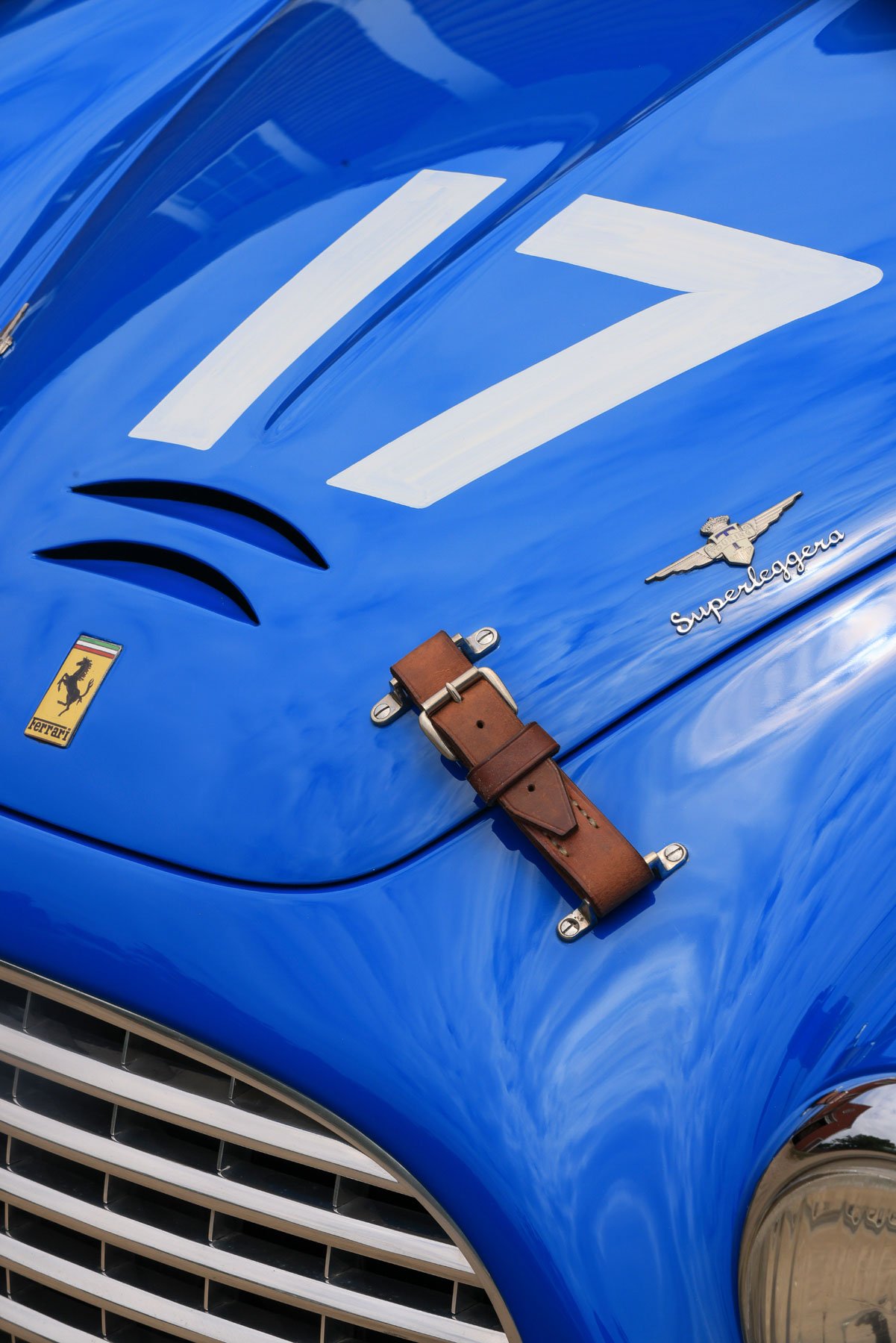
Carrozzeria Touring played a pivotal role in shaping this legacy. Their Superleggera (“super light”) construction — aluminum skin over a delicate tubular frame — yielded bodies as strong as they were ethereal. The famed Barchetta roadster defined Ferrari’s early competition look, but for long-distance speed, Touring created the Berlinetta Le Mans: a wind-cutting fastback that echoed pre-war Alfa Romeo streamliners while pushing Ferrari into a new visual and aerodynamic era.
Of the mere five 166 MM chassis bodied by Touring in Berlinetta Le Mans form, 0060 M stands as the final example. Originally finished in a distinctive light blue, body no. 3461 features horizontal hood vents, rear quarter-window louvers, faired-in fog lamps, and a one-off dashboard with centrally mounted, white-faced Jaeger instrumentation. As an even-serial-number Ferrari competition car, 0060 M also carries the unmistakable mark of early Ferrari practice: even numbers for racing prototypes, odd for road machines. For collectors, that distinction is gold.
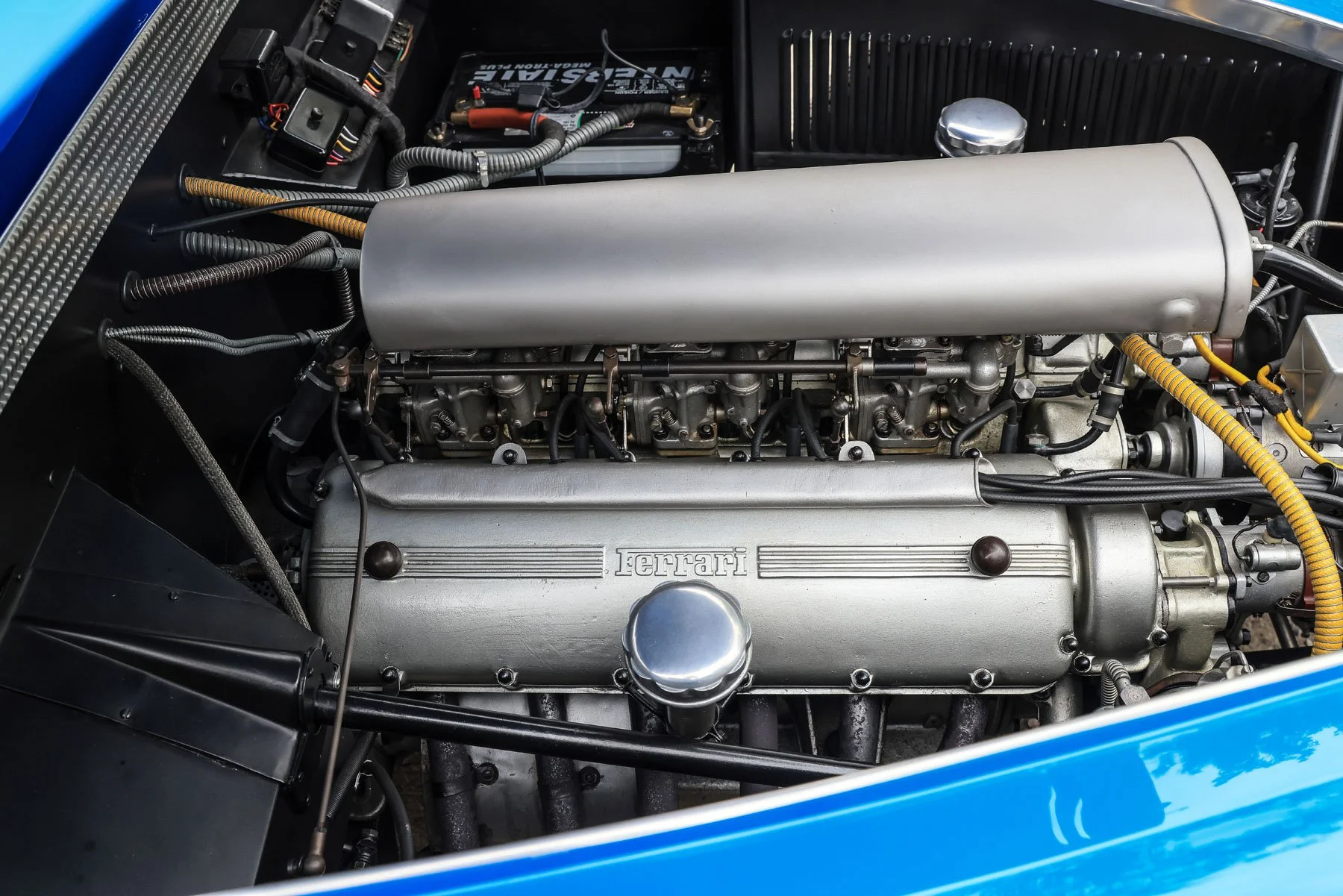
Cunningham’s decision to have the car upgraded to 195 S mechanicals before its American campaign proved both savvy and poetic. The V12’s displacement grew to 2,341cc, fed by three Weber 32 DCF carburetors drawing air through a cold-air box. Output rose to an estimated 170 bhp at 7,000 rpm, with improved torque for tighter, more responsive performance. It was, in essence, a factory-sanctioned evolution — competition development in real time.
Chinetti’s Sebring class win was just the beginning. The car next traveled to Argentina at the invitation of President Juan Perón, where Jim Kimberly piloted it to a seventh-place finish. Back in the U.S., it appeared at both Bridgehampton and Watkins Glen, carving its place into the emerging American road-racing scene.
By 1952, the car passed from Cunningham to Peter and Robert Yung, who entered it in the Bridgehampton Cup before trading it back to Chinetti for a Vignale-bodied 225 S. Chinetti then sold the car to Henry N. Manney III, later the beloved European editor of Road & Track. Later that year, Manney swapped 0060 M, along with other considerations, with John Fox — Cooper’s U.S. agent — for a new Aston Martin DB2 and a Cooper Norton. Fox entered the Ferrari in its final period race, the San Diego Cup at Torrey Pines.
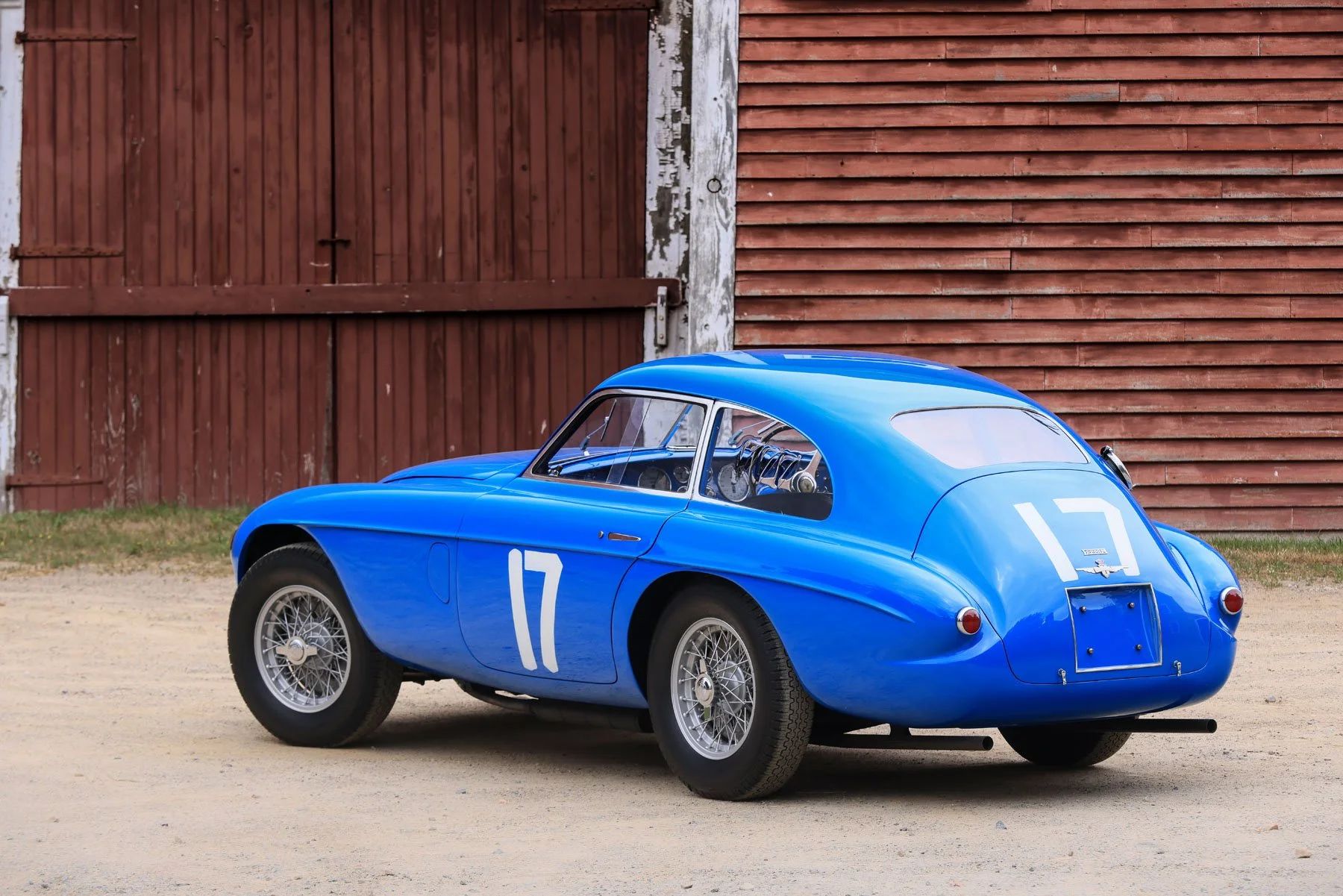
From there, 0060 M passed through several Southern California owners before heading to Illinois in 1965, eventually appearing at the 1971 FCA National Meeting in Chicago. Under Donald Dethlefsen, it earned Best of Show at the 1977 FCA National Meeting at Watkins Glen, a fitting tribute to its authenticity and presence.
In 1981, the Berlinetta shipped to Australia to join the collection of Peter Briggs, shining at the Mille Miglia, Goodwood Festival of Speed, and the Louis Vuitton Bagatelle Concours d’Elegance. Its versatility was unmistakable: race car, showpiece, and ambassador of early Ferrari artistry.
Returning to the U.S. in 1998, the car was acquired by Bruce Lustman of Colorado, who commissioned a meticulous restoration by Mike Dopudja of MPH in Englewood. Completed over two years, the work earned Second in Class at Pebble Beach in 2001. Today, 0060 M is presented in its original Sebring livery, and crucially, its chassis, engine, gearbox, and rear end all match the factory build sheets — a matching-numbers quartet that significantly elevates its importance. Maintained by Paul Russell and Company, it recently completed a private rally from Palm Beach to Naples without issue, a testament to the integrity of both restoration and design.
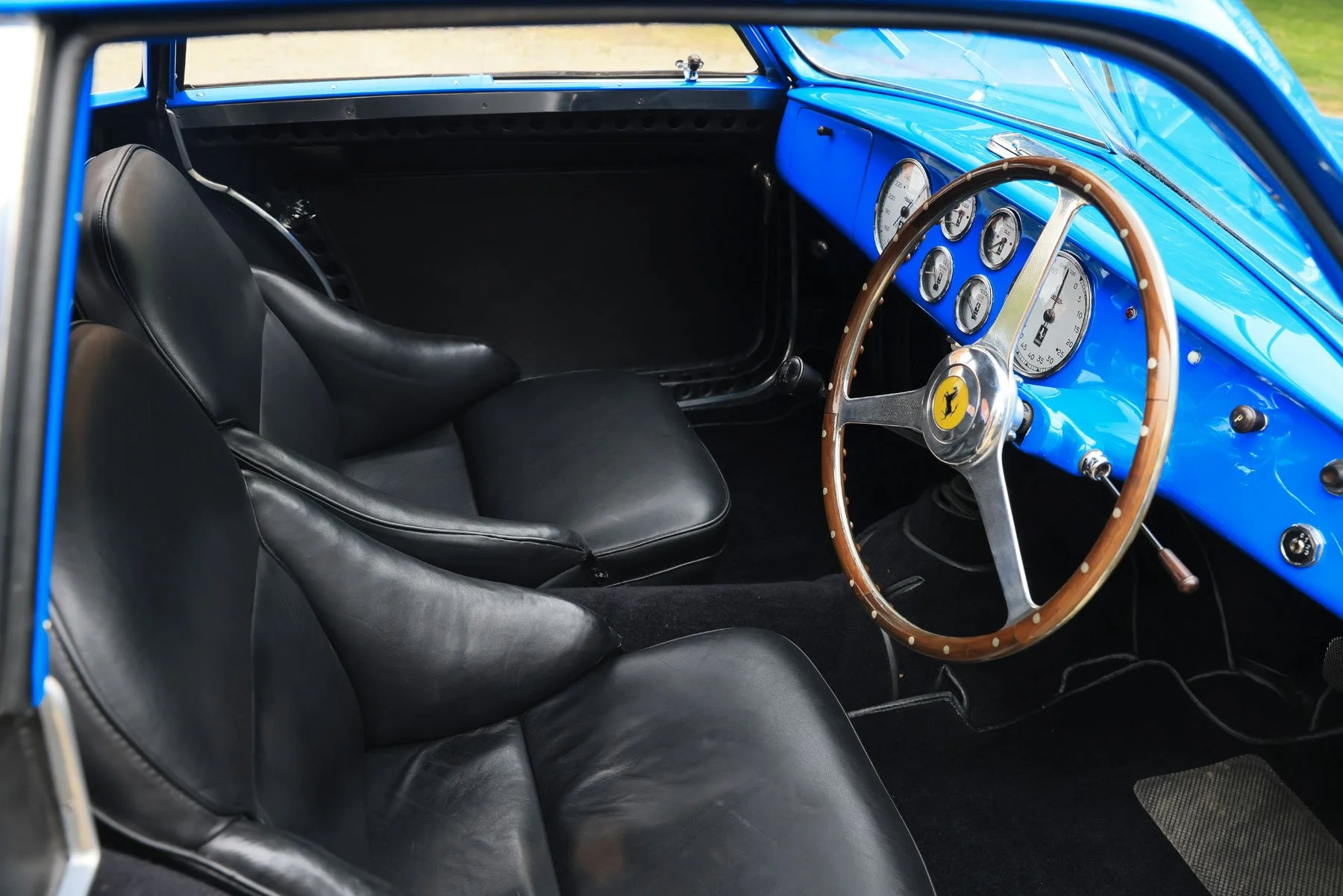
The Ferrari 166 MM Berlinetta Le Mans distills Ferrari’s early genius into one impossibly complete machine. It could win on Sunday and charm the concours lawn on Monday, an ability few cars of any era can claim. In 0060 M, that duality is unusually pure: show-car provenance, period-correct upgrades, American and international race history, concours achievements, and documented mechanical authenticity. It recently sold at Gooding & Company’s Pebble Beach auction for an estimated $3.5 to $4.5 million.

