
Micro Cars, Macro Aspirations
Brent Mills’ Peel Engineering P50 & Trident
STORY | Evan Griffey
Photography | Maris Saulits
In a world where bigger is often better, meet the Peel P50 and Peel Trident… microcars with macro aspirations. Peel Engineering was a modest but wildly inventive Isle of Man company that produced fiberglass boats and motorcycle fairings before swinging for the fence and jumping into personal transportation in the early 1960s. Its idea was as simple as it was brilliant: ultra-light, ultra-efficient microcars designed for short-distance urban life.
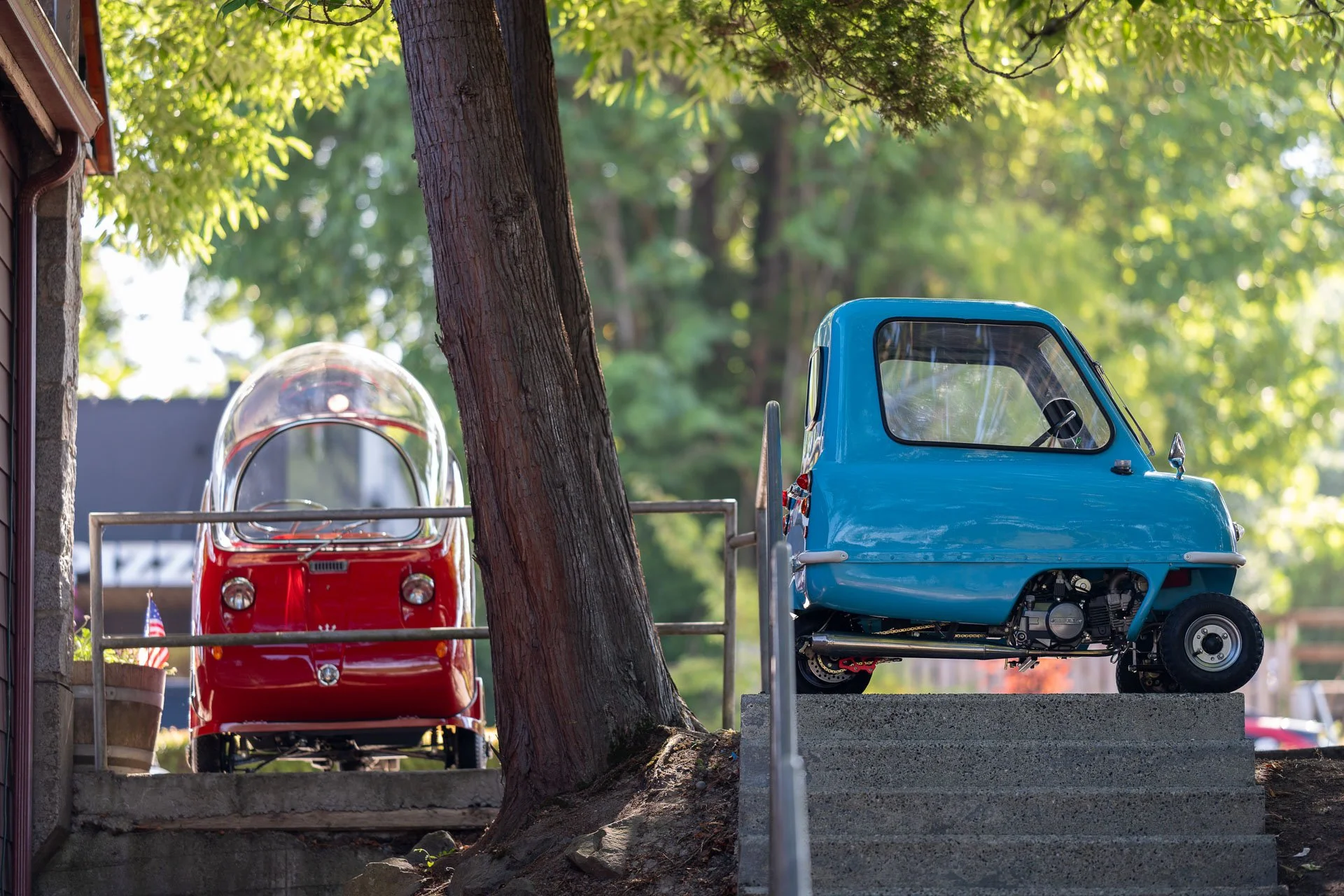
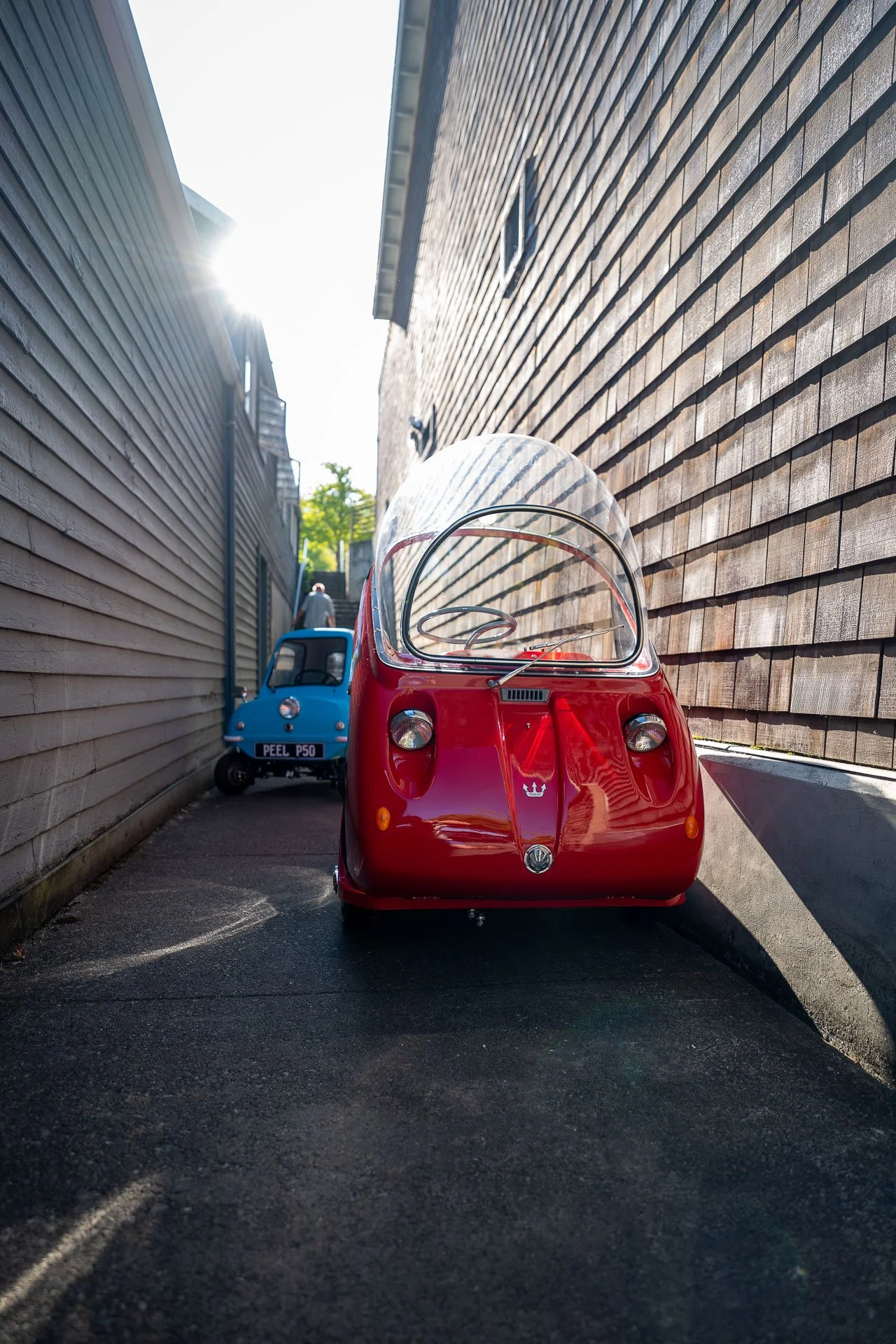
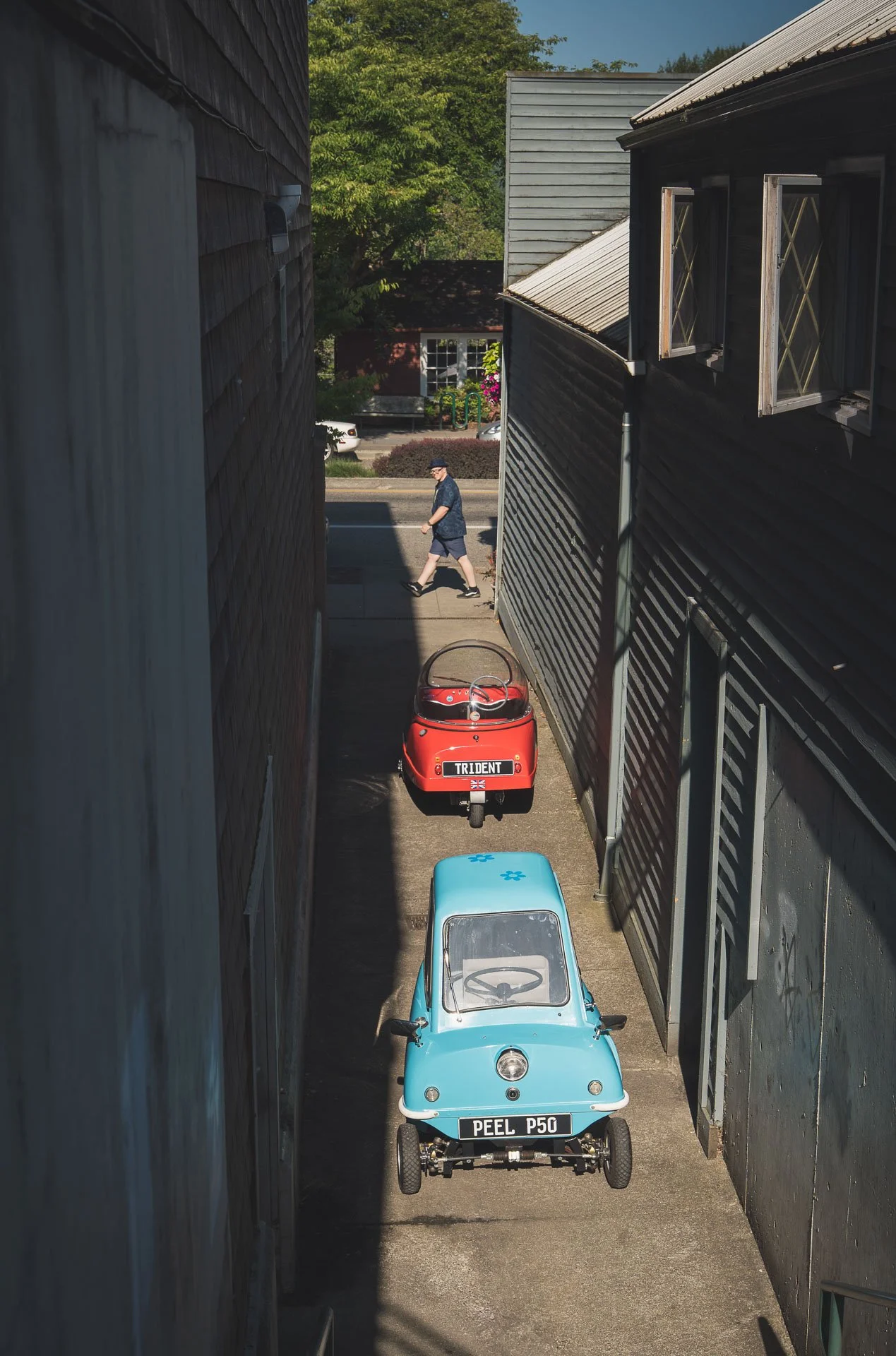
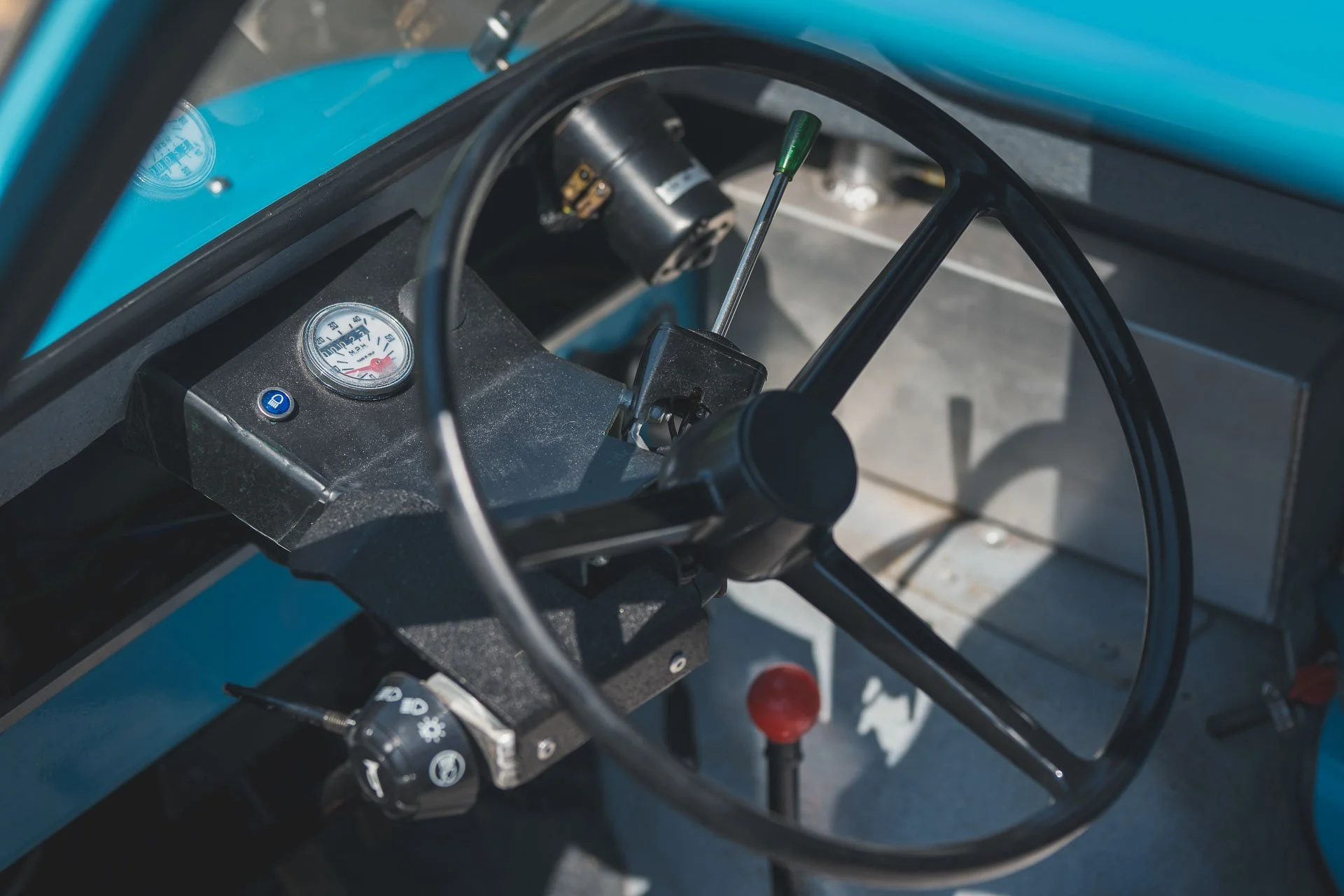
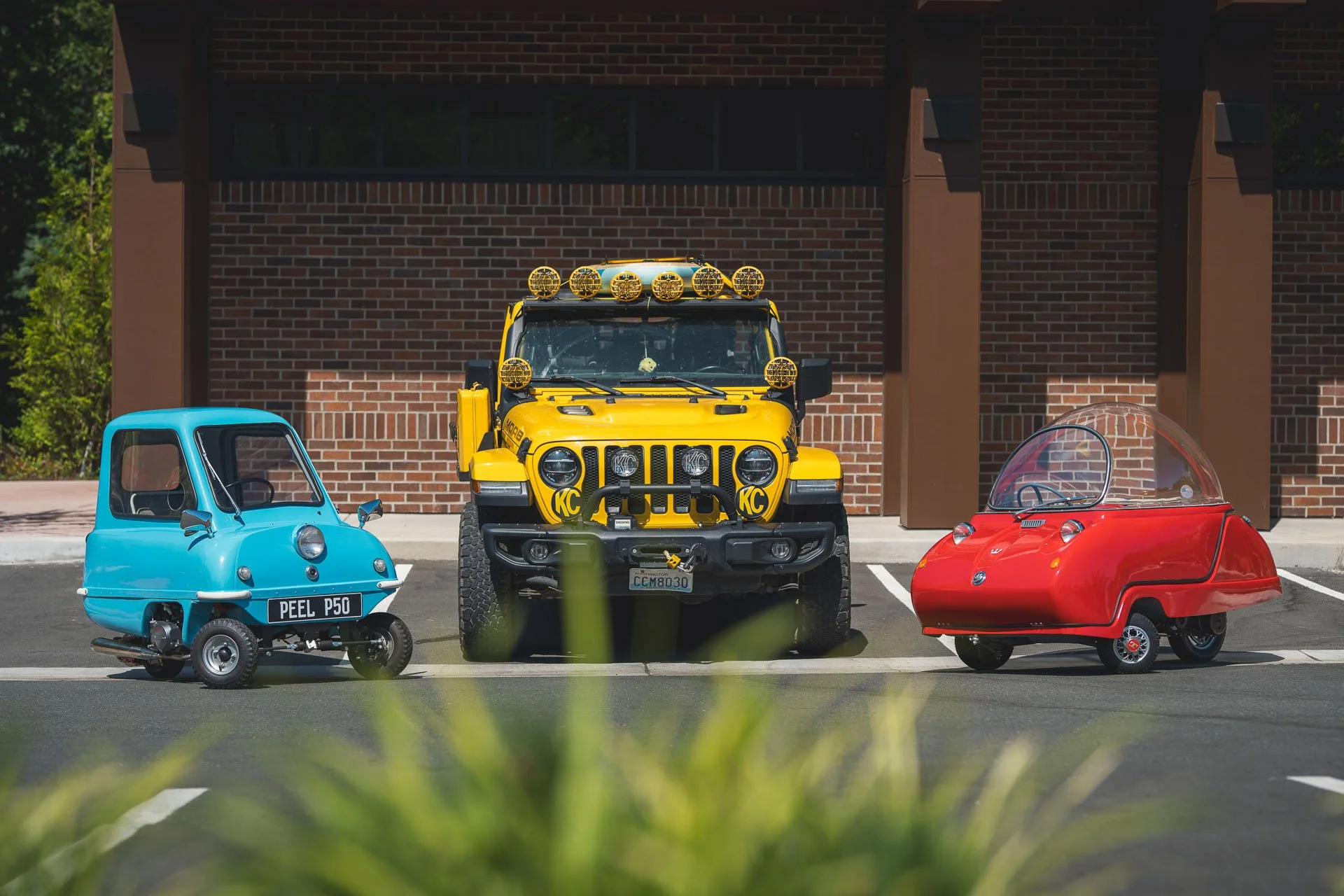
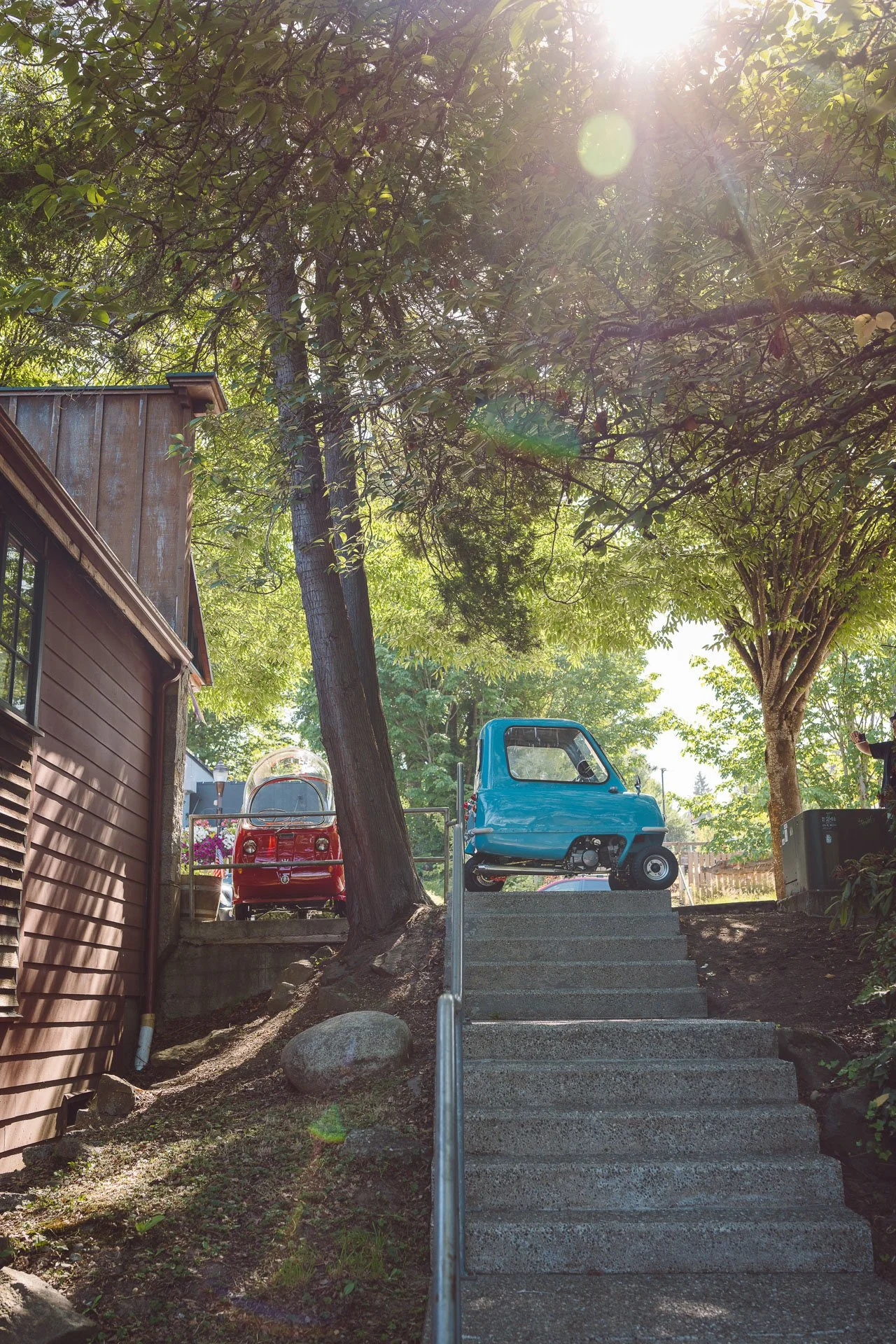
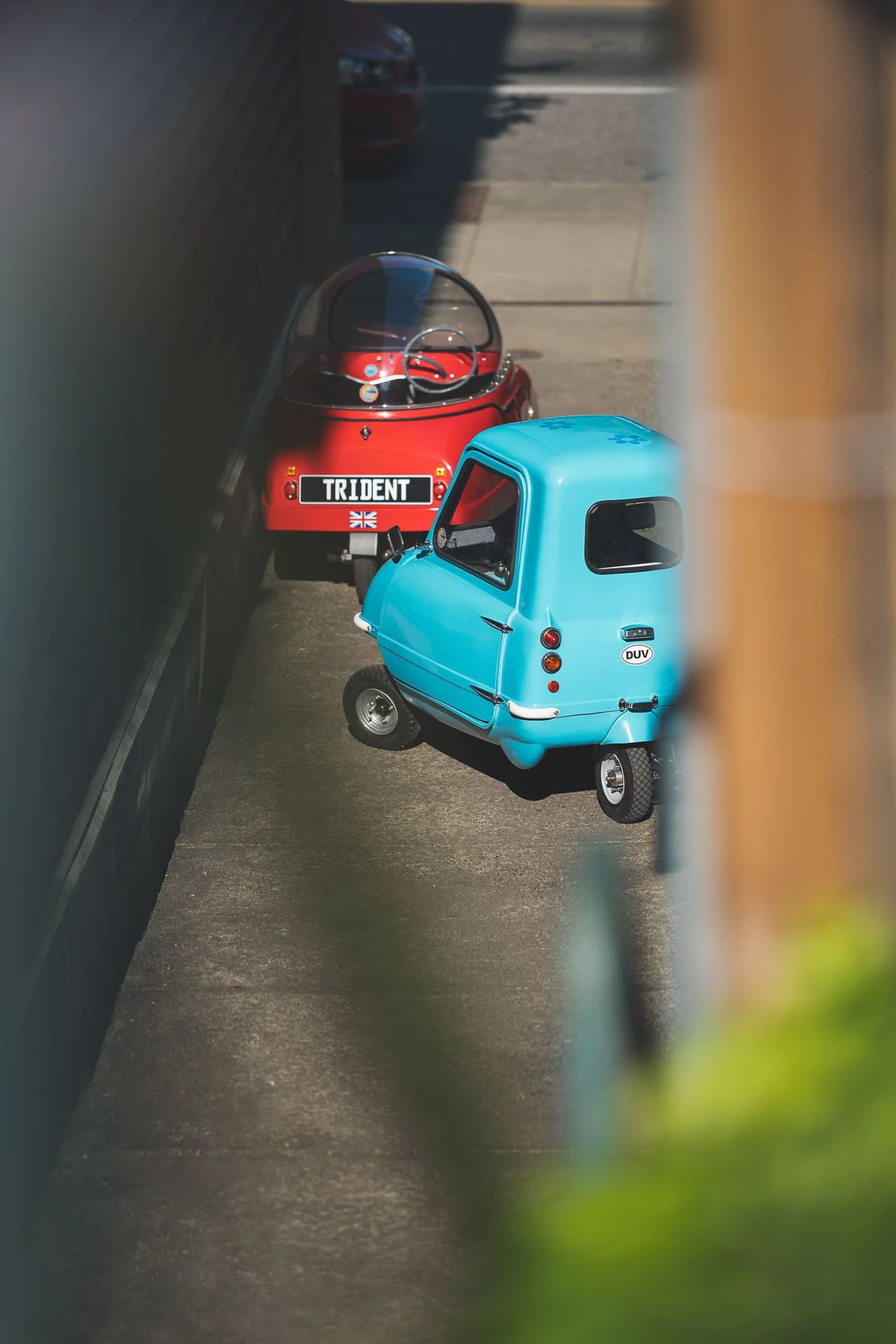
The result was the Peel P50 (1962-1965), a single-seat “shopping car” that, at 137 centimeters (4.5 feet) long and 99 centimeters (3.25 feet) wide, makes quite a visual impact. It’s not such a big stretch to see the P50 as the inspiration for the familiar red and yellow Little Tikes Cozy Coupe play cars, and it’s not surprising the P50 became the world’s smallest production automobile. It featured one door, one headlight, and a 4.5-horse, 49cc, single-cylinder, two-stroke DKW engine. The hard-working engine motivated the P50 to a top speed of 38 mph and generated fuel efficiency of more than 100 mpg. The original P50 had three forward gears but no reverse, requiring the driver to exit and use a rear handle to lift the car and rotate it to the desired position. Only 55 Peel P50s were produced, and today they can sell for well into six-digit territory, a remarkable jump from their original £199 price tag — hence Peel’s “almost cheaper than walking” advertising slogan.
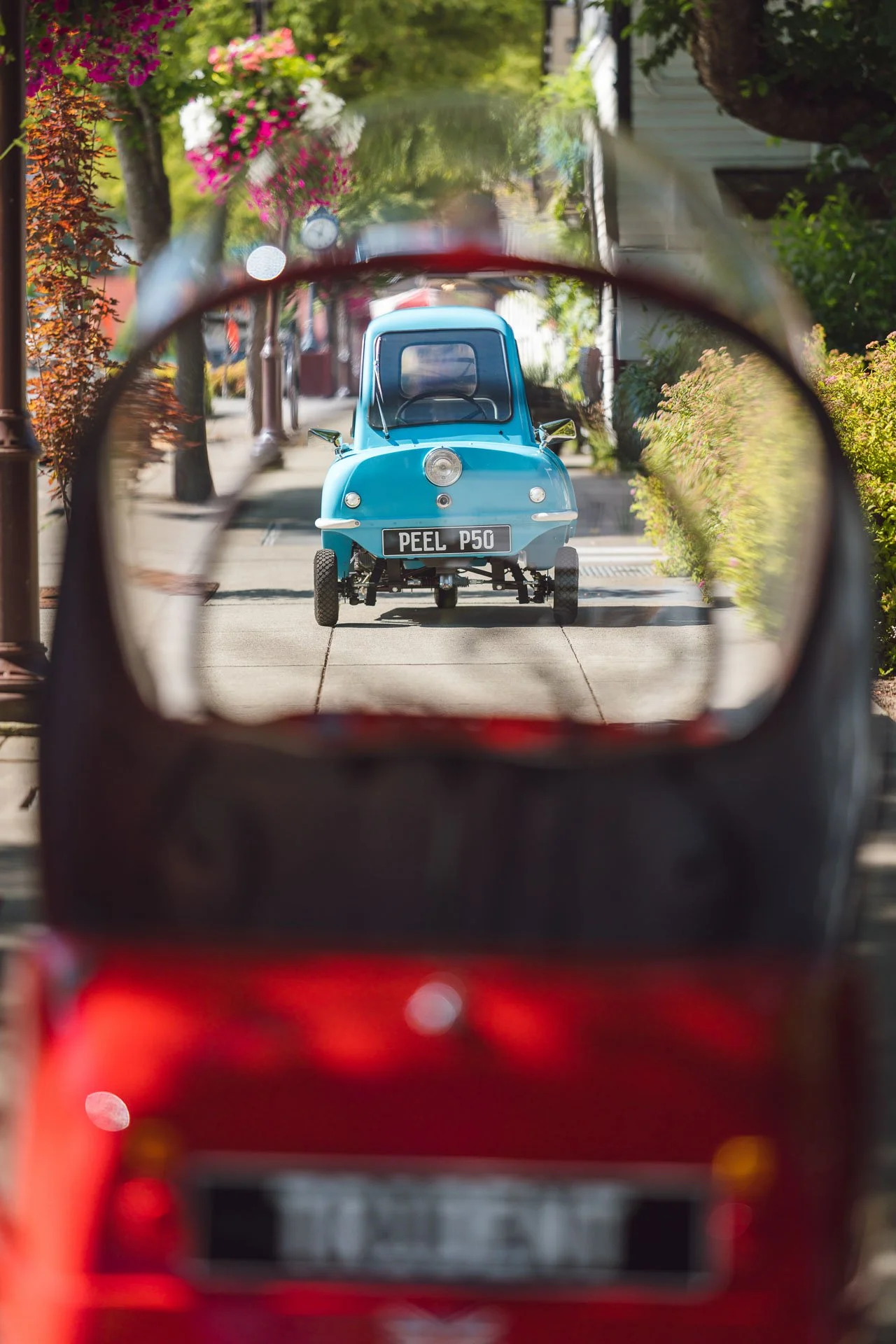
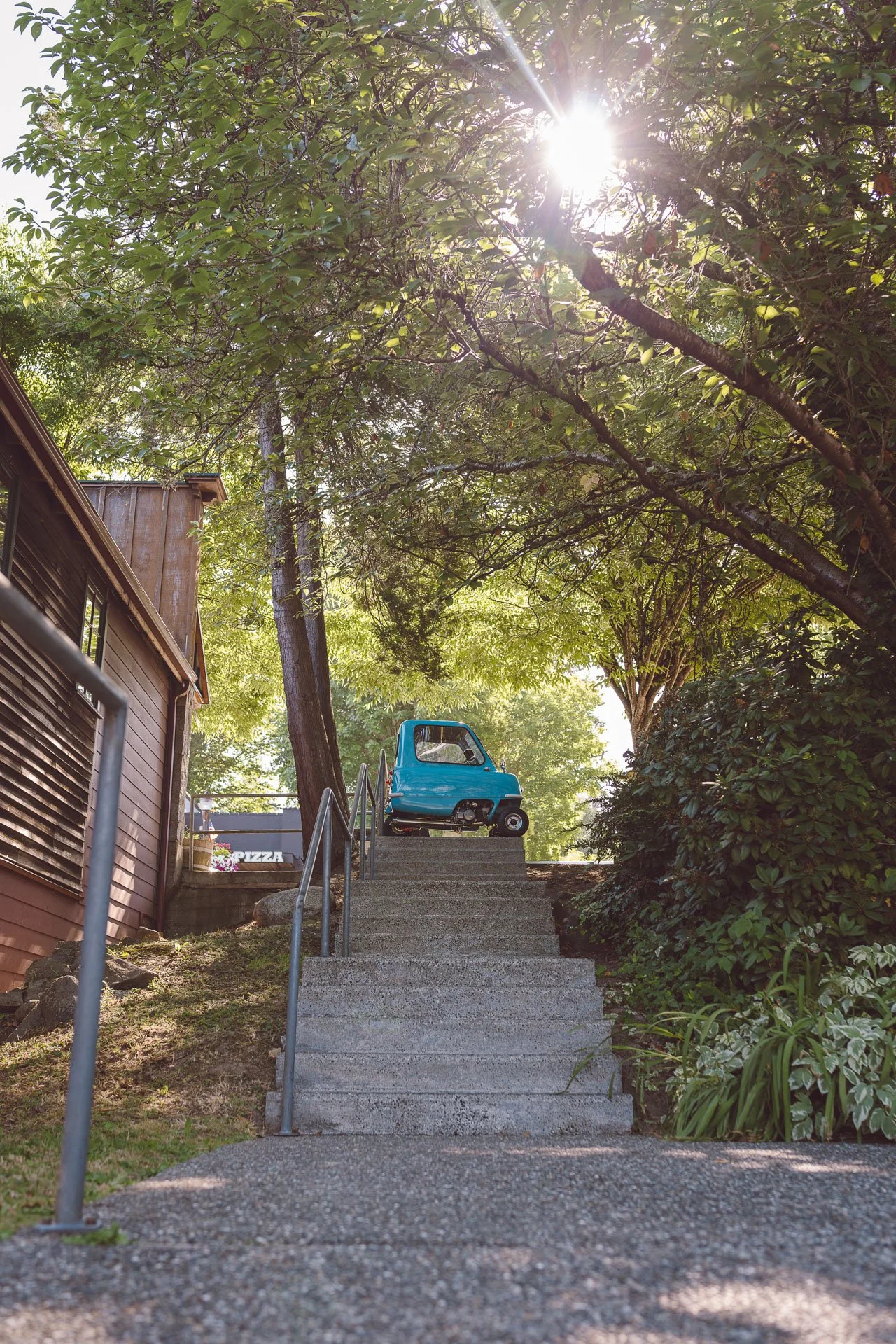
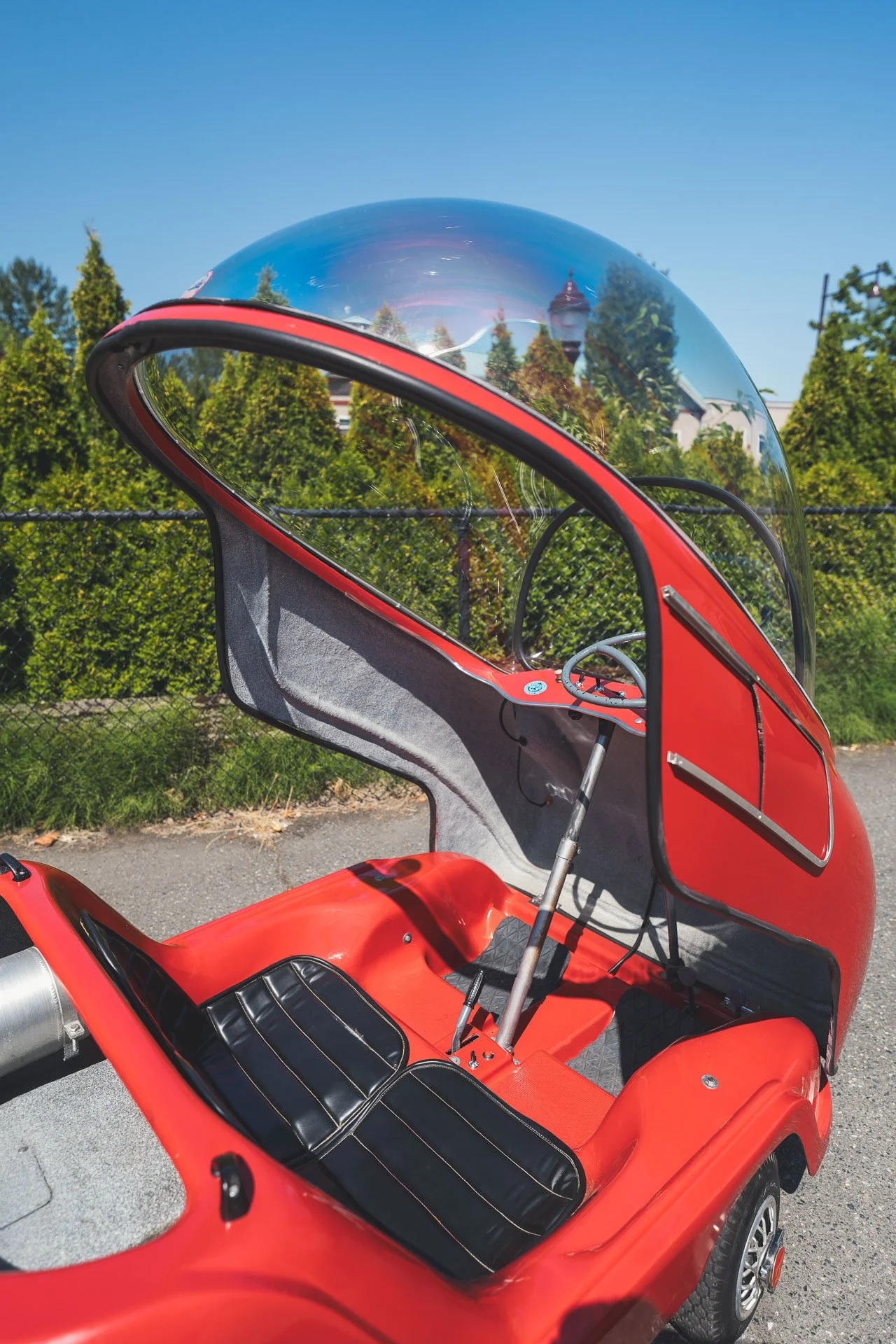
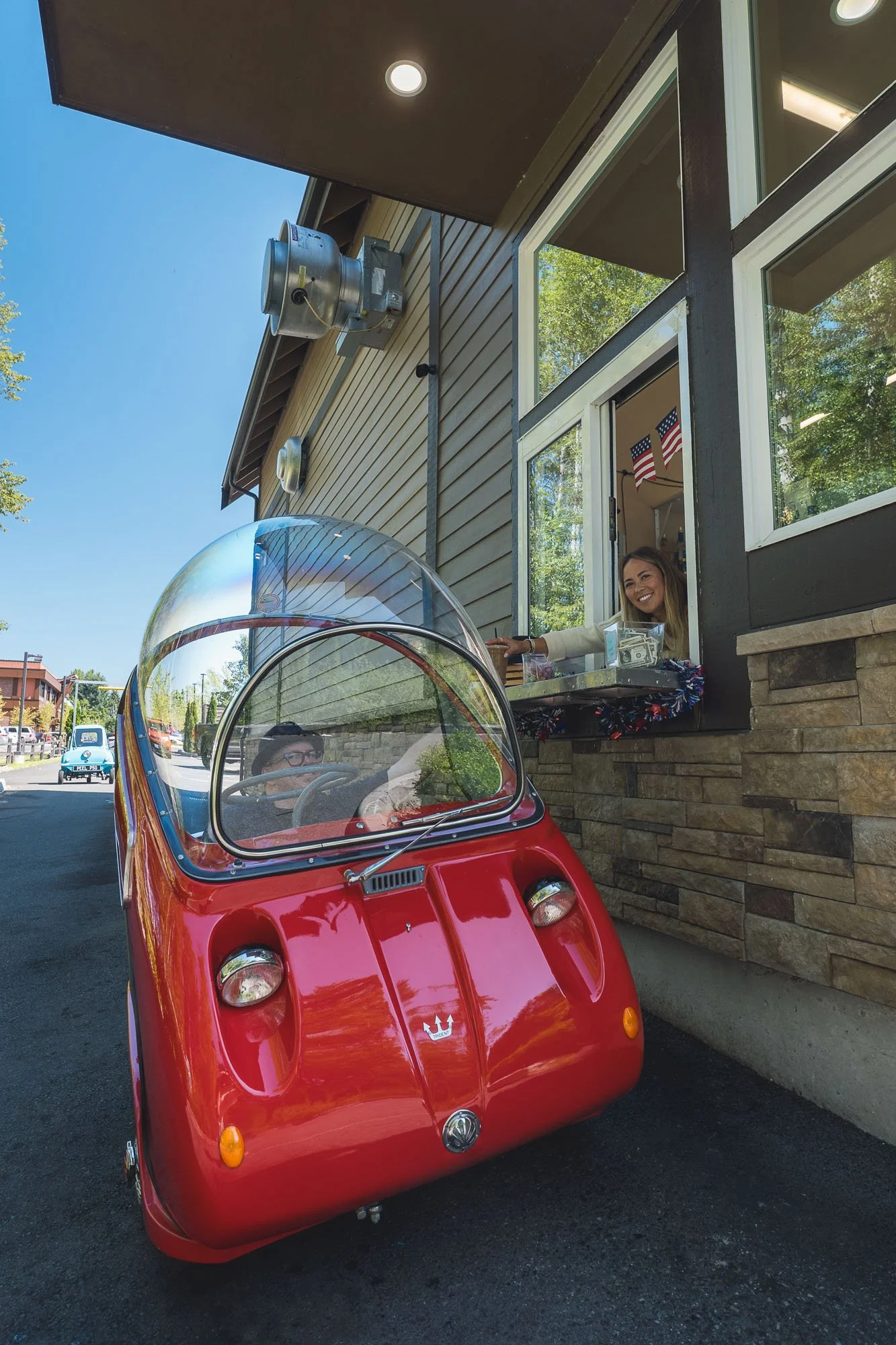
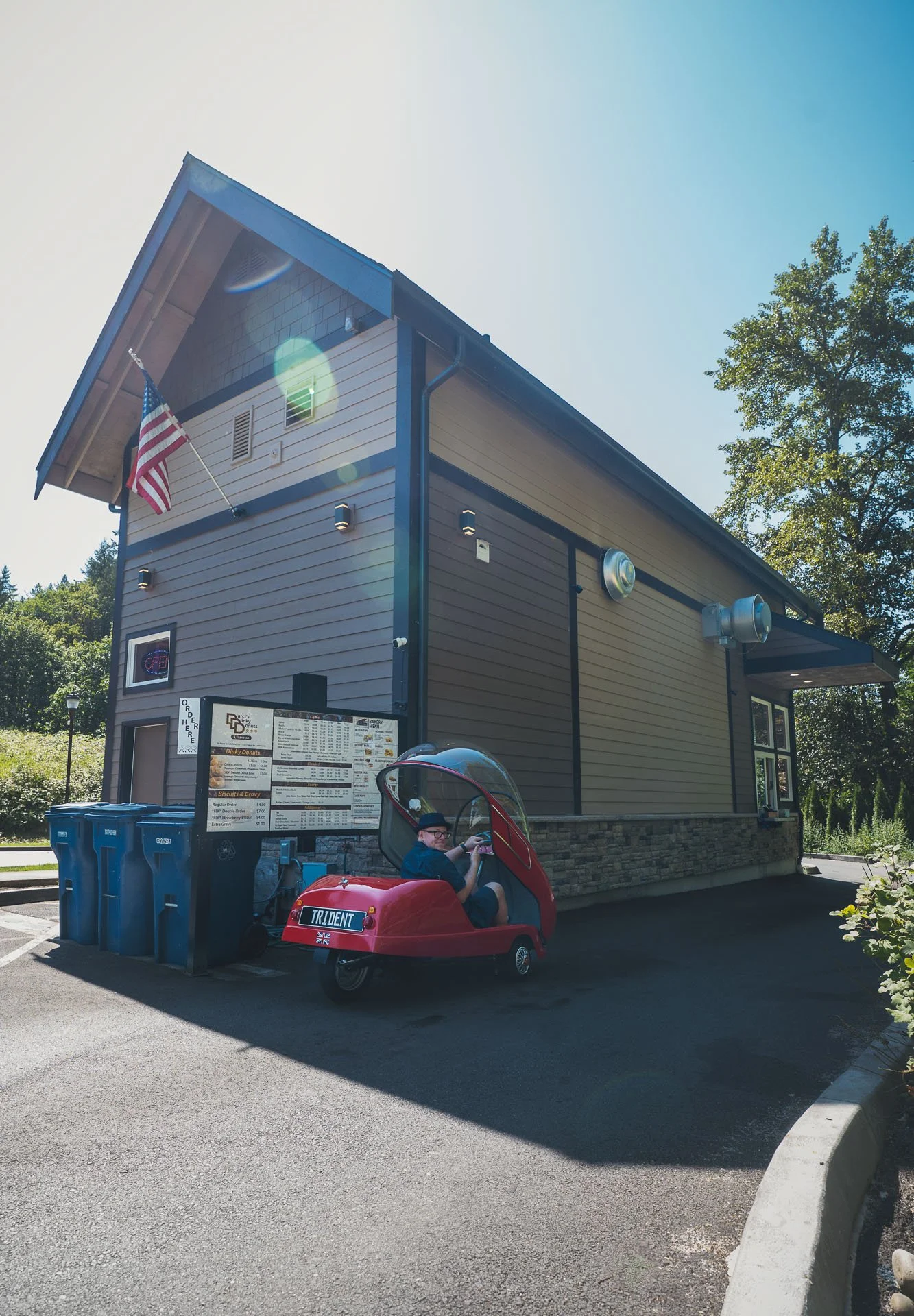
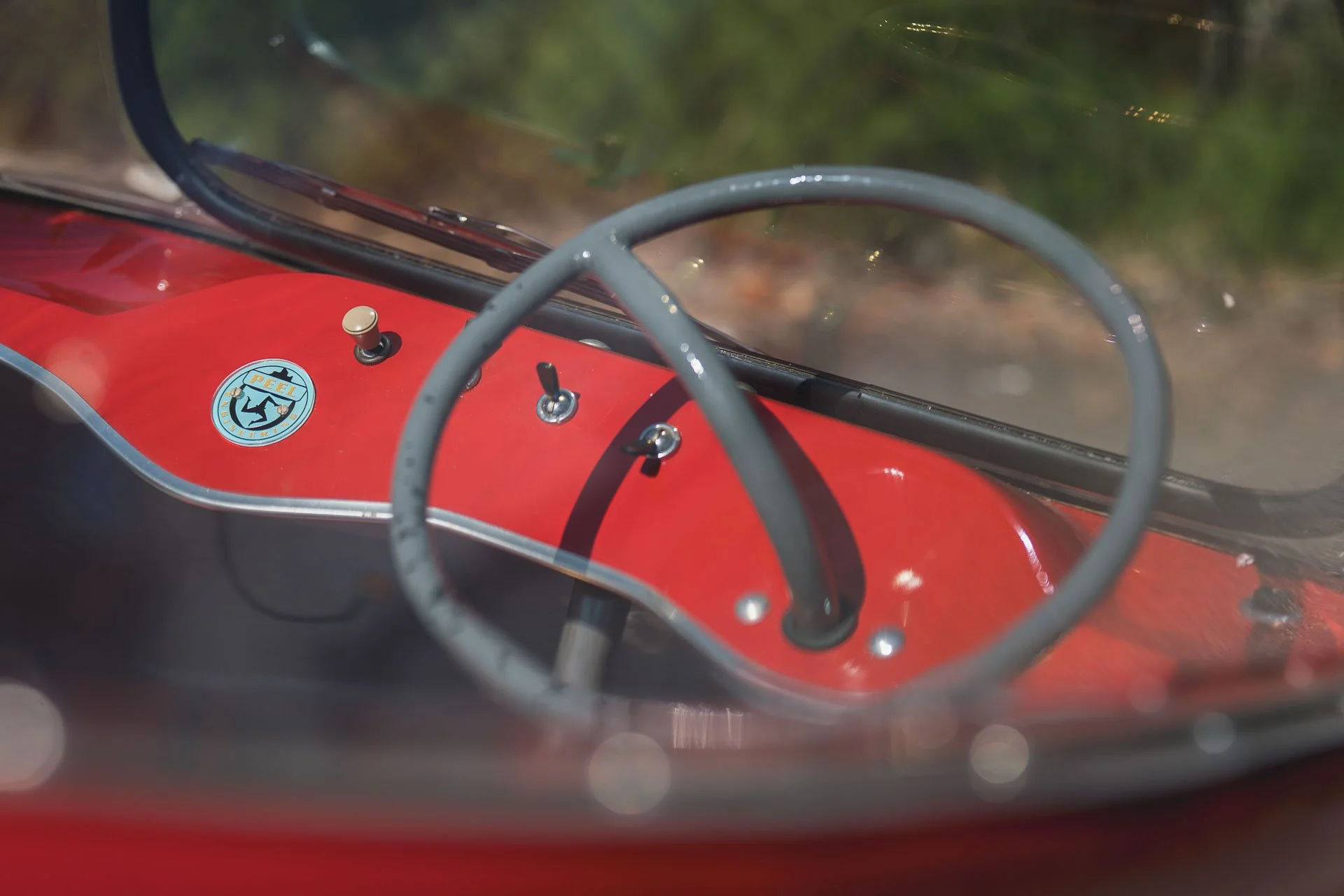
Peel Engineering’s second act was the Trident (1965- 1966), a two-seat, bubble-topped “terrestrial flying saucer” that perfectly captured the Jet Age optimism of the era. It also used the 49cc engine, returned the same 100 mpg, and embodied Peel’s belief that mobility didn’t need to be big or complicated — just smart, light, and a bit cheeky.
After being featured on BBC’s Top Gear, the cars became cult collectibles, with original models fetching high prices at auction (e.g., $140,250 in Monterey, 2017). In the Top Gear skit, a P50 was driven through BBC headquarters by presenter Jeremy Clarkson, proving it could comfortably accommodate his 6’5” frame. Today, modern gasoline and electric replicas are available for those who want the experience without the six-figure price tag.

Purchasing a Pair of Peels
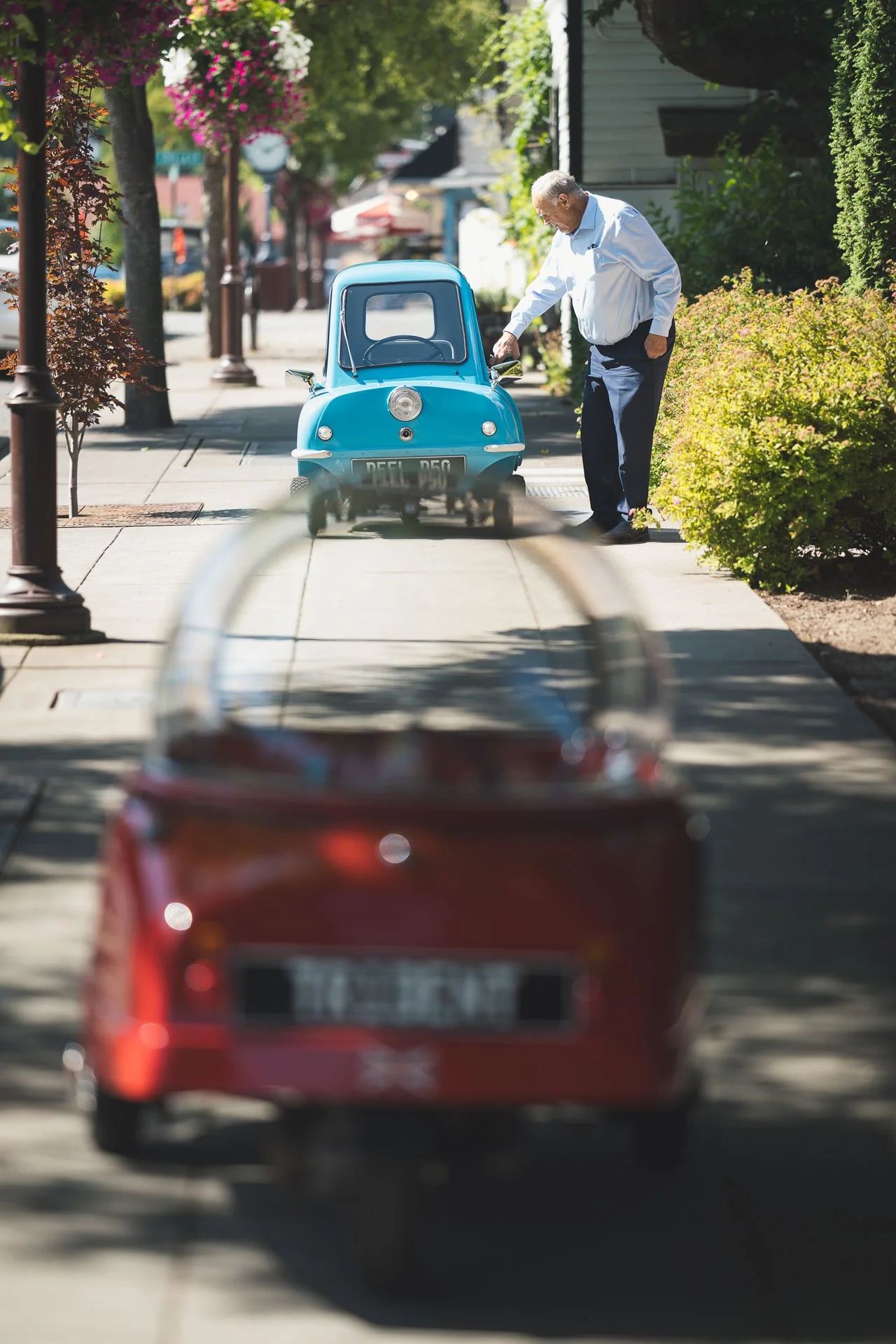
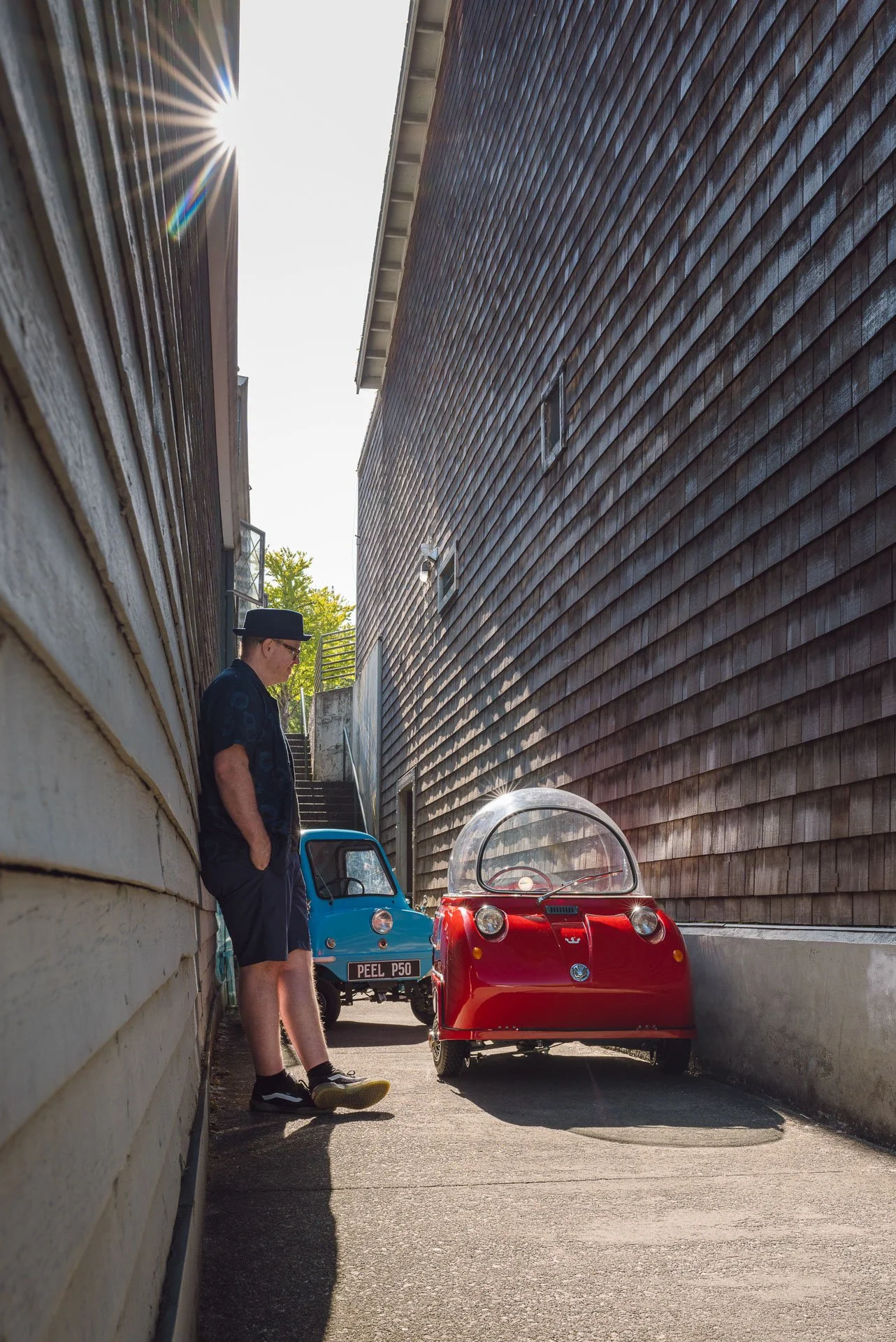
Microcars have always been a constant for Duvall, Washington’s Brent Mills (@automotomedia). His first car was a 1964 Fiat 600-based Abarth. As a hardcore microcar enthusiast, offerings from Peel Engineering were near the top of Brent’s bucket list. But his road to Peel ownership hit a pot hole. “Several years ago, I decided I would build a reproduction Peel Trident,” says Brent. “I placed a down payment of $7,000 to a company in the UK, and a year or so later realized that they stole the money from me and many others.” The cosmic tumblers lined up one day in late 2022 when a Peel Trident replica came up for auction on Bring a Trailer. The catch? The auction was for a pair; a Trident and a P50. Brent won the bidding war. Both reproductions were built in the UK, with the P50 produced in 2008 and the Trident built in the mid-1990s.
BUILDING A MORE A-PEELING, FASTER PEEL
Like many of us, Brent has a tendency to tinker, so the Peels’ diminutive 49cc engines were in jeopardy from the drop. “I bumped displacement to 125cc in both the cars,” says a prideful Brent. “The Peel P50 got a Honda CT125 four-stroke. It was a pretty simple swap and gave the car four forward gears. The Trident’s power infusion comes from a Honda Aero two-stroke scooter engine with a CVT. This was a more complex swap that required me to completely change the engine mounting configuration. I designed the mounting brackets and welded them up in a way that makes for easy removal if needed.”
On the road, Brent says the Peels are not for the faint of heart. “The P50, with the engine on the right side of the chassis, is not balanced well, so turning left is quite tippy and will provide a quick adrenaline boost when you least expect it; turning right is much more forgiving. The brakes on the replica are hydraulic discs, and provide very capable braking, unlike the originals with cable-actuated drums. Steering is really nice with a modern rack and pinion.

The Trident is a much more stable platform, with a slightly wider wheelbase, but braking is as original, which is to say cable-actuated front drums that work well enough, but have a tendency to pull one way or the other, so I often use the rear handbrake for a more consistent braking experience. Another interesting aspect of the Trident is that its steering is one-to-one as you turn the wheel, so a slight movement one way or the other is a big deal; wherever the centerline is on the wheel is exactly where you’re going.”
He says both Peels are capable of 40 to 50 mph, but it feels like you’re doing 160 in a car meant to do 85 mph. “You’ll never feel so alive and fearful of not being alive all at the same time, but if living on the edge at 40 mph sounds like fun, you’re right!”
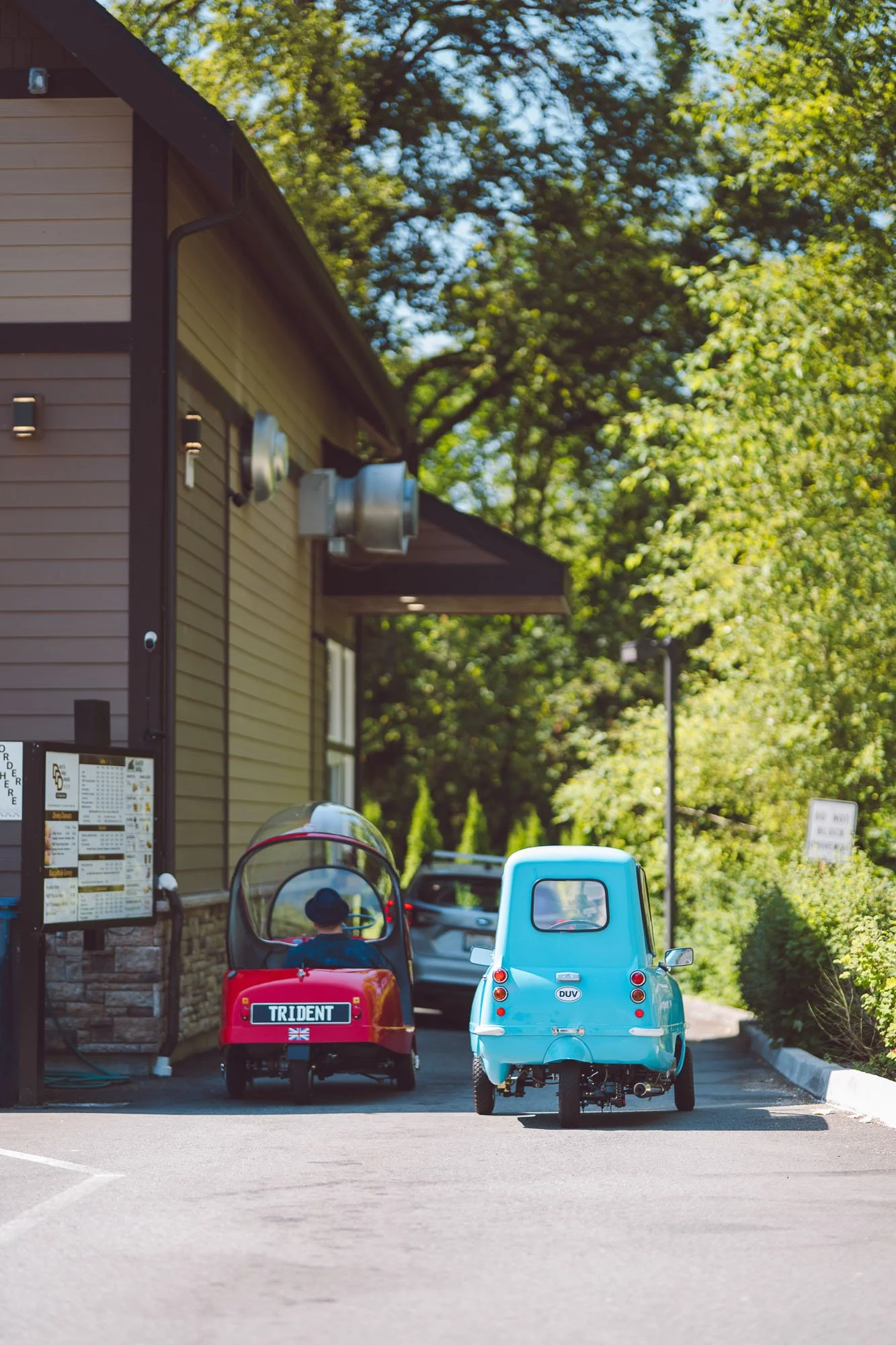
The cars attract a steady stream of curious onlookers, and Brent says that sense of connection is the most important aspect of any collector car — meeting enthusiasts, answering questions, and sharing in the experience. So if you see a tiny car that looks like it should be shooting off into space at a local Cars & Coffee, feel free to chat Brent up.

