
The Benchmark for Lightness
Caterham Seven
STORY | Chris Seely
Photography | Maris Saulits
When you boil down 40 gallons of sap from a maple tree, you get one gallon of pure maple syrup. The resulting syrup is the ultra-concentrated, full-flavor sugar hit of what a tree can produce. On the contrary, maple sap is almost indistinguishable in taste from syrup. It has little to no flavor, appears clear in color, and has no sweetness at all.
Most of the cars on the road today are closer to sap than syrup. Every year, cars get heavier and more bloated. As they pack on the pounds, the taste of pure driving experience fades closer to oblivion. Our 4,000-pound-plus beasts boast heated seats, driver assists, and power steering, but all that comfort comes at the cost of sweetness, color, and flavor. Every luxury in our modern-day transport comes with a sensation-numbing increase in weight. For passionate drivers, this weight is the fastest and easiest way to murder the driving experience.


Here is an example. Let’s start with a sporty two-seater, we’ll call our example the Typhoon XYZ. To build the Typhoon, we start with a chassis that is nice and rigid. Our customers want modern amenities like a big sound system, power seats, climate control, and parking sensors on all four corners. All these amenities together add a few hundred pounds. To make our Typhoon XYZ stop, we need a big set of brakes, which require oversized wheels and tires. These brakes, wheels, and tires add rotational mass, which is even harder to overcome. To power the car with this extra weight, we now need a bigger, more powerful motor and a stronger driveline, which, you guessed it, adds weight. This swelling list of weights never ends. Before you know it, our Typhoon XYZ is slow and soft. We’ve quickly made our sports car drive like an 18-wheeler.
By contrast, prioritizing lightness has compounding benefits. With fewer options, it takes less metal to make the chassis stiff. With a lighter chassis, the suspension has less to manage. In this tiny package, little wheels, tires, and brakes can be used to make our sports car stop effectively, and with all this weight out of the equation, we can use a smaller, more efficient motor to make our car go. What we have designed in this exercise is the ultra-concentrated, Grade A version of a sports car. The car is light, the chassis is stiff, and because of this, it speaks clearly to the driver and grips, dives, and slides like no other car can.
So what is the real-life version of this car? What is the lightest, rawest, most concentrated version of a sports car you can buy today? The answer is over two times lighter than a BMW M2, can corner at 1.5g, and has the power-to-weight ratio of a Ferrari 458 Italia. Of course, the boiled down, ultra concentrated, and full of flavor iteration of a sports car is the Caterham Seven.
Historic Proportions
All Caterhams were born from the infamous Lotus Seven. Back in the early days of Lotus, the Seven was Colin Chapman’s swansong for lightness and simplicity. From 1957 to 1973, Colin Chapman oversaw four iterations of his bug-eyed street racer, from the 36-horsepower Series 1, to the boxy twin-cam screamer of the early ‘70s. In any iteration, the Lotus Seven was designed to be the most pure, concentrated, and unfettered driving experience imaginable. Chapman understood the snowballing impacts of weight and built his brand around the benefits that lightness brings to the driving experience. His company’s motto was famously “Simplify, then add lightness”, and while all his cars were light as a feather, the Lotus Seven was the original vision and remains among the most minimalistic cars.
Throughout the late ‘50s and ‘60s Chapman’s roadmap for Lotus was centered around two things. First, success in motorsports, and second, small-scale manufacturing of enthusiast cars such as the Seven, Elan, and Europa. However, in 1973, his vision for the company changed. Chapman wanted to bring the lightweight mantra of Lotus to the upscale market. As a result, the raw and minimal Lotus Seven no longer had a place in the company’s catalog; the most concentrated road car in the world would be scrapped.
Fans of the Lotus Seven were devastated, they were hooked on a lightweight driving experience that no other car could provide; and the vision of their company was changing right before their eyes. No fan was more disappointed than Caterham founder Graham Nearn, who operated a Lotus dealership in Caterham Surrey. Upon hearing that the Seven would be discontinued, he called Colin Chapman, and bought the production line, tooling, jigs, and exclusive rights to manufacture the Lotus Seven under a new name. History’s most raw, lightweight, and unfettered driving experience was saved, and for the next 50-plus years, it would be available as a Caterham.
True to the Original Inspiration
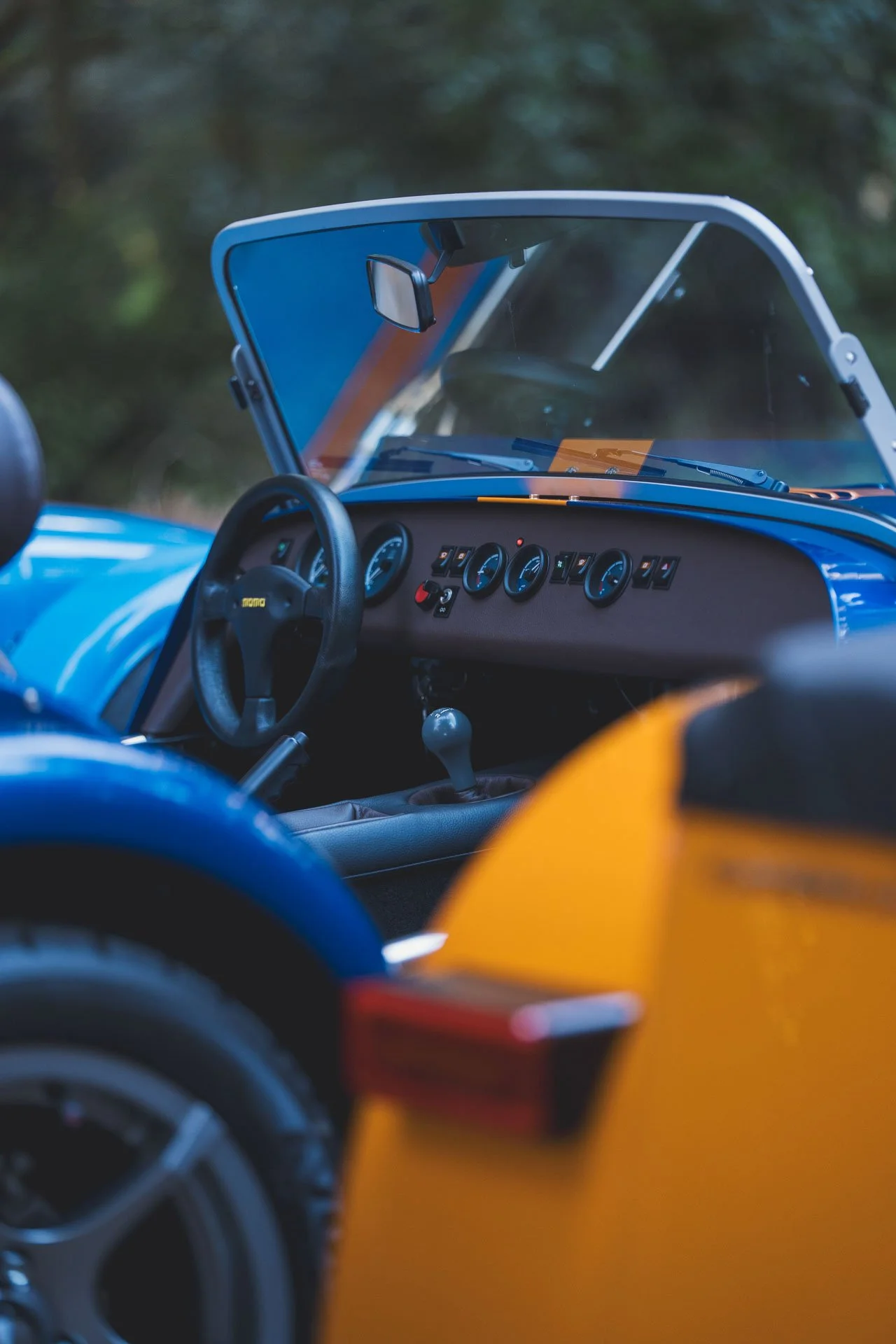
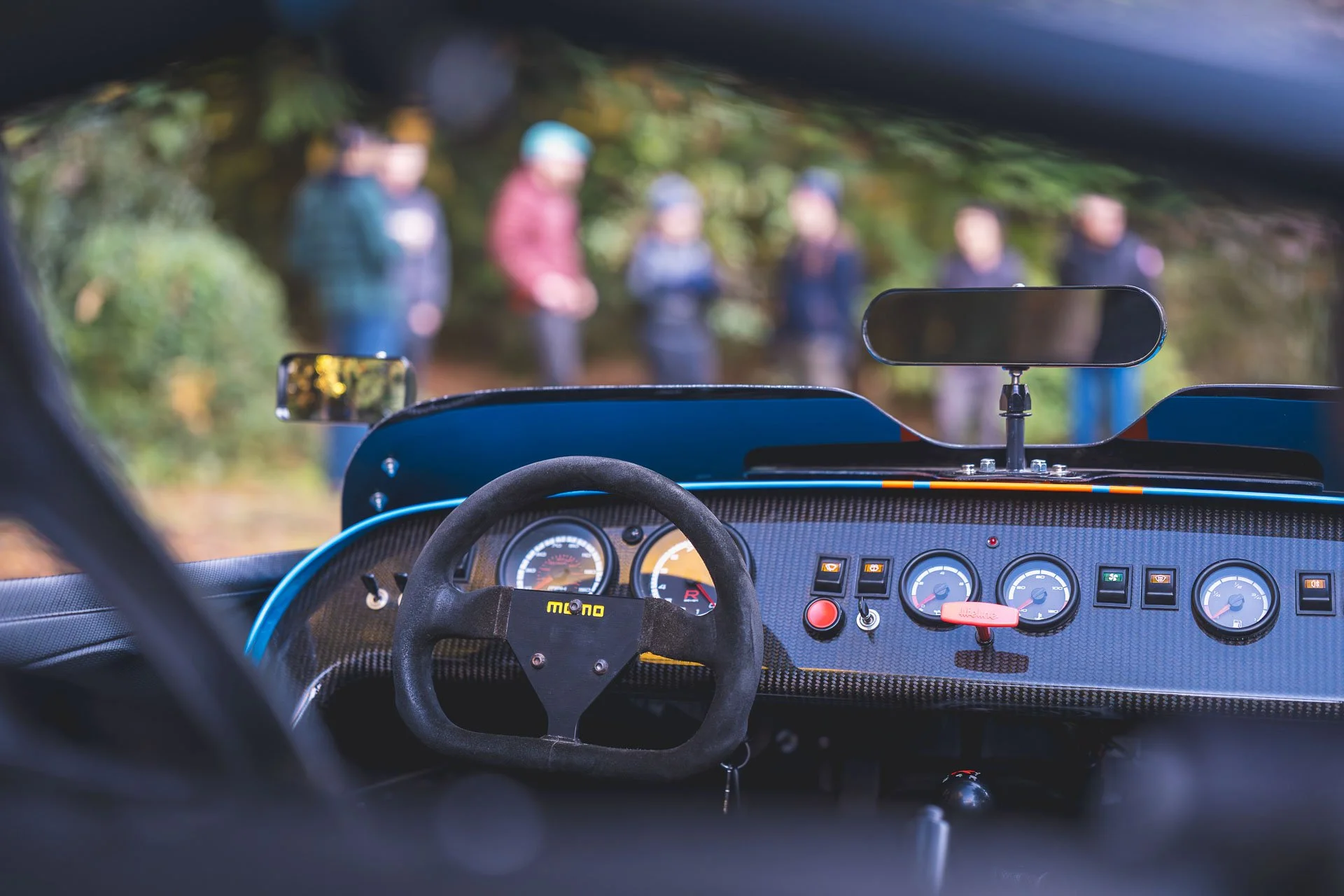
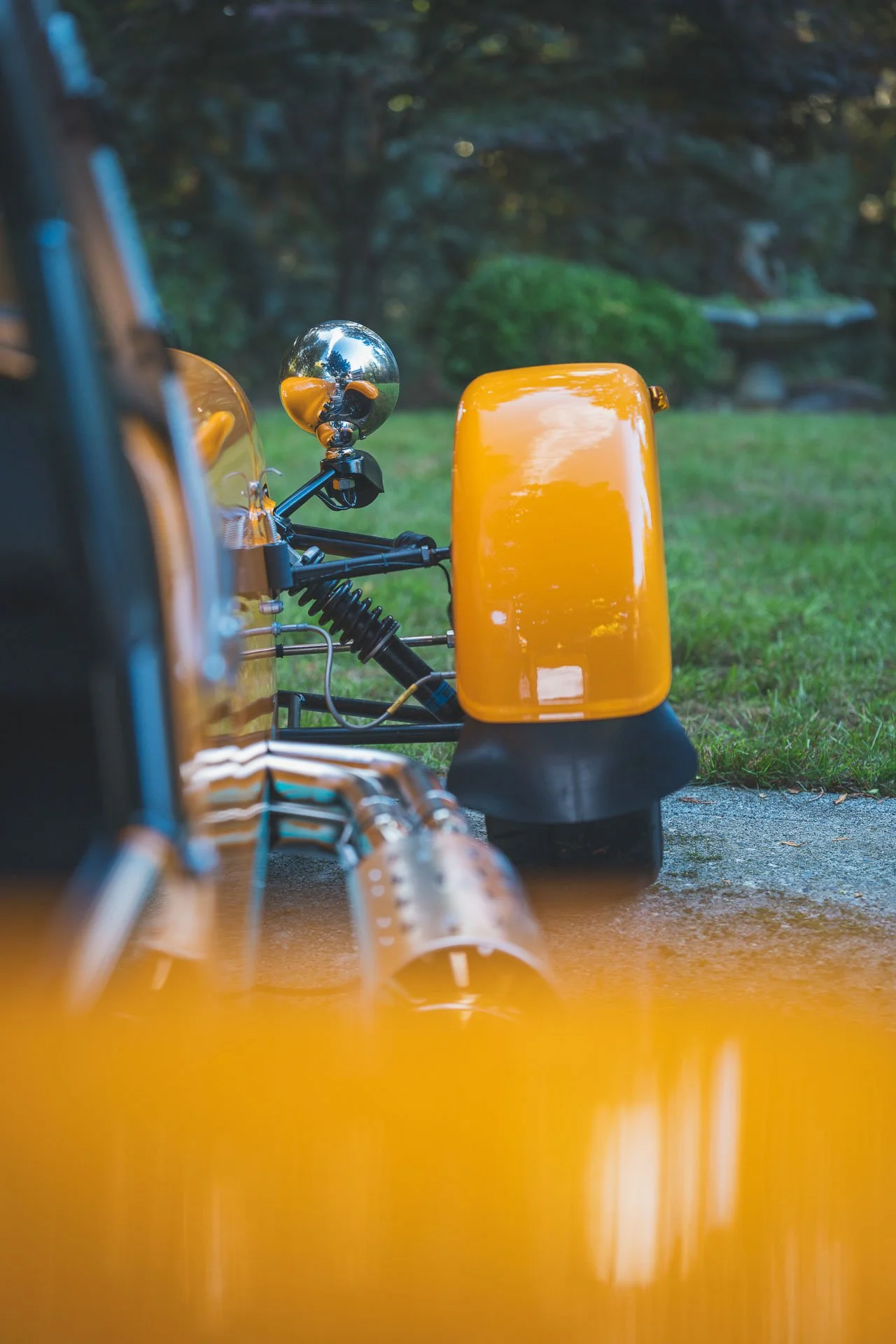
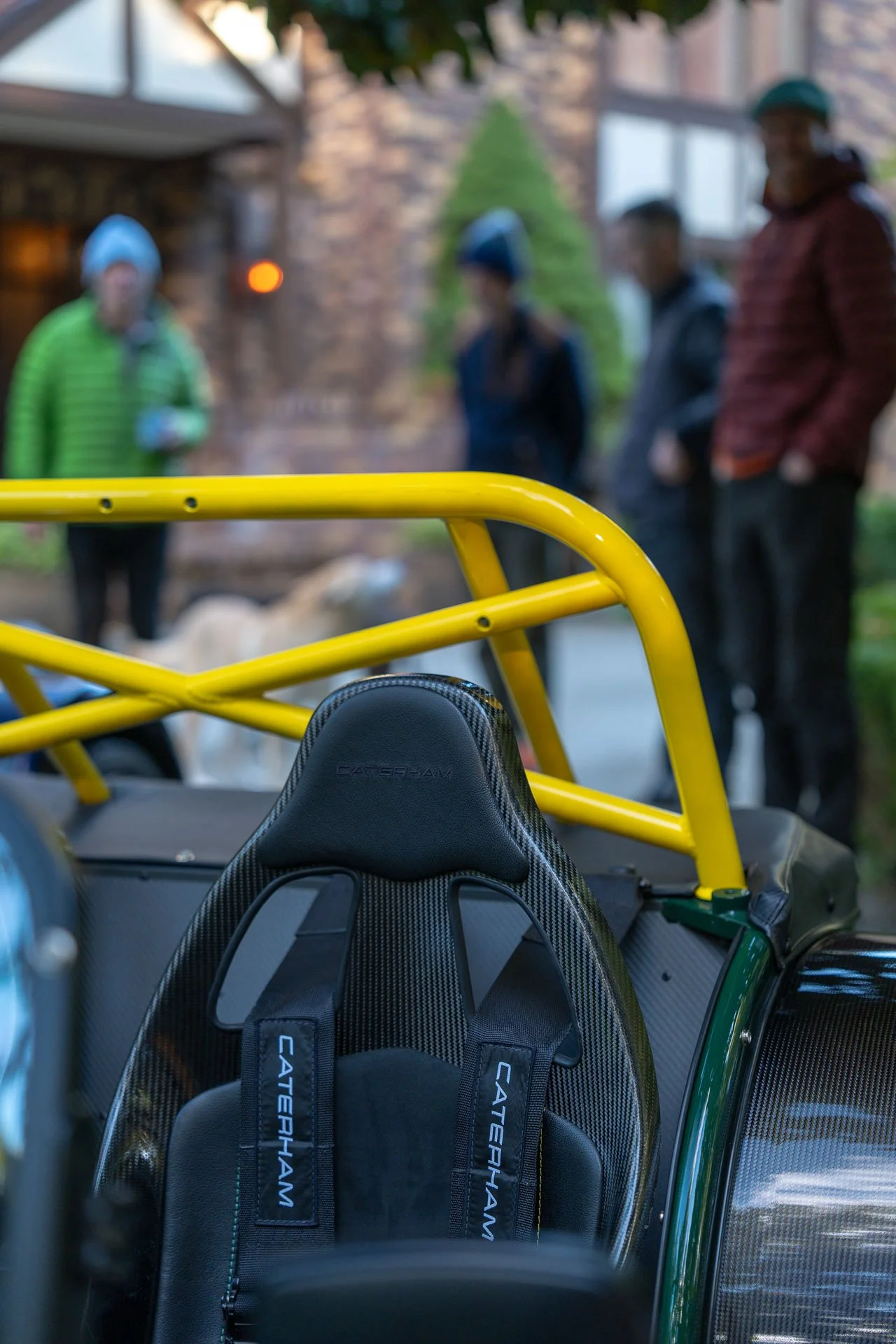
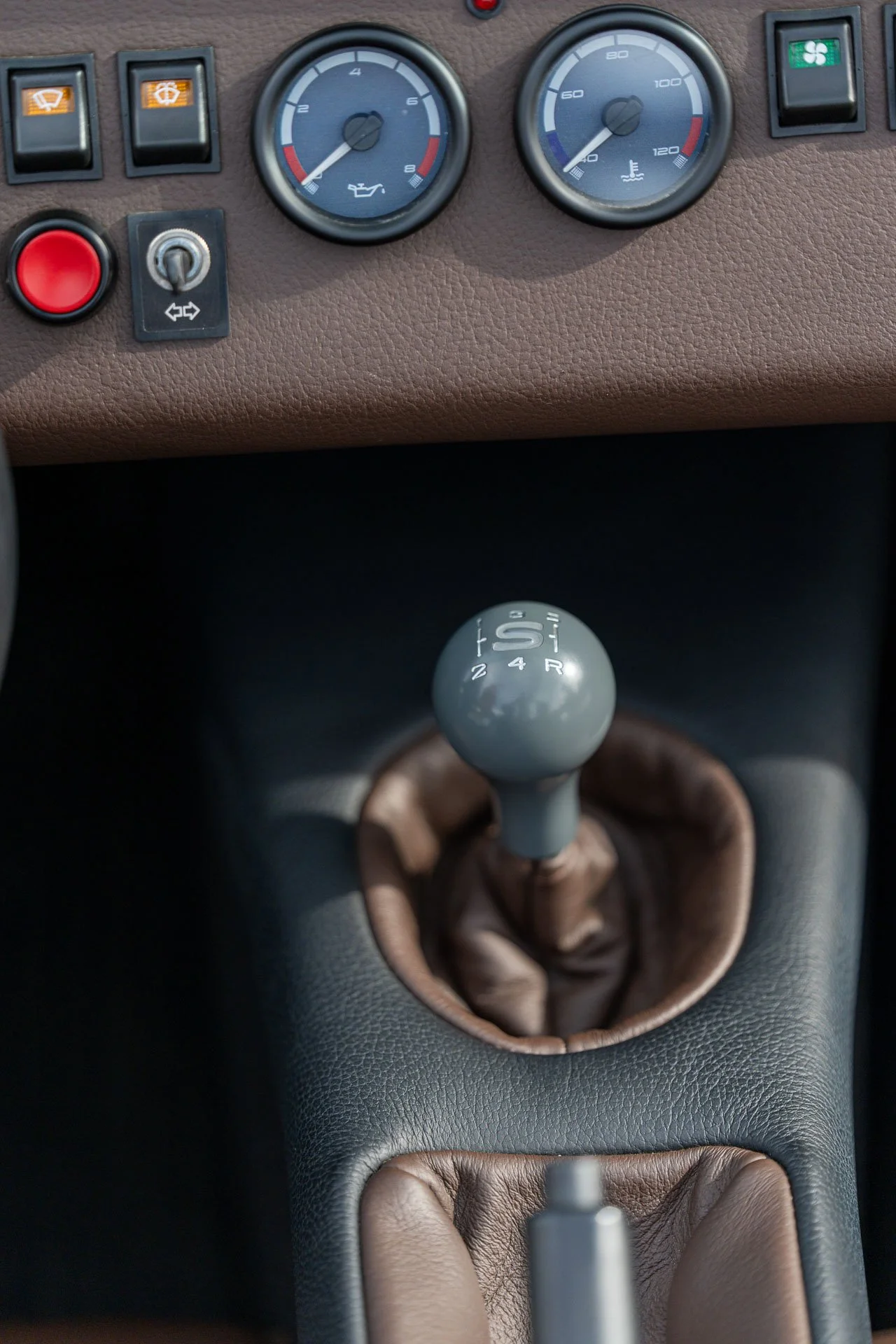
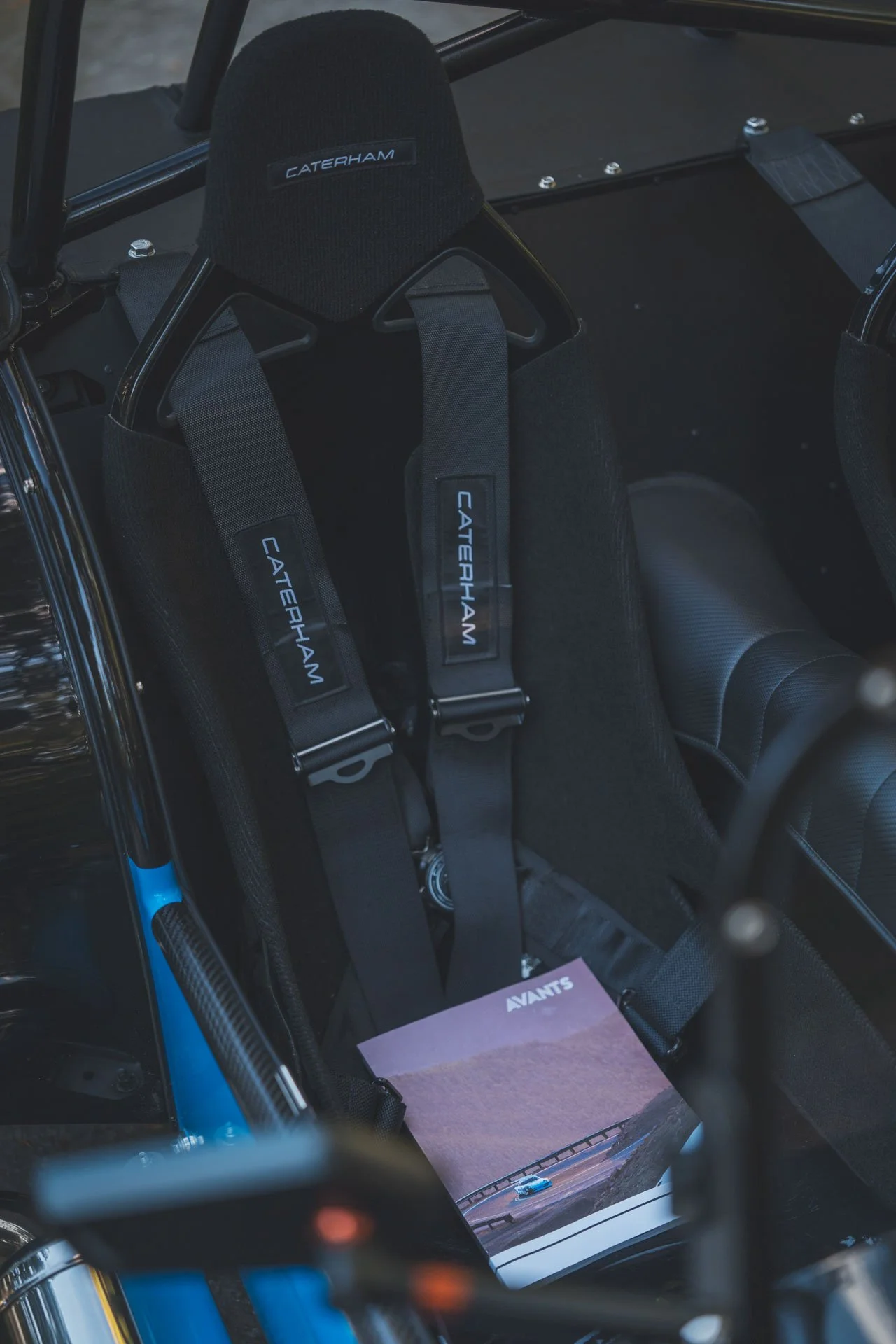
Even today, Caterham’s design language follows that of the Series 2 or Series 3 Lotus Seven to a tee. Every component on a Caterham is there because it is essential. Inside, there are pedals and a shift knob to control the driveline, a steering wheel to control direction, a turn signal switch, and a few gauges to ensure the car doesn’t explode. In some models, even the windshield is optional. The engine bay is much of the same, you won’t find plastic shrouds or extraneous labels in a Caterham; grams add up. As for body work, the design uses a tube frame chassis with ultra-lightweight panels, although much of the double wishbone front suspension is left exposed to the elements. In a Caterham, if it isn’t necessary, it isn’t there.
Though Caterham closely follows the original Lotus Seven design, some updates have been made over the past 50 years. Mainly, the driveline is much healthier and more robust than the engines and transmissions of the ‘60s and ‘70s. Most Caterhams available today use a Ford four-cylinder for a naturally aspirated 210 horsepower, or a forced-induction 310 horsepower. In a 1,500-pound car, this is not a meager number. If traction is available, even the less powerful version will get you from zero to 60 in less than four seconds. Fifty years of perfecting the recipe also means that a Caterham’s seats and touchpoints are much more comfortable than an original Lotus Seven, and the suspension and brakes are more refined too. Caterham has taken the original masterpiece and helped it age properly. The magic, weightless driving experience is there, but it has been brought gracefully into the modern age. Caterham owner Hal Strong adds, “I have never aspired to anything but a Caterham... It’s a brilliant car that communicates perfectly with the driver.”

Driving the Legend
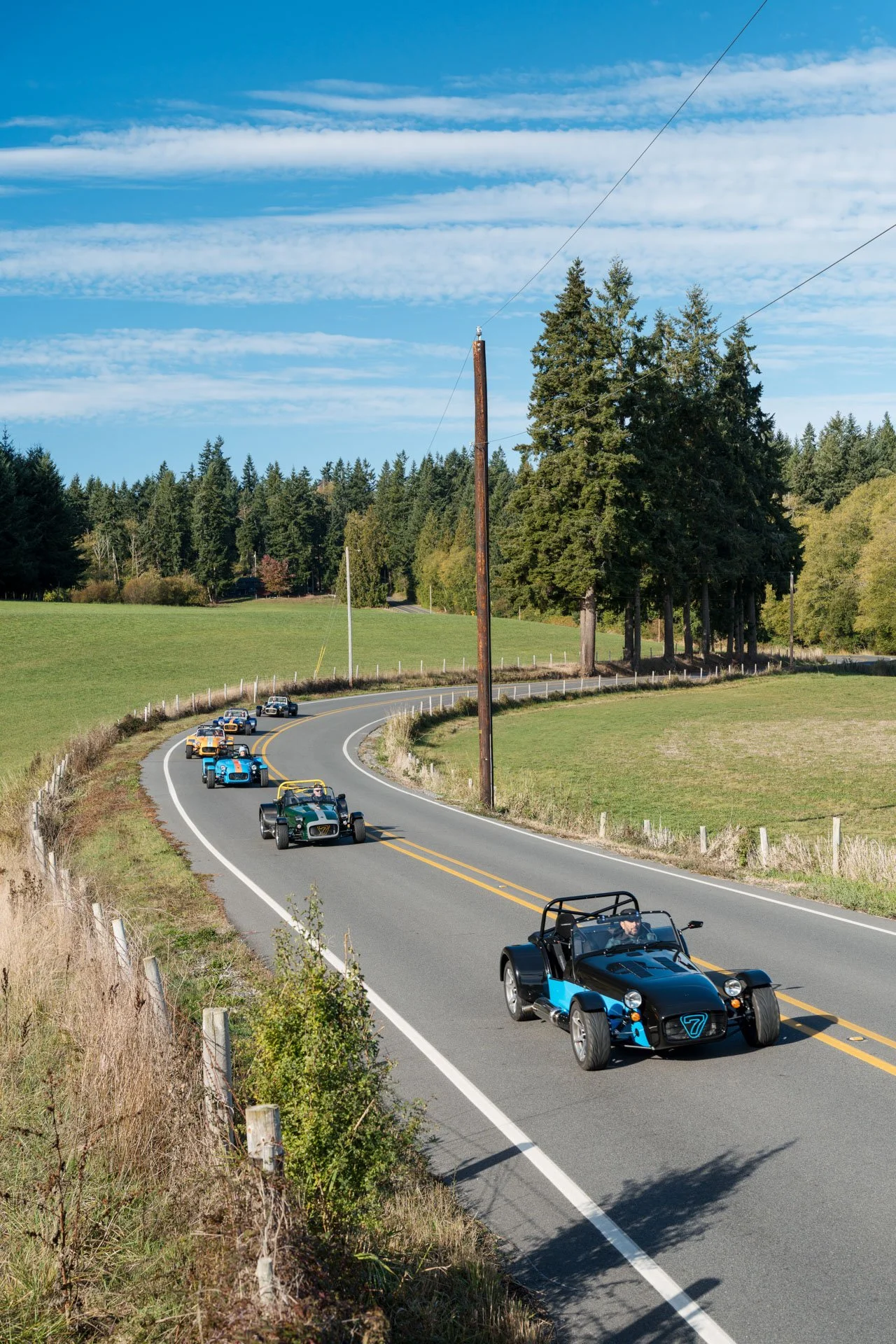
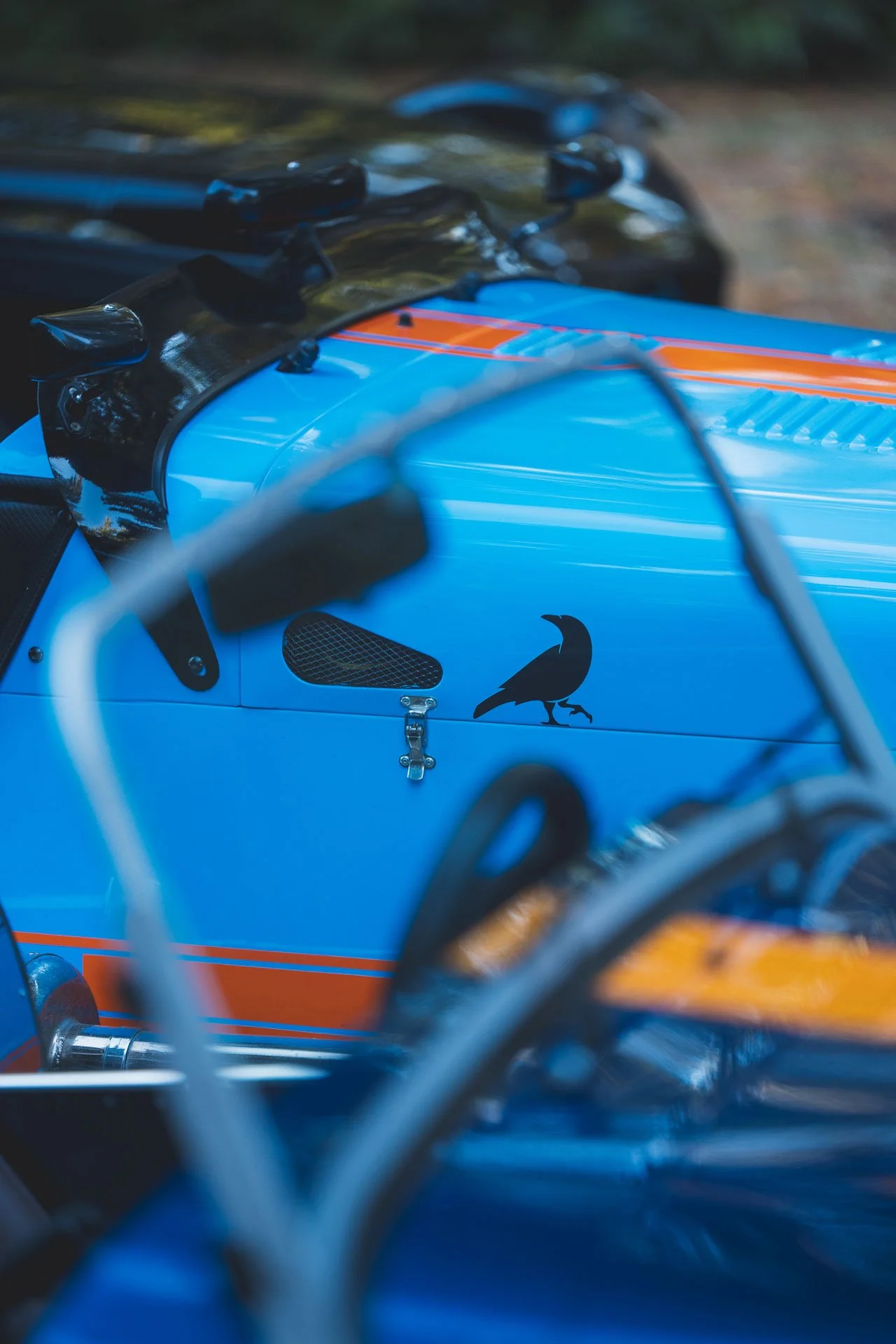
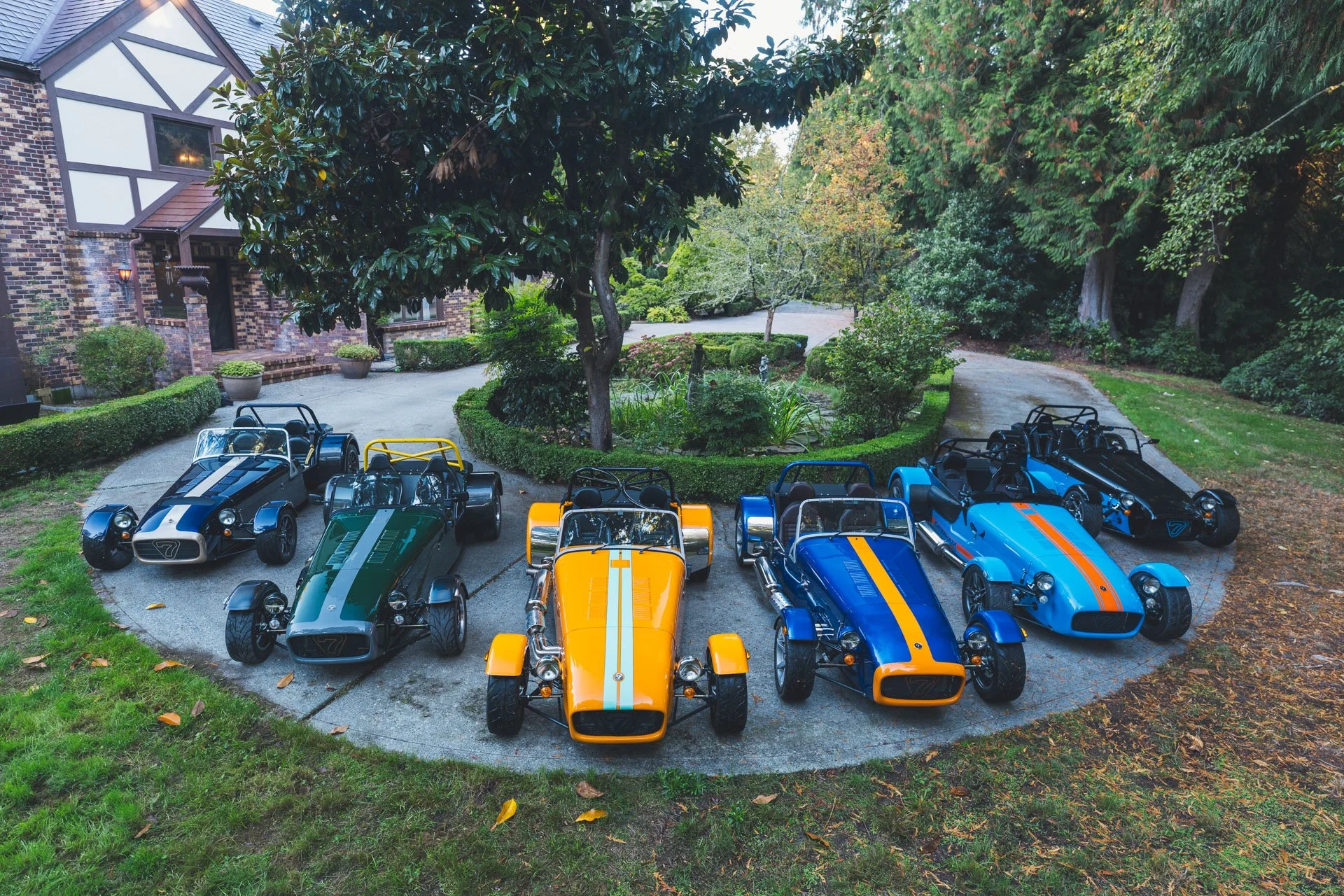
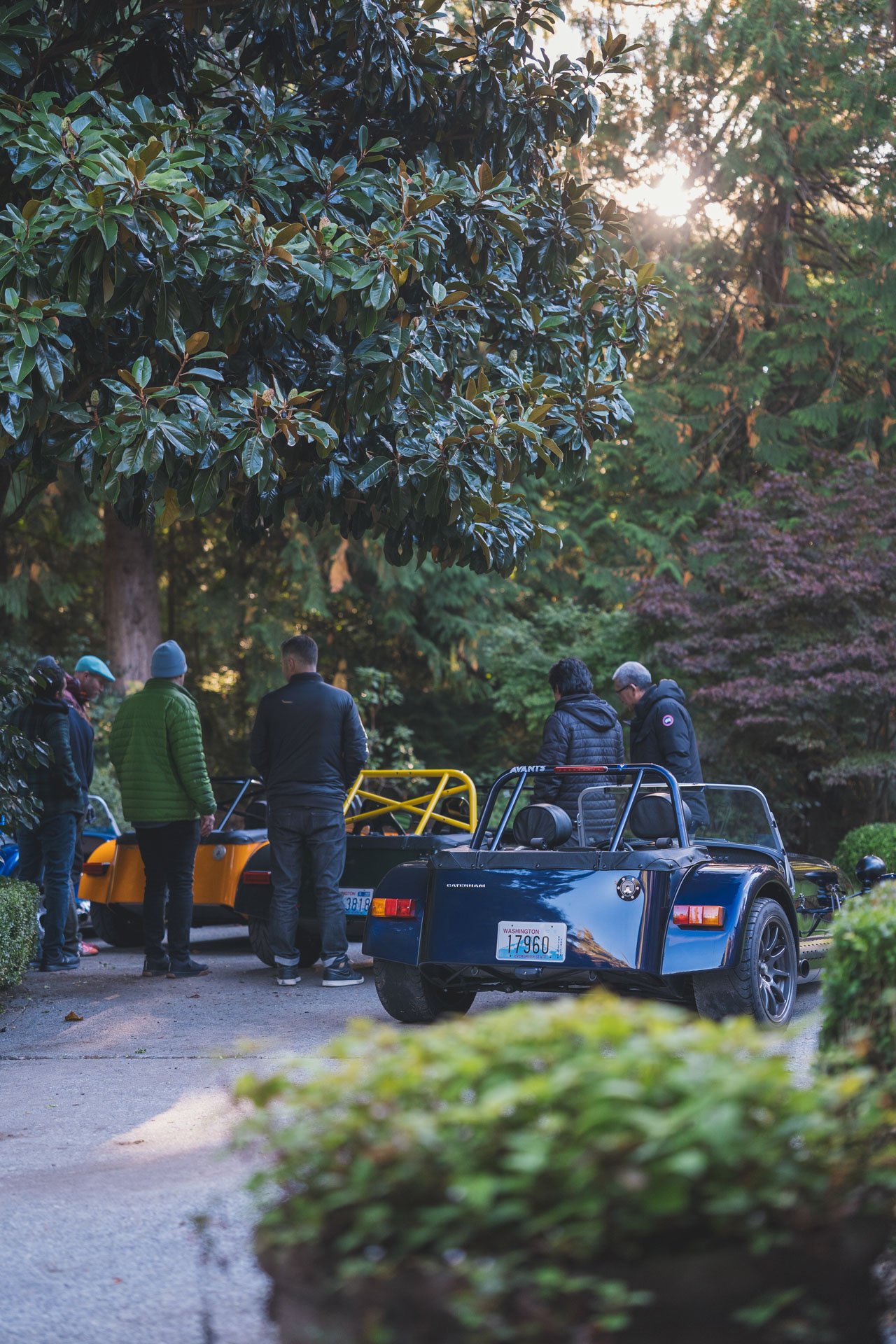
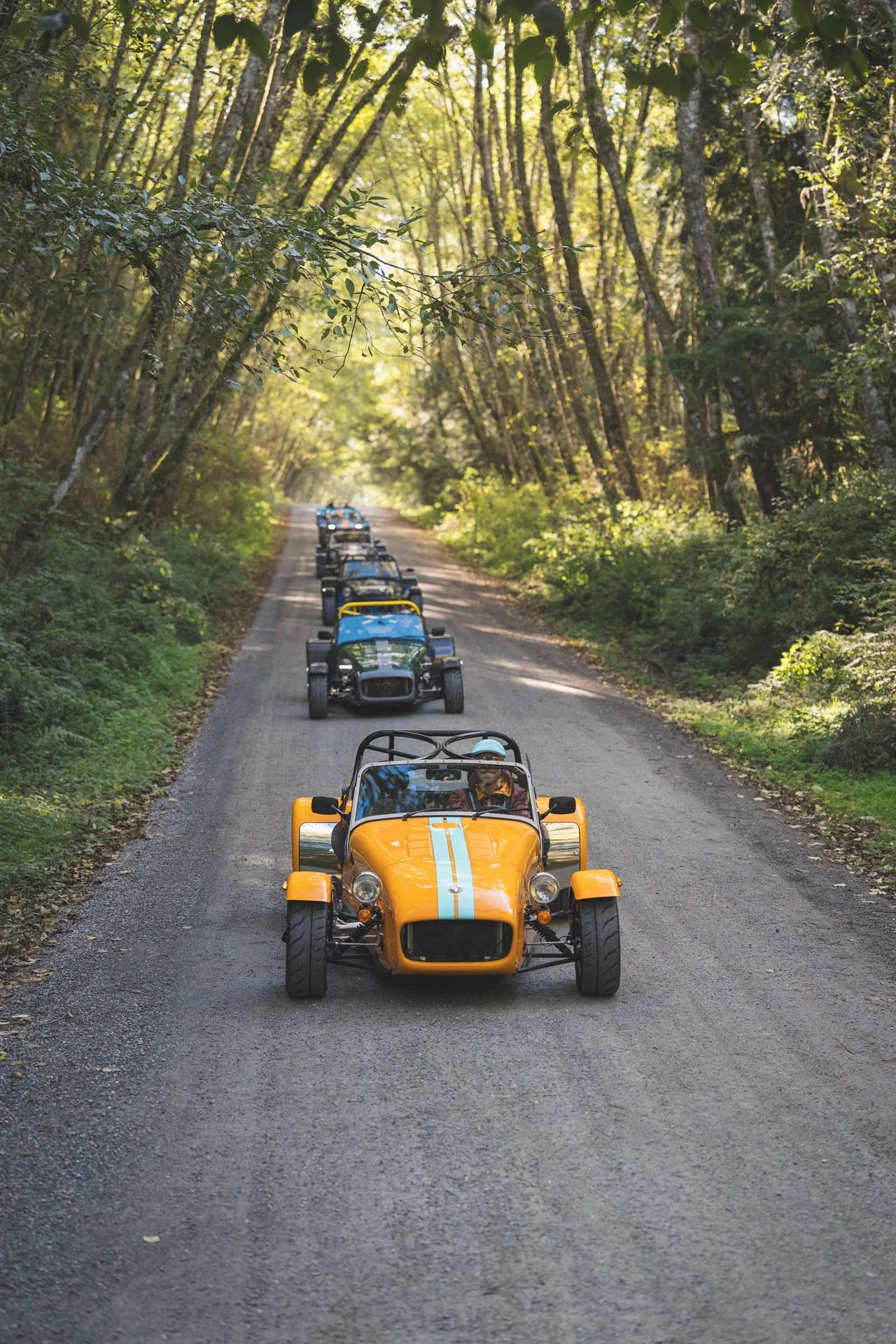
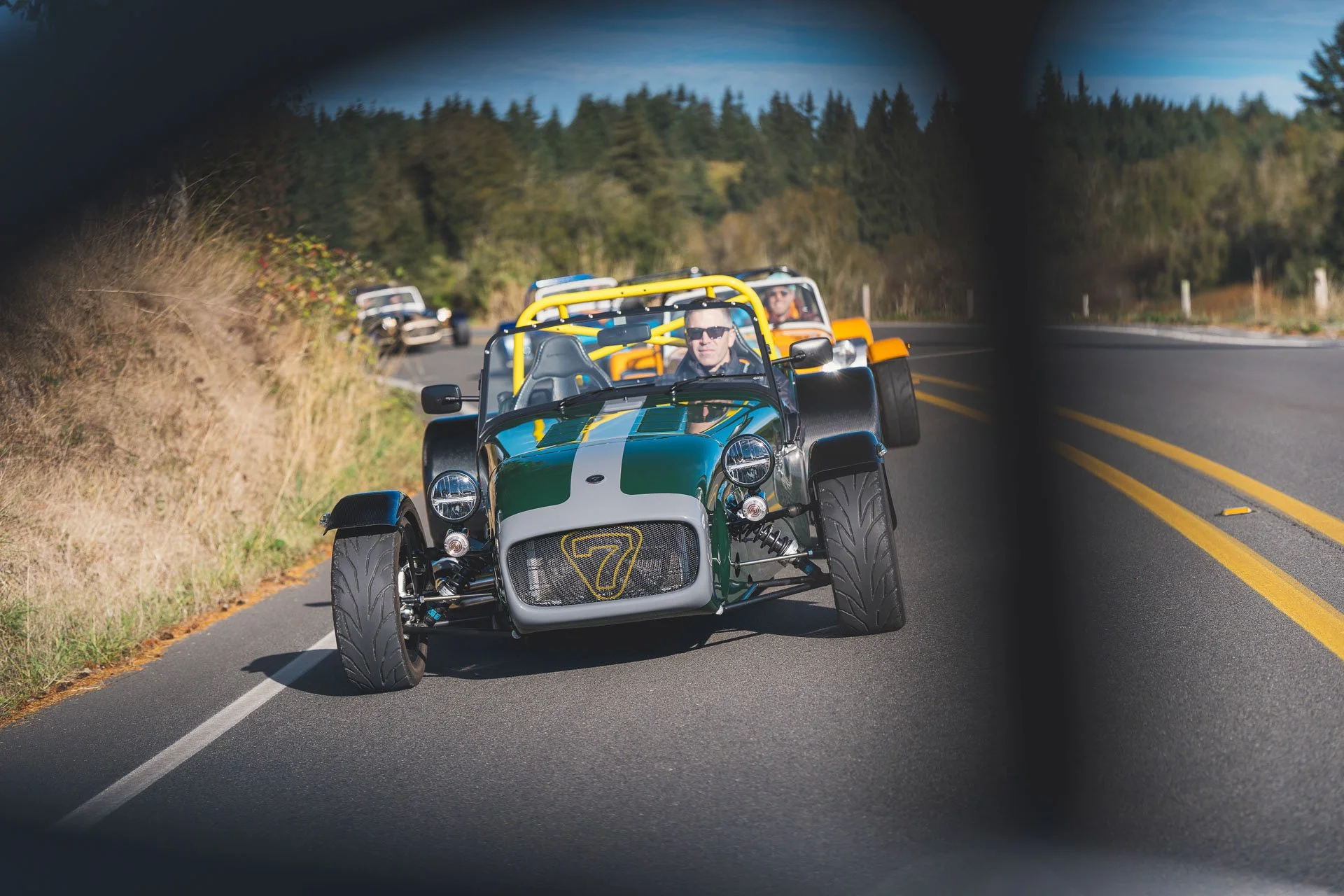
The Caterham driving position is classic British, long hood with seats close to the rear axle. When inside, the first thing you notice is how low the doors are. This is a necessary sacrifice for the ultimate lightweight driving experience. Even with sticky tires and a driver over the rear, a Caterham is quick to wag its tail. Owner of the blue and orange car in the photos, Todd Brown, notes, “Driving (a Caterham) is all about controlling the back end. It has really good balance, and a lot of traction in the nose, but with no weight back there, it can get loose… the higher horsepower cars are just insane.” But this performance doesn’t sacrifice comfort. Todd and his fellow Caterham enthusiasts take their cars for regular multiple-day rallies all over Washington. Thanks to the simple design and modern reliability, they have no issues pushing or cruising in the car all day long.

Adding Custom Touches
To keep with Lotus tradition, all Caterhams are sold as kit cars. When you purchase a Caterham, you can either choose to build it yourself, or have an authorized dealer build it for you. There are only seven dealers in the U.S., for us lucky Seattle residents, Beachman Racing owned by Bruce Beachman is one of them. Bruce lives and loves Caterham. He builds them, he races them, and he’s the hub of the community. On Caterham, Bruce says “Caterham most fully captures the heart of the enthusiast who is most focused on the driving aspects of the automobile — not the tech, or the power, or aesthetics, or the cache. The pure, direct experience of driving a car… We love the power-to-weight, we love the grip, we love the connection, and we love the direct driving experience — pure, simple, fun.”
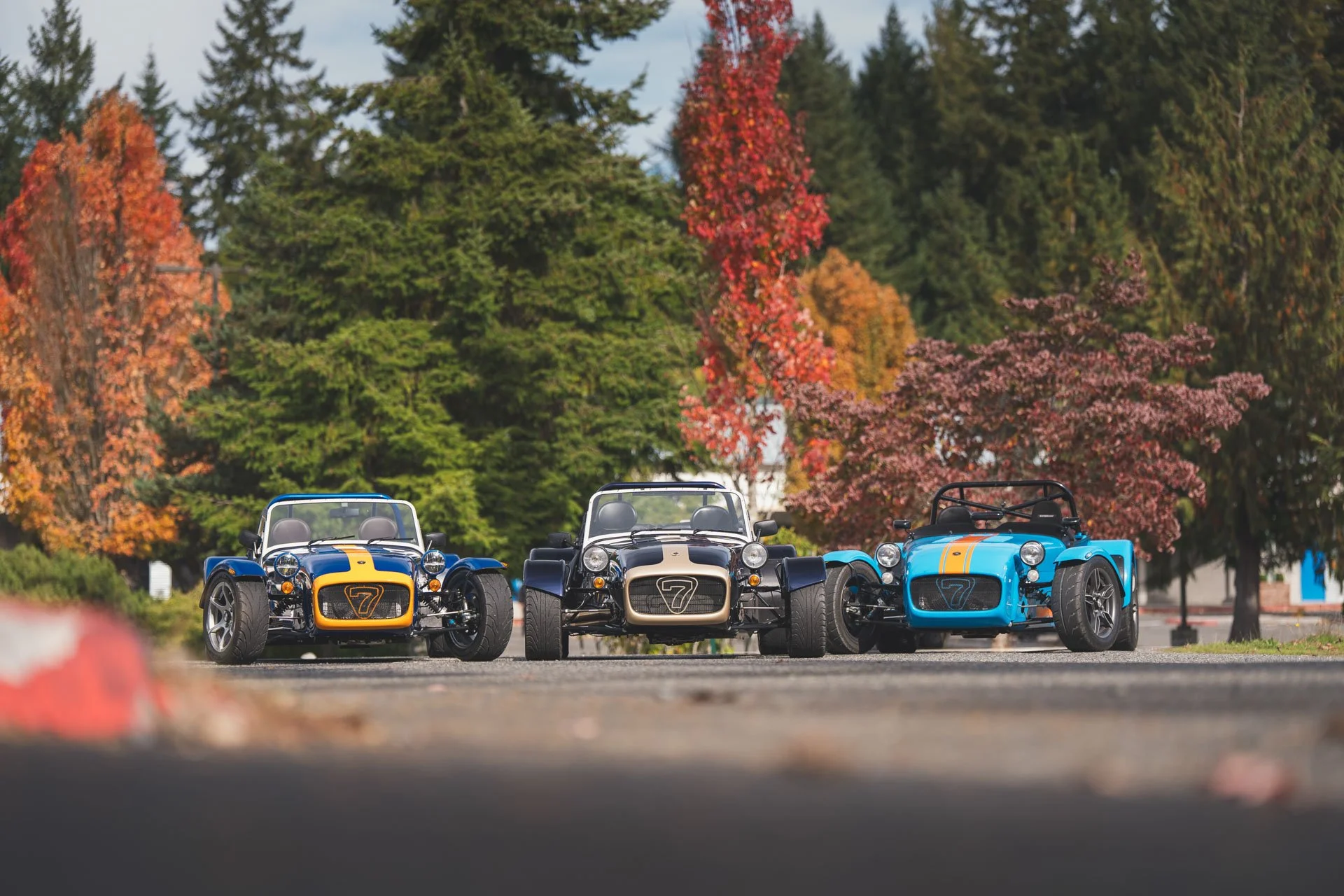
Part of that fun is designing your own car. When buying one new, you can build your Seven to your exact specifications. Currently, there are 11 different models to start with, all with varying combinations of vintage appeal, modern amenities, power, and race equipment. Once you choose your model, every aspect, such as the paint, floor height, suspension stiffness, and amount of carpet in the interior, can be modified to your taste. Yes, a Caterham is a familiar face, but you are unlikely to ever see another in your exact spec.
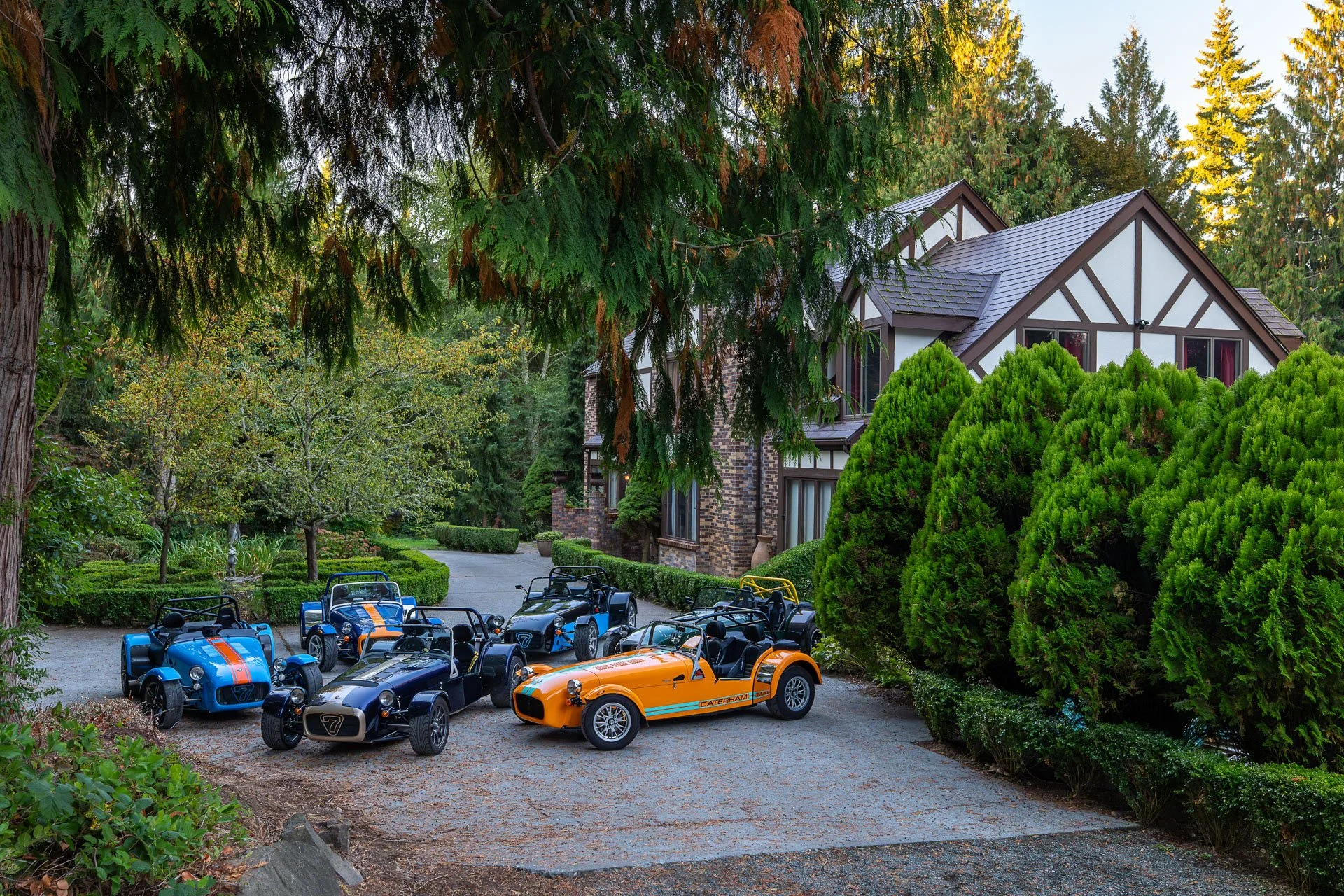
At its core, this story is about why weight matters. Strip away the numbers and the technology, and mass remains the most powerful force shaping how a car feels on the road. Colin Chapman built his legacy on that belief, and thanks to Caterham, his benchmark for lightness still lives. Though the Caterham Seven may look like a 1960s throwback, 50 years of refinement have perfected its formula. Modern Sevens are savage, communicative, and alive, yet now they offer comfort and reliability without diluting the experience. The benchmark hasn’t just survived; it continues to improve.

