Mid-Engined Masterpiece
Justin Cashmore’s 1960 Renault Dauphine
STORY | EVAN GRIFFEY
Photography | HUNTER COURTIN
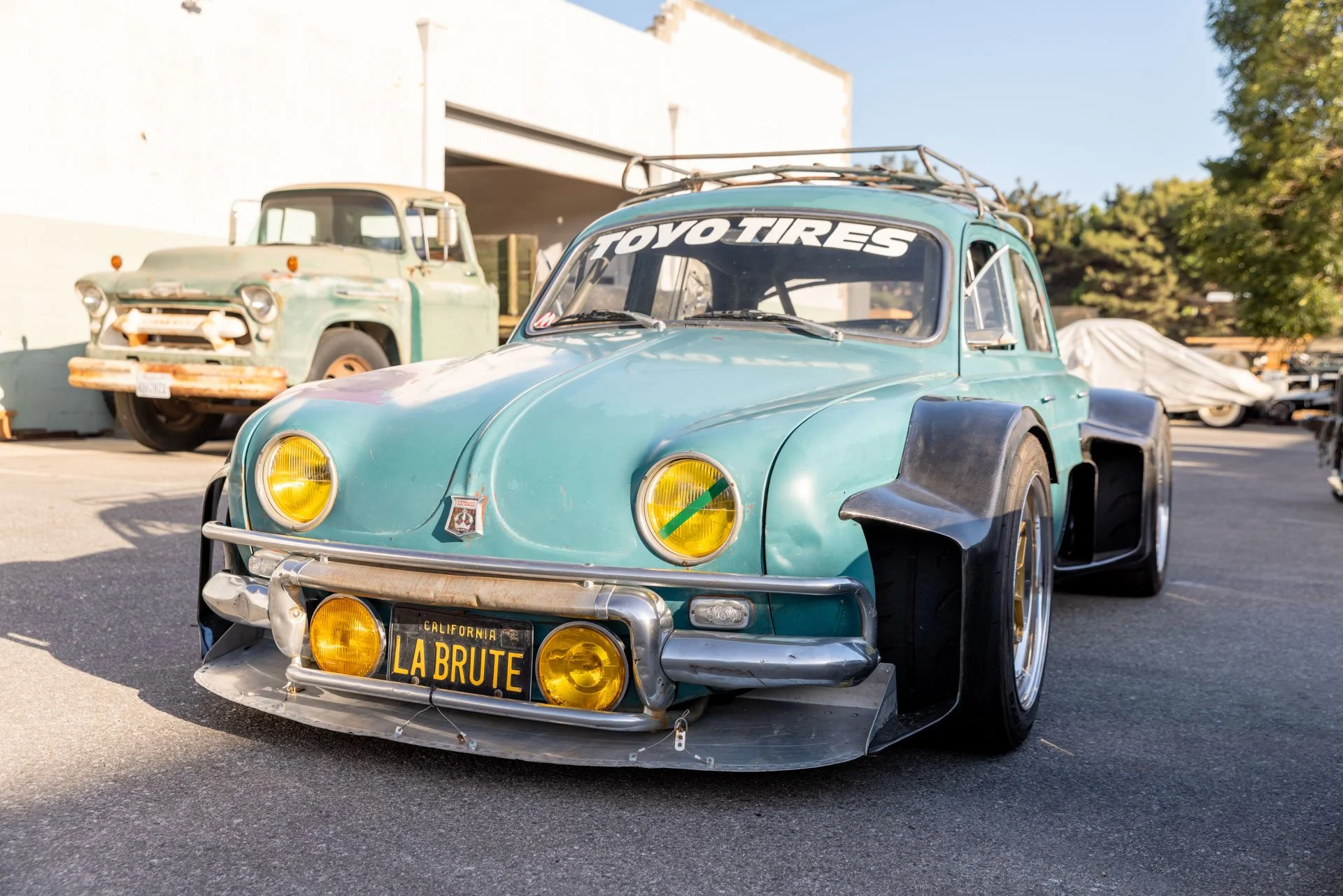
There is no doubt Justin Cashmore marches to the beat of a twisted, acid-dropping drummer on the verge of insanity. Does anyone in their right mind look at a Renault Dauphine and build the beast you see here?
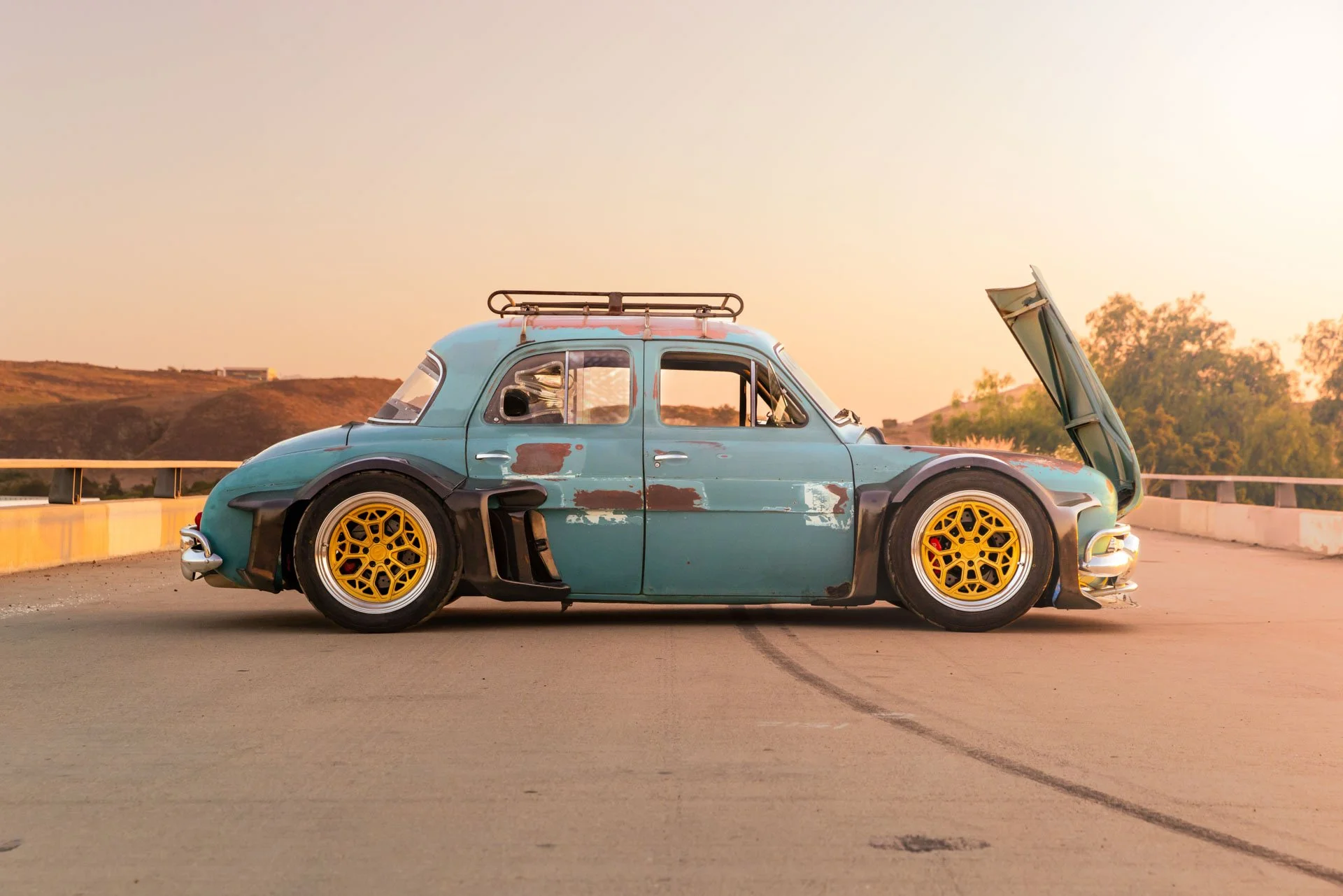
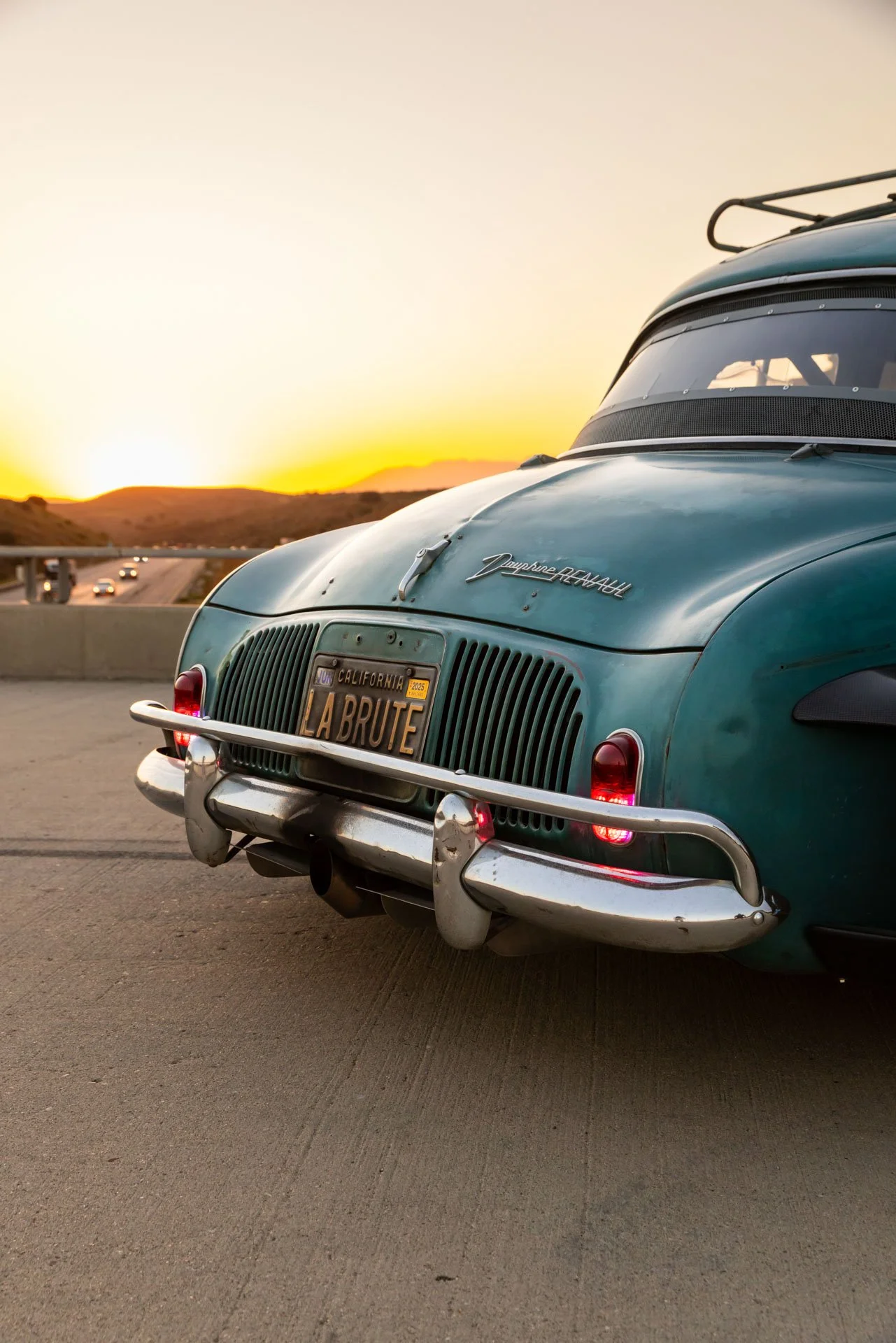
Perhaps the biggest yawn of a car on the European continent in the 1960s, the Dauphine is basic transportation at its most basic. It replaced the 4CV that had been in production since 1947. Clearly, Renault was aiming for a more streamlined look as the Dauphine’s straightside design is a total departure from the fat-fendered, swoopy-tail look of the 4CV. The Dauphine retained its predecessor’s rear-engine, rear-drive powertrain. Motivation comes compliments of an 845cc water-cooled Ventoux engine rated at 32 horsepower in 1960. The car was slow, even by horse-and-buggy standards, posting a 22.3-second 0-60 as tested by Road & Track in 1962.
What did Justin see in this car, and how did he ever find it? The story starts off typically enough. “The car was listed on Facebook Marketplace by a little old lady,” says Justin. “She was trying to clear out a desert property that had a bunch of her late husband’s old junk on it: cars, farm equipment, a bulldozer, just a collection of randomness. It was way out east of Anza, California, literally in the middle of nowhere. It had been sitting in the same exact spot since the late ‘60s, with bullet holes, broken glass, no floor or engine, completely forgotten. It was exactly what I wanted. It’s a tiny, light, very pedestrian, European sedan that was virtually abandoned and headed for the scrapper. What I saw was a unique canvas with just enough space for my plans, and I could style it the way I wanted.”
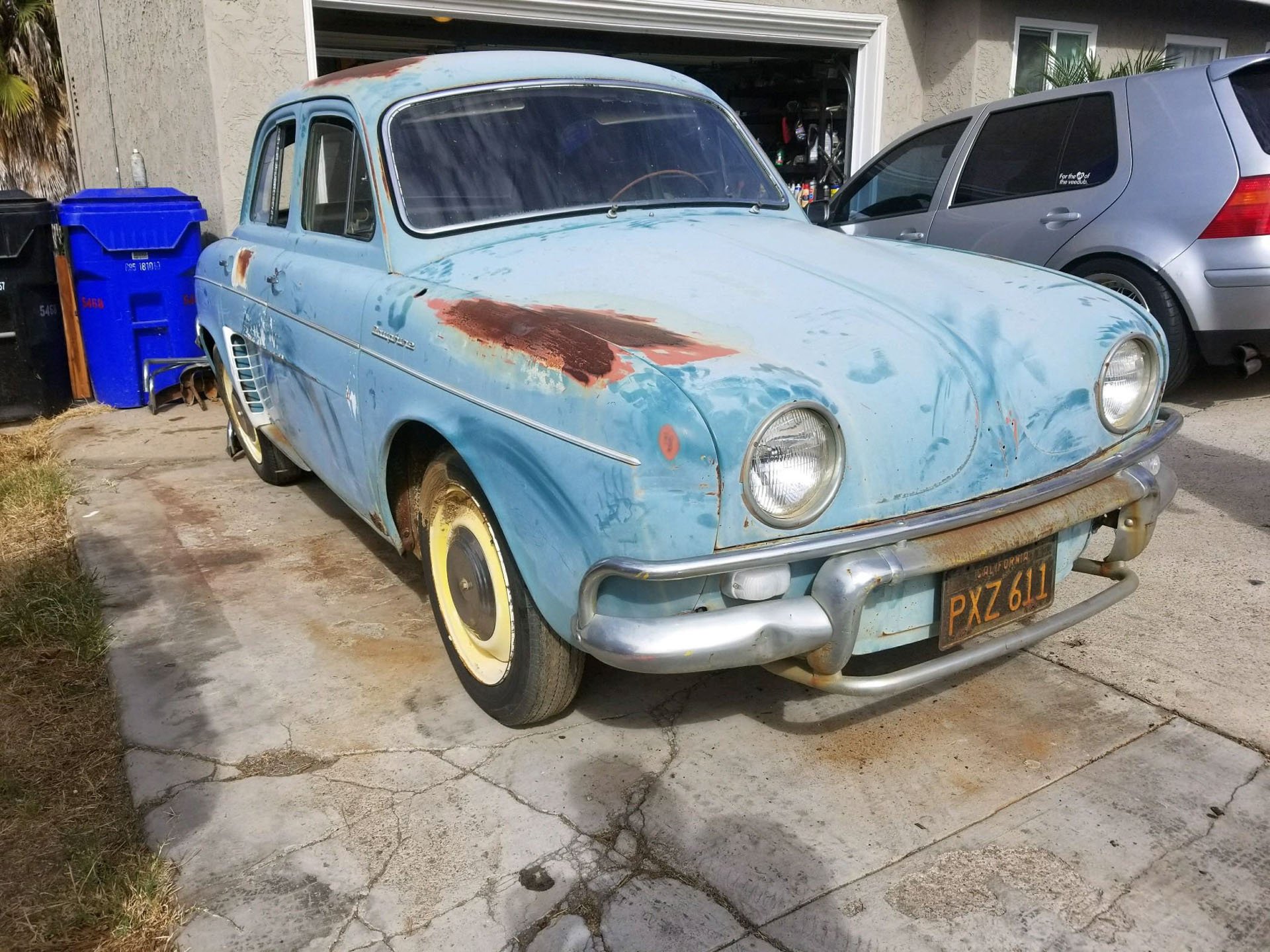
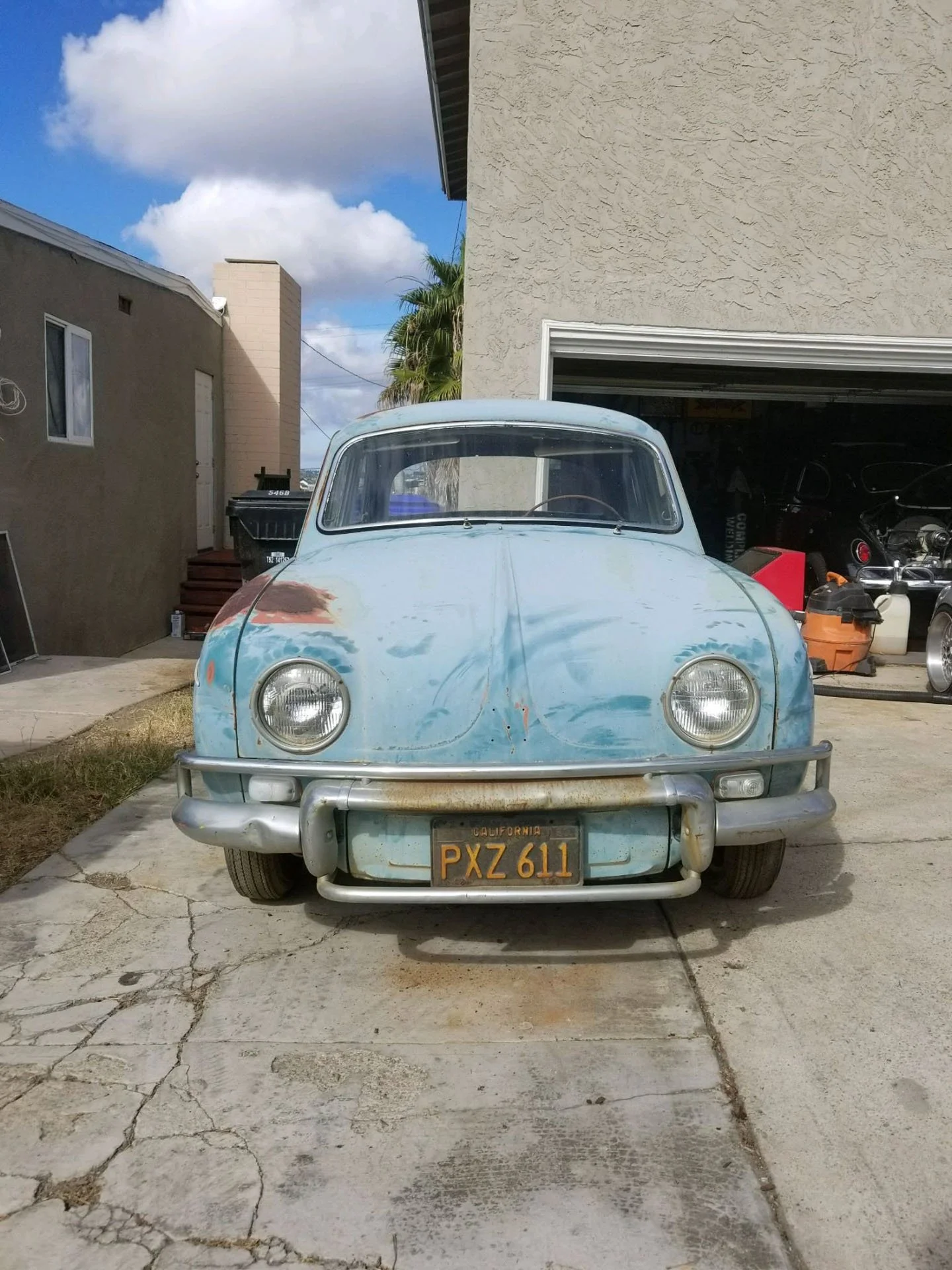
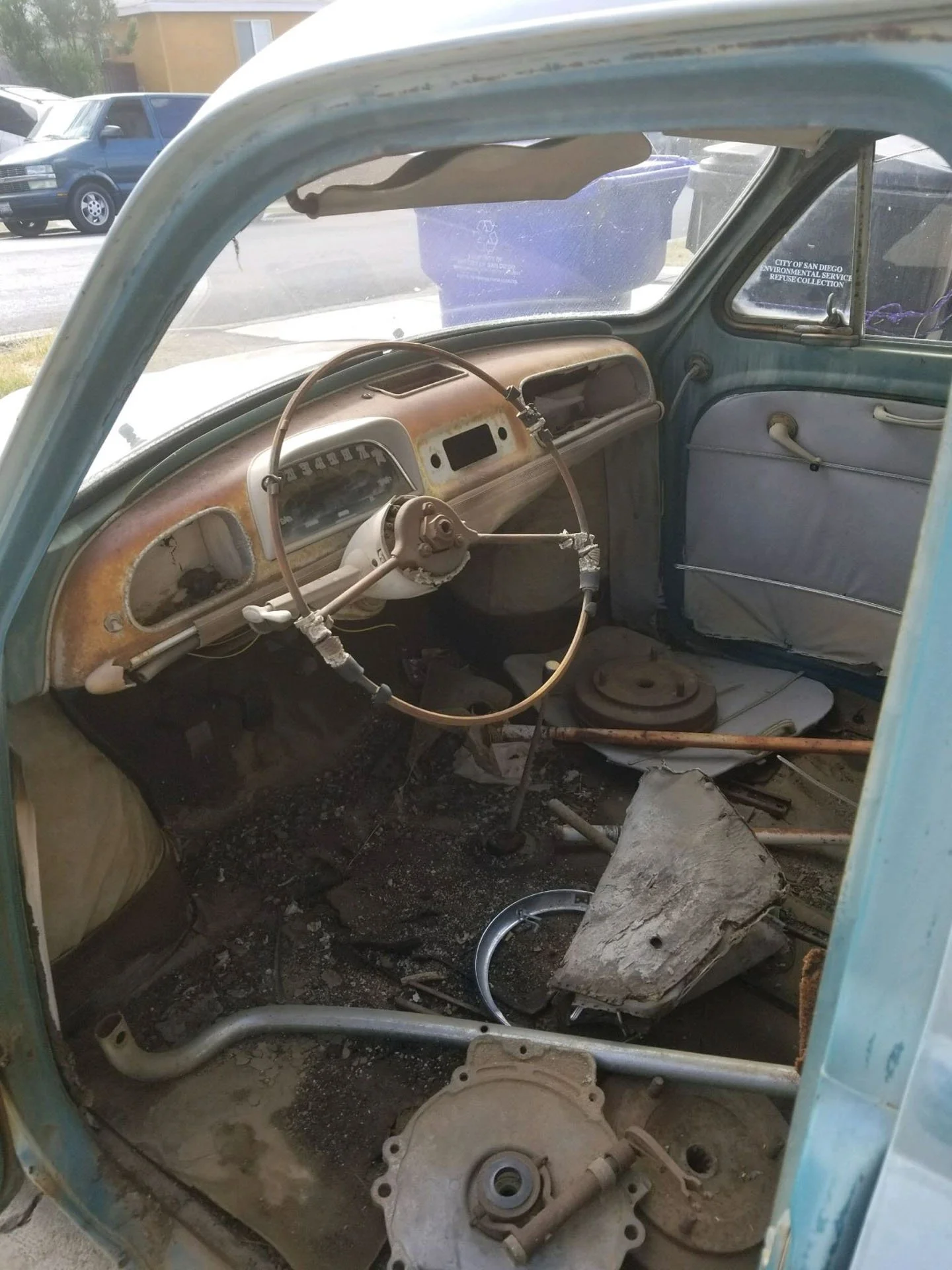
That’s right, Justin had envisioned the car before he had the car. “The mid-engine VR6, custom chassis, and pushrod suspension plan goes back way before I got the Dauphine,” says Justin. “The Renault is just where the roulette ball landed; it could have very easily been a SIMCA, DKW, Fiat, or Alfa.”
Justin executed all the fab work himself. He acquired the car in November 2017 and was working on the transformation in less than a month. He constructed a custom chassis and subframe to house the VW engine. Since the VR6 was bigger than the Renault powerplant, the rear seats were enthusiastically sacrificed.
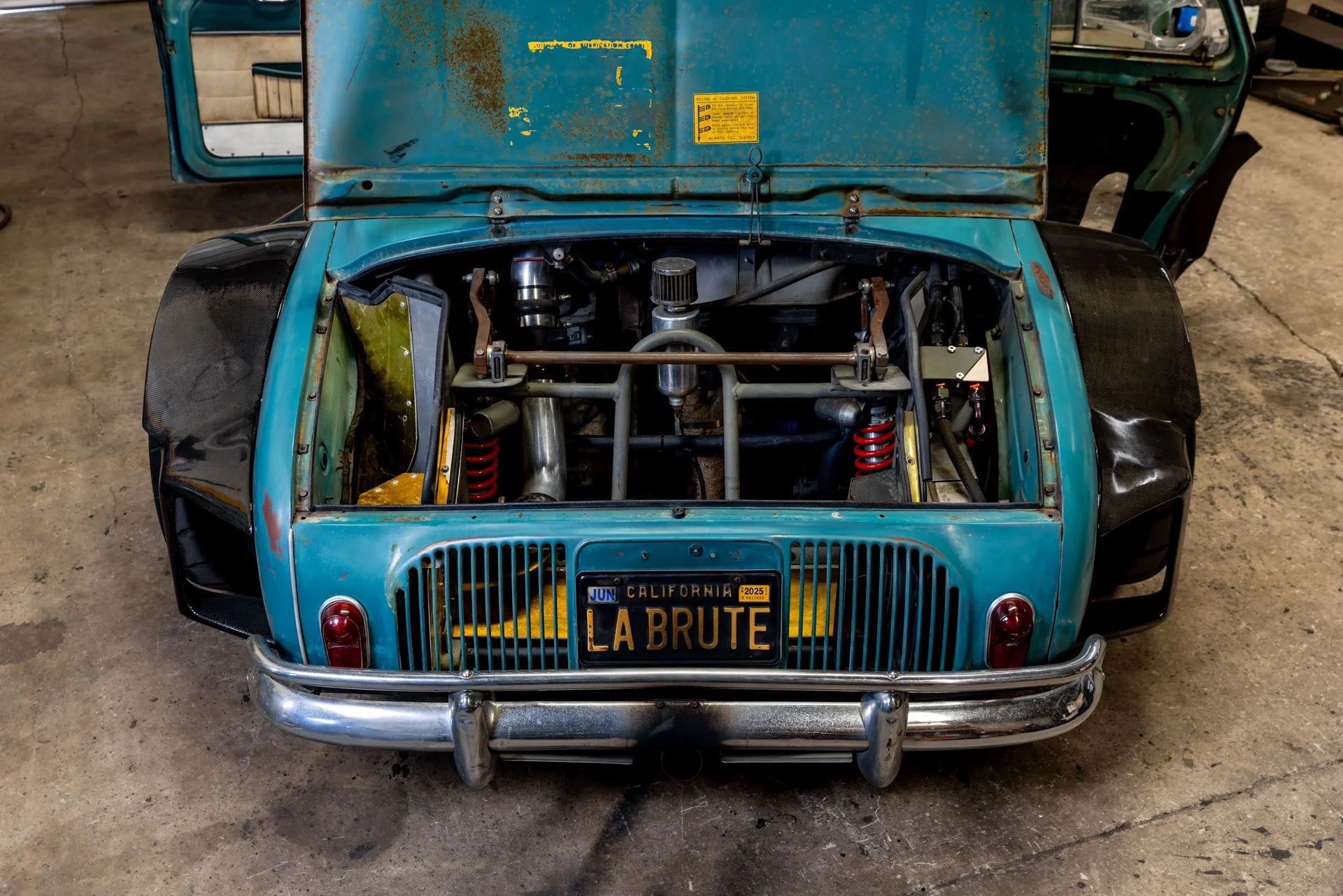
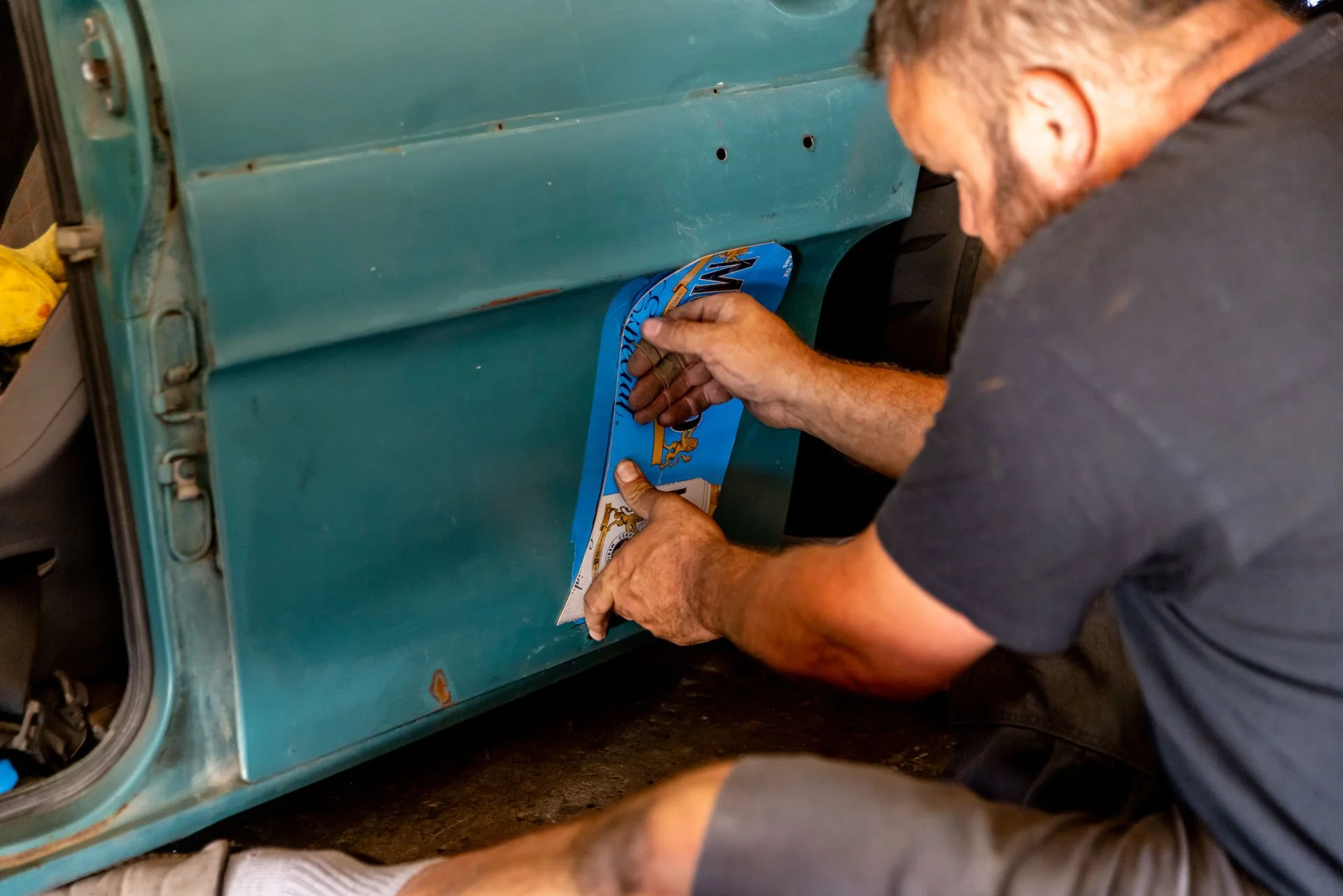
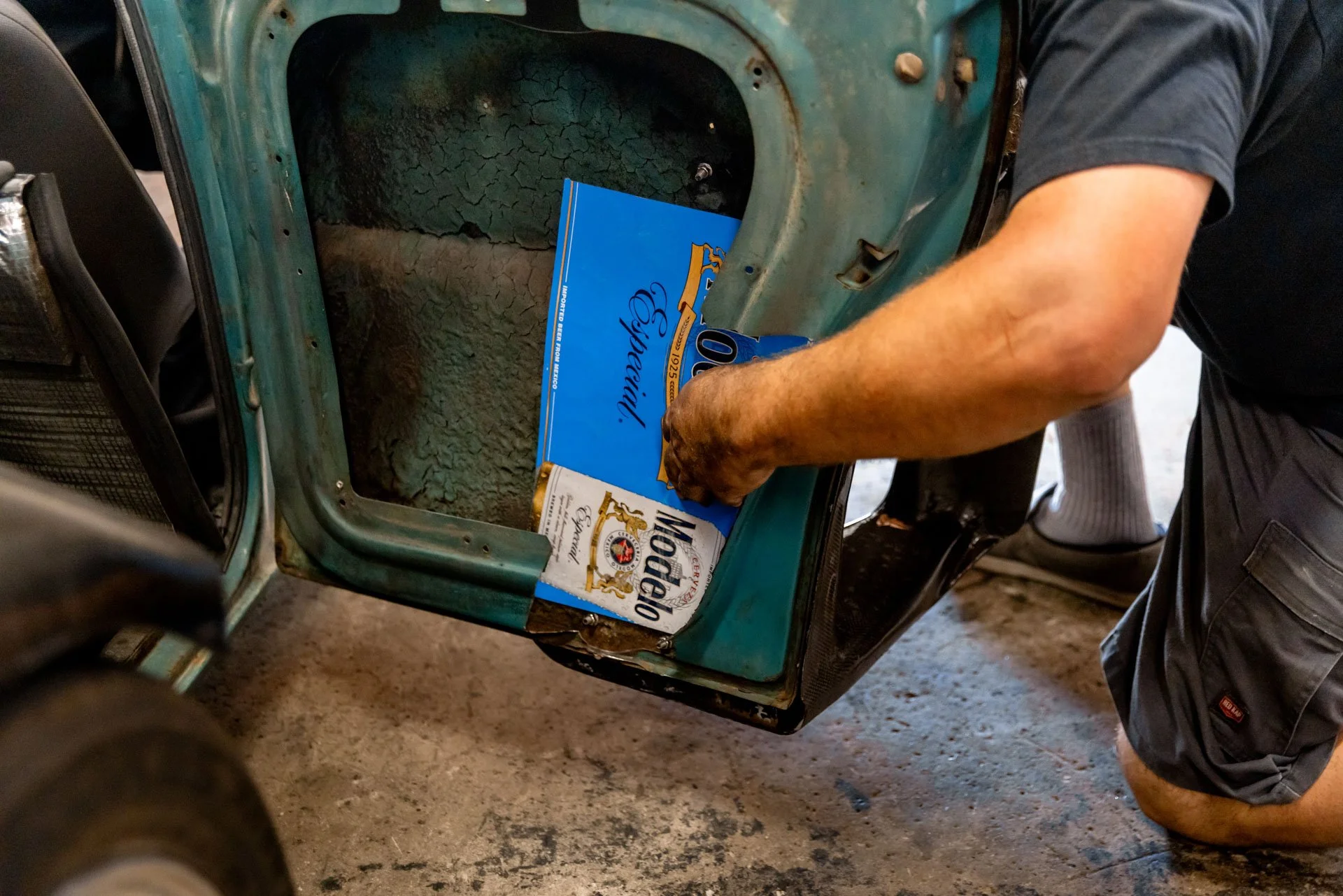
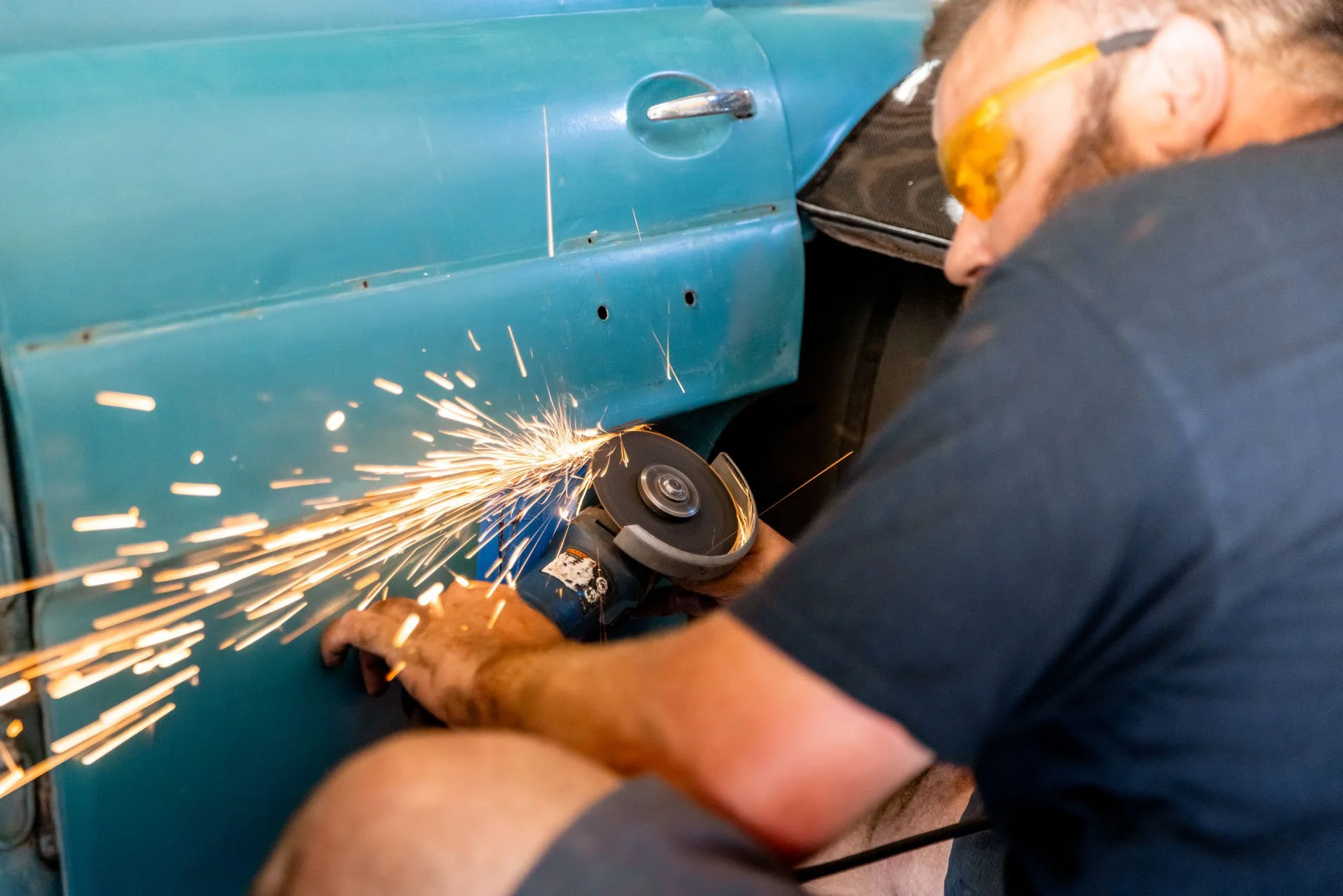
The initial build of the car was completed such that it was running and driving in April 2019. It appeared at the SEMA Show in November 2019 and was taken to a steady state of daily driving from after the SEMA Show to February 2023, when Justin had a hankering for carbon fiber. The carbon fiber widebody portion of the project lasted until June 2024. Justin reports that halfway through the widebody build, he had a real struggle with motivation and didn’t touch the car for around eight months.
Sometimes it’s the struggles that define the build. “While all the metal fab work was fun,” says Justin, “the most rewarding part of the build was the hand-formed, hand-laid carbon widebody. I’ve worked with composites in the past, but never to this degree. It was nice to just jump in with both feet and learn. Did I fail a lot? Yes. Could I do a better job now? Absolutely. Would I have it any other way? Not a chance.”
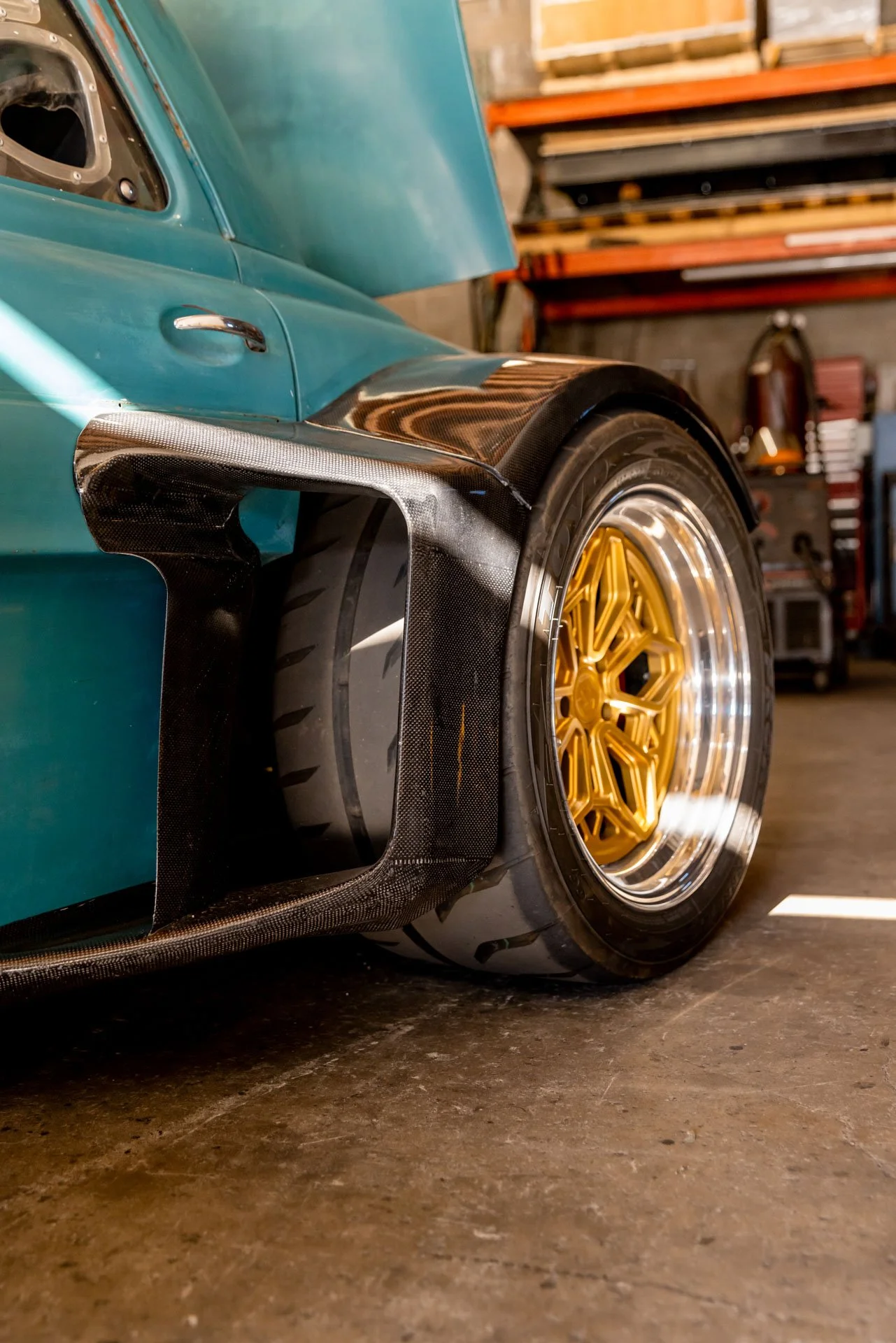
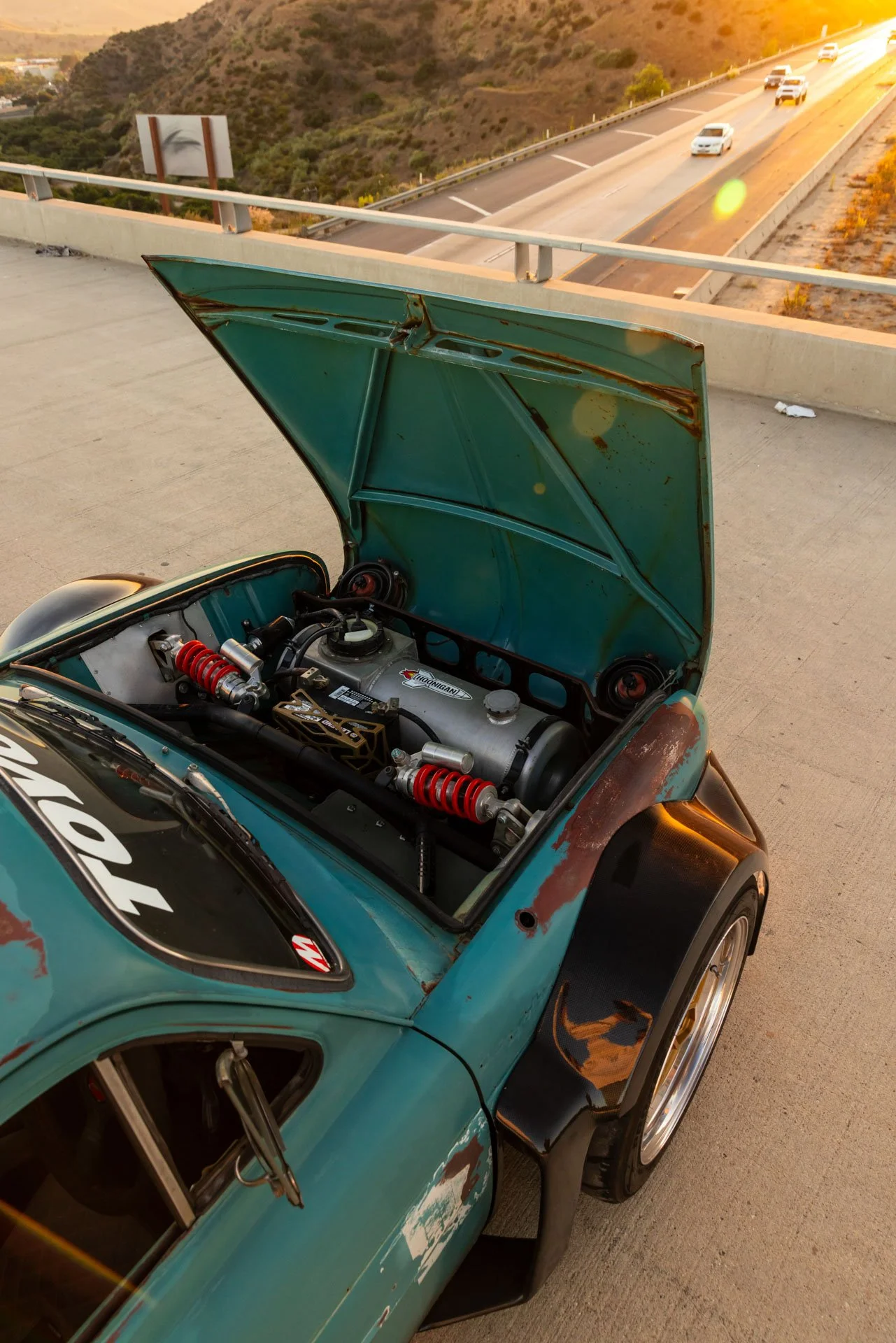
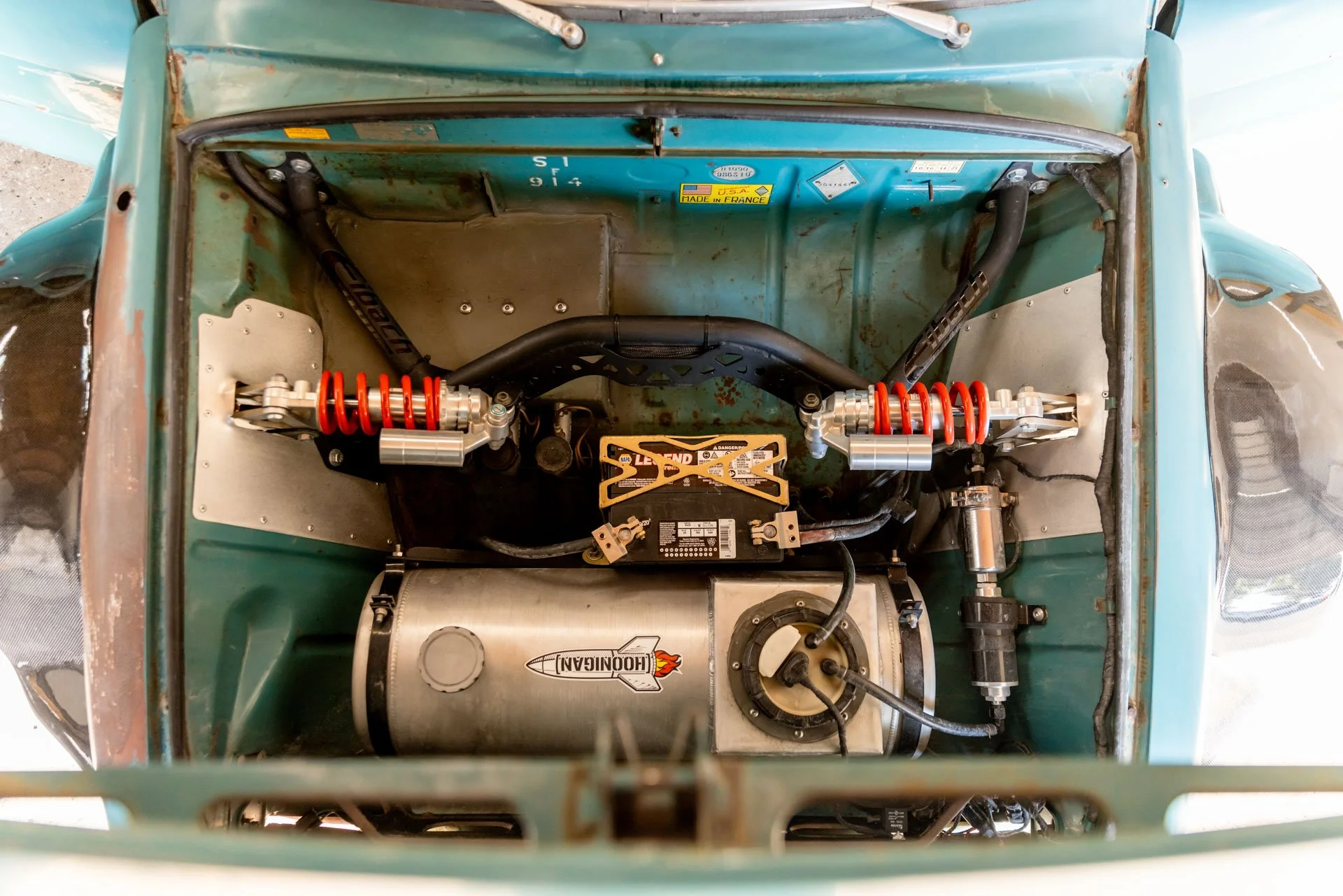
Beyond the menacing wide fenders, the frunk, or front trunk, is one of the more fascinating aspects of the build. The space is home to the fuel cell, inboard side of the pushrod suspension, battery, pedal box, and front roll cage structure. “I made the full suspension myself. It’s nothing wild, a double-wishbone setup front and rear, with actual NASCAR sway bars, and pushrod suspension. This is a budget build, so the coilovers are rear Yamaha R1 units that I have re-valved and re-sprung.” One more challenge met.
“There are a few other big hurdles that come to mind. One is how it is very difficult, if not impossible, to find parts for a Dauphine, and when you do, they’re old and French, so they fall apart. Another issue was spatial; the car is tiny, so just trying to fit everything in and not making it a nightmare to work on from a maintenance standpoint was a constant struggle.”
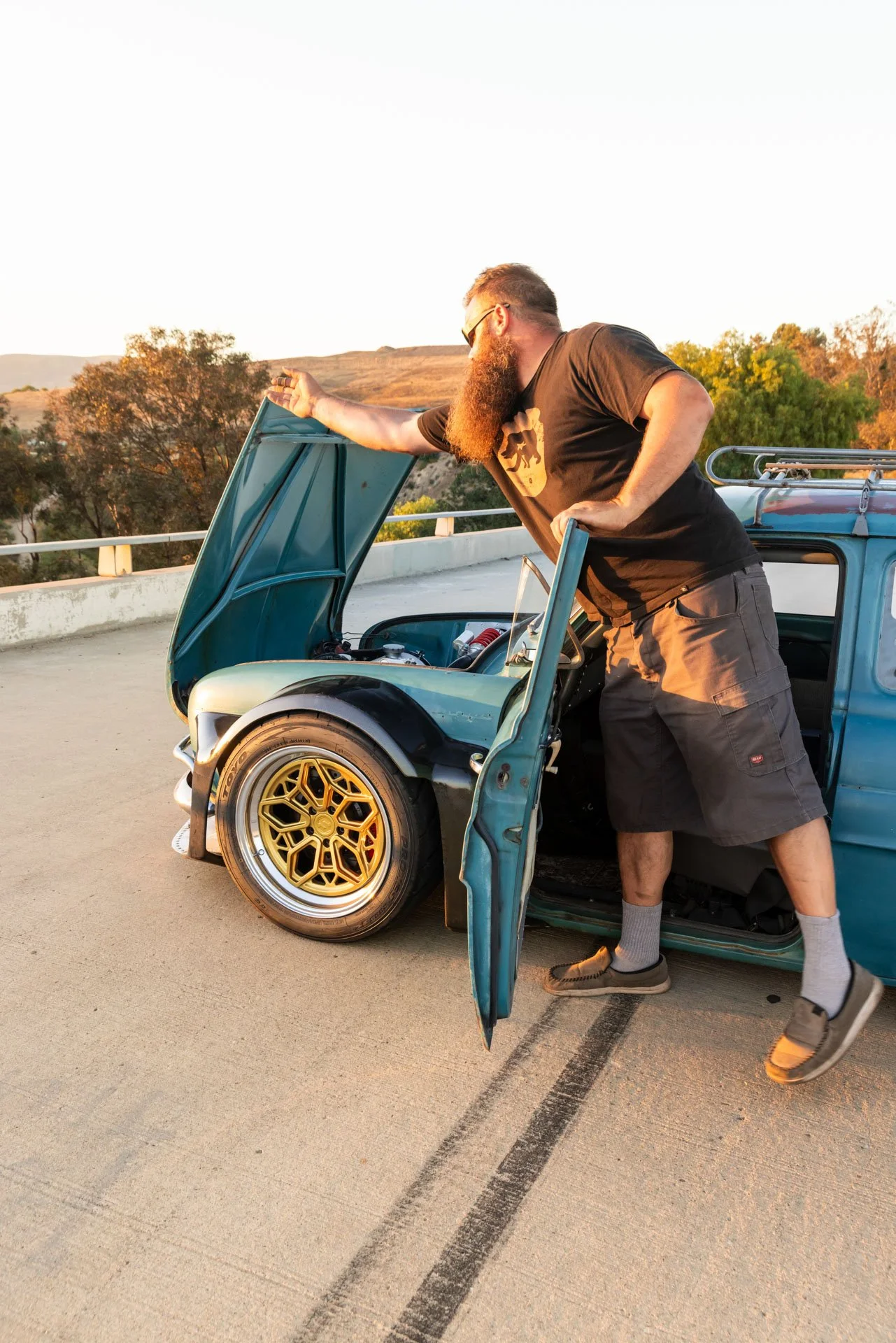
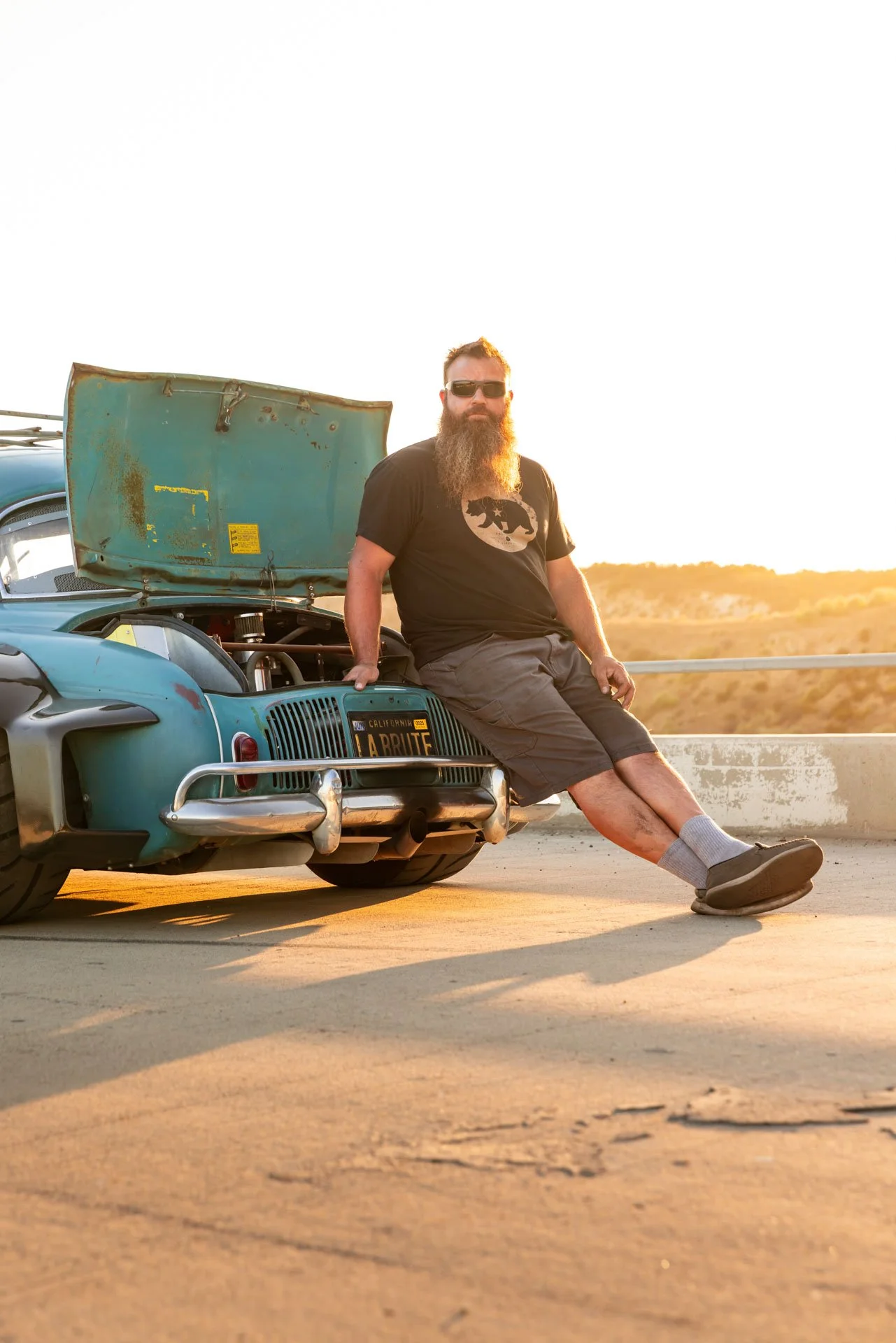
When you first lay eyes on the Renault there is a lot to take in despite the car’s diminutive size. With all the bulging, stretching, and venting going on, it’s hard to classify the build. “This was never supposed to be a ‘show car,’” quips Justin. “I built it to be a little monster in the canyons and produce a visceral driving experience. It has evolved to be way more finished and aesthetically pleasing and less rough and utilitarian than I thought it would be. To classify it… It doesn’t really fit anywhere. I would say it’s part track car and part death trap, with a sprinkling of old-school JDM and Group-5 vibes.”
One thing is for sure… this isn’t granddad’s Dauphine. Look at the numbers. Justin reports the VR6 is currently nearly stock, aside from the exhaust, intake, and United Motorsports tune, so he estimates around 230 horsepower with the caveat, “I have banged it off the rev limiter a lot, so maybe less.” Compare that to the 32 horsepower of the Renault’s original powerplant, and you have a magnitude of more than seven times the power. Factor in a suspension system that a circa 1960 Frenchman couldn’t even dream of, and you have a one-off driving experience.
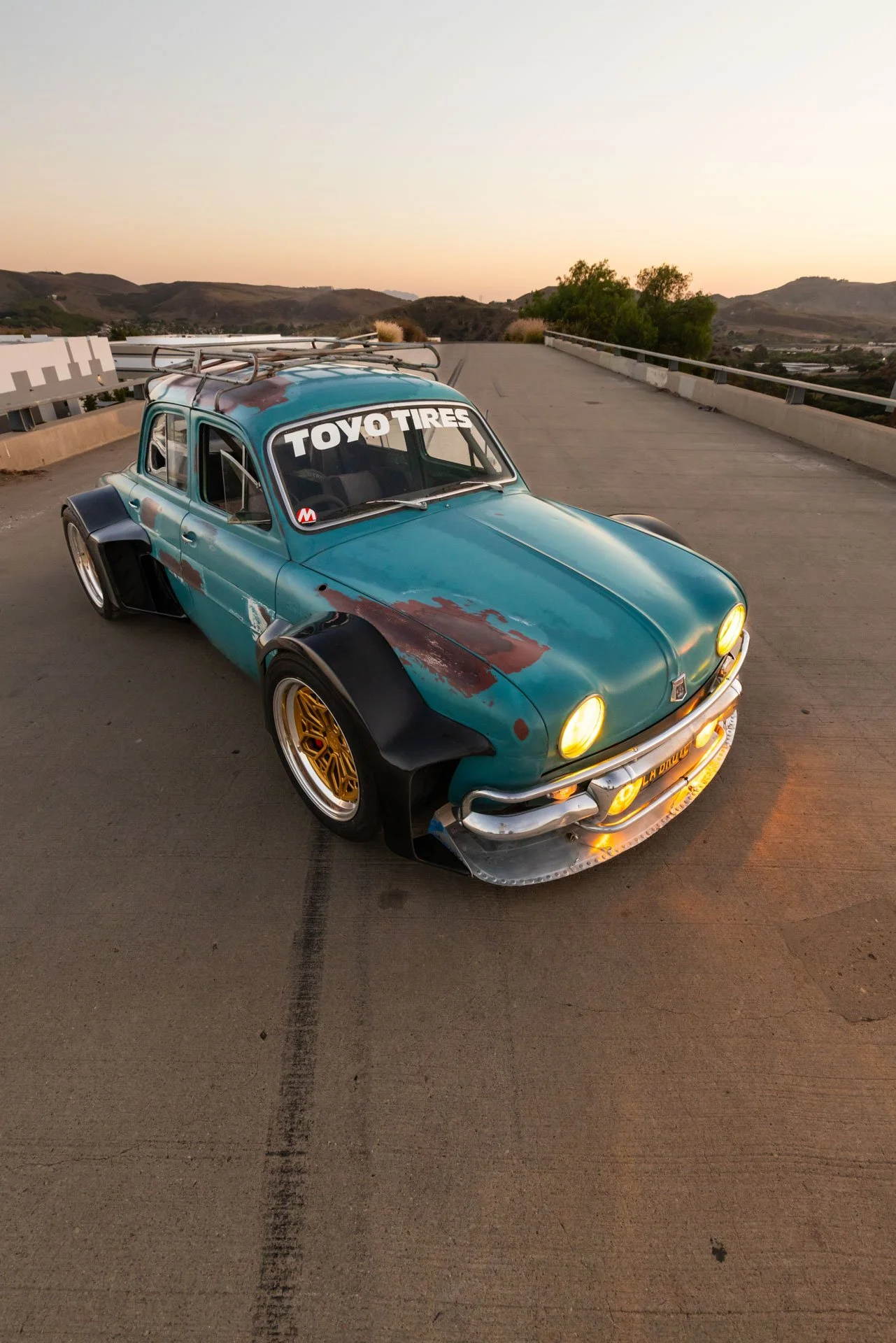
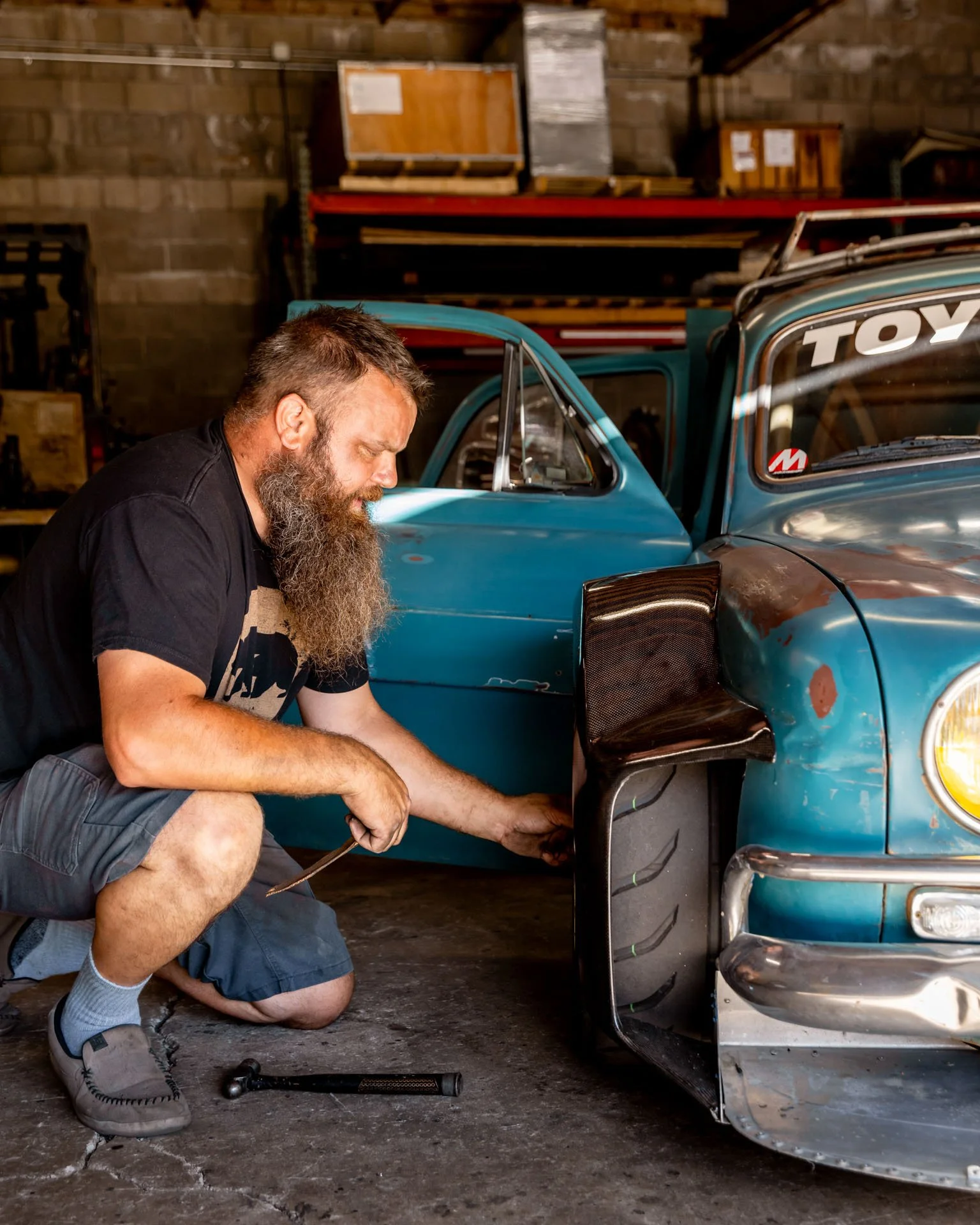
“During the build, I went out of my way to ensure the experience remains unfettered,” says Justin. “It doesn’t have power brakes or steering, most of the suspension uses Heim joints, the engine and transmission are solid- mounted, and there’s no sound deadening anywhere — just raw, unfiltered fun.”
“When you’re driving it, you hear everything from the exhaust and induction noise to the fuel pump and fans. The engine is literally where the rear seat used to be, so you can smell and feel it right behind you. It is 100% the most visceral, engaging, and addictive car I’ve ever driven. In the canyons, it’s both exciting and relaxing. It’s exciting because all your senses are on the verge of overload, but it’s relaxing because it’s way more capable than it has any right to be, making even the most technical areas somehow simple.”
Like many projects, there may be no finish line. Justin says his future plans include a ‘60s-inspired race livery, a turbo, a riveted fuel cell, and some interior changes. We’d change nothing, but we understand sometimes the journey is as important as the destination.

