Gold Rush
THE FERRARI DINO & DAYTONA
STORY | CHRIS SEELY
Photography | KARL NOAKES
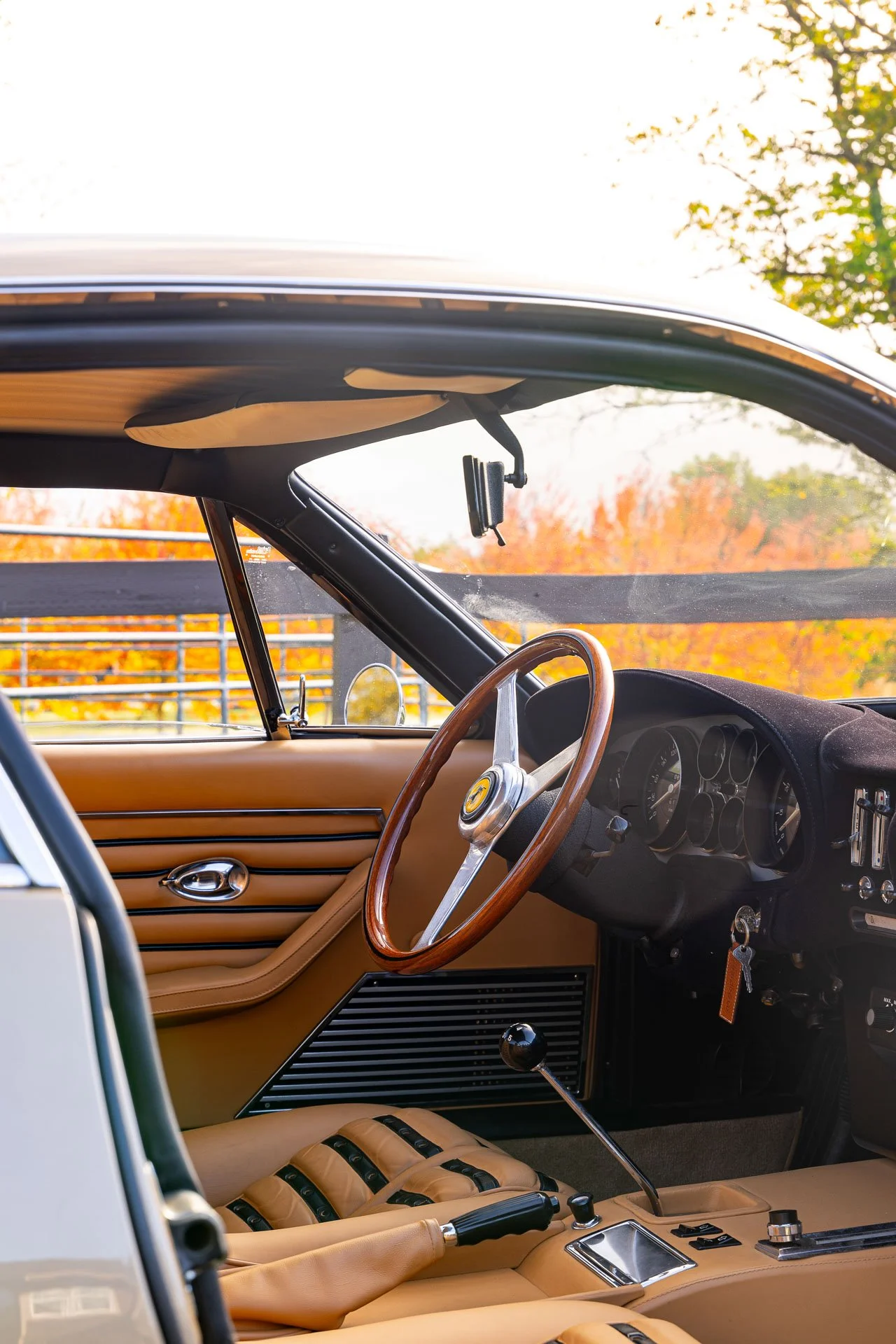
Close your eyes and picture a Ferrari. What do you see? Beautiful leather interior with hand stitching and a gated shifter? Gold or silver wheels wrapped in black Pirelli leather? Specifics aside, one thing is certain, the car you are picturing is painted red.
Red and Ferrari go together like peanut butter and jelly, rhythm and blues, or coffee and the morning news. Over 50% of Ferraris sold are painted in some shade of red, most common of which is “Rossa Corsa” the most iconic of Ferrari’s racing colors. Even Enzo Ferrari is believed to have said, “Ask a child to draw a car, and certainly he will draw it red.” The color practically belongs to the brand and is just as crucial to the company’s success as their masterful motors and racing heritage.
But as Enzo himself implied, a red Ferrari is a child’s car. It looks cool and fast, but is flashy and seeks attention. The most dignified, refined, and gentlemanly of Ferraris can only be one color: gold.
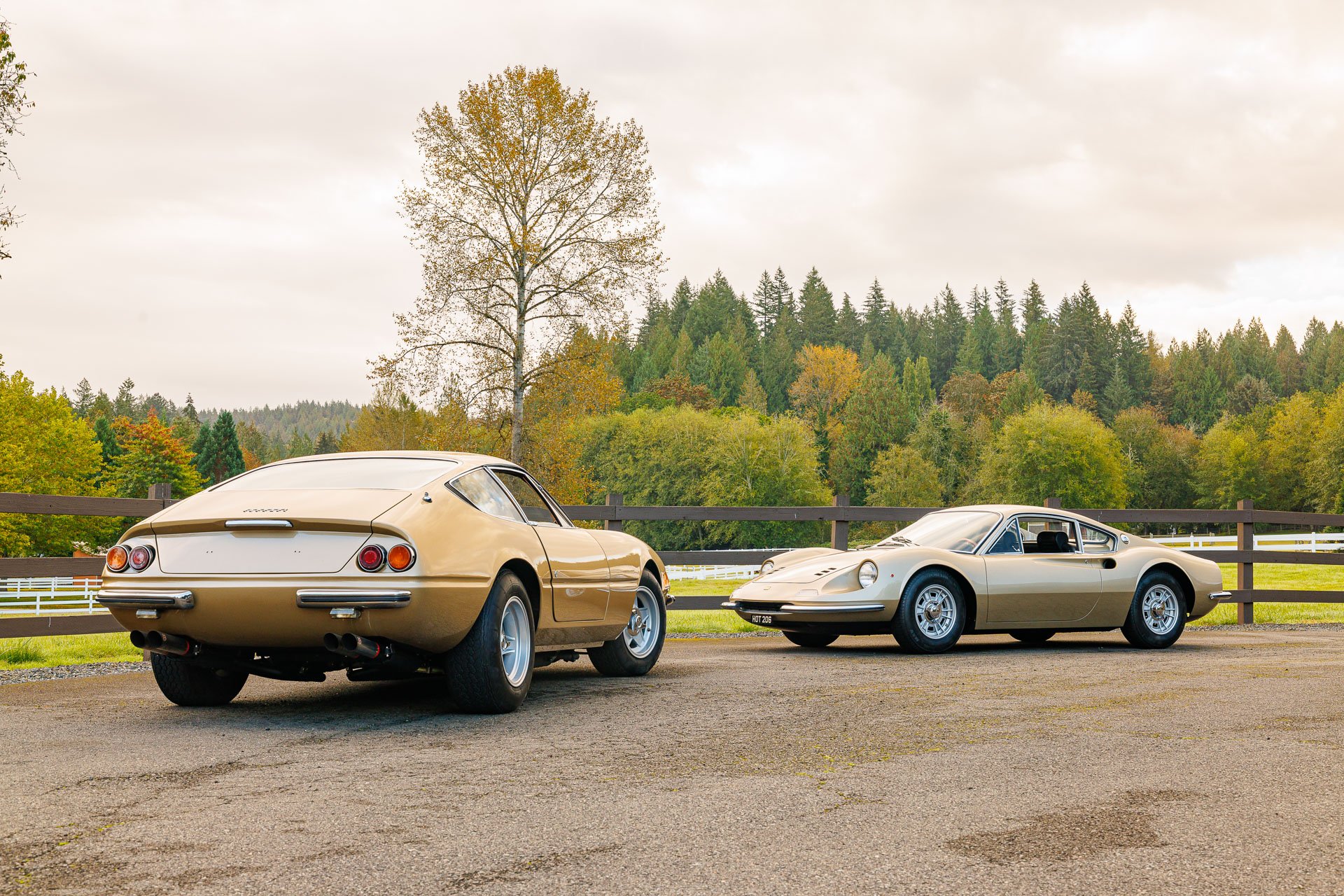
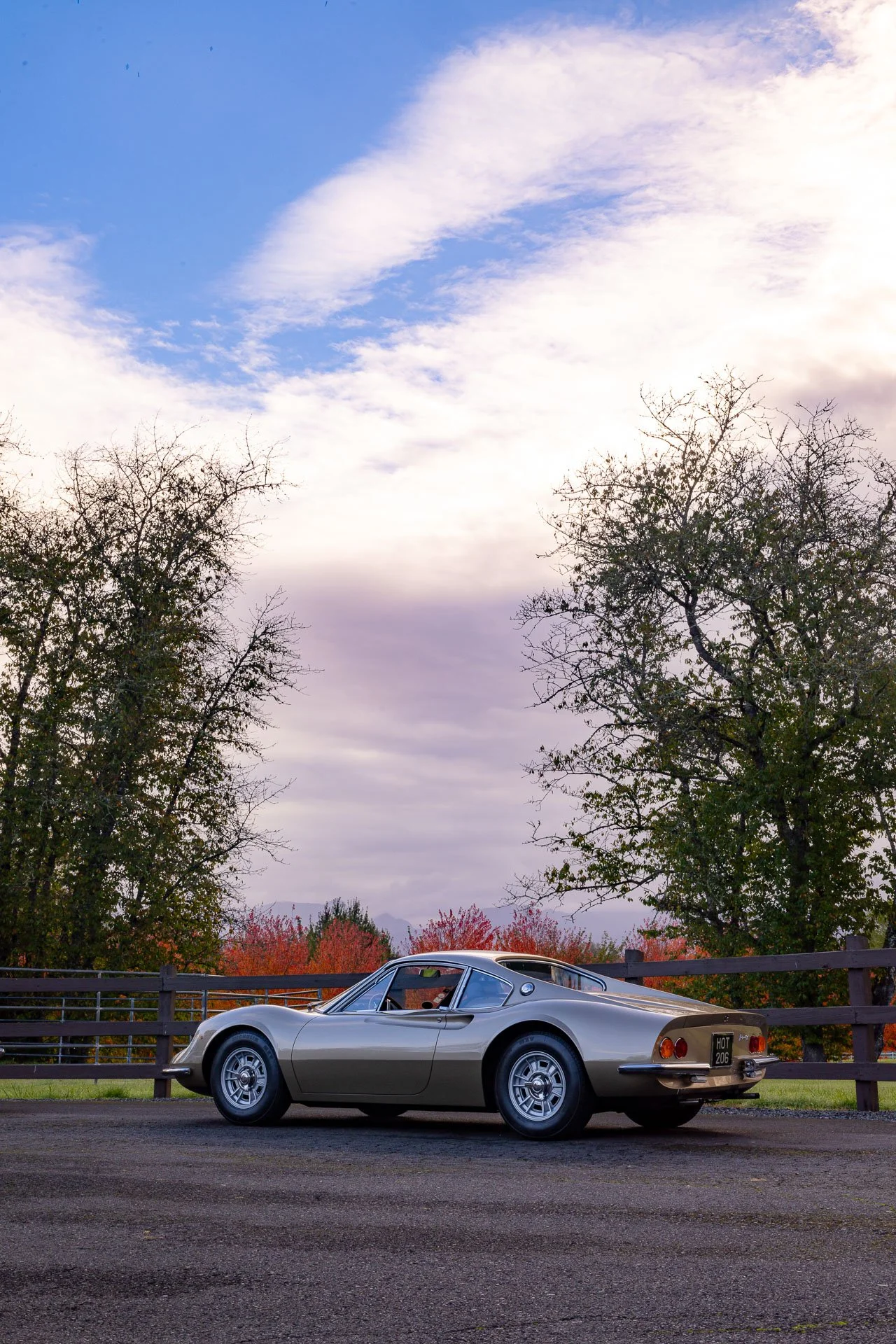
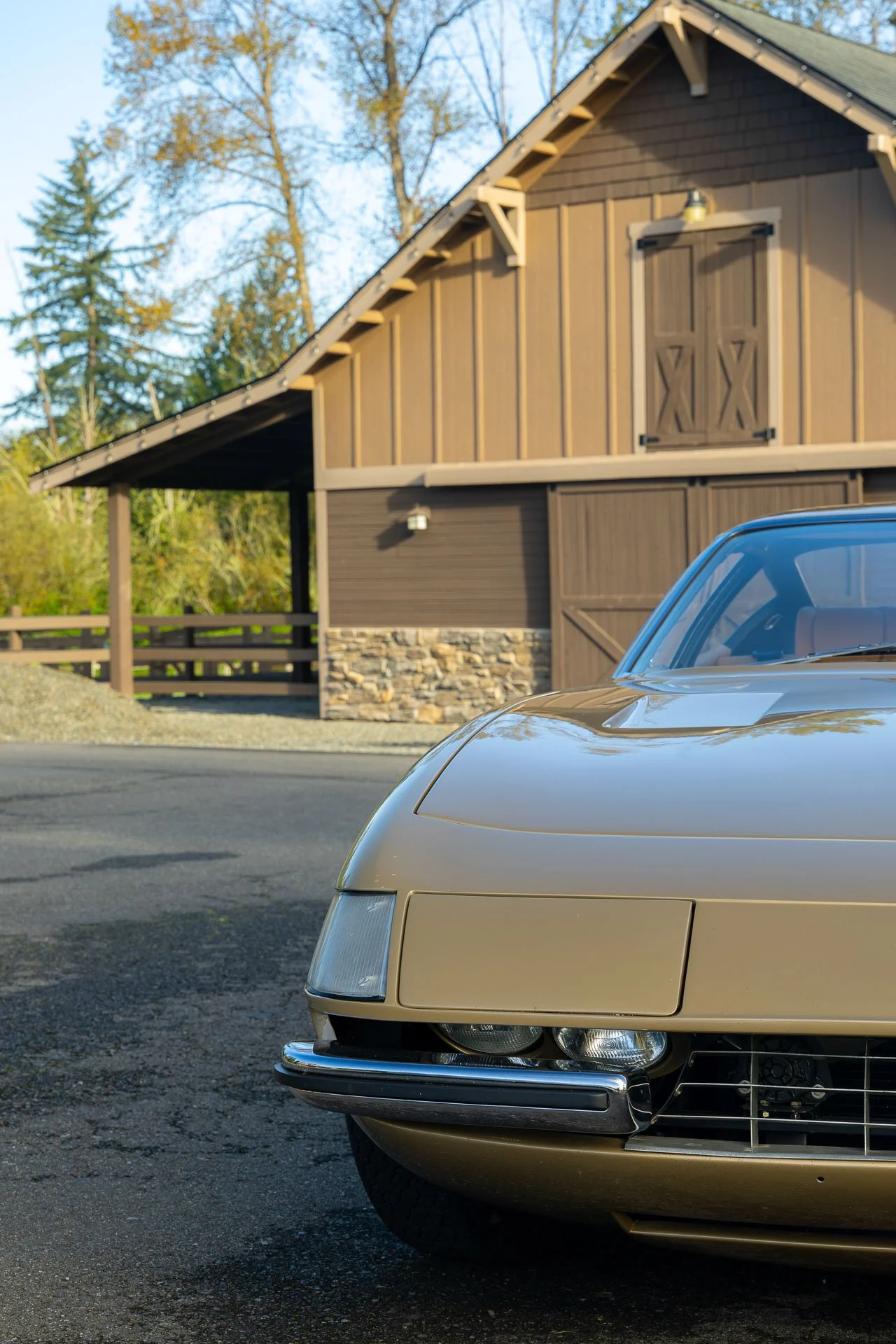
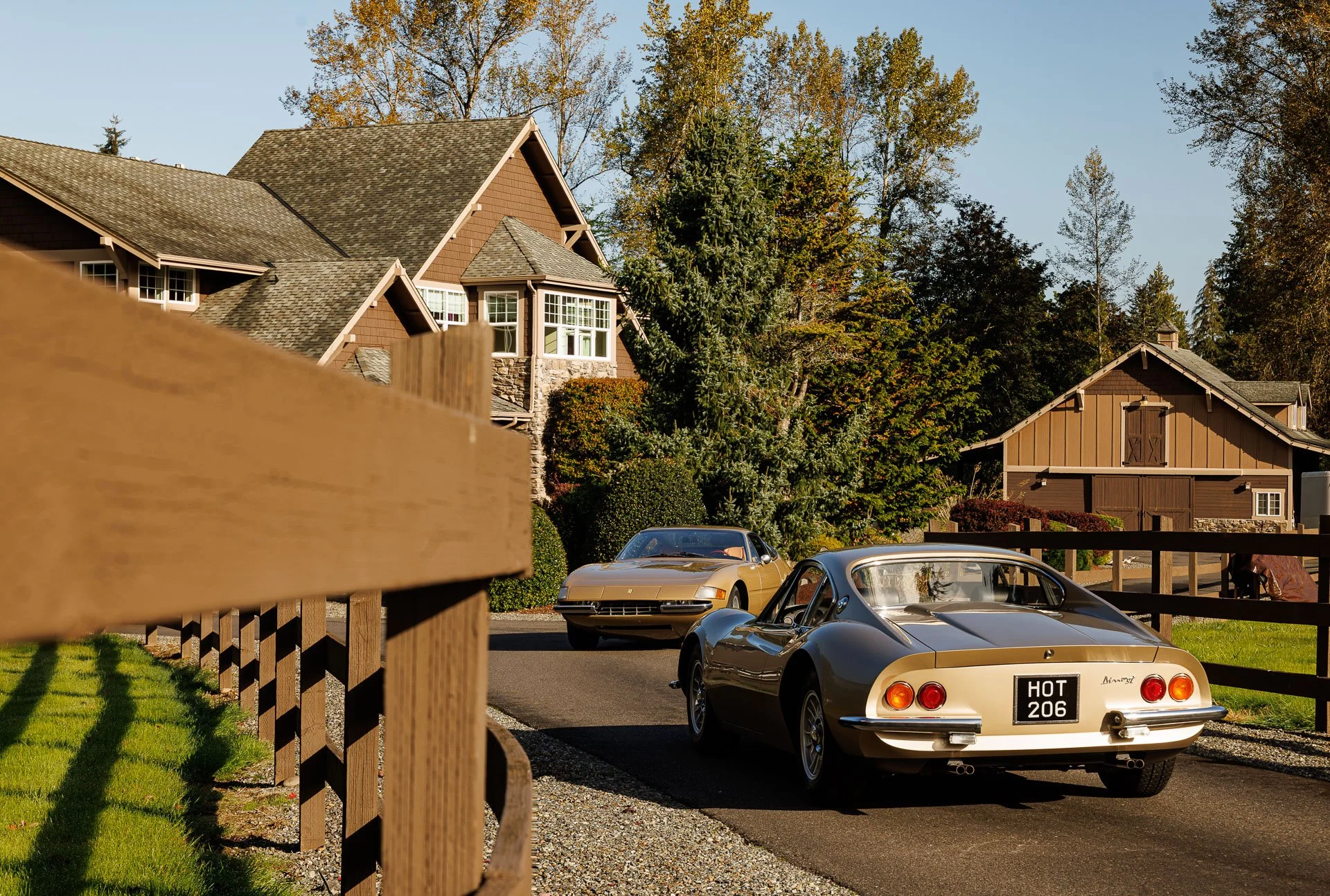
Pete Parsons owns not just one gentleman’s Ferrari, but two. You may remember Pete from our story on his DB4 lightweight, the most proper of vintage racers. But while the DB4 is a stroke of engineering perfection, Pete’s gold Ferrari Daytona and Dino 206 GT command a level of respect that nothing else in his collection can touch. Porsche 356s, Jaguar E-Types, and BMW E30 M3s are all background noise compared to the excellence that is his big and little gold sports cars. Shimmering in their metallic gold coats, these are more than just cars. They are a representation of the heart of the brand; founder Enzo Ferrari, and his first son Dino.
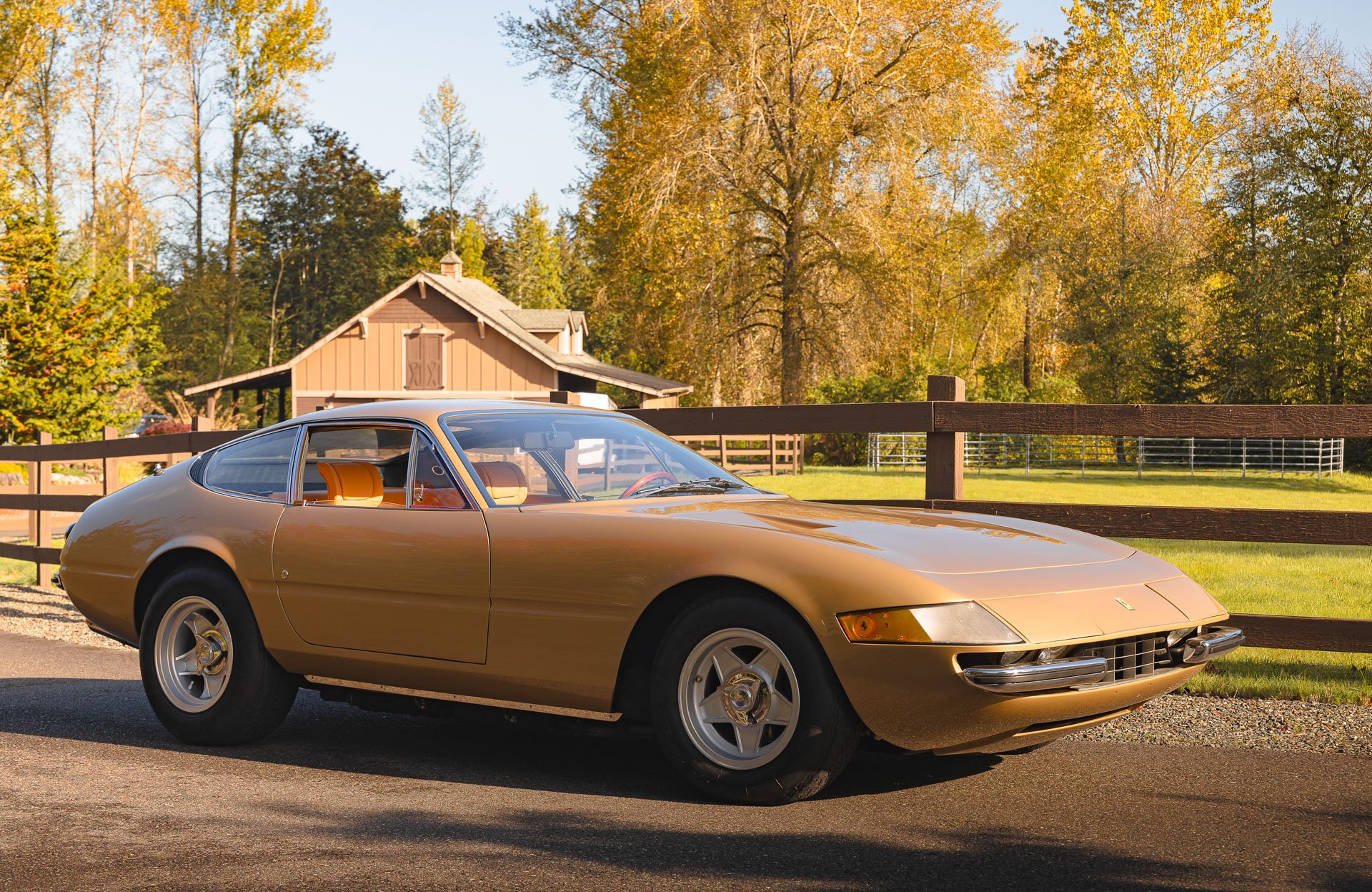
If you are a fan of vintage Italian cars, seeing a Daytona in person will bring you to your knees; seeing one in gold will make you move to Italy. Even if you have never heard of it, the words Ferrari and Daytona together will tell you that this car is one for the gods. Ferrari never actually named this car “Daytona.” Instead, it was deemed the 365 GTB4 (Berlinetta) or 365 GTS4 (Spyder). The name Daytona was given by the press after Ferrari swept the 24 Hours of Daytona podium in 1967, the first endurance race back from their infamous defeat to the Ford GT40 at Le Mans.
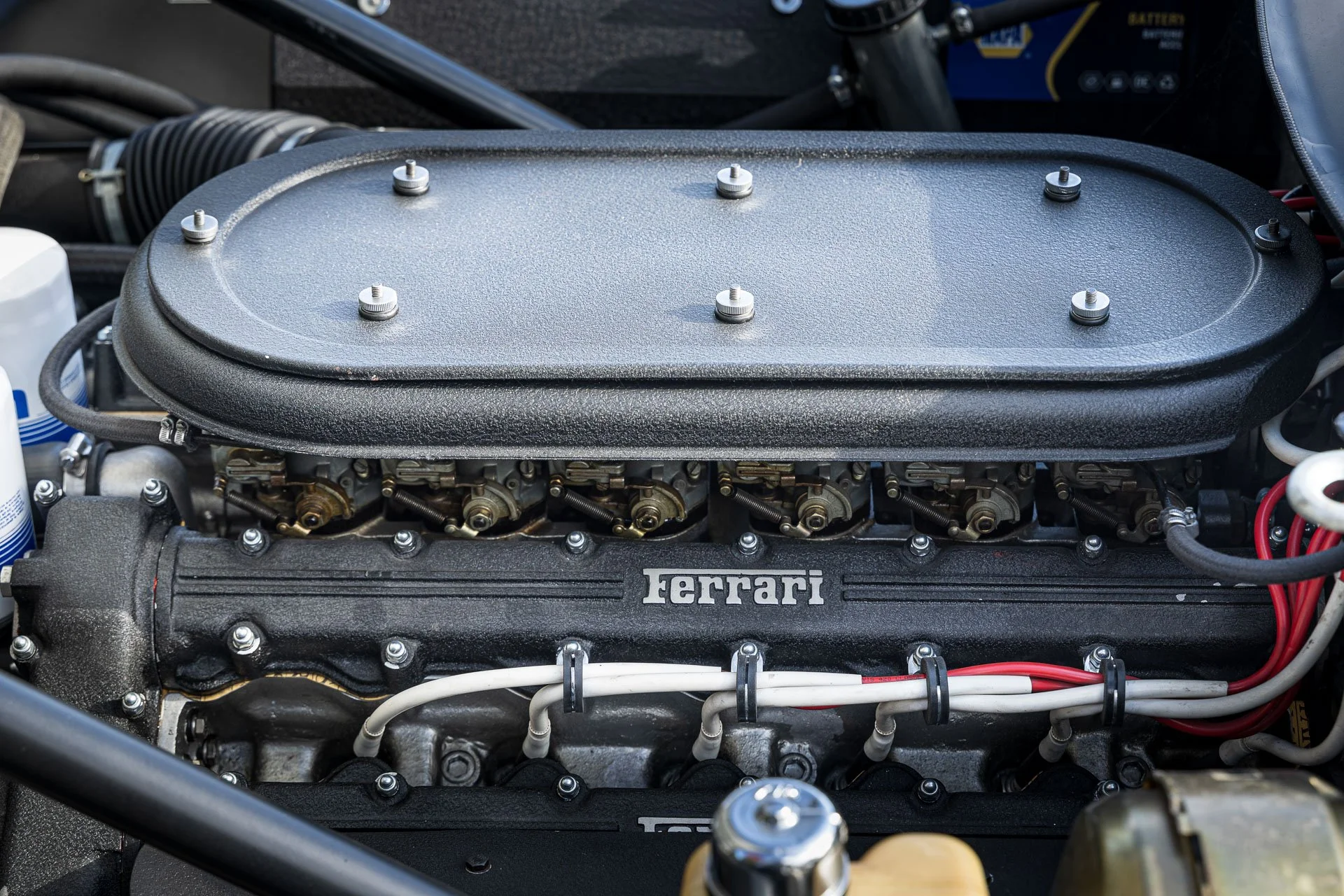
While the defeat at Le Mans humiliated Old Man Ferrari momentarily, the victory at Daytona and the launch of the 365 GTB4 was a statement to the world that Enzo’s love of motorsport still burned strong and Ferrari was still the best in the business. Styled by Pininfarina, the 365 was the birth of Ferrari’s hammer-down GT cars. With a healthy 4.4-liter V12 in the front and a transaxle to balance the weight in the rear, the 365 GTB4 was unofficially the fastest car in the world. Even with vintage tires and wire spoke wheels, it could see speeds over 170 mph and even set the record for the first ever Cannonball Run. More importantly, the Daytona was everything the new Lamborghini Miura wasn’t. While Lamborghini was focused on bringing a mid-engine supercar to the masses, Enzo Ferrari’s masterpiece was proof that masterfully crafted, old-school, front-engine power still reigned supreme.
Enzo Ferrari was adamant that all Ferrari road cars, like the Daytona, had to abide by a special formula. Ferraris had to be elegant, refined, and sport large V12 motors mounted in the front. This was the secret sauce, and no ingredients were to be removed or added. However, in the early ‘50s, Enzo’s first son, Dino was dreaming up his own recipe for the brand. From an early age, Dino was fascinated by automotive engineering, but unlike his father, he was most intrigued by the new, lightweight, mid-engine Formula 1 cars and the dream of a small, quick-revving, hummingbird of a V6. As such, he worked closely with engineer Vittorio Jano on the design of the centerpiece of this passion project, a new 2.0-liter V6 motor that would soon bring Ferrari many Formula 2 victories.
But the story of Dino Ferrari is one of tragedy. In 1956, he passed away at the young age of 24 from muscular dystrophy. Enzo was shaken forever. Ferrari the brand had lost its next brilliant inventor. Ferrari, the family had lost the person they loved most. In his memory, work soon began to commemorate young Enzo, and his vision for a perfect sports car.
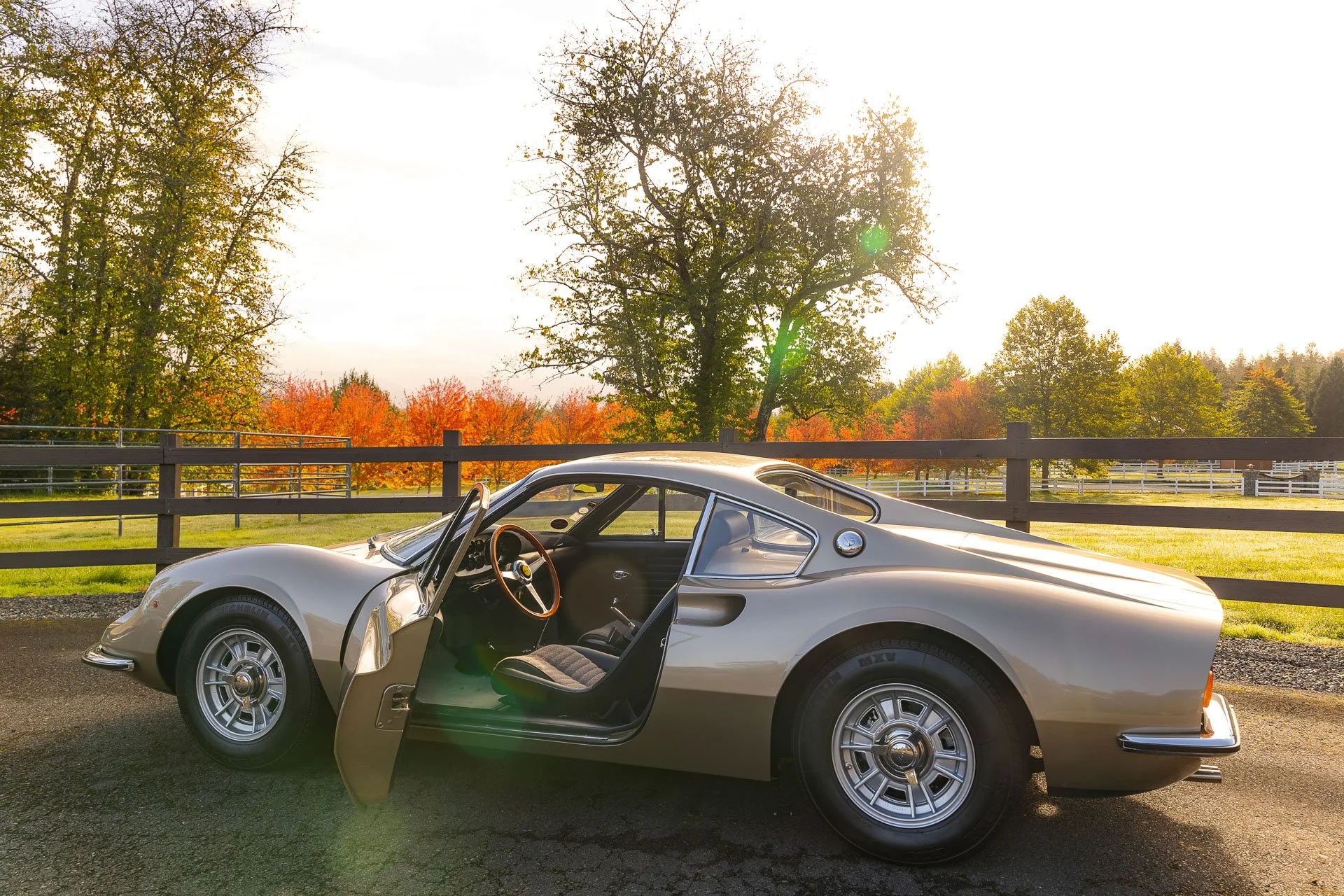
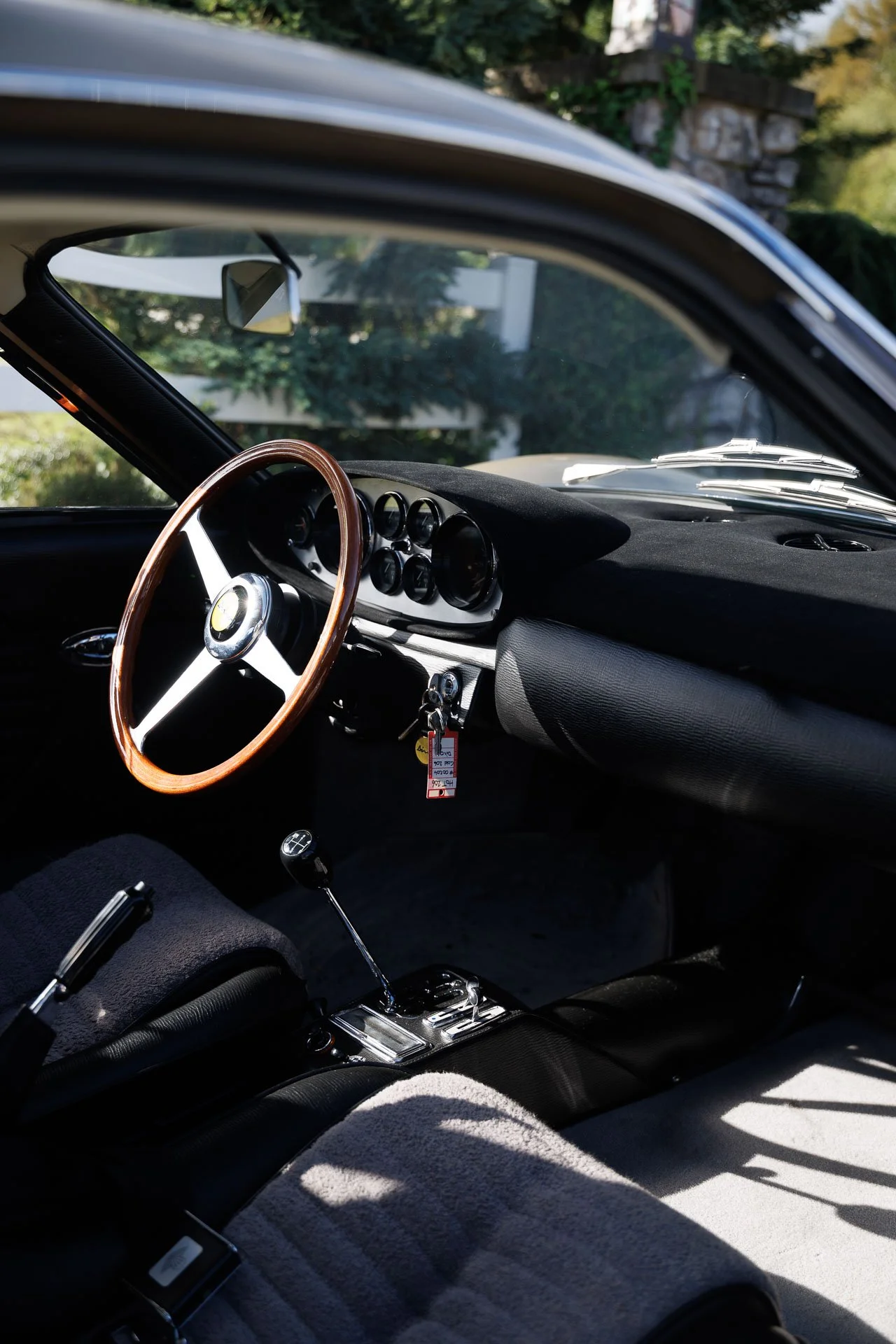
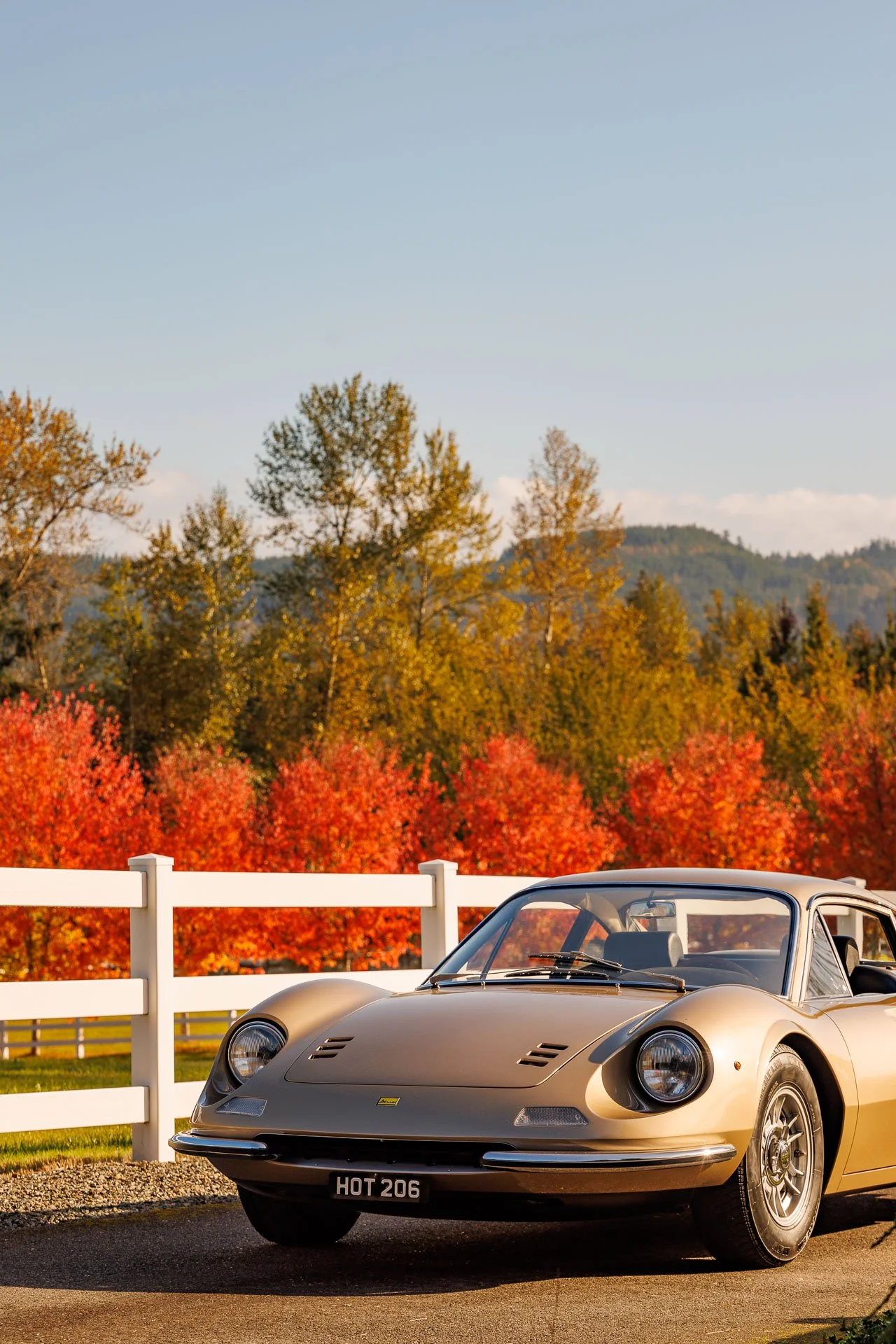
In 1968, the Dino 206 GT was launched as a tribute to the late son of the Ferrari family. Unlike the Daytona, it does not abide by Enzo’s recipe, it abides by Dino’s. The 206 GT uses the same 2.0-liter Ferrari V6 that Dino helped create. Like the F1 cars that inspired him at a young age, the 206 GT is lightweight and mid-engine for better balance and handling. The launch of this car was a new chapter for the Ferrari family, a chapter where they targeted the lower-budget, Porsche 911 market, but more importantly, commemorated their son by creating his vision for what a sports car should be.
The Dino 206, and later 246, were never officially badged as Ferraris. For long after his son’s death, Enzo wanted to keep their recipes separate. Front engine V12s were proper Ferraris; mid-engined V6s were sold as Dinos, a completely separate, albeit the same, brand. It wasn’t until the Dino 308 of the ‘70s was in production that the two recipes were finally merged, and Dino’s vision got the prancing horse badge it deserved. A wise call from Enzo, as some of the best Ferraris since have been based on Dino’s original vision.
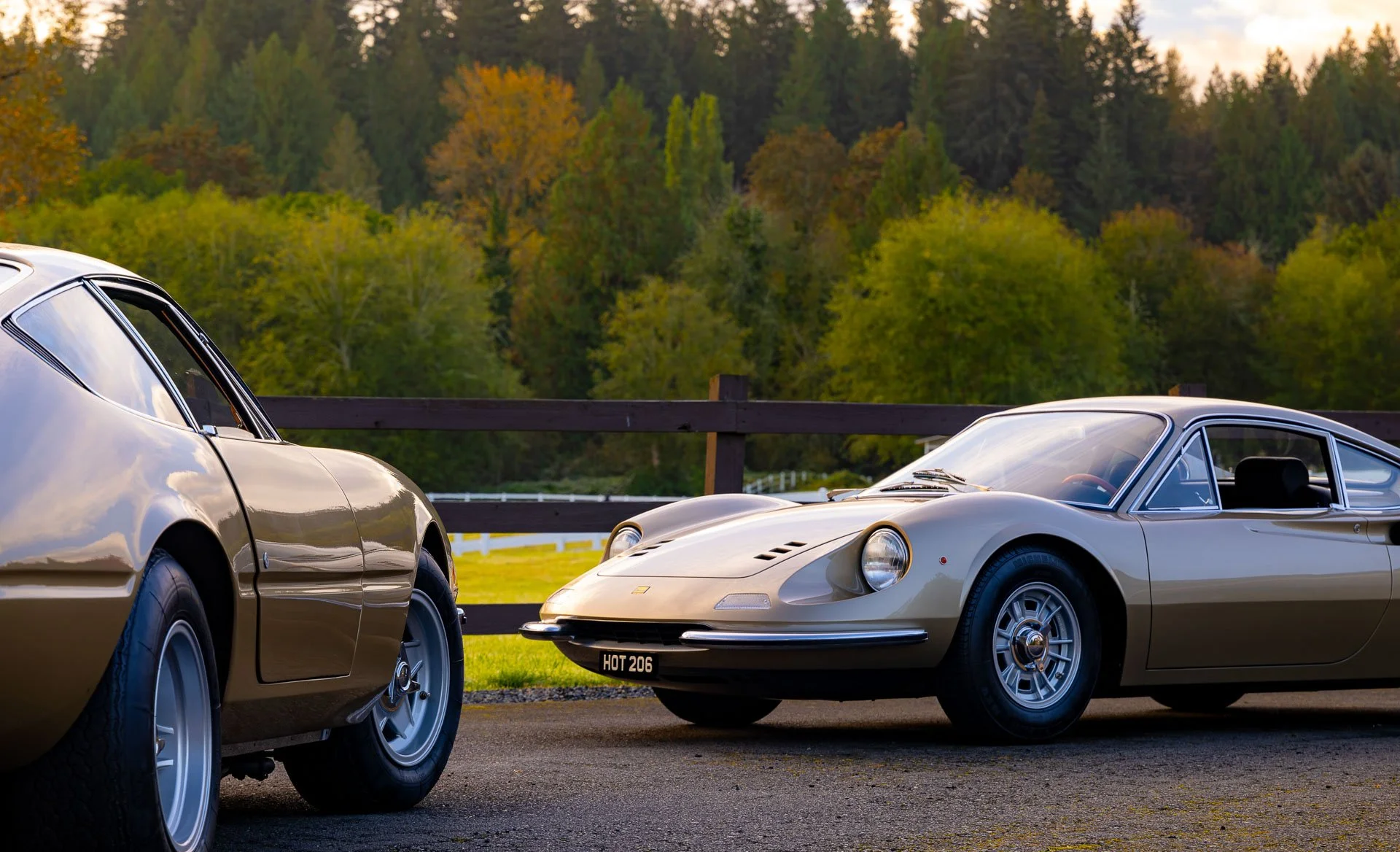
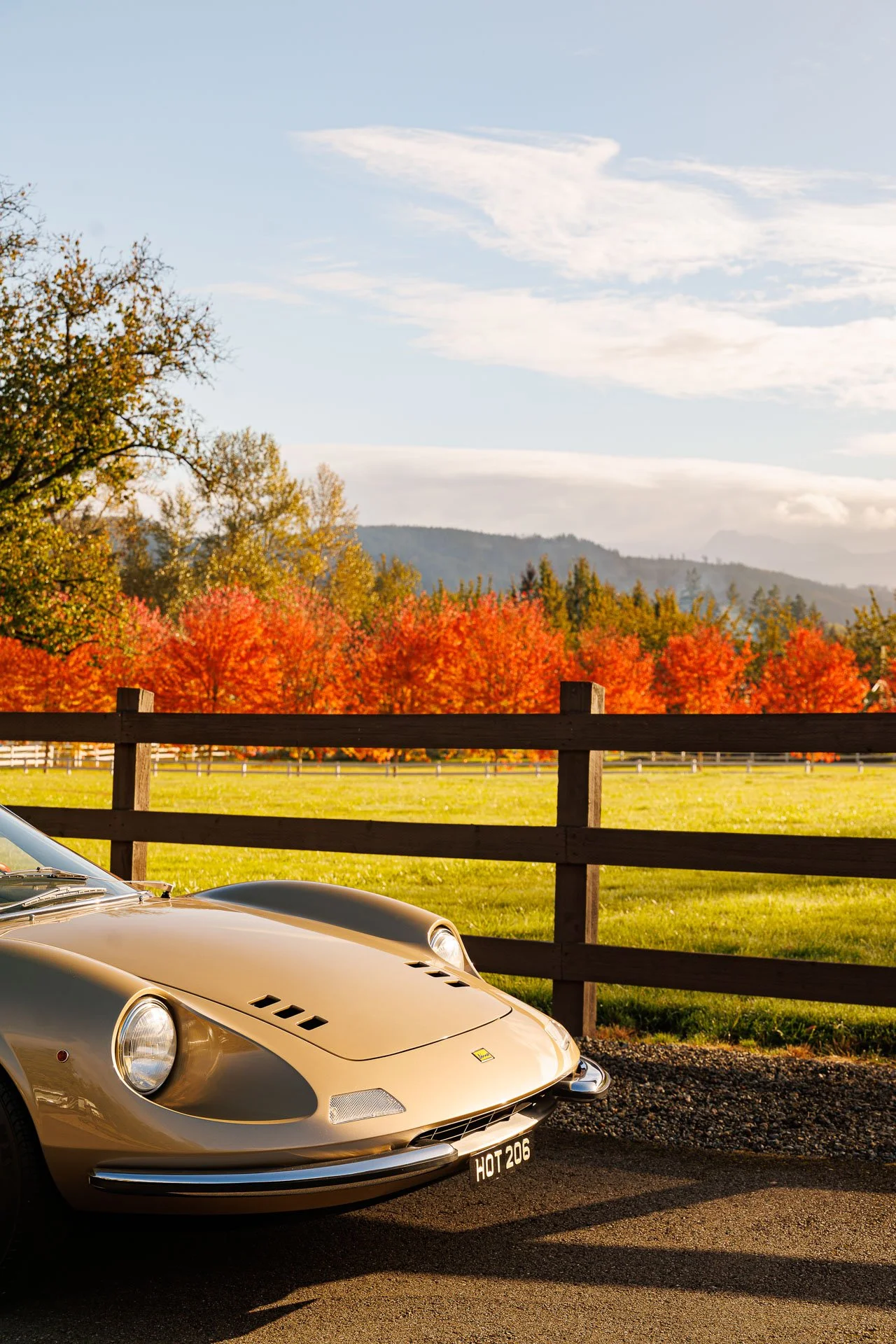
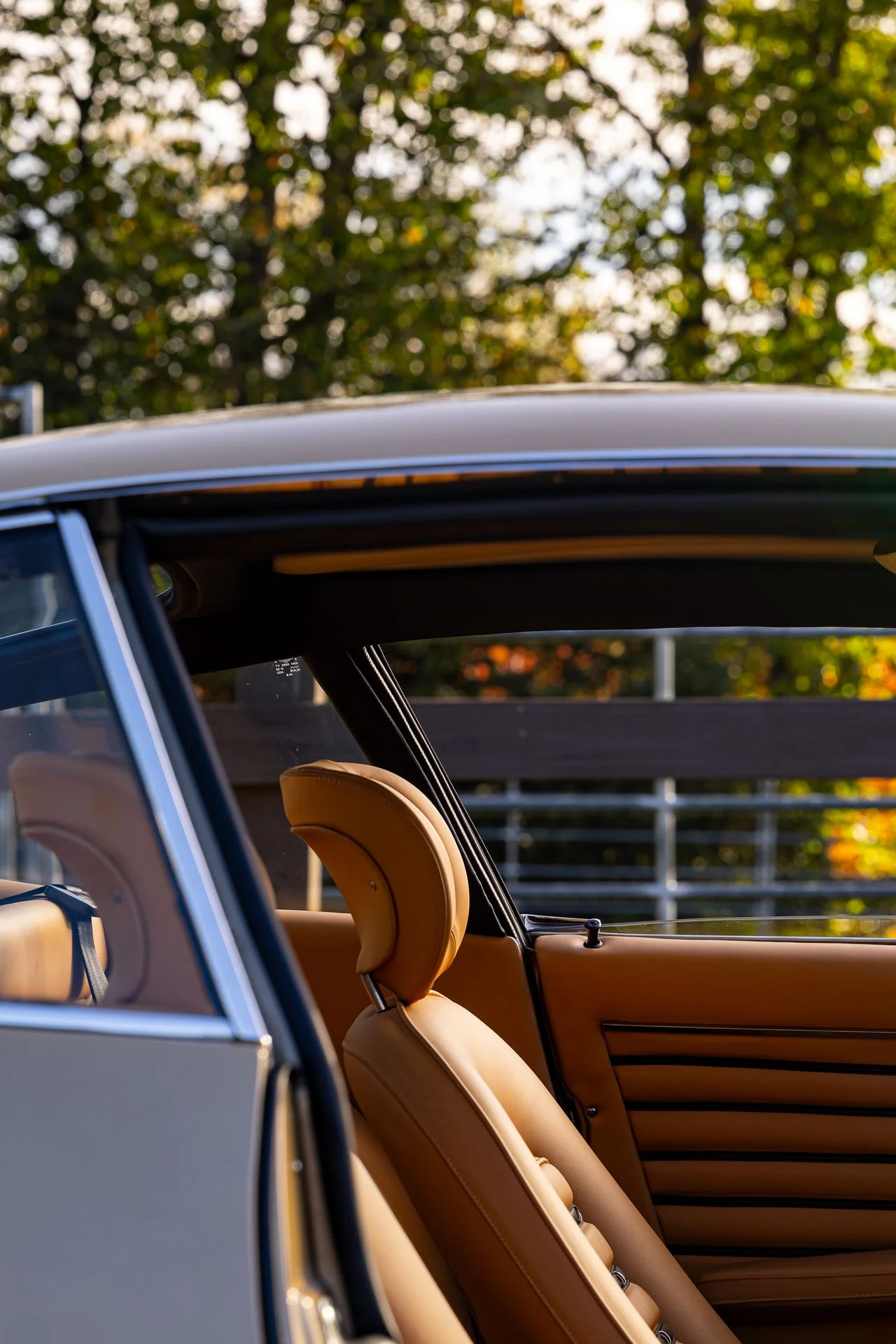
Despite their extravagant and masterful designs, the Ferrari family was never one for show. They were humble, quiet, and obsessive about winning races. Enzo himself didn’t spend his free time living like a celebrity, instead he spent it in the factory, listening to opera in his office, or behind the wheel of his Mini Cooper. The bright red paint of most Ferraris doesn’t represent this lifestyle. The cars that best represent the core of the company are designs from Old Man Enzo and his son Dino, painted in an understated and elegant color. The two cars that best represent the Ferrari family are not red. They are a gold Ferrari Daytona and a gold Dino 206 GT.

