
Forever Analog
STORY | Ryan Bahrke
Photography | Brandon Faith
Hear the word “analog,” and a few things come immediately to mind: directness, authenticity, timelessness, and inherent goodness. Also, old school; something more grounded — and more honest — than much of what’s being doled out in 2026.
Standing here in the middle of Beverly Hills — in front of an anonymous retail façade and among the plumped lips, wrapped Cybertrucks, and glowing iPhones of America’s third-richest area code — I’m picking up very little in the way of analog.
But then an unmarked door opens, and photographer Brandon Faith and I are greeted by the familiar smile and firm handshake of Tom Kenney, the collection manager and mechanic for the one and only Mr. Bruce Meyer.
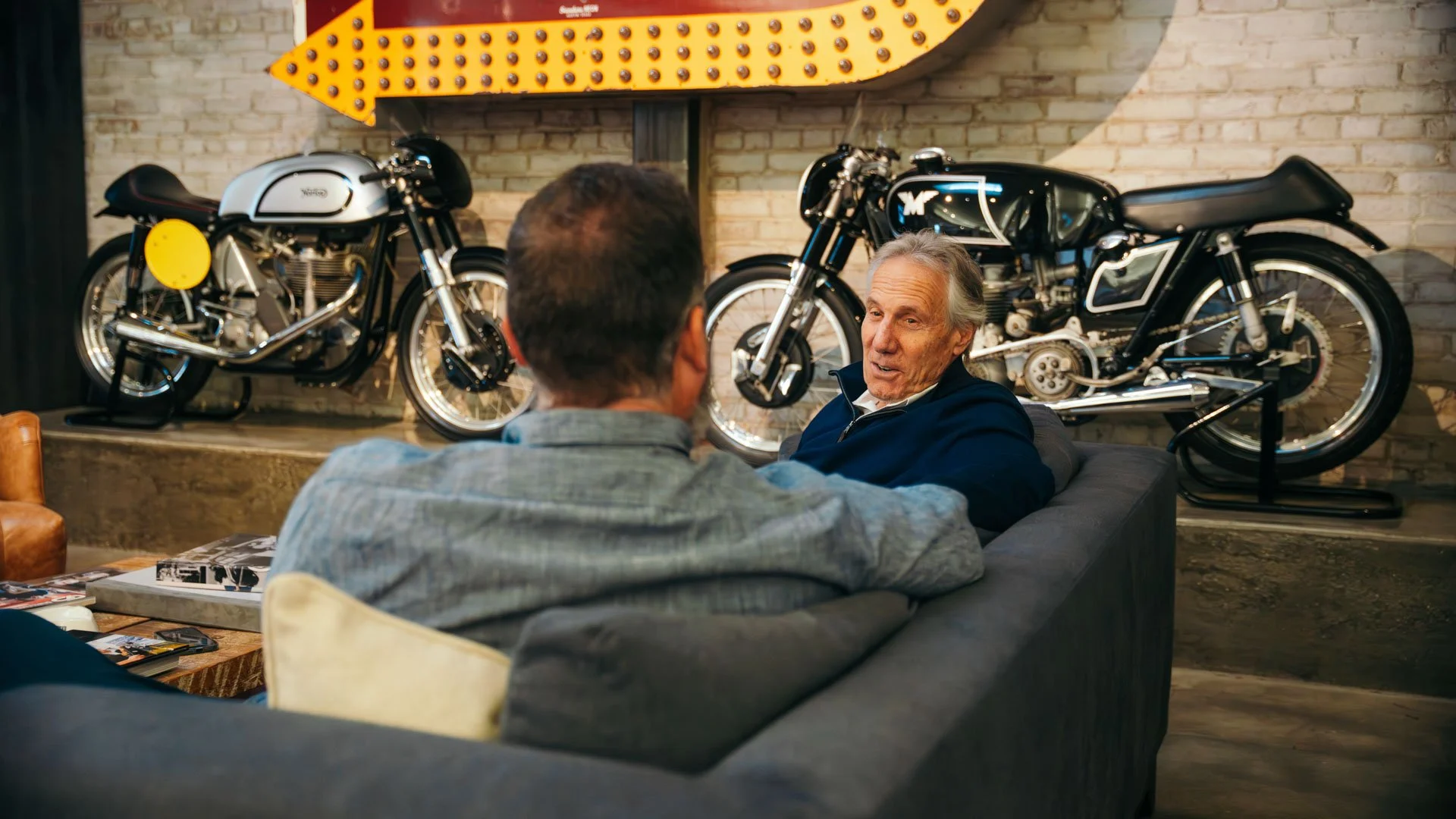
Because hidden here, in the middle of Beverly Hills, is Bruce’s legendary garage. And in it is one of the world’s great compilations of analog cars.
As we make our way upstairs, Tom points to an old, framed photo, shot in the early 1920s from a vantage point almost exactly where we’re standing now, more than a century later. Right in the middle is the long-gone Beverly Hills Speedway; a high-banked board track where greats like Art Klein and Ralph DePalma risked life and limb racing Peugeots and Duesenbergs. While Beverly Hills might seem like the antithesis of analog now, it wasn’t always the case.
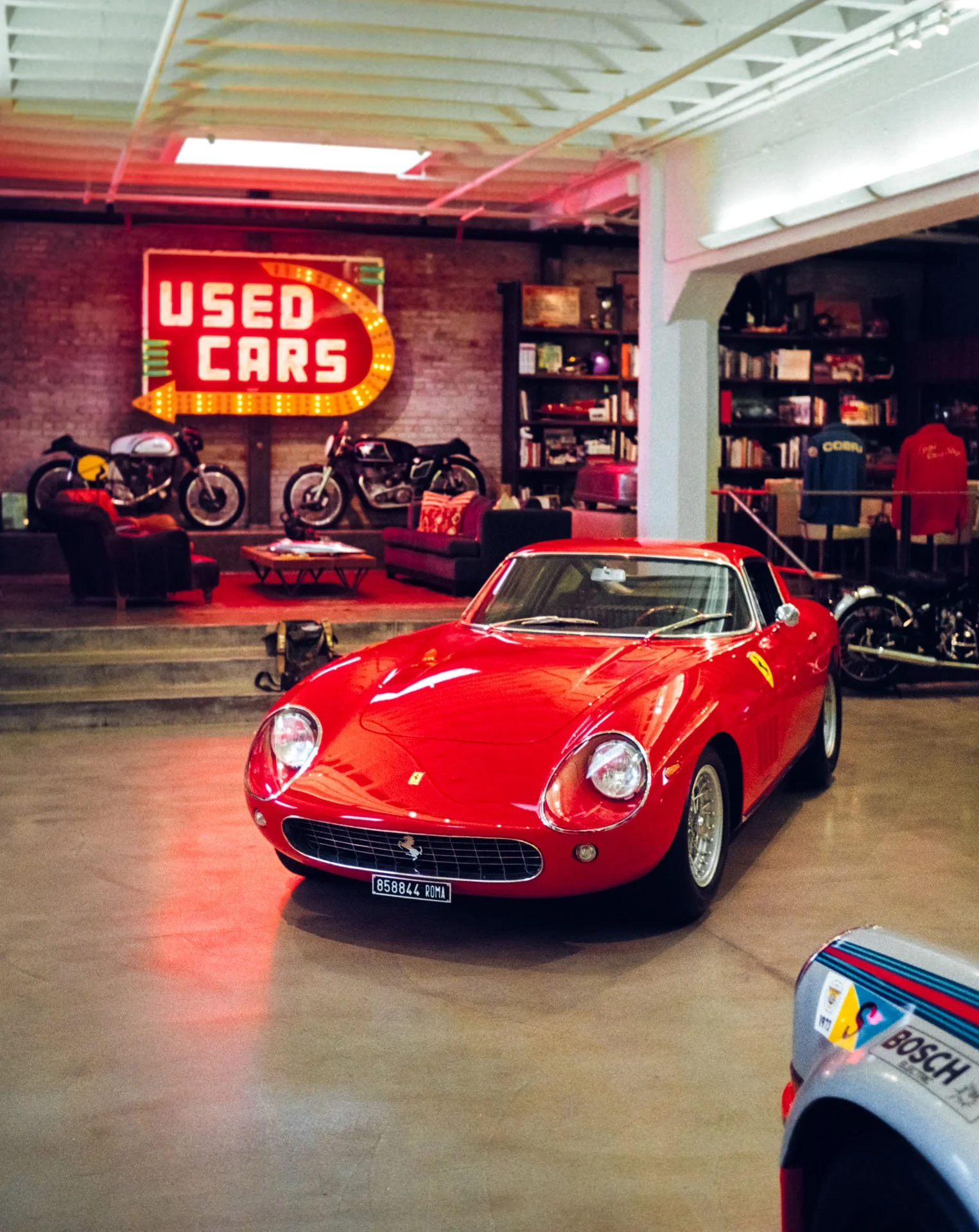
We open another door, and there is a humming, flashing USED CARS sign, walls lined with vintage race posters, and trophy cases spilling over with the ephemera of a life lived well. I’ve been here before, but it hits me again that this isn’t just a car collection; it’s a greatest hits collection.
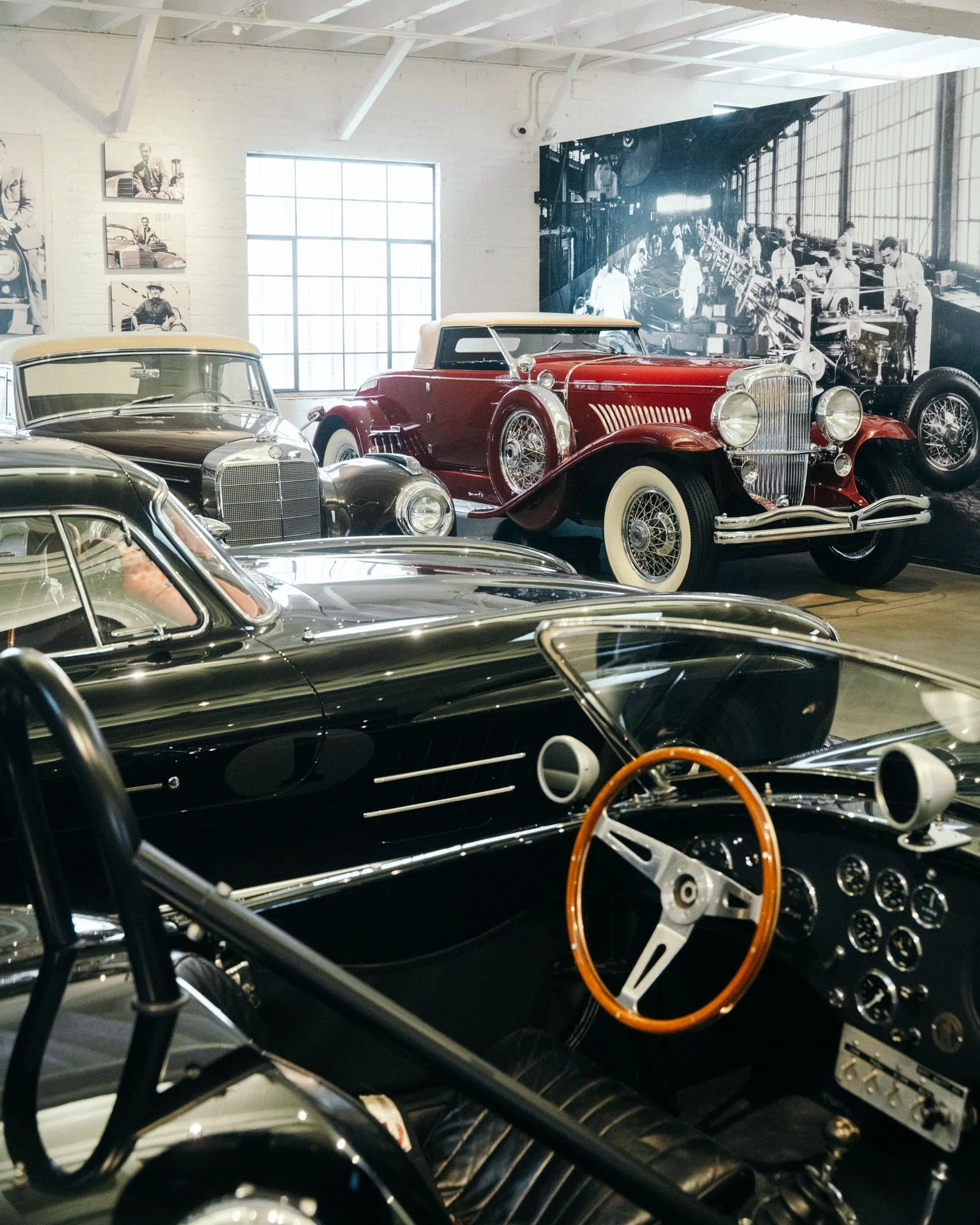
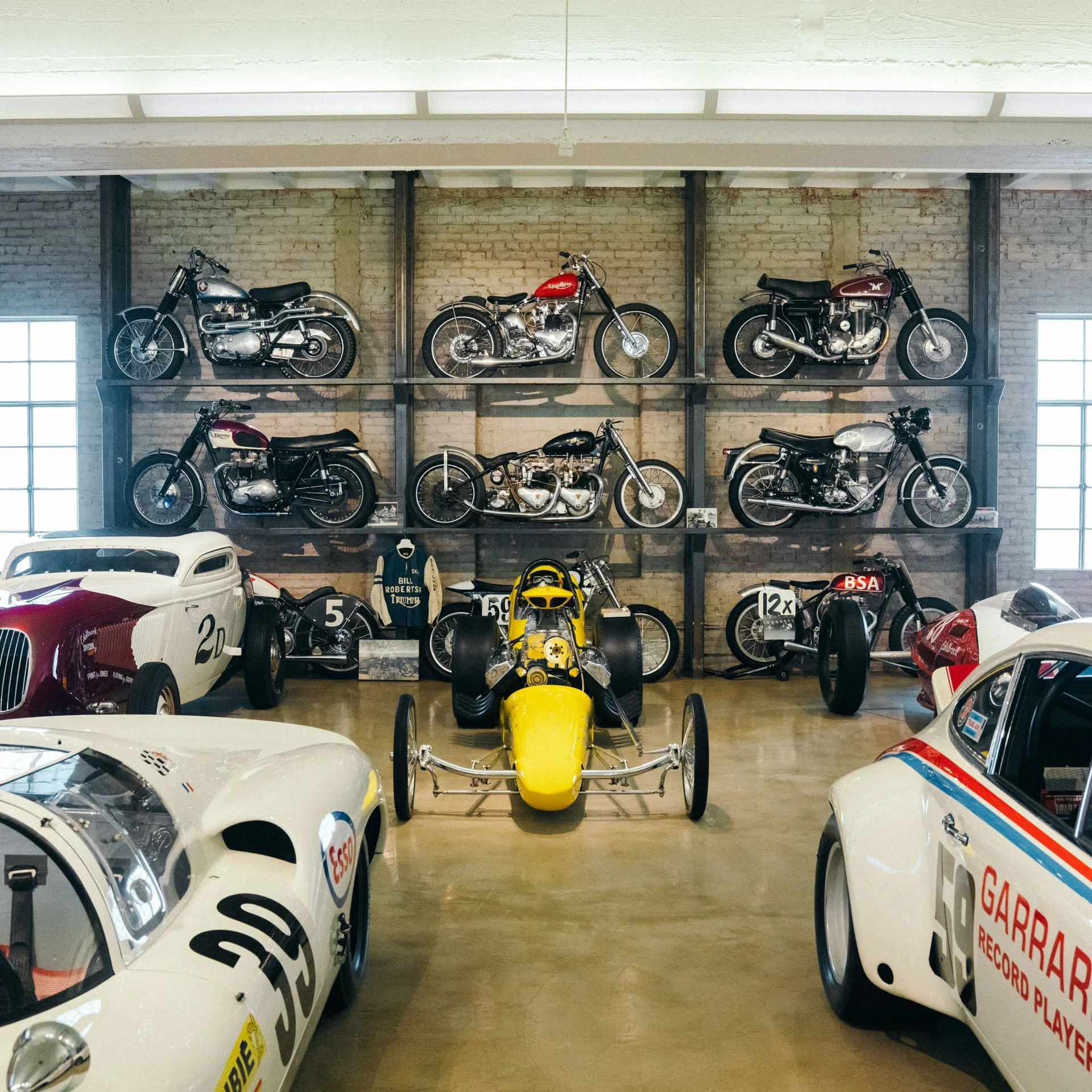
To my right is CSX 2001, the first production Shelby Cobra built, and the first to see a racetrack. Dead ahead is a RUF CTR Yellowbird, just like the car that famously graced the cover of Road & Track in 1987. It was once the world’s fastest production car, and it left an indelible mark on me and countless other young enthusiasts.
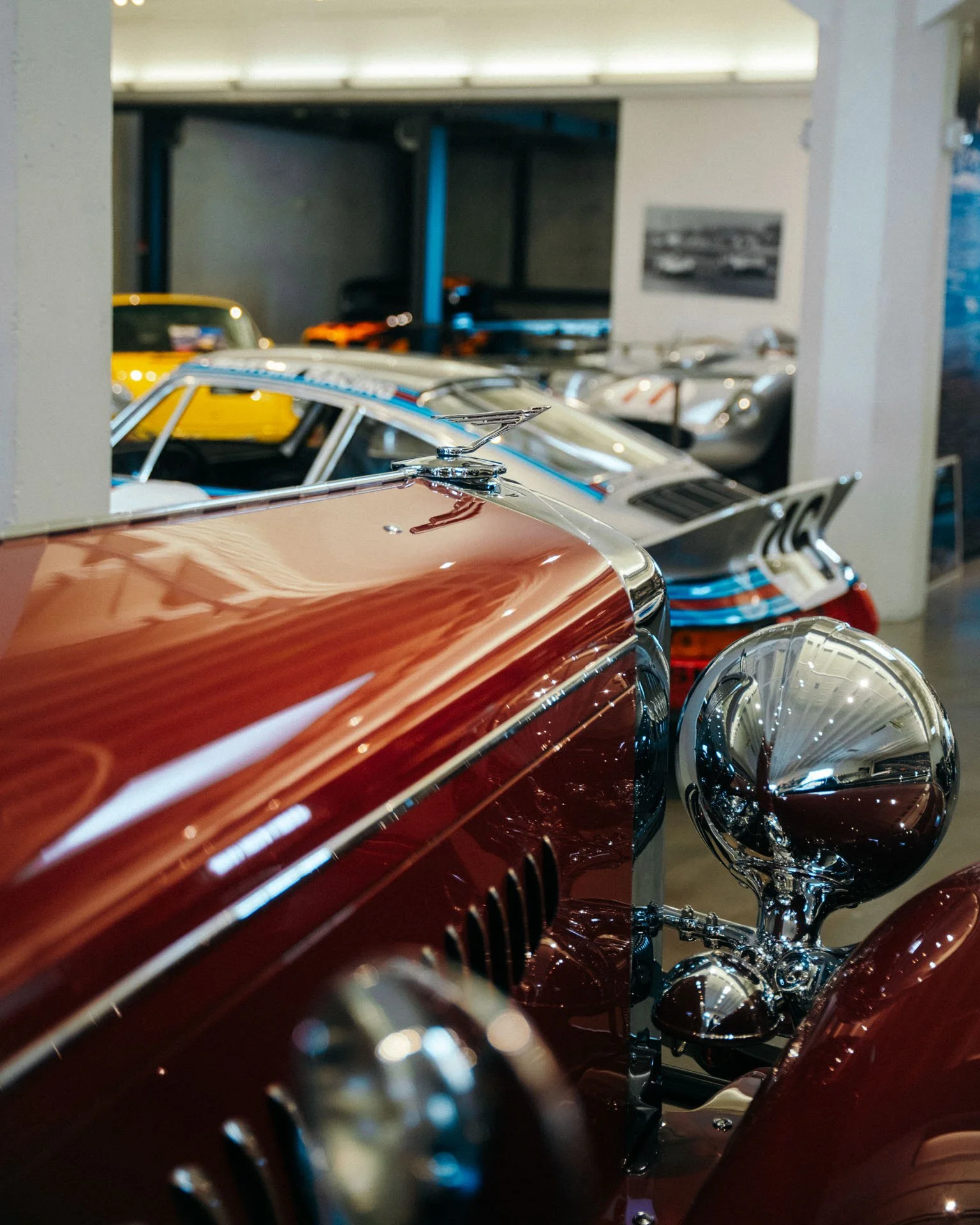
To my left sits Bruce’s newest acquisition: an exceedingly rare 1965 Ferrari 275 GTB Competizione Clienti in Rosso Corsa. Behind it, a tobacco-brown 1956 Mercedes-Benz 300 SC Cabriolet once owned by Clark Gable; his name tags still on the fitted luggage in the trunk.
Further back is the Kremer Porsche 935 K3 that took overall victory at the 24 Hours of Le Mans in 1979. You’ve seen it as a die-cast model; this is the real thing. As the gravity of what you’re looking at sets in, your eyes are already drawn to the next car.
In all, there are a couple dozen cars, a number of motorcycles, and one boat: the wooden Miss Daytona, a Miller-powered hydroplane racer. Each one, singular: the best one, the first one, the only one. And all of them, achingly analog.
And then Bruce himself strides in, with the gait of a man 30 years younger than his 85; all easy confidence and genuine warmth. If we’re equating analog with authenticity — and I think we are — then automotive enthusiasts don’t come much more analog than Bruce Meyer.
I’d asked Bruce in advance to choose something special from his garage to drive. Selfishly, I’d worn my bright yellow Adidas, hoping to manifest a certain German car.
Instead, I found myself dropping into a chopped 1932 Ford three-window “Roller Coupe,” and into stainless steel bucket seats taken directly from a World War II Grumman F6F Hellcat. It’s about as far from his RUF as Bruce owns, but it makes more sense, really. As a young man growing up in nearby, working-class Hollywood, Bruce cut his automotive teeth on cars like this; not with Porsches and Ferraris. And Bruce, of course, is still a hot-rodder at heart.
Heading out from Bruce’s garage into the alley behind it, a crowd gathers, drawn by the throbbing V8 cacophony and the out-of-place-and-out-of-time spectacle of the car it’s emanating from. Out-of-town tourists, local car spotters, and distracted valet parkers from nearby watering holes rush to capture a shot of this living, breathing piece of analog aimed right at the heart of Beverly Hills. Its five-inch chop and friction shocks might suggest short rips in town, but Bruce drove the car all the way to Canada and back a couple of years ago.
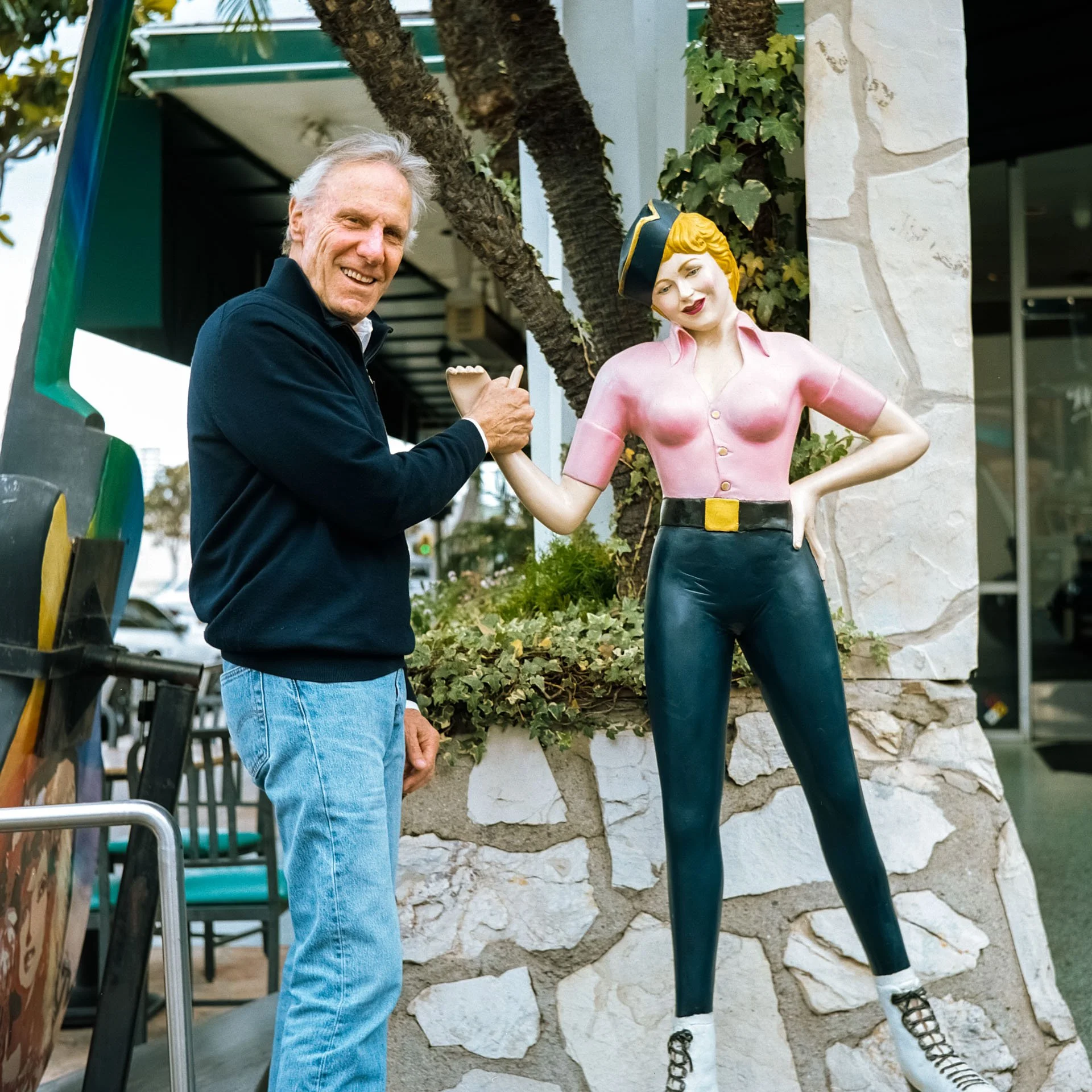
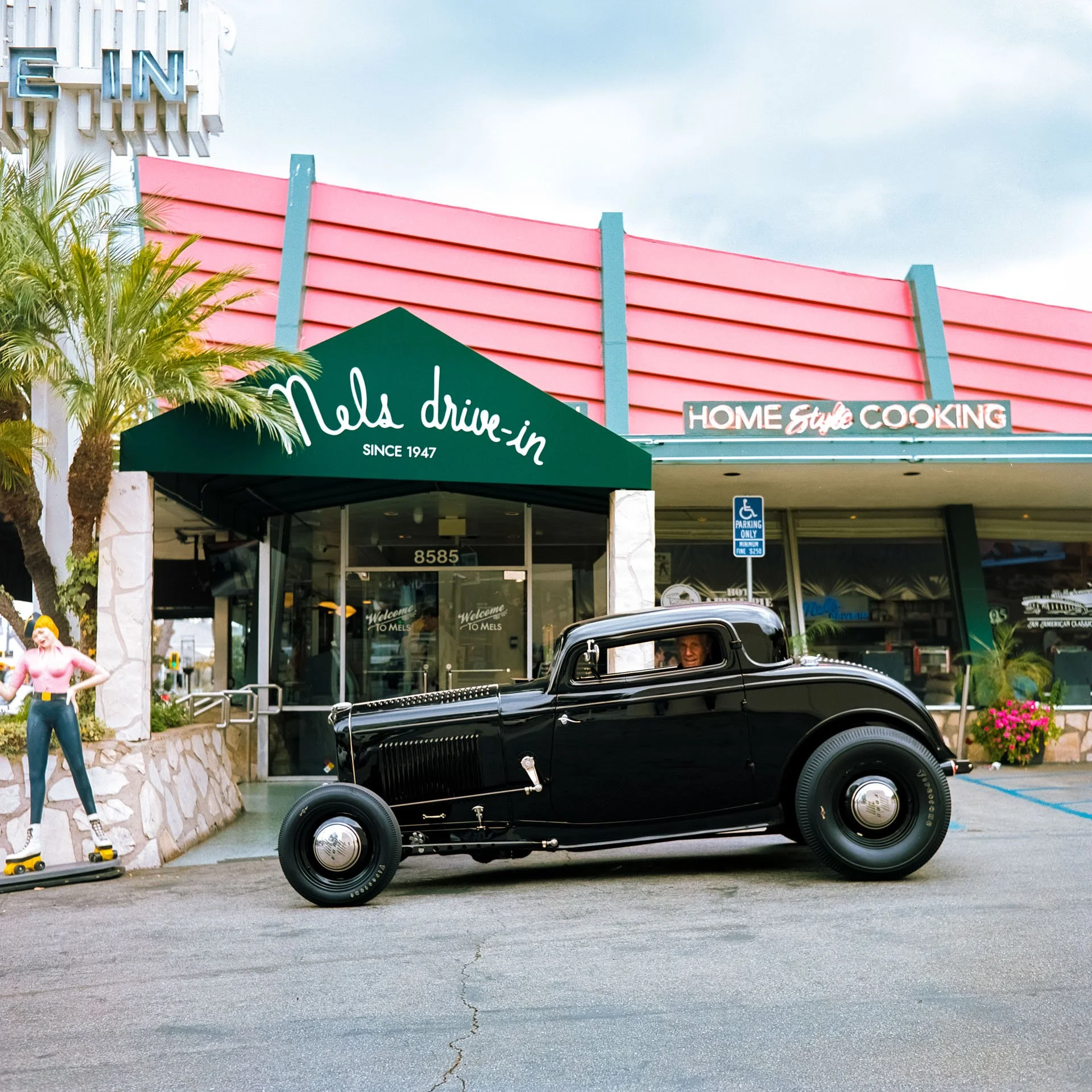
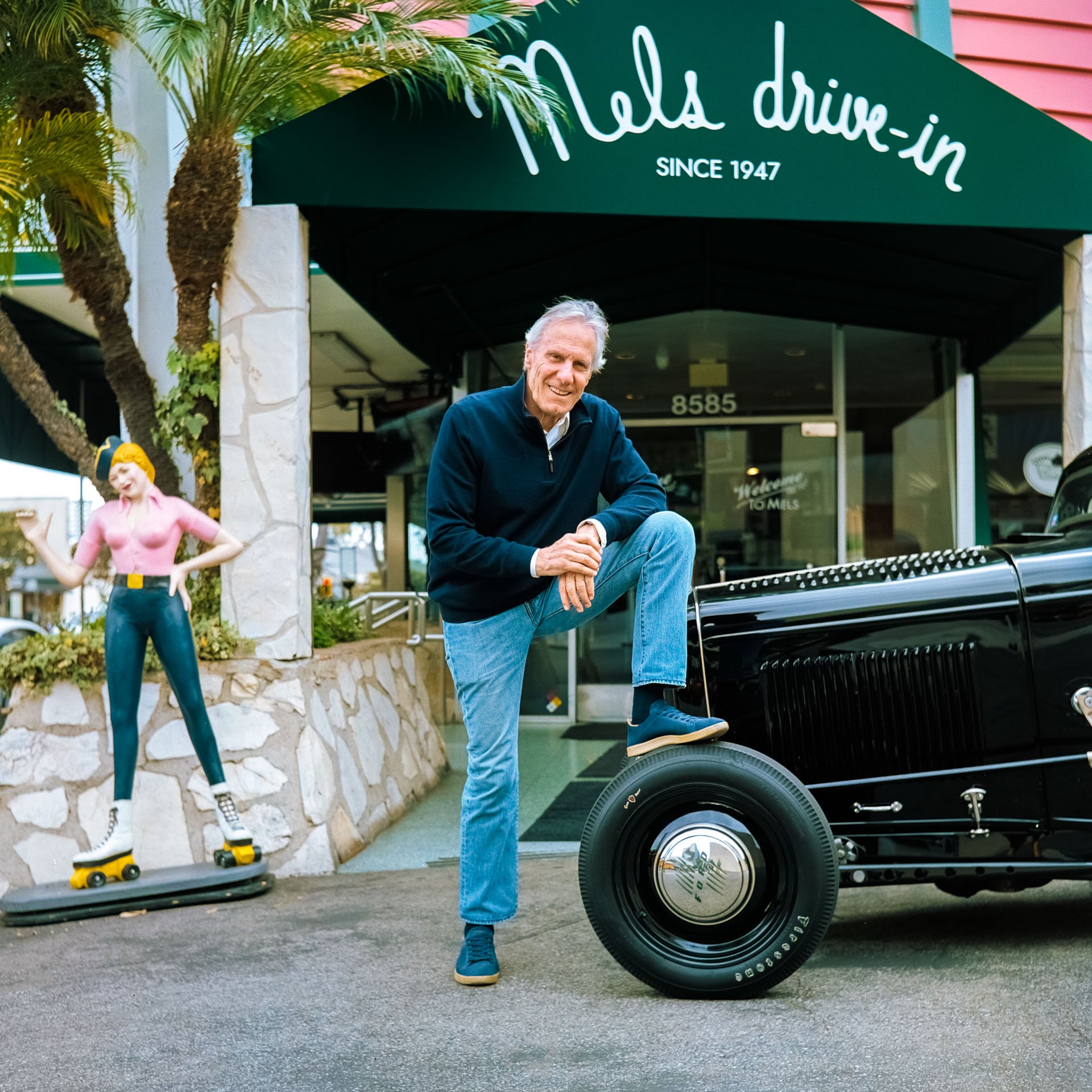
And, just like that, we were off. Just two car guys, cutting through the rush of Southern California traffic, headed north to Sunset Boulevard and the iconic Mel’s Drive-In. Behind us, Tom and Brandon follow in the photo vehicle we’ve enlisted: the slammed 1996 Suburban on Boyd Coddington wheels that serves as Bruce’s shop truck.
After a successful photo shoot with Bruce and the Ford in front of Mel’s (“We’ll be good! They know me!”), Bruce headed back to his garage in the Ford while Brandon and I regrouped in a red vinyl booth. Upon our return, Bruce would be disappointed to find out we’d ordered smoothies at the diner; Bruce is more of a burger and malt guy, despite his lean physique. Needless to say that the Yellowbird wouldn’t have quite worked at Mel’s, anyway. And I was starting to wonder about my yellow shoes, too.
There are moments in life that don’t quite hit you ‘til they’re in the rearview. And, as I slid back behind the wheel of my very wonderful but very non-analog Genesis G90 press car, I recall what Bruce told me as we said our goodbyes.
“Twenty percent is the cars. Eighty percent is the people.” And that’s Bruce Meyer. Always the gentleman. Always willing to make time for a fellow enthusiast. And forever analog.

