Aluminum Elegance
1949 Jaguar XK120 Alloy Roadster
STORY | Stein Broeder
Photography | All images copyright and courtesy of Gooding & Company, LLC. Photos by mike maez
Sleek. Elegant. Lightweight… And once deemed the fastest car in the world.
In the aftermath of World War II, the British automotive industry was poised for a renaissance. Among the most dazzling stars of this rebirth was the 1949 Jaguar XK120 Alloy Roadster — a car that not only redefined Jaguar’s identity but also set a new benchmark for postwar sports cars.
The XK120 was positively shocking when it debuted in 1948. It was impossibly modern, both aesthetically and technically. The latter aspect was especially important, as the car was originally introduced to showcase Jaguar’s exciting new twin-cam engine — the new saloon for which it had been developed was not yet ready. Intended for low-volume production, the XK120 featured handmade aluminum bodywork.
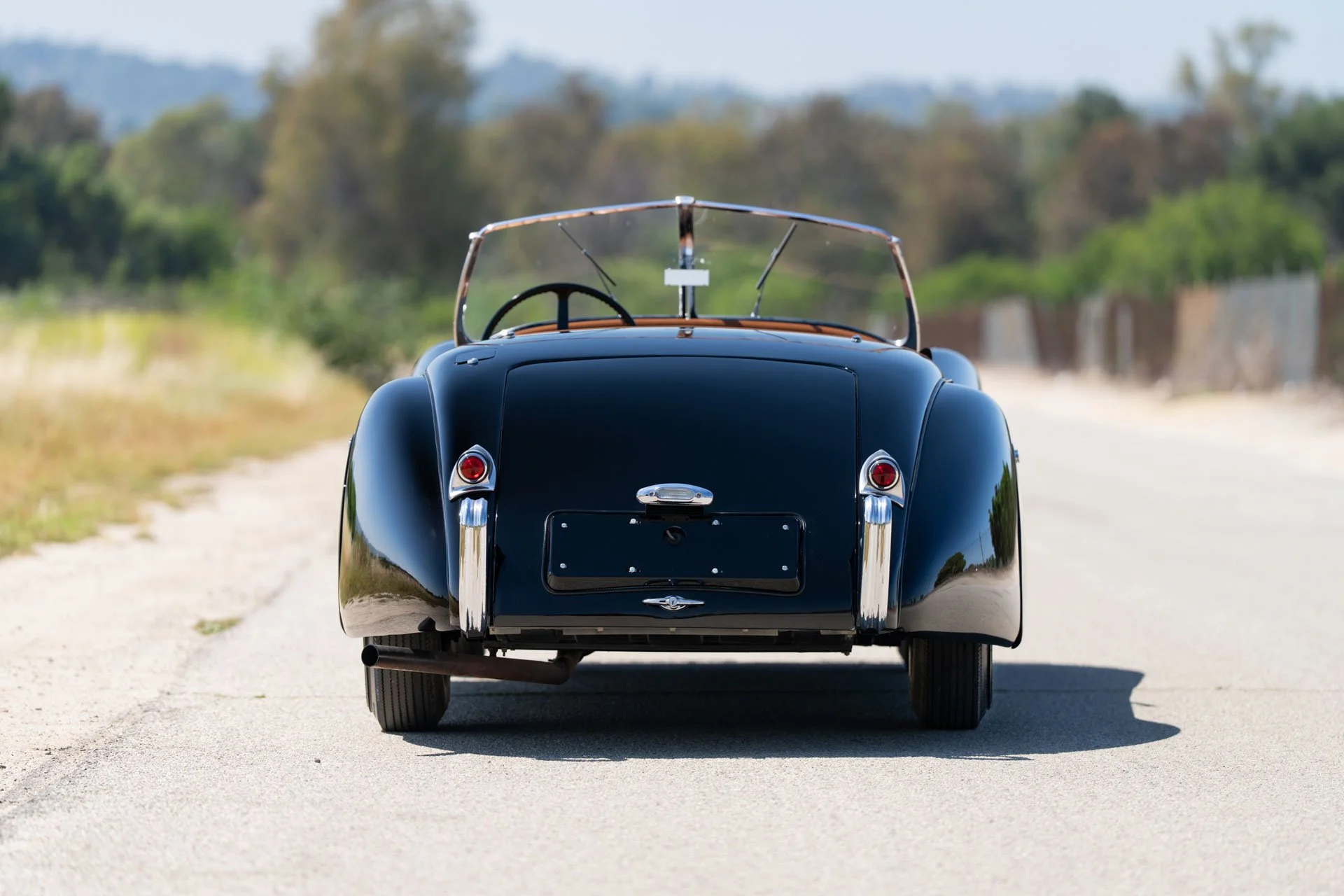
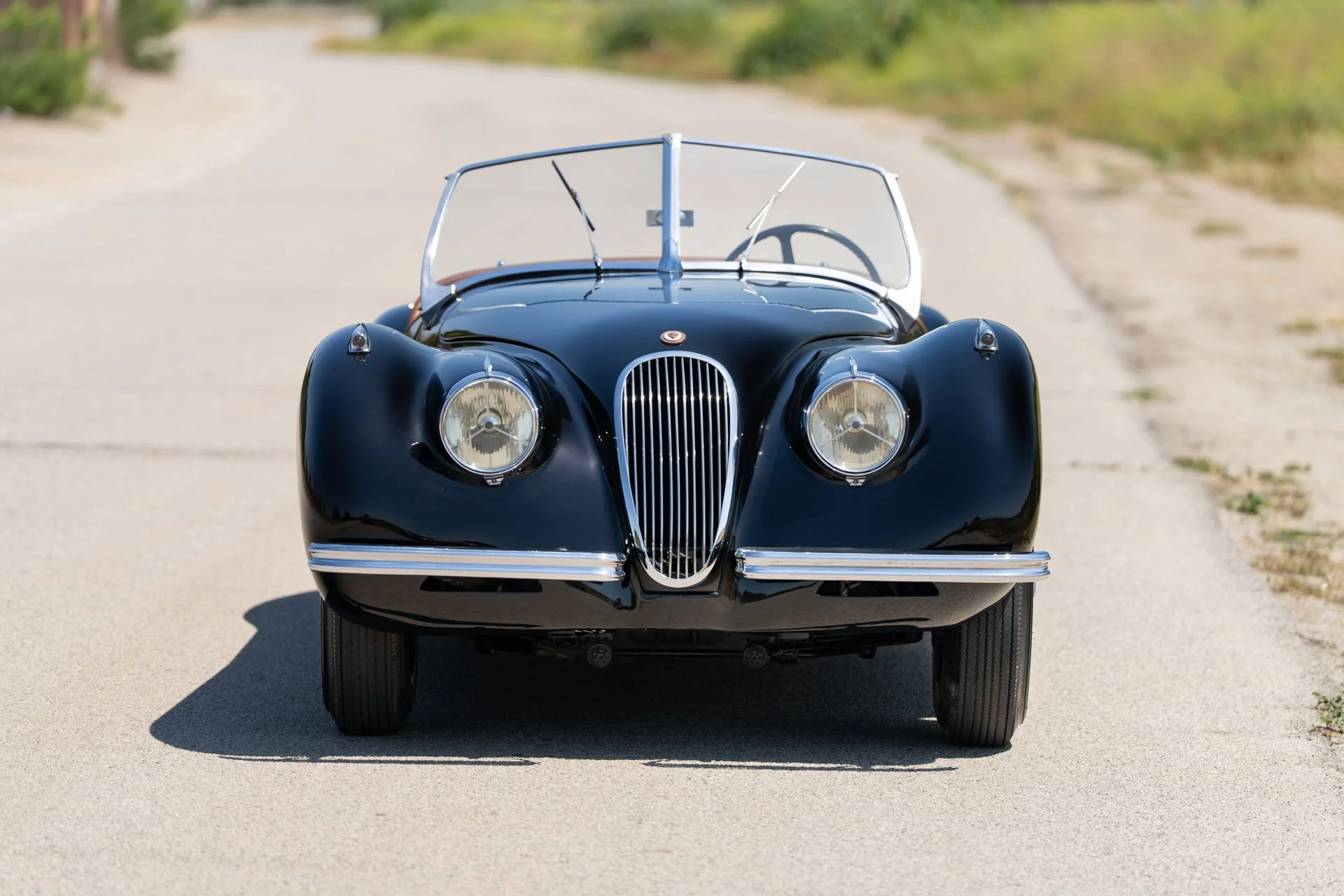
The Jaguar made its debut at the 1948 Earls Court Motor Show in London. Originally intended as a showpiece to highlight Jaguar’s new XK engine, the car’s sleek, feline lines and jaw-dropping performance captivated the public and press alike. Jaguar founder Sir William Lyons had envisioned a modest production run of 200 units. However, strong demand persuaded Jaguar to retool for mass production with steel bodies after 242 alloy-bodied examples had been built.
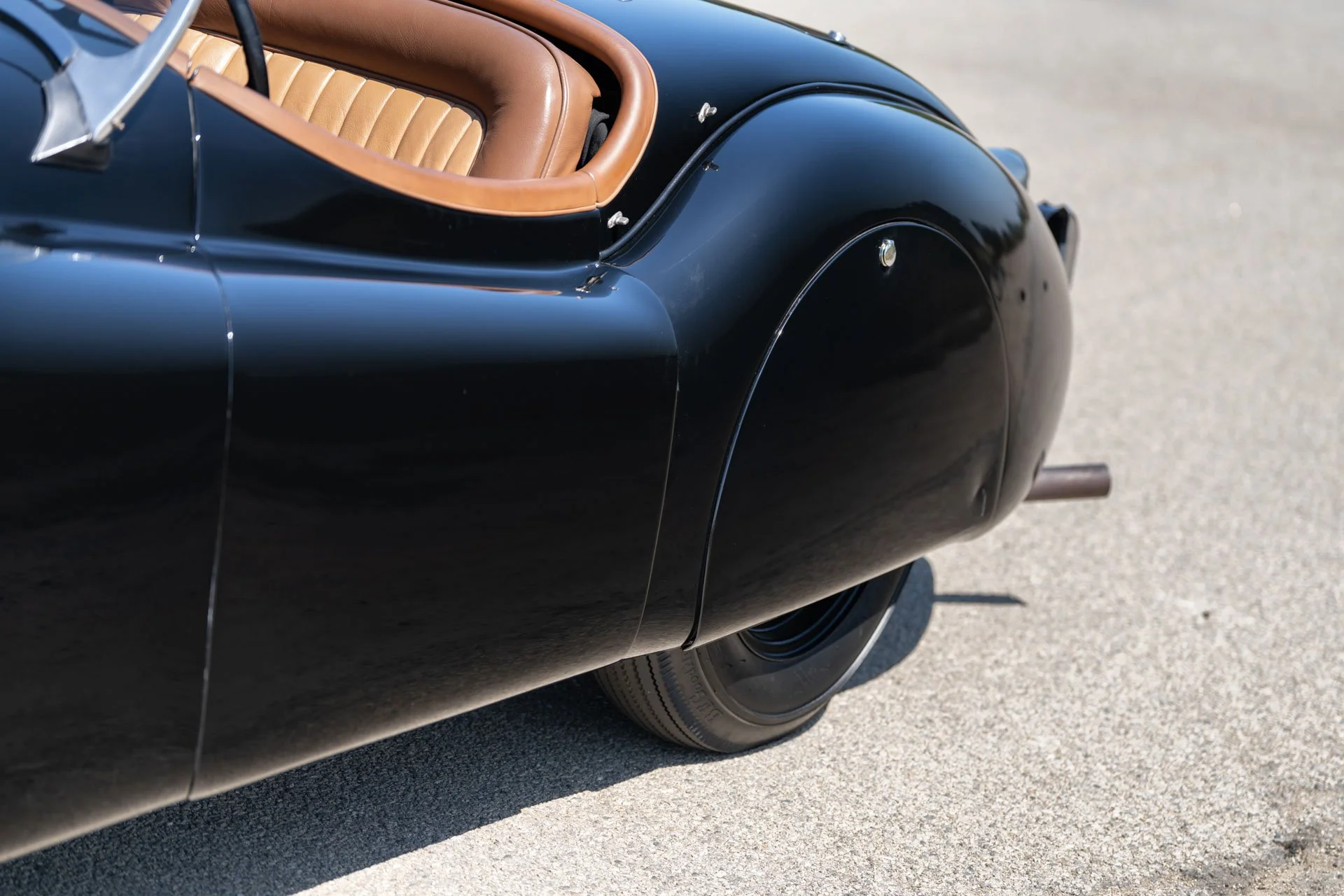
The initial run of XK120s were hand-built with aluminum panels over ash wood frames — a nod to pre-war coachbuilding traditions. These “alloy” roadsters are now among the most coveted collector cars in the world. Their rarity, combined with their historical significance, makes them automotive royalty.
At the heart of the XK120 was the revolutionary 3.4-liter inline-six XK engine. With twin overhead camshafts and an aluminum-alloy cylinder head, it produced 160 horsepower — enough to propel the car to a top speed of 120 mph, hence the name. In fact, during testing on Belgium’s Jabbeke Highway, a production XK120 reached a staggering 132.6 mph with the windscreen removed, earning it the title of the fastest production car in the world.
The XK120’s mechanical layout was conventional but effective: a separate chassis, independent front suspension with torsion bars, a live rear axle, and drum brakes all around. But it was the combination of lightweight construction and powerful engine that gave the Jaguar its edge.
Not just a showroom darling — this car was a racing thoroughbred. One of the earliest alloy-bodied XK120s was owned and raced by Roger Barlow of International Motors in Los Angeles, with none other than Phil Hill, future Formula 1 World Champion, as his mechanic. The car competed in the first California Sports Car Club race in 1950, marking the beginning of Jaguar’s storied motorsport legacy.
Another notable owner was Hollywood legend Clark Gable, who took delivery of chassis number 670003 — the first production XK120. Gable’s ownership added a layer of glamour to the car’s already magnetic appeal.
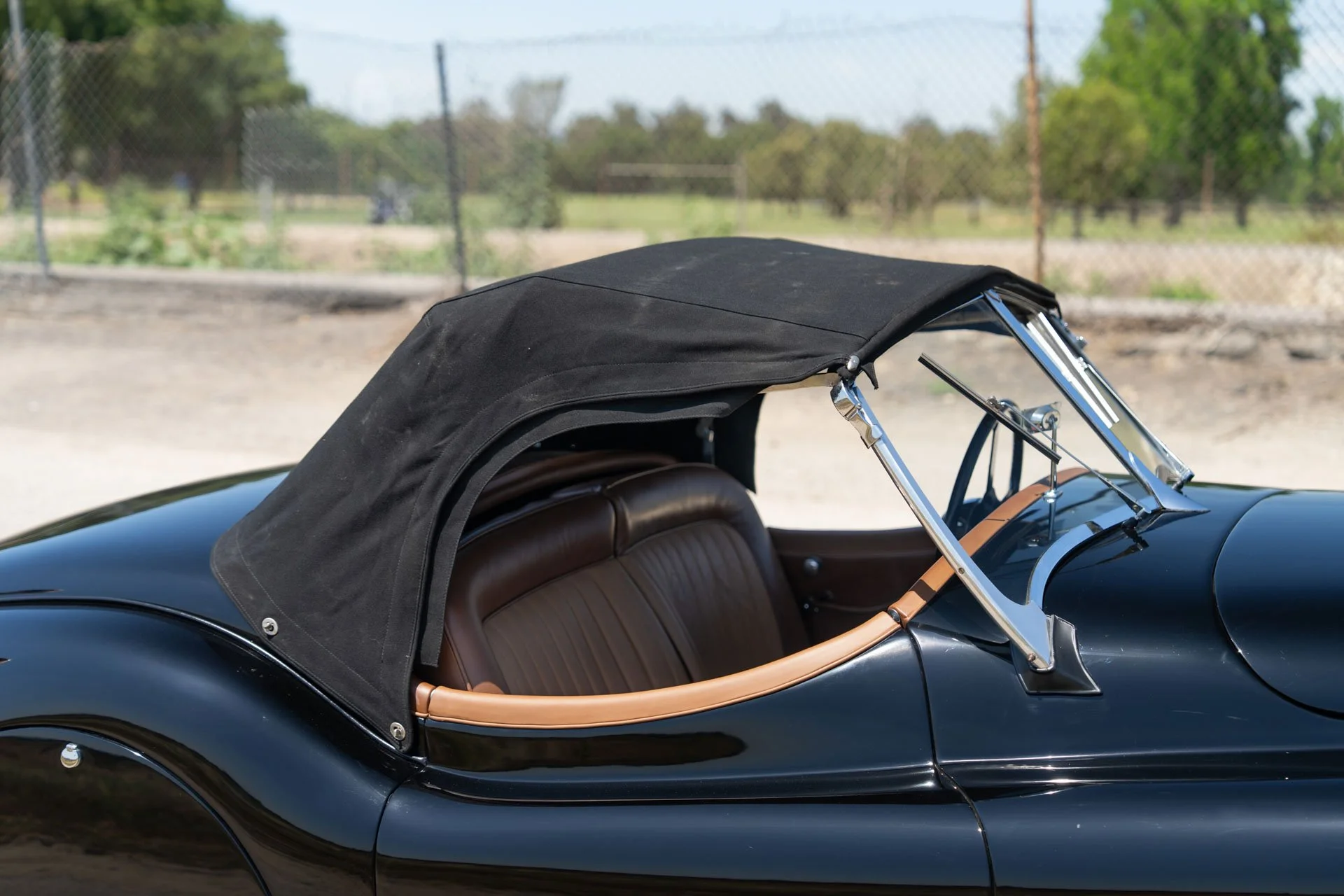
The XK120’s success laid the foundation for Jaguar’s golden era. It led to the development of the XK140 and XK150, and its engine powered the legendary C-Type and D-Type racers that dominated Le Mans in the 1950s. The XK engine itself remained in production in various forms for more than four decades.
This 1949 Jaguar XK120 Alloy Roadster is a wonderful example of the most desirable road-going XK120 variant. Of the 242-unit production run, it is one of 184 left-hand drive examples. Finished in its elegant original black exterior with biscuit and pigskin interior, the Jaguar stands apart in looks, performance, and pedigree.
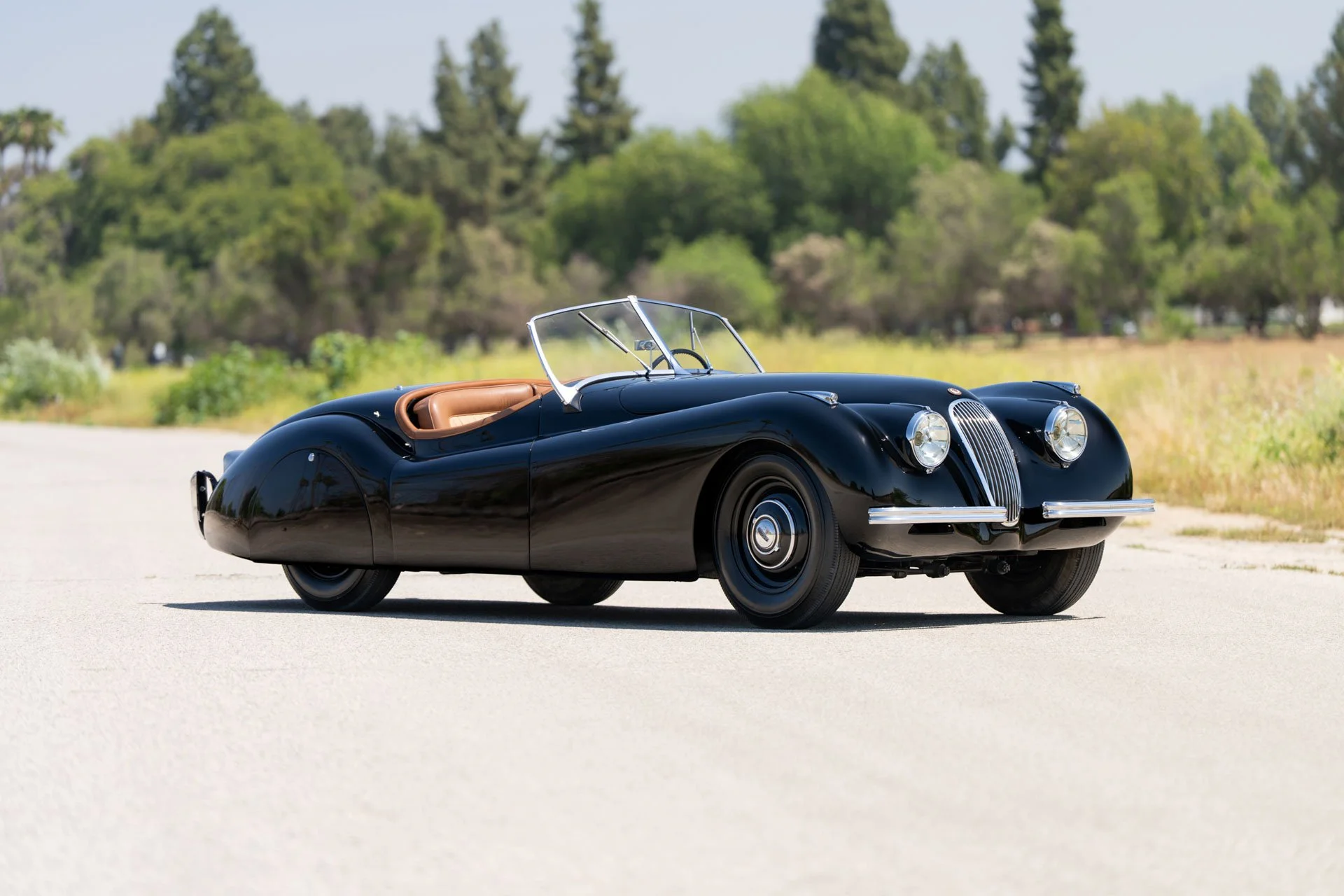
This example received an extensive bare-metal restoration to high standards during the late 1980s. According to its accompanying JDHT certificate, the car was restored in its handsome as-delivered color combination and retains its original engine block. The certificate also confirms that this example was originally delivered to the US, as many XK120s were, and sold new to J.L. Albert via Clayrich Motors of St. Louis, Missouri. Since its restoration, this Alloy Roadster has been carefully owned by several knowledgeable collectors, including Terry Larson and Mark J. Smith. It was sold by Gooding & Company at their Pebble Beach auction for $257,600.
More than just a car, the 1949 Jaguar XK120 Alloy Roadster was a statement — a declaration that British engineering and design were back, and better than ever. It was a car born from necessity, shaped by artistry, and destined for greatness.

