
Inside Shanine Yngvason’s Sanctuary
STORY | Anthony Pitt
Photography | KARL NOAKES & MAris SaulIts
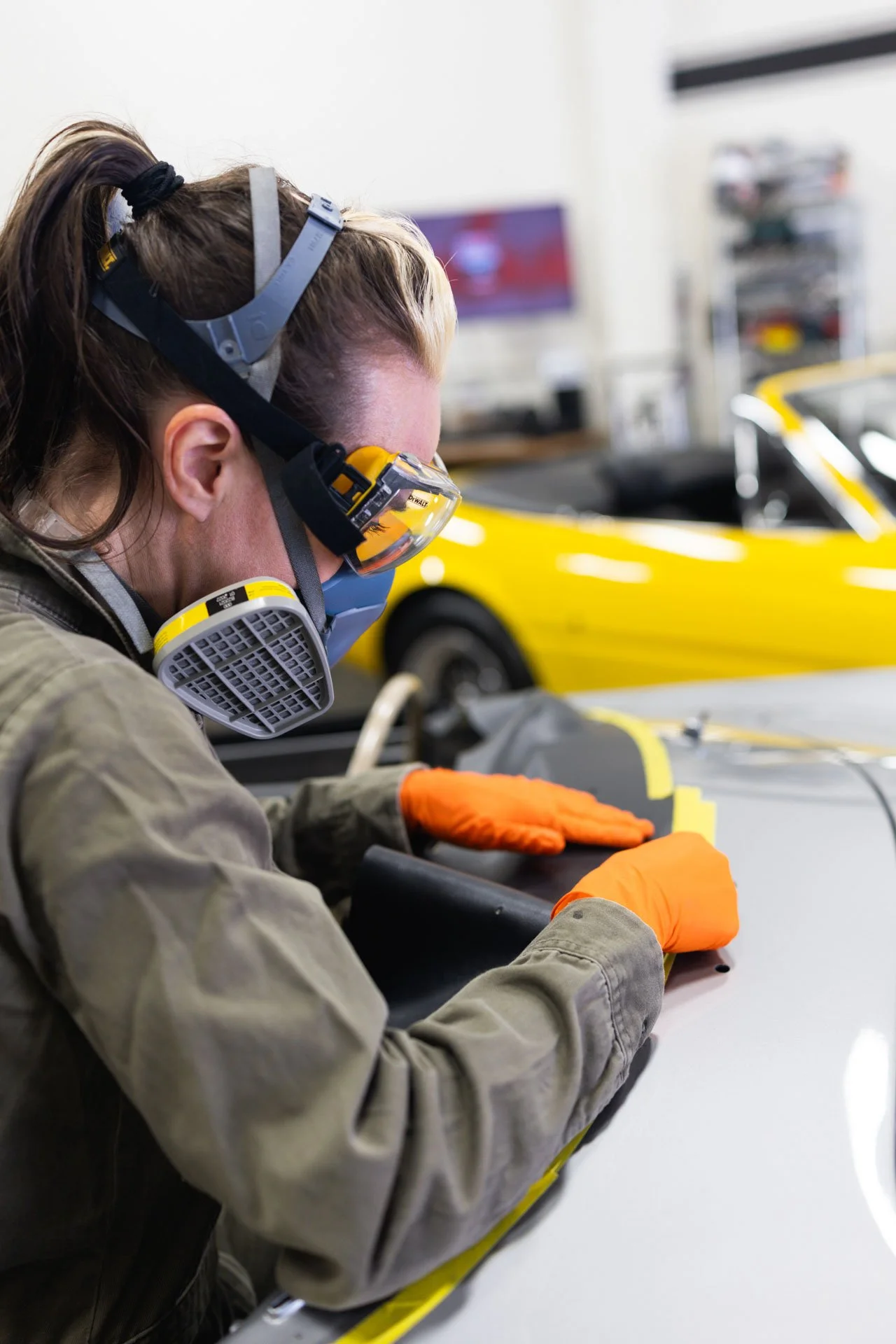
Step through the door at House of Wolves, and it hits all at once: color, chrome, leather, and the sense that you’re not quite sure what this place actually is until you start poking around. There’s no single thing to look at, only everything, all competing for your eye in the same breath. A rare yellow Ferrari Daytona sits under careful light, taped and attended to with a precision closer to surgery than servicing. Beside it, a freshly painted Porsche 914/6 shell glows in bright orange. Further back, a 356 Convertible D sits with no interior. There are no screens here, no diagnostics running. Just eyes, hands, and the accumulated knowledge of someone who has spent years learning to read objects the way other people read text. It’s clear: this place is not about volume. It’s about something else entirely.
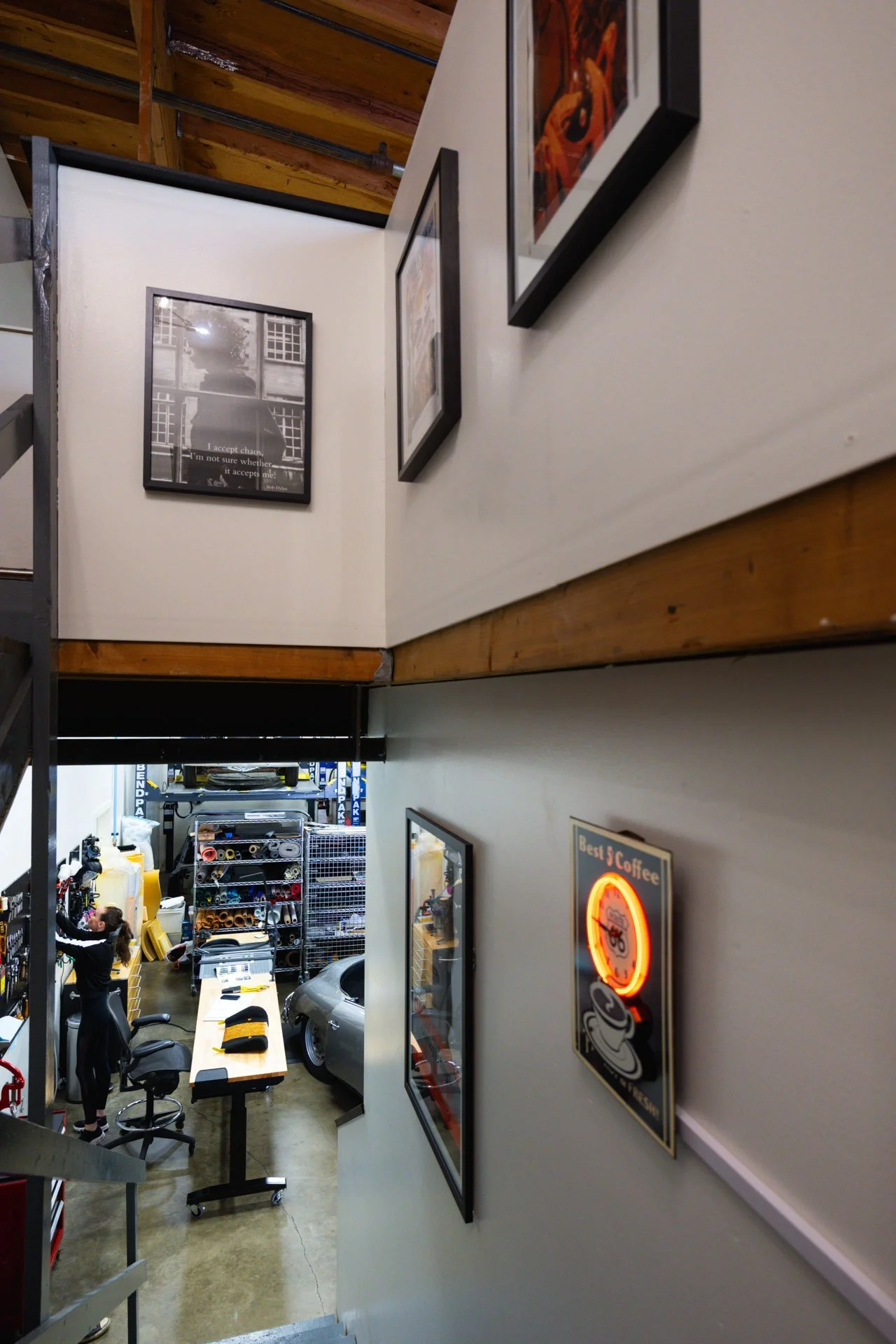
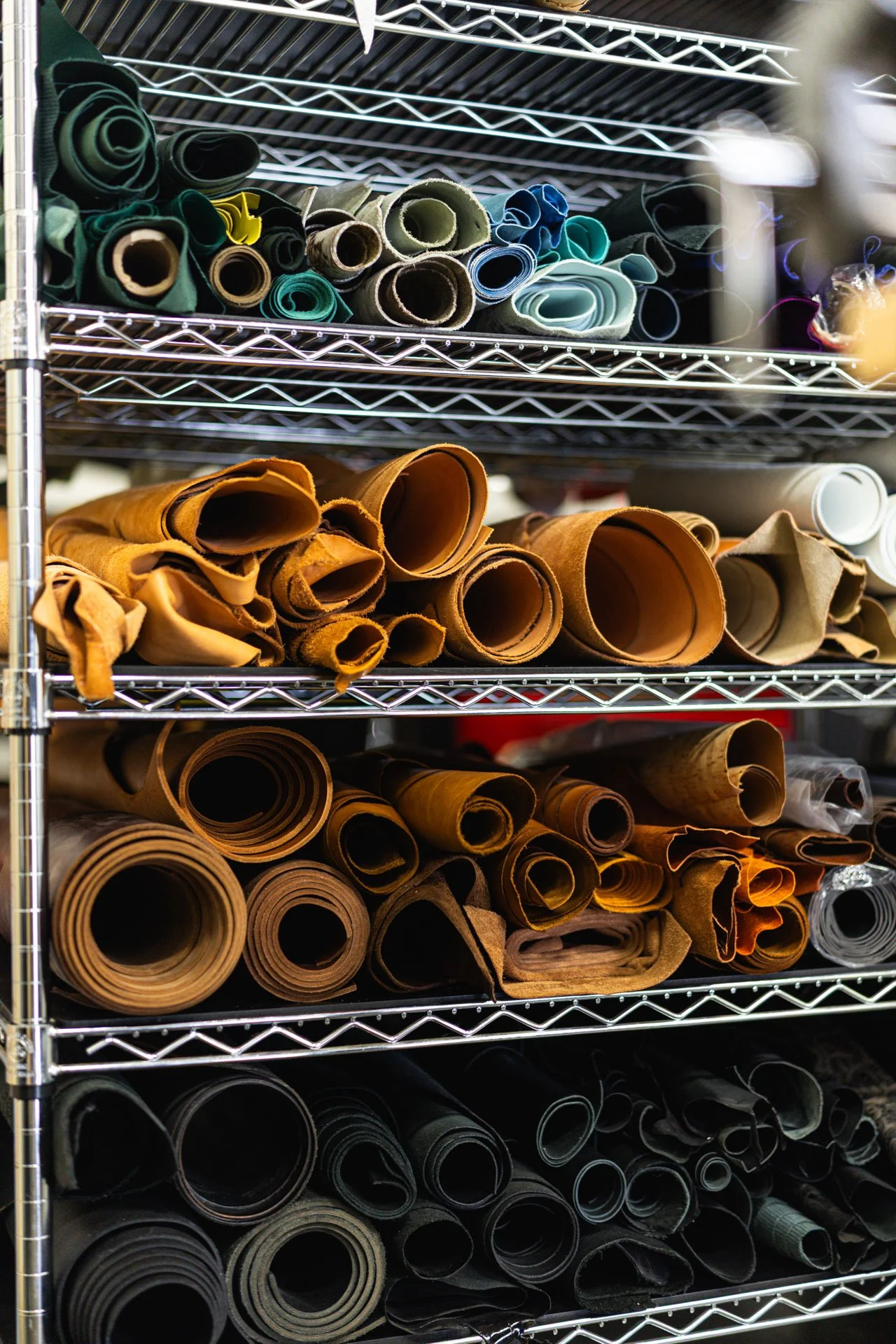
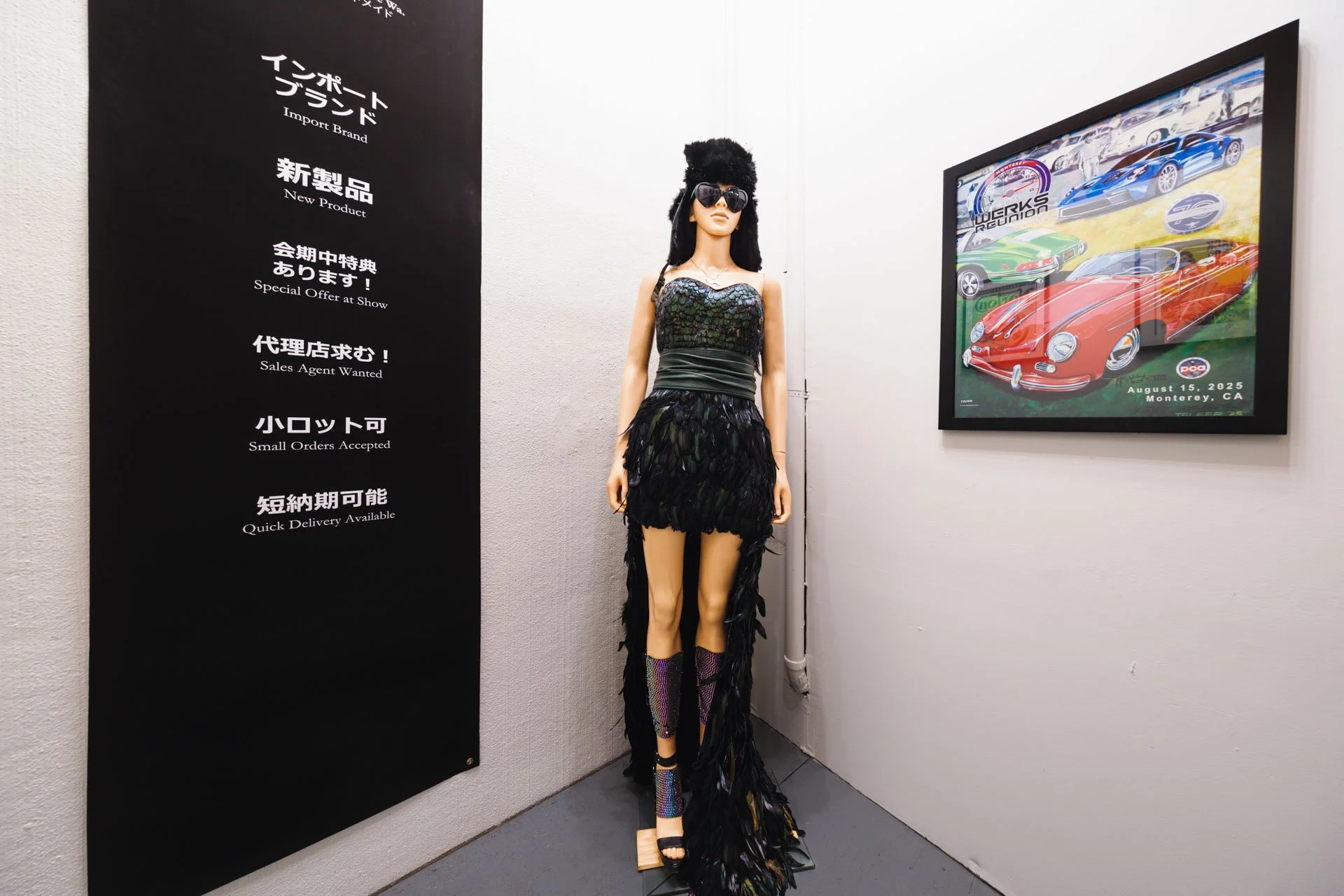
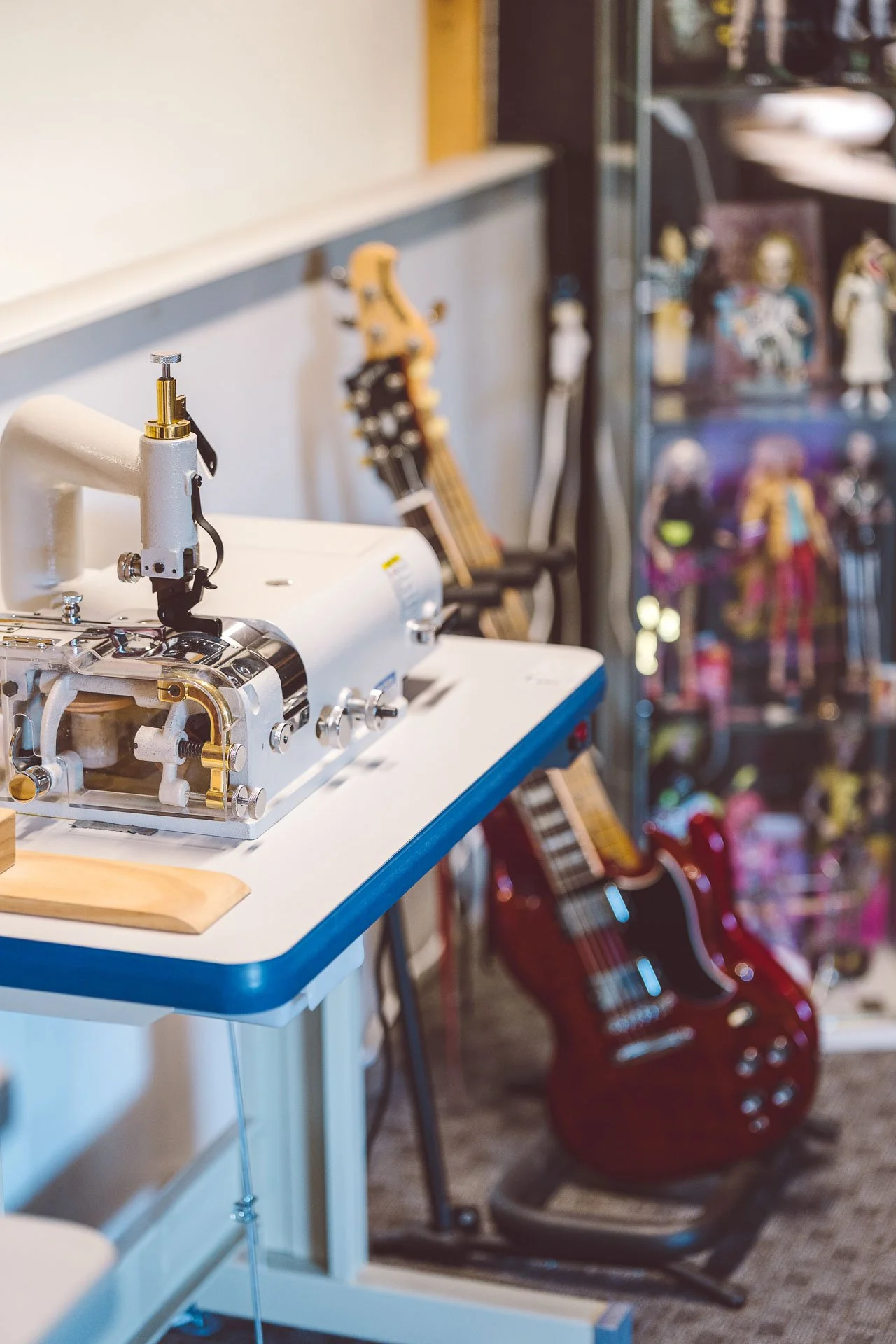
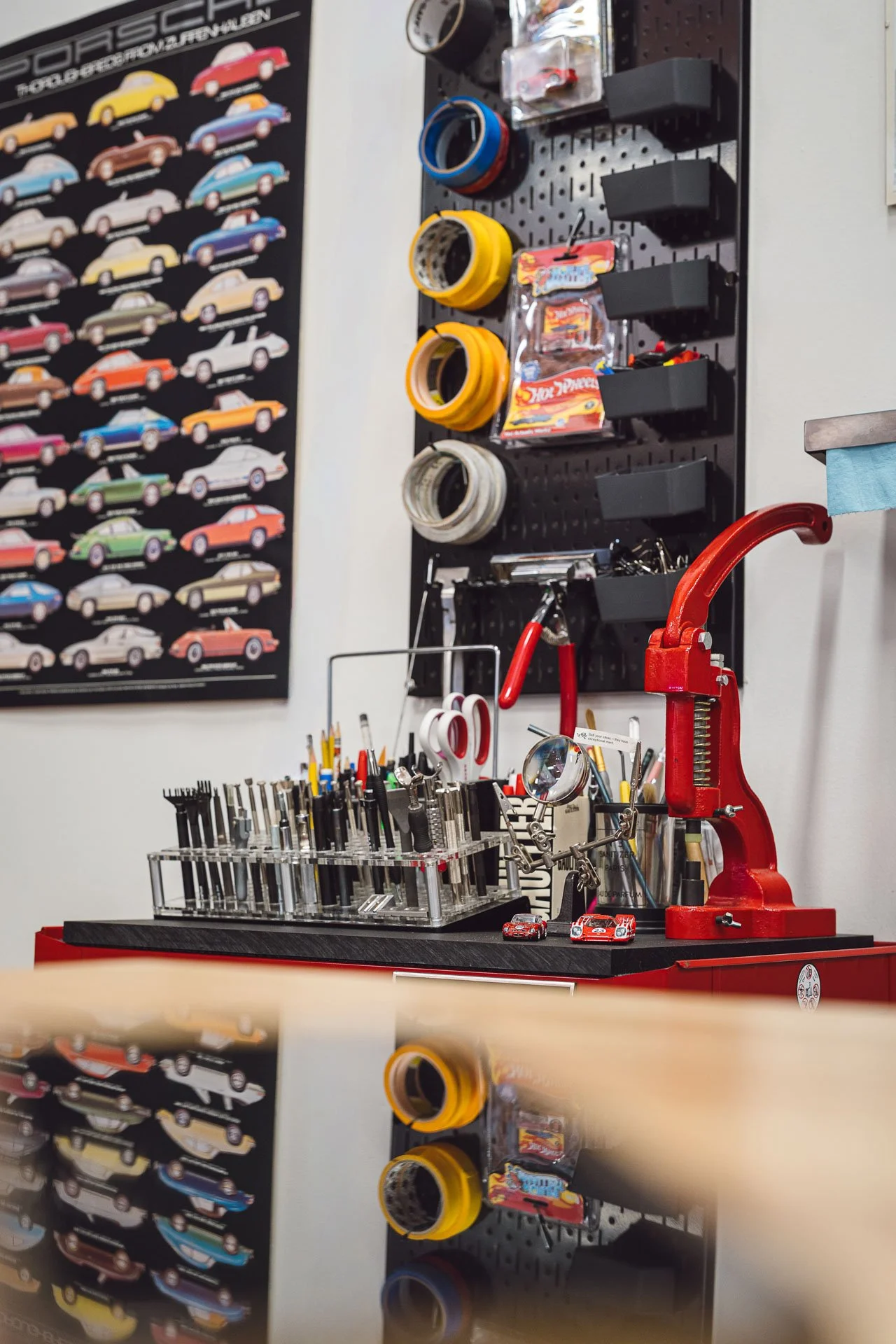
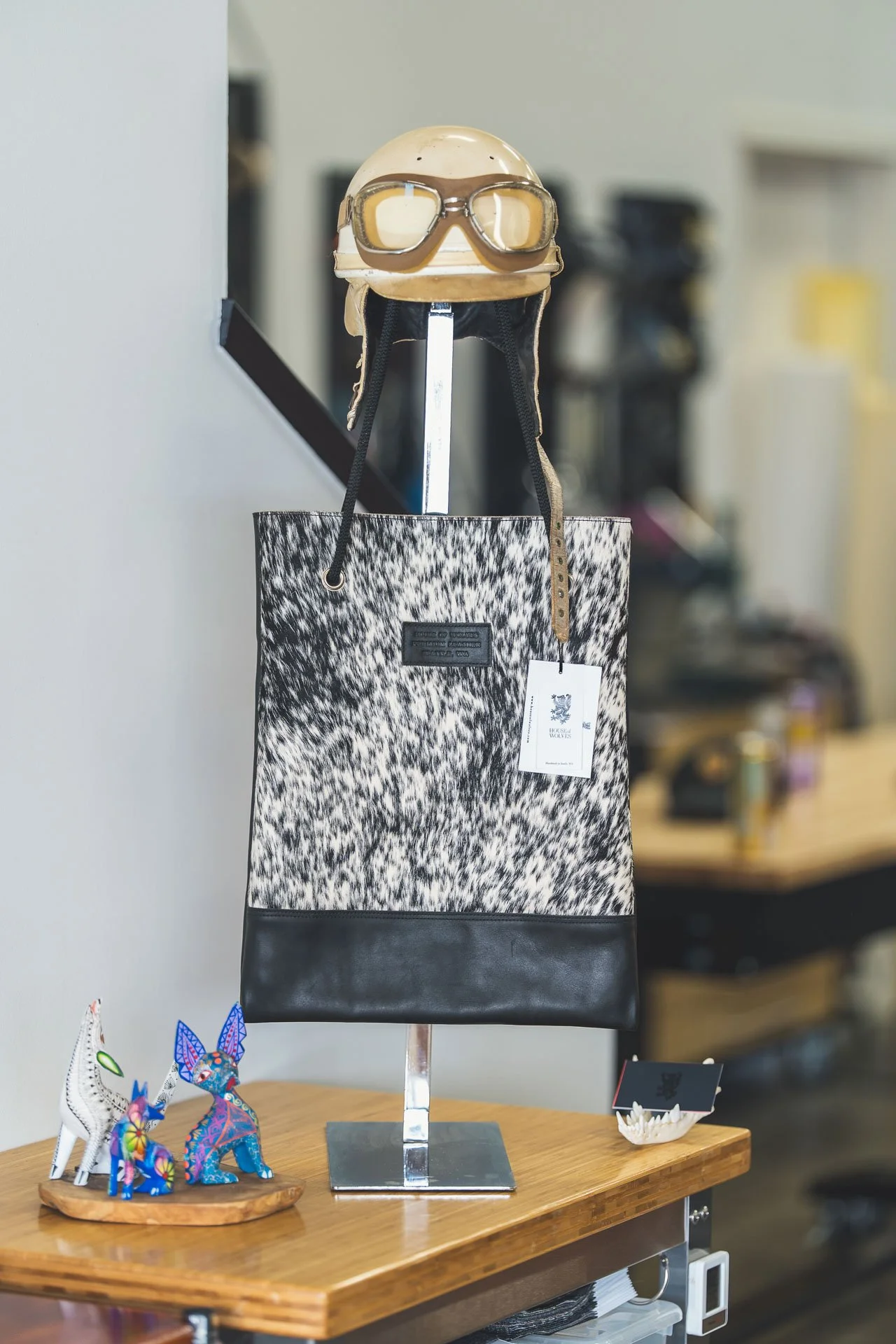
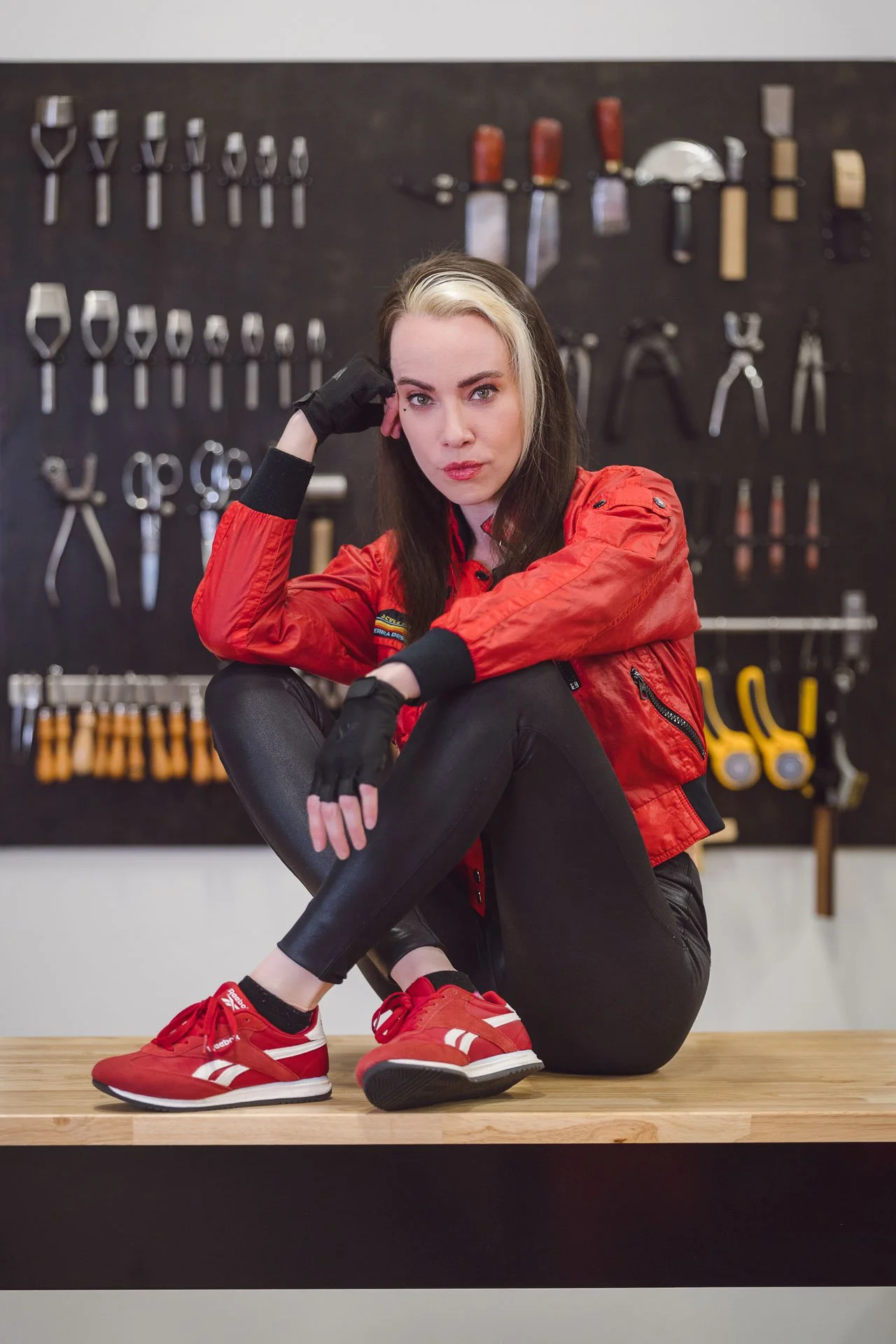
House of Wolves is Shanine Yngvason’s studio, her sanctuary, and, depending on the day, her recording studio, design room, and leather workshop. It occupies a building that logic says should feel like a garage. It doesn’t. The upper level opens into something closer to a New York loft, a space accumulated rather than designed, where every object has earned its place. Vintage transistor radios and cassette players sit displayed with the care of museum pieces. Guitars lean against walls. Artwork climbs the staircase. Racks of leather hides sourced from travels across the world are organized by shade and tone. Everything here was chosen slowly, kept deliberately. On the staircase landing, watching over it all, sits a mannequin wearing a gown Shanine designed, made and actually wore to the Grammys.
“House of Wolves is my creative sanctuary,” she says. “It’s a place where craftsmanship, music, art, fashion, and fast cars collide. I can shut the world out and immerse myself in whatever I’m bringing to life, whether I’m designing a Porsche interior, developing a couture accessory, or writing music.”
A HAYNES MANUAL AND A DREAM
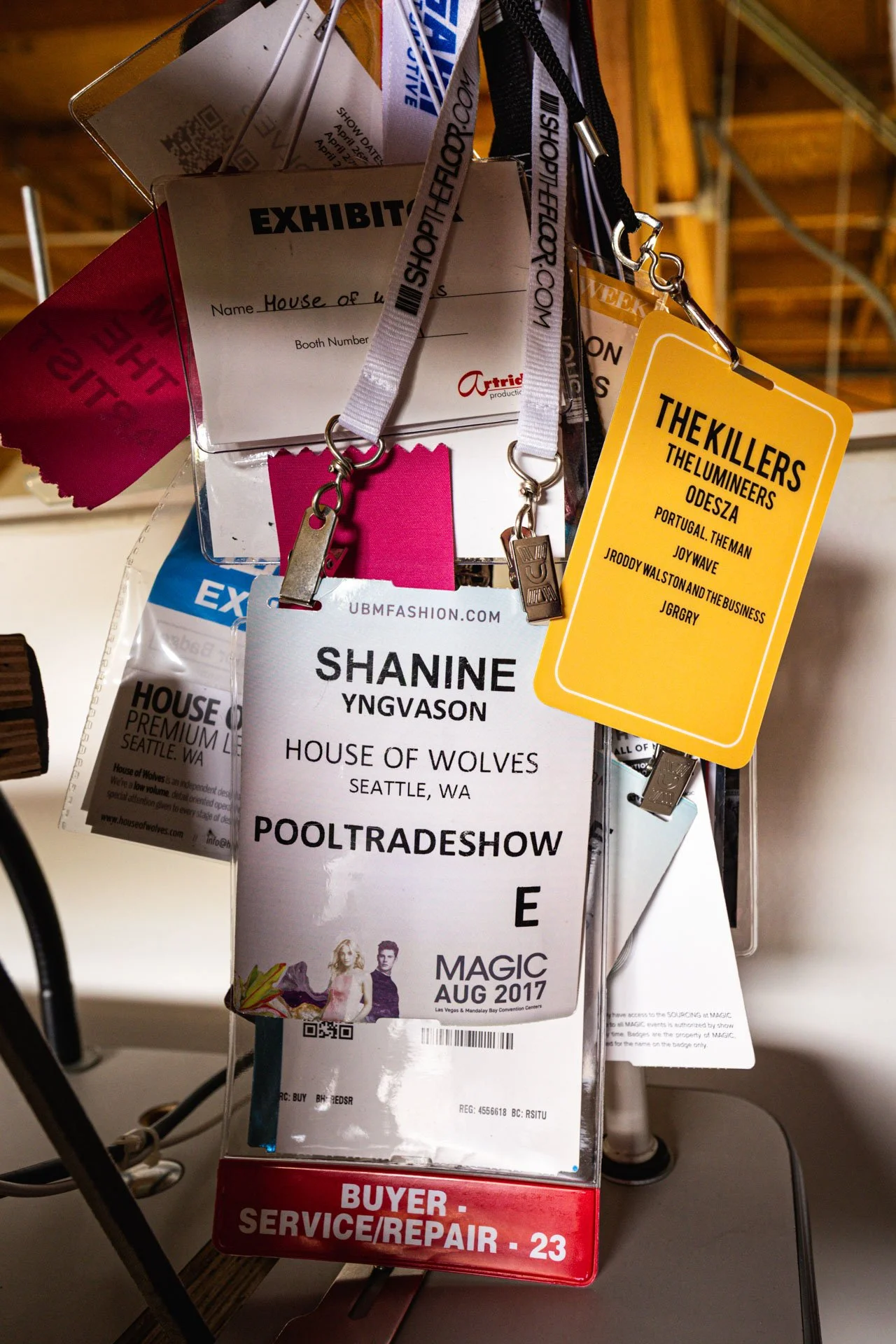
Shanine grew up between two worlds — her parents are from Ecuador and Iceland — and has never quite landed in one place creatively, which may explain why House of Wolves resists every category you try to put it in. The craft came fi rst, long before the cars did: since childhood, she’s been drawing, painting, making ceramics, designing clothes, building things with her hands. The automotive world came later, almost accidentally.
“I started under the hood before I ever touched an interior,” she recalls. “When I was 18, I bought a ‘76 Corvette Stingray and a Haynes repair manual, and that little book literally changed my life. Learning how to take things apart and put them back together gave me the confidence to trust myself.”
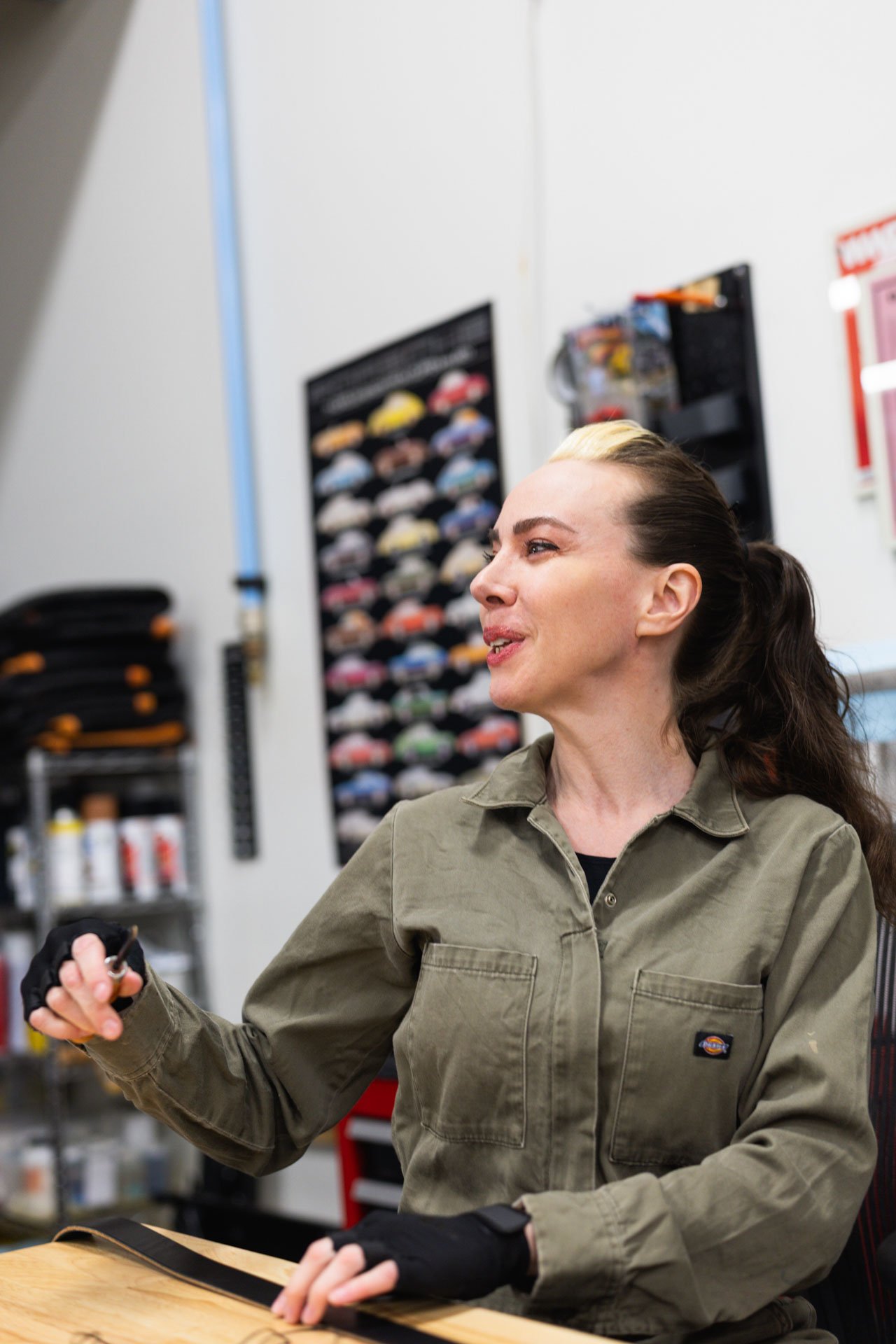
Years later, when a friend who restored race cars suggested she try an interior, she approached it the same way: no formal training, no guarantee, just the willingness to begin. Her first professional automotive project was a 1962 Porsche 356B Roadster Super 90 valued at nearly half a million dollars. “I had no idea what I was doing in the beginning,” she says, “but it’s never really stopped me before.” The finished result exceeded her expectations, and the response to her work confirmed she was on the right path. After that first project, several Porsche Club of America (PCA) members entrusted her with their own 356s and 911s, marking the beginning of a new chapter in her career.
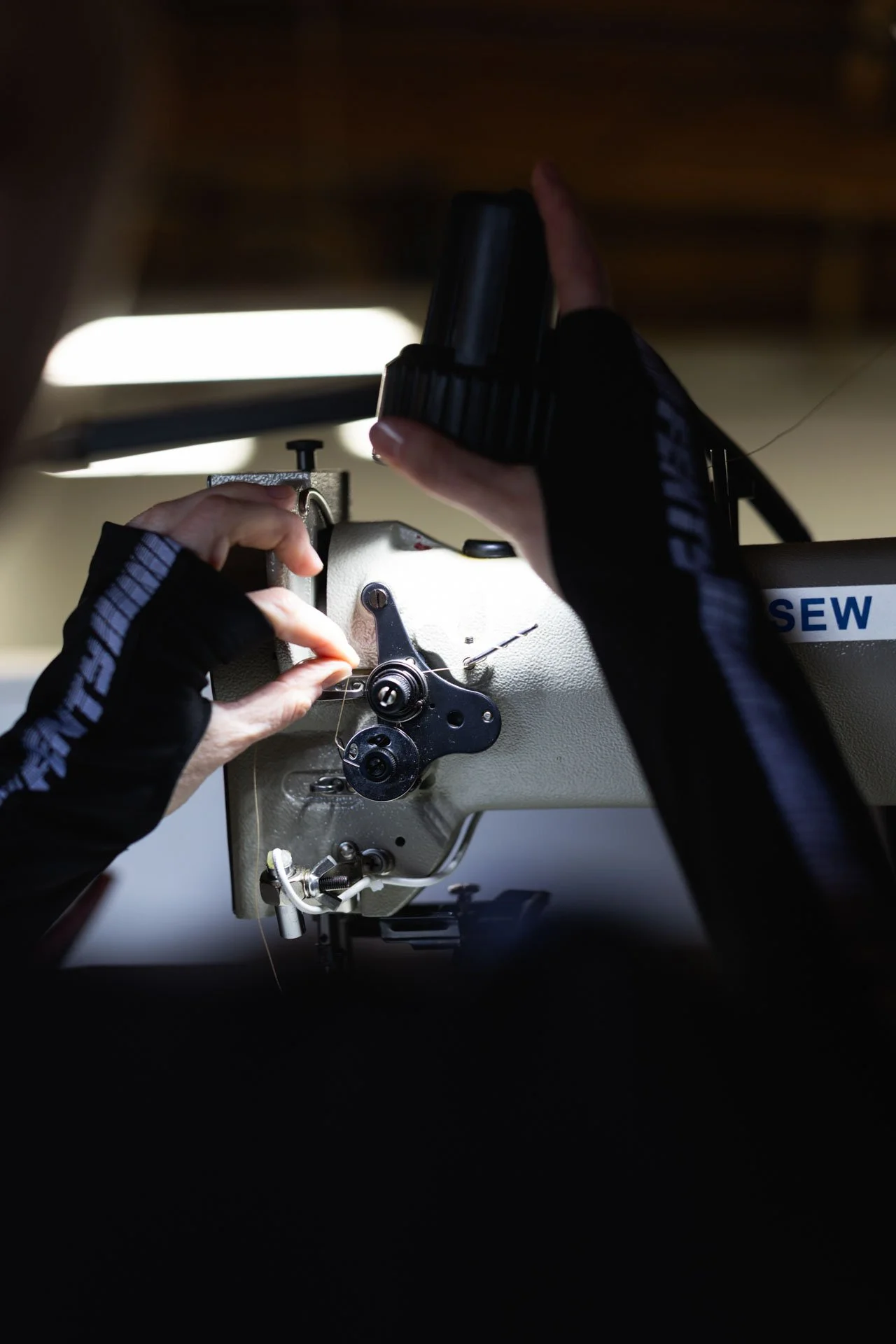
What followed was years of increasingly rare and complex work, and a slow, deliberate process of building a studio around the way she thinks, not around how upholstery shops are supposed to work. Materials came from Japan, Europe, or anywhere she could find something worth keeping. Many tools were modified by hand or made from scratch. “I couldn’t afford all the tools I needed, so I tried to be resourceful,” she says. “I’d modify things, rig things together, make my own. I never let limitations get in my way, and honestly, it made me a better problem solver.
A Sanctuary, Not a Garage
The work itself is harder to define than the space. On any given day, leather straps might be hand-cut from a single hide in one corner while fresh dashboards are shaped in another, and a plaid upholstery pattern is laid out for a third project across the room. The projects differ. The standard never does. No signature style, only a standard: exacting, uncompromising, and shaped around whatever the car, and the client, actually needs.
That distinction matters to her. Before beginning any project, she sits with the client asking questions that have nothing to do with the specifications: she wants to know the history, the story, and what the object means. “I really try to build whatever the design is around those stories,” she says. “So it captures a lot of feeling in what I do.”
Nowhere is that more evident than in her work on a 1967 Jaguar E-Type Roadster, a car so original that the collection manager responsible for it called it the piece that scared him most. The leather on the seats was decomposing, seams coming undone. Everyone she consulted told her to walk away. She didn’t.
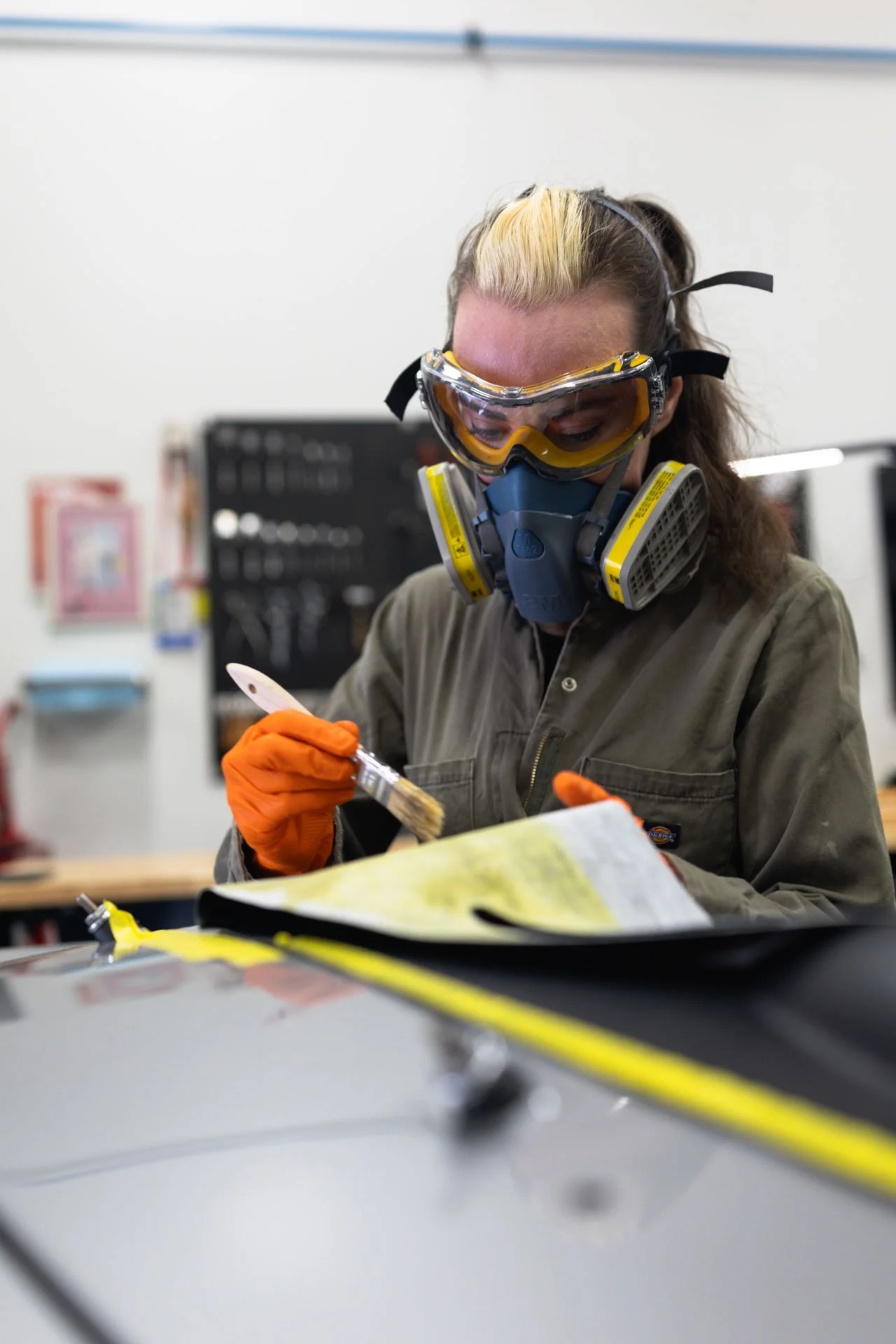
Instead, she removed the hardware without destroying the leather, hand-carved new cushions, soaked the leather to restore its suppleness, and stitched through every pre-existing hole by hand. She mixed paint by eye to match the original color (revealed only beneath hardware she’d removed) and applied it in thin layers, sanding in between, until it matched the patina around it. No spectrophotometer, no color-matching software. Just a killer eye for detail and a drive to make it perfect.
She did all of this while sick with COVID, the kind of sick that puts most people flat on their back for a week. Shanine didn’t take the week. She went to the workshop instead, because the deadline wasn’t moving for anyone: the car was headed to a concours show in Europe, where every seam would be under scrutiny. That’s the standard she holds herself to: not “good enough under the circumstances,” but good enough, period — circumstances be damned. She powered through, and when the car left the shop, the client was proud to showcase the original leather, not restored to look new, but repaired so precisely, its cracks and tears gone and its patina fully intact, that no one could tell it had ever fallen apart. Shanine considers that the highest compliment she could ask for.
HIGH STANDARDS. NO COMPROMISES.
There is a word she uses often, almost reflexively: Preservation. Not just of objects, but of methods, of the relationship between maker and material that gets lost when speed becomes the goal. “I worry that lots of traditional trades and skills are dying,” she says. “Skills like upholstery, leather smithing, woodworking, metal shaping, they take years of practice and patience to master. But what concerns me isn’t just the techniques. It’s the mindset behind them. There’s a level of care, pride, and attention to detail that comes from creating something with your hands.”
It’s a worry, but not a passive one. Shanine talks about a girl from Wyoming who wrote to her after reading a magazine feature, so moved by it that she signed up for an upholstery program at WyoTech before working up the courage to ask, via Instagram, whether she might work at House of Wolves someday. “I told her, ‘Call me when you’re out of school,’” Shanine says. “Hopefully we can influence more people, inspire other generations to want to step into these crafts and keep them alive.” That, perhaps, is where preservation really lives: not in the objects, but in the passing on.
“What makes House of Wolves special isn’t just me,” she says. “It’s the culture, the standards, and the passion behind the work. Those are the things I want to protect as it grows. I’d rather grow slowly and intentionally than sacrifice quality for volume.”
INTENTION OVER CONVENIENCE
There is something quietly defiant in all of this; though Shanine isn’t making a manifesto out of it, she’s just working. In a world optimized for speed, scale, and the instantly reproducible, choosing the harder, slower, more considered path has become its own kind of statement. Every hide selected by hand. Every tool modified to do what no off-the-shelf version could. Every client interview that skips the brief and starts with a conversation that takes hours, not minutes.
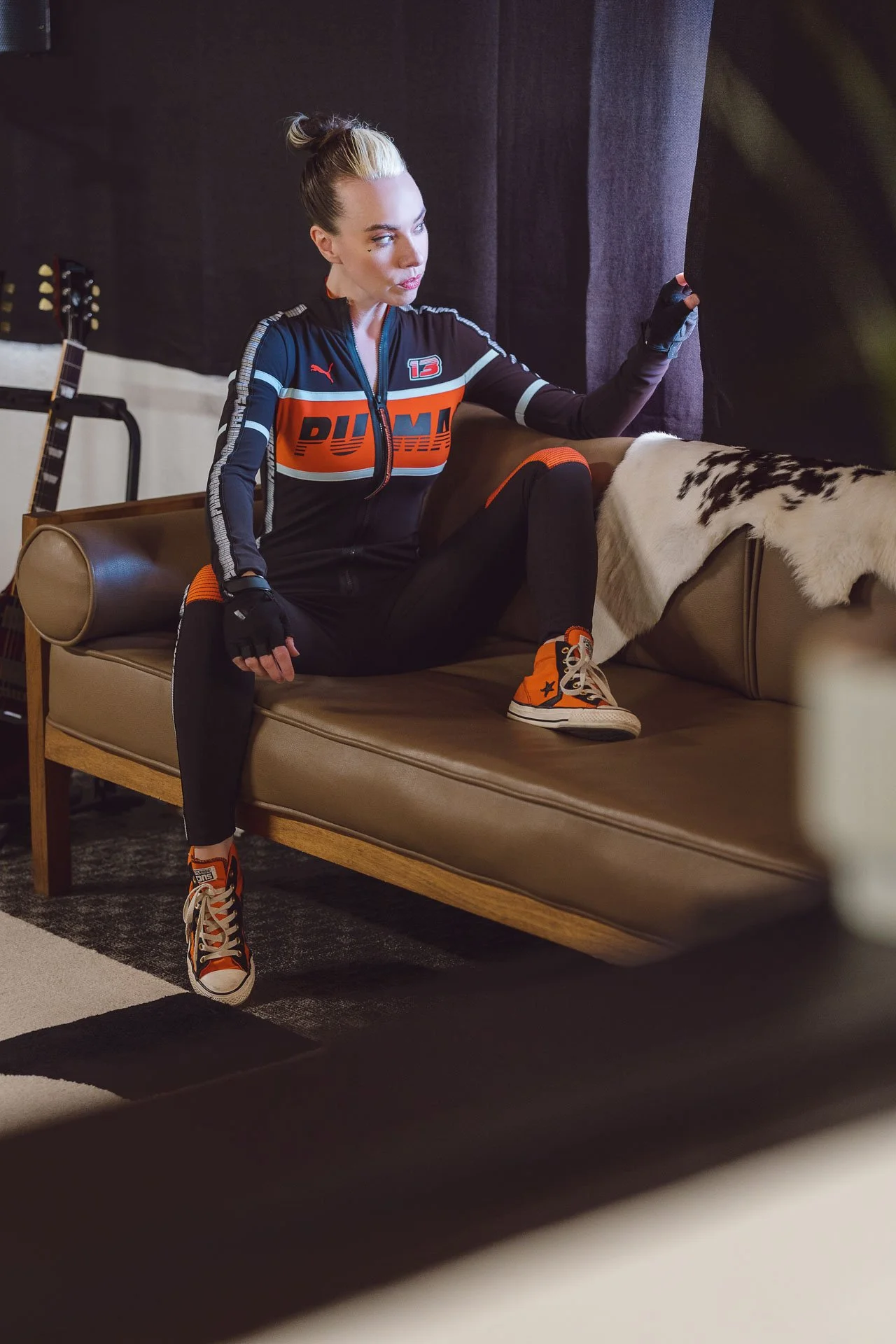
None of it is the easy way, and that’s exactly the point. “If it doesn’t scare you,” she says, “it’s probably not worth pursuing.” She means it about the work, and about everything else she does. The jumpsuit she pulls on without thinking or the music she’ll go home and write after a 14-hour shift. None of it is compartmentalized. None of it is performative. It is simply how someone lives when they’ve decided the process matters as much as the outcome, that the making is not separate from the meaning.
That is, in the end, what House of Wolves is. Not a shop. Not a studio. Not even a brand. It is a way of working that produces extraordinary things, practiced by someone who has never been interested in the easy version of anything. In an age that can generate, replicate, and optimize almost anything with a keystroke, there is something irreplaceable about that. Something worth preserving.
The work, as ever, continues.

