
Taking The Path Less Travelled
Petersen’s 4x4 Rally To SEMA
STORY | Dan Pilling
Photography | Ivan Llagan
“Roads? Where we’re going, we don’t need roads.”
Doc Brown’s line couldn’t describe our trip ahead any better, as 27 rigs idle under a rising desert sun outside Palm Springs. Somewhere beyond the mountains lies Las Vegas and the SEMA show — the automotive world’s annual carnival of chrome and creativity. Most of the cars that appear there will arrive wrapped in trailers and polished by white gloves — but not ours. We’re taking the hard way.
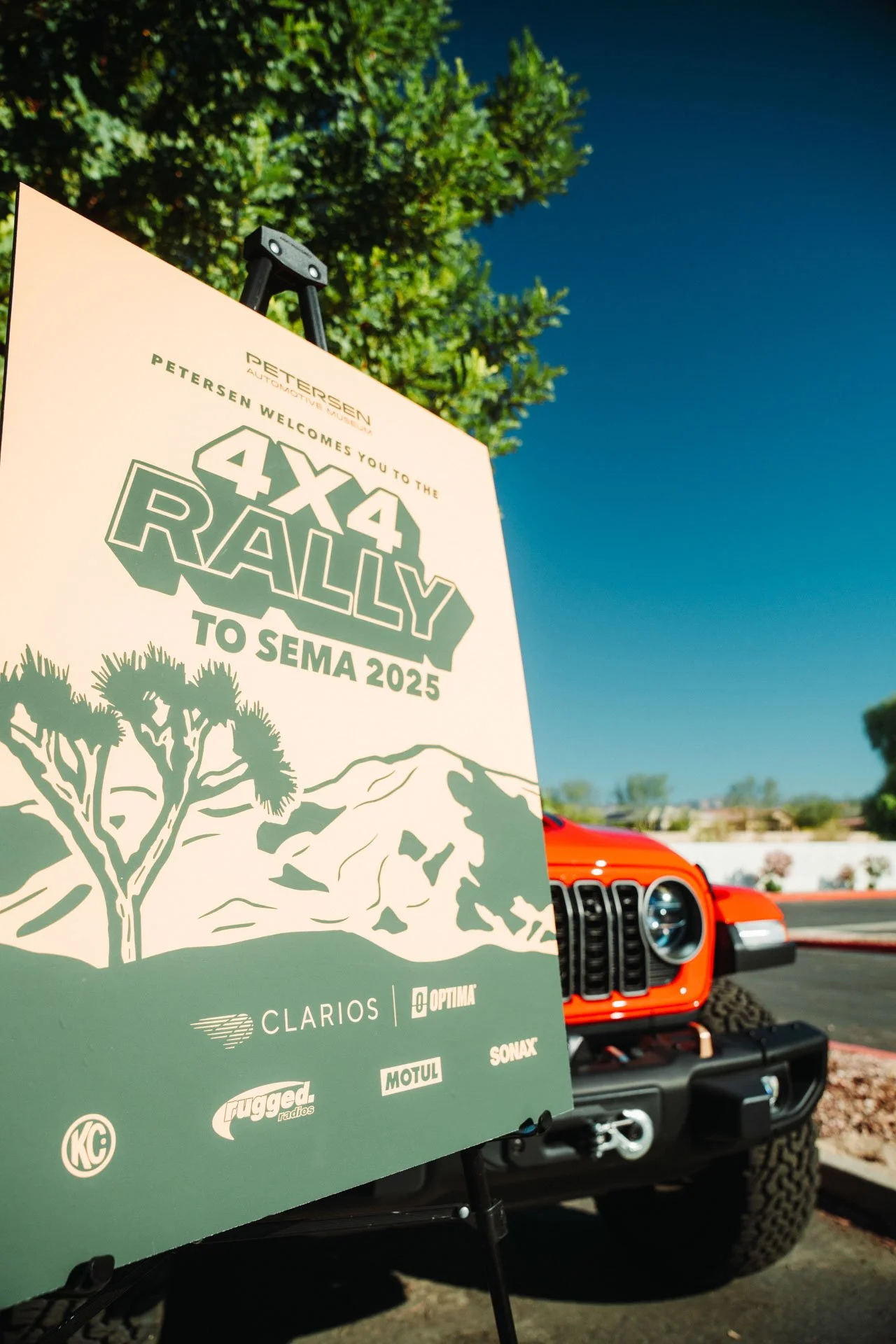
For the next two days, we’ll cross California and Nevada the long, dusty way — off-road, cross-country, and occasionally cross-eyed — on the Petersen Automotive Museum’s second annual 4x4 Rally to SEMA, with support from Optima Batteries and Clarios.
At the Rancho Mirage Resort, coffee cups clink beside tire compressors. The lineup looks like an off-road convention: lifted Wranglers and 4Runners, a brand-new Lexus GX still smelling of dealership leather, a steel-wheeled Defender, and, stealing every glance, the Petersen’s own Ford F-150 Prerunner — a sand-devouring missile a guest nicknamed The Bazooka.
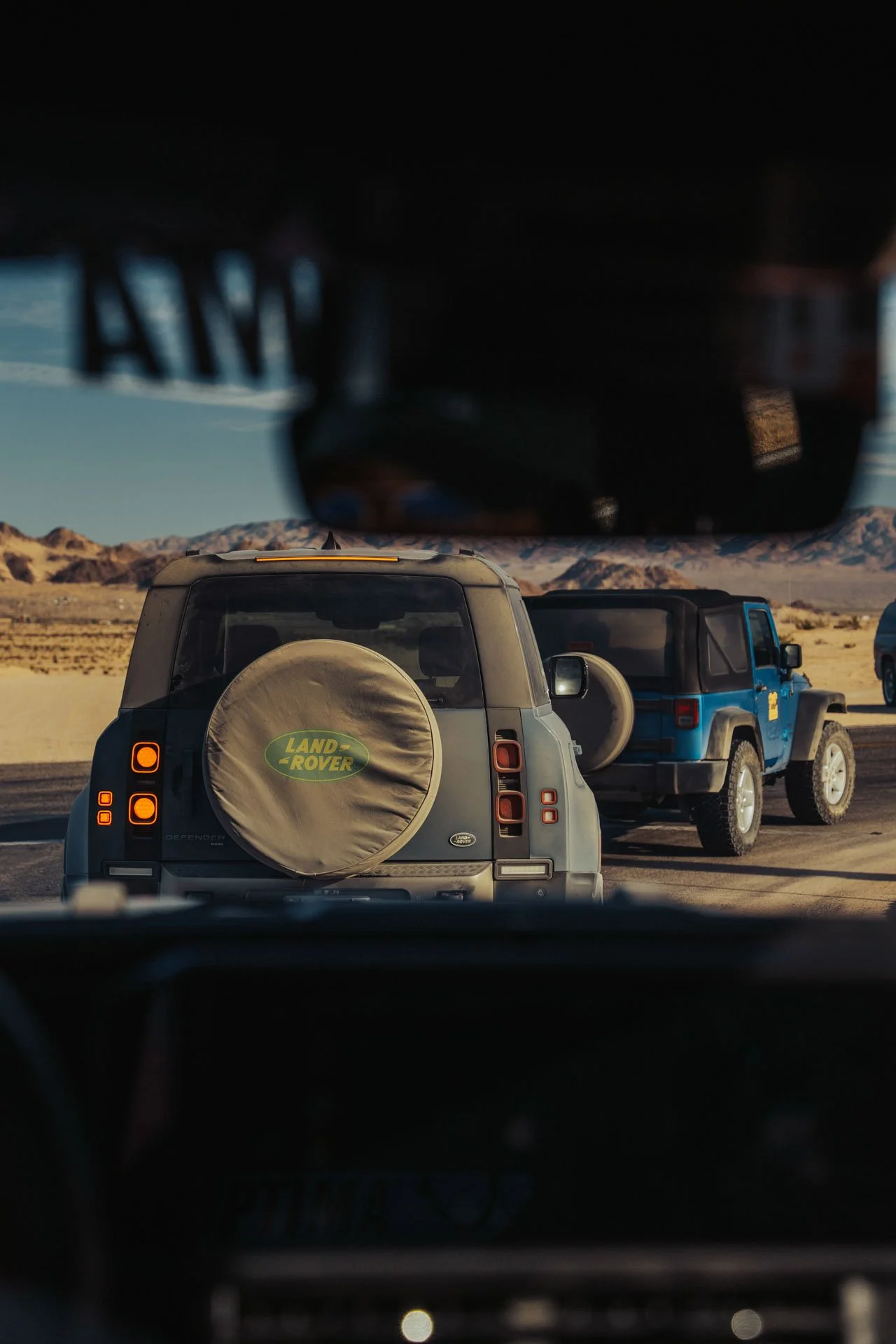
Our trail bosses — Randy Wimenta from KC HiLiTES, Dustin Ensign from Rugged Radios, and Martin Castro from SoCalX — stand relaxed, sun-browned, the picture of competence. Their briefing is short and to the point: “Stay together, respect the land, don’t do anything that becomes a story for the wrong reasons.”
Radios crackle. Transfer cases drop into four-high. The convoy rolls.
The road gives way to dirt with a soft, gritty snap — a small sound with big meaning. Freedom tastes like dust, apparently, because within moments we’ve kicked up a sand cloud long enough to redraw the horizon. “We’re making art back here,” someone laughs through the static.
The trail wastes no time reminding us who’s in charge. Loose gravel shifts under tires; soft sand demands momentum and faith. Technical climbs appear without warning. Martin’s calm voice guides each vehicle: “Right line, steady throttle, you’ve got this.”
By mid-afternoon, the timid have found rhythm, the confident have found humility, and everyone has found dust in places they didn’t know existed.
Just after sunset, headlights snake toward AutoCamp Joshua Tree, a pocket of polished Airstreams glowing silver against the fading light. Dinner is at the Snake Bite Roadhouse — cowboy steaks, banter, and the kind of laughter that comes when adrenaline finally wears off.
As the evening rolls on, stories trade hands like poker chips. Someone wins “The Velociraptor Escape Vehicle” award; another takes home “The Ted Lasso Belief Trophy.” Under a billion desert stars, strangers start sounding like teammates. Tomorrow will come early.
Engines cough awake before dawn. Coffee steams in enamel mugs. If day one was about learning our rigs, day two is about trusting them.
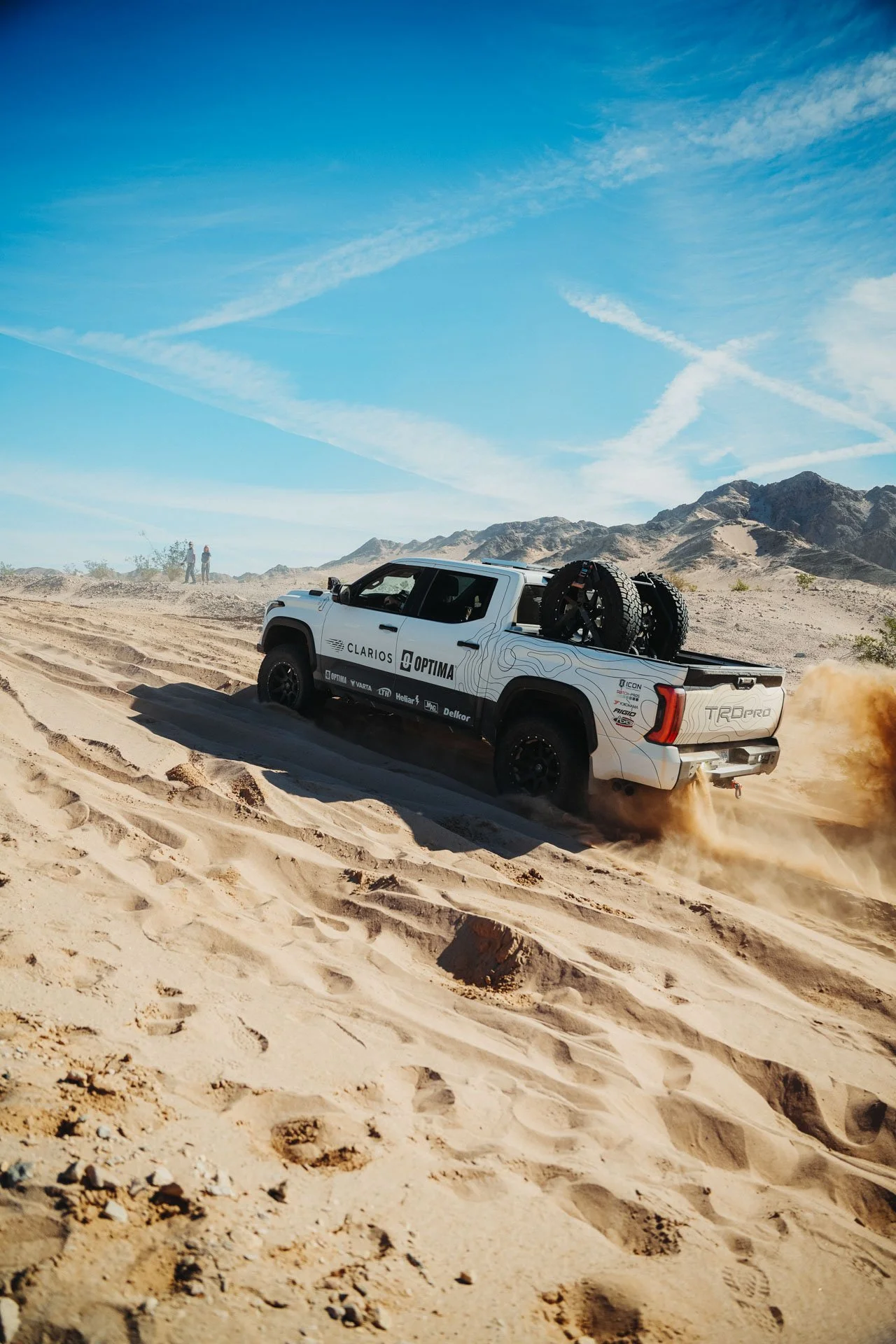
The first challenge arrives instantly: deep, unrelenting sand. The rule is simple — don’t lift. One by one, rigs power through, rooster tails backlit by sunrise. The Defender on steelies glides up a steep sandy face with what looks like zero effort — calm, graceful, impossible to ignore. The Bazooka? It shrugs off the climb as easily as a daily commute.
Confidence rebuilt, we push on
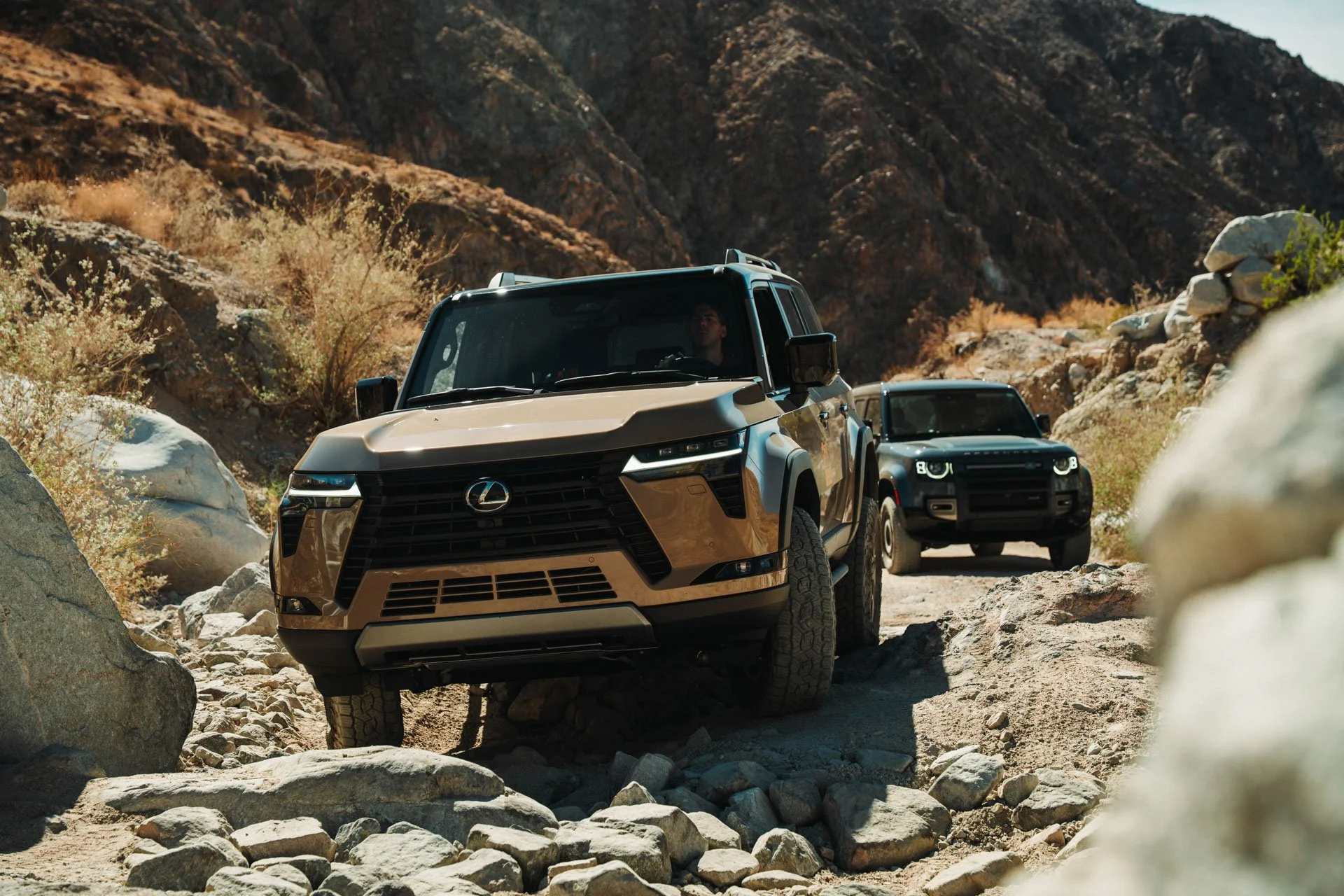
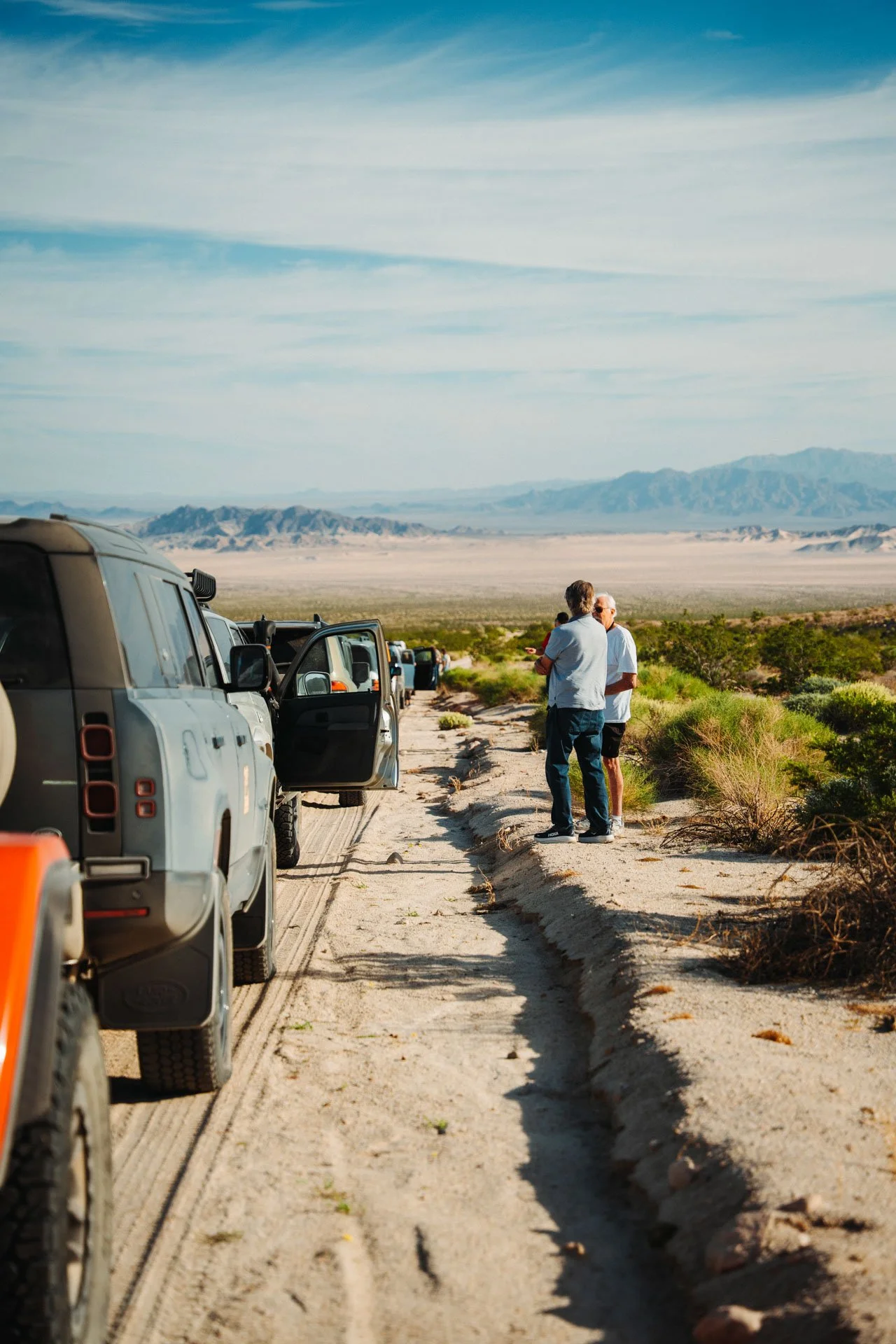
The trail tightens into a canyon, mirrors folded, spotters outside calling lines like stage directions. “A little deeper… hold it… perfect.” By now, the radio chatter is equal parts instruction and comedy. The convoy has become a single moving organism. Somewhere in the squeeze, a lone Jeep Commander finds itself facing the full weight of that organism — reversing a long way so the group can pass. We feel a little guilty, but also quietly grateful; sometimes the needs of the many really do outweigh the needs of the few.
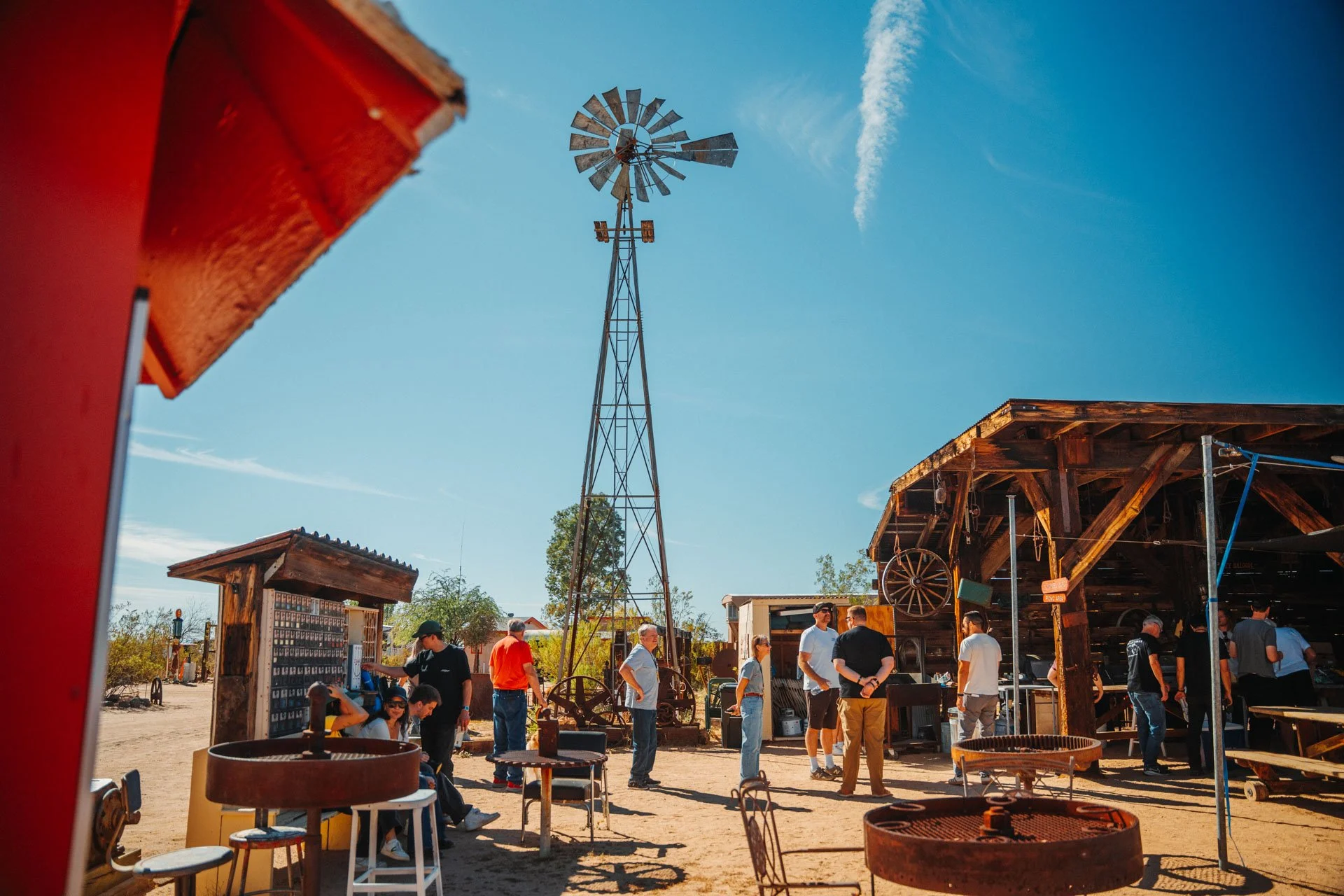
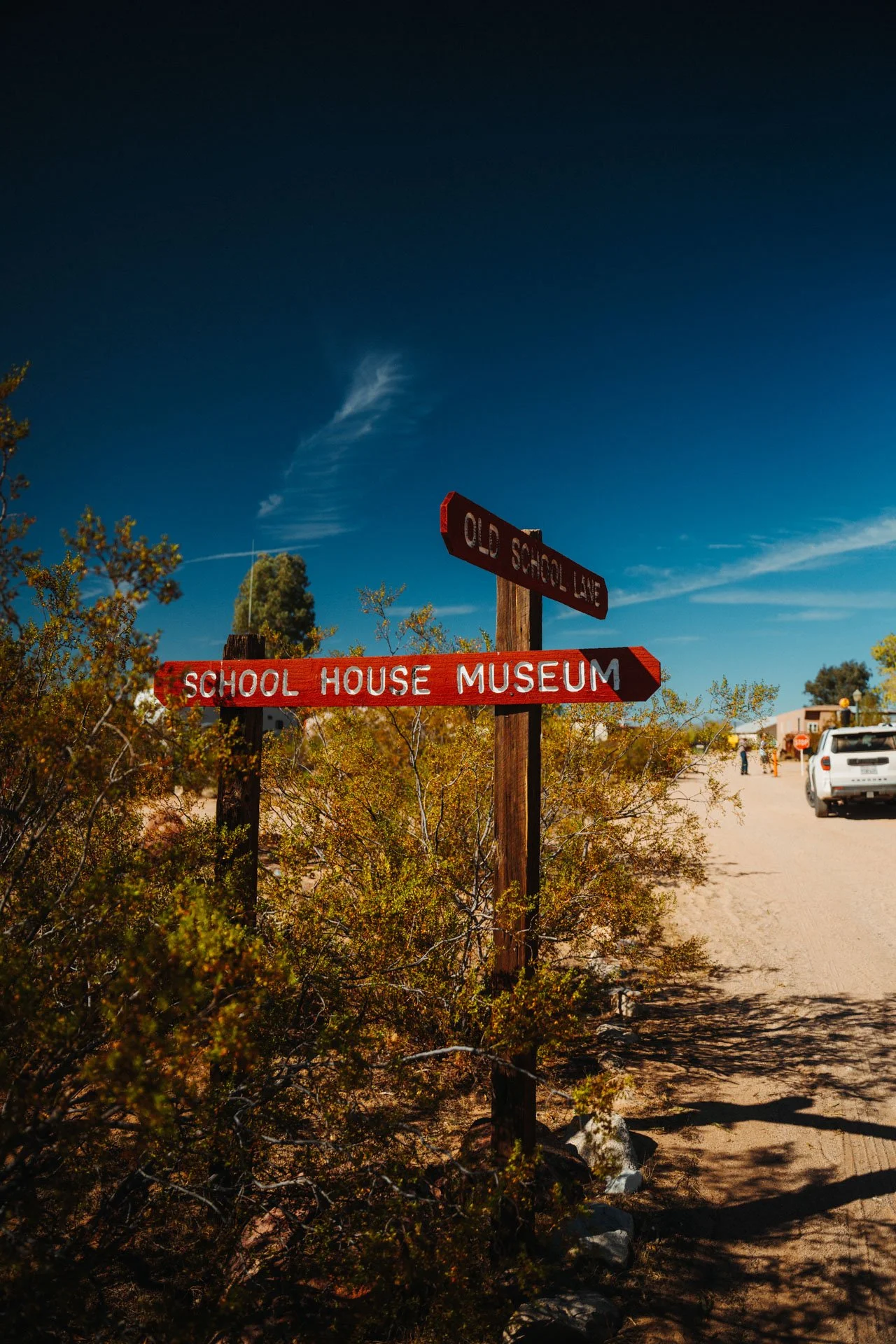
By mid-day, we roll into Goffs Schoolhouse — a living museum at the junction of history and dust. Built in 1914, it once schooled the children of miners and railroad workers before Route 66 shifted course and left it behind. Today, it’s lovingly restored by the Mojave Desert Heritage & Cultural Association.
Parking our modern rigs among century-old artifacts feels like a time warp: shiny (and not-so-shiny) metal meeting rusted relics of travel. The school bell still hangs; the desert wind still hums through the telegraph poles. We refuel with sandwiches, photos, and a renewed respect for the people who crossed this land without suspension lift kits or A/C.
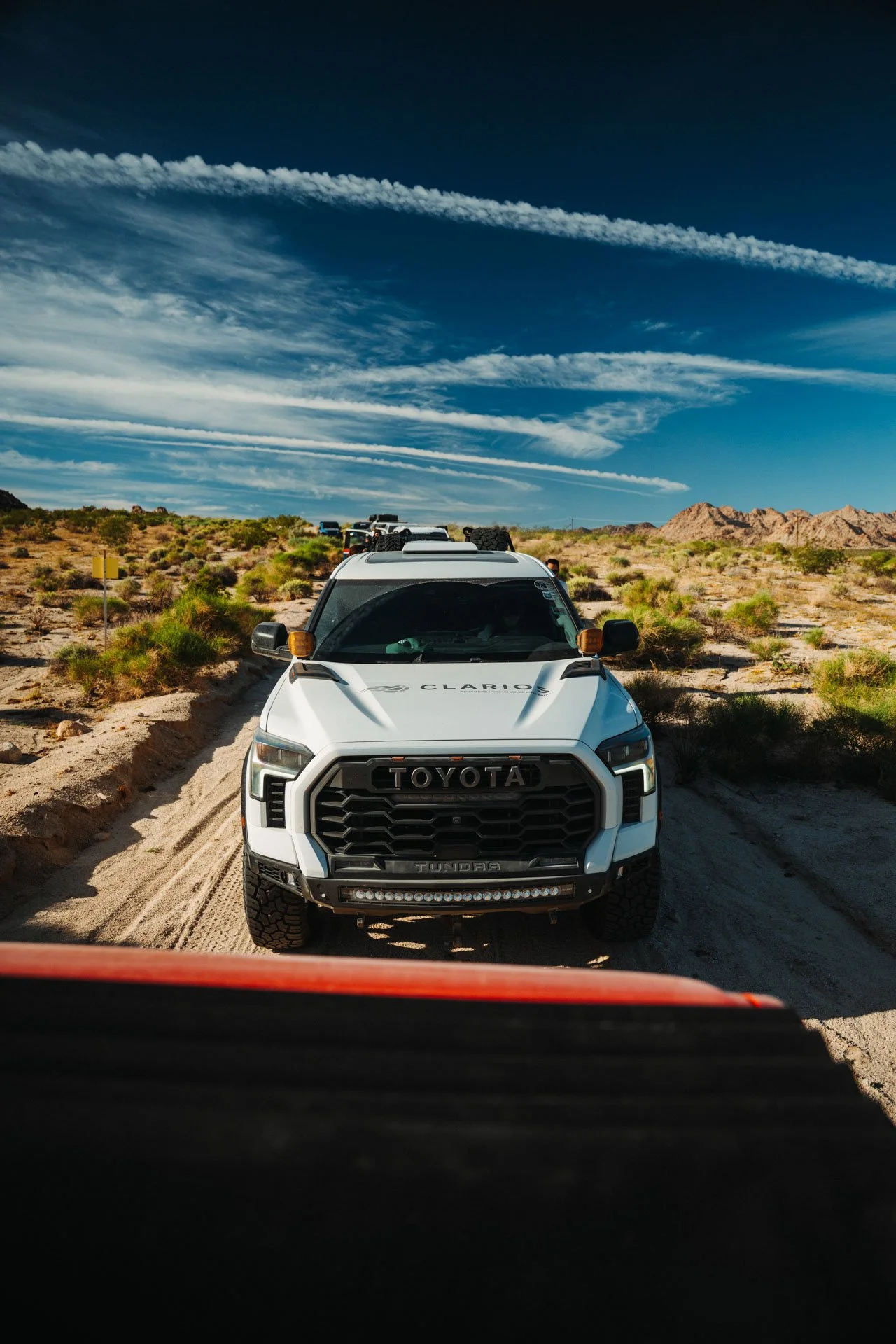
The afternoon brings faster, smoother trails — a gift after two days of rock and rattle. The desert begins to flatten and, far on the horizon, something gleams. At first, it looks like a mirage. Then the scale clicks into focus: 173,500 heliostats reflecting sunlight toward three blazing towers of the Ivanpah Solar Electric Generating System. Civilization.
The transition from dirt to tarmac feels almost wrong. Tires hum where they used to roar. The radio goes quiet, each driver processing the shift from isolation to neon anticipation. Then, suddenly, the Las Vegas Strip appears.
Convoying into Las Vegas is surreal. Valets at the Westgate Hotel blink as dust-coated trucks line up beside supercars. One of them eyes the Bazooka and mutters, “What is that thing?”
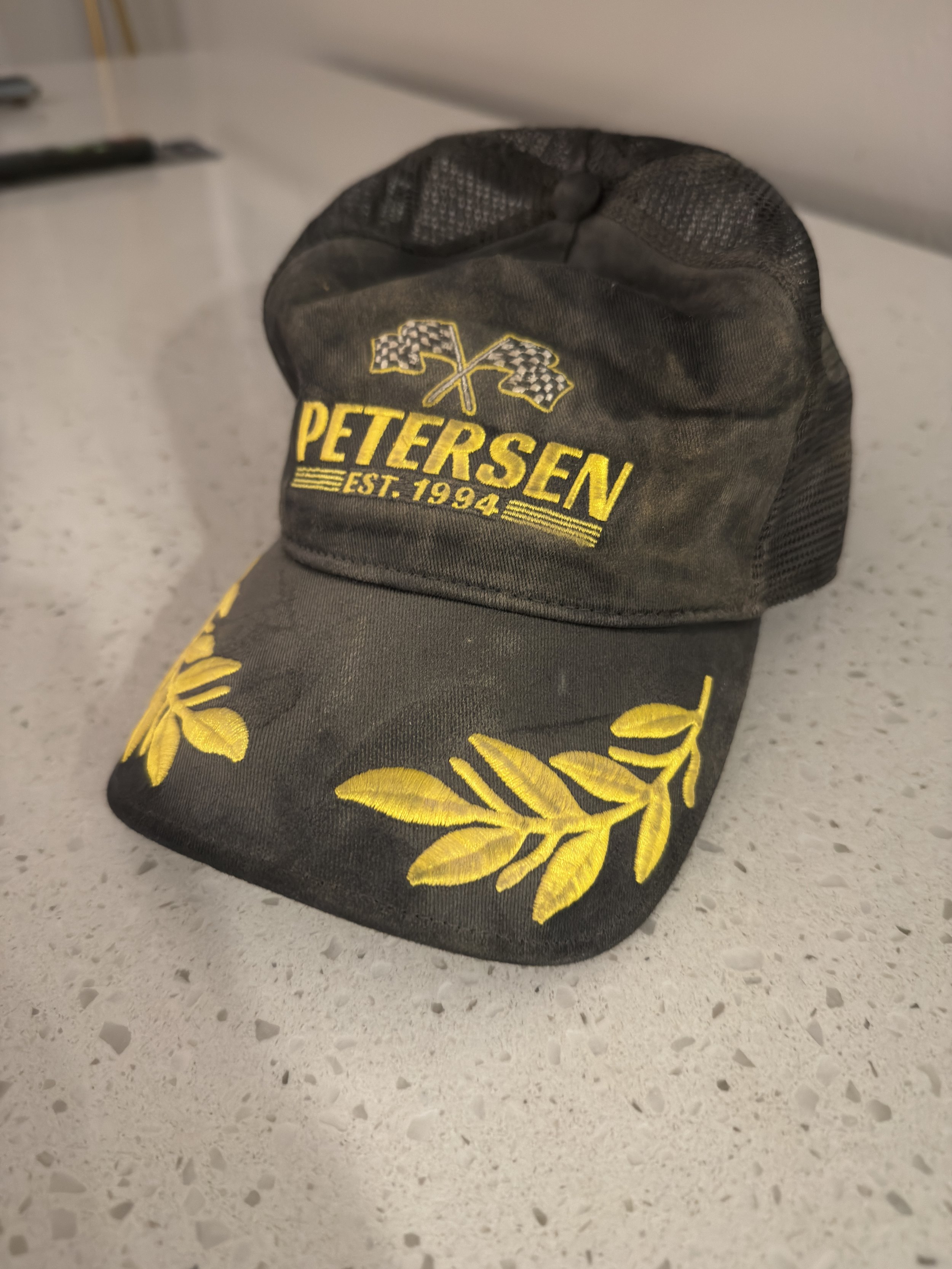
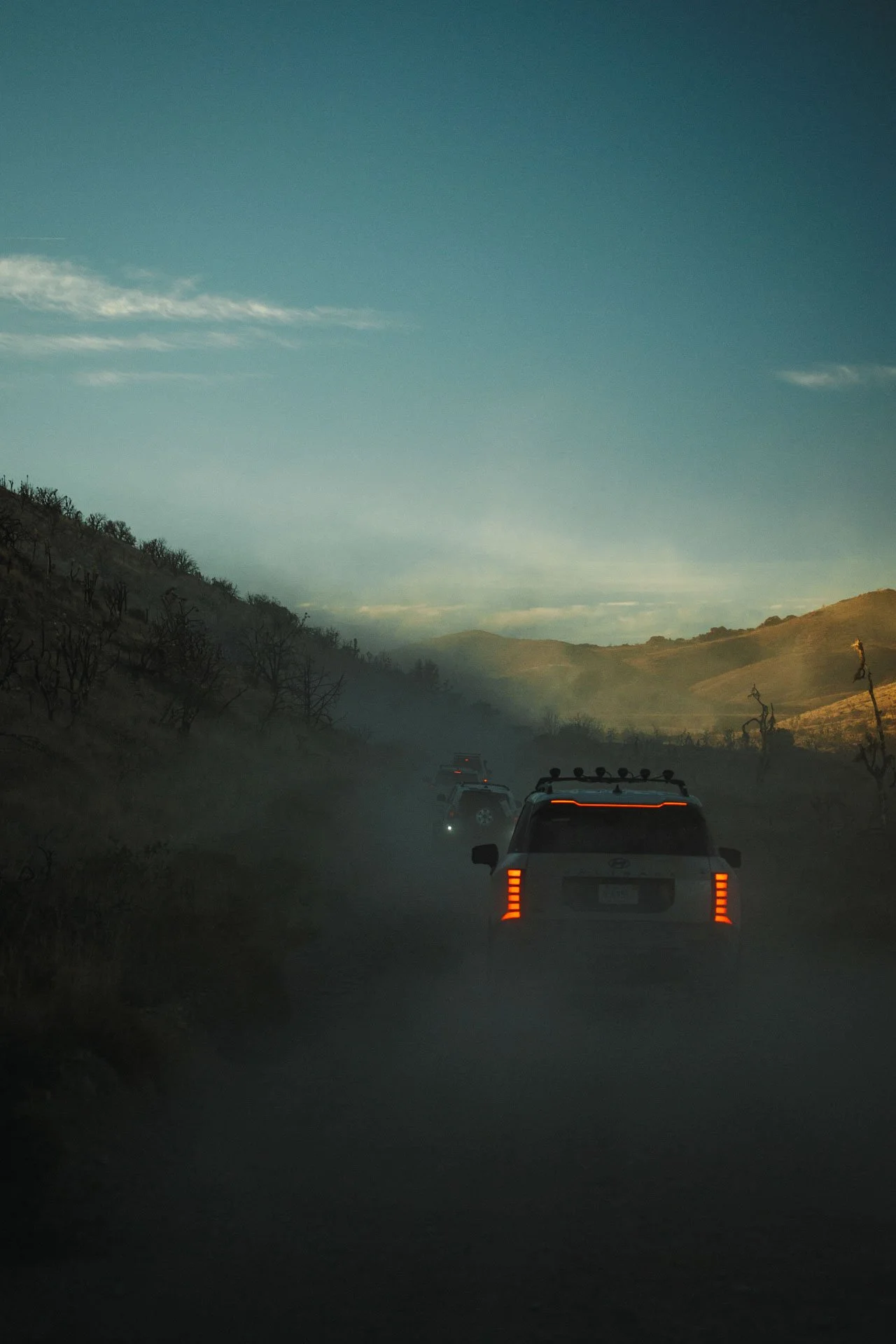
The next day at the SEMA show, it’s easy to spot the rally crew. We’re the ones eyeing the display trucks and whispering, “Could it actually make it?”
Walking the halls, the noise feels different after two days of silence and wind. Every polished fender and laser-cut bracket makes sense now — these parts were born from the same impulse that sent us across the desert: the urge to build, test, and go further.
The Petersen 4x4 Rally didn’t take the easy way to Las Vegas, and that’s exactly the point. Highways get you there, but trails remind you why you went.

