
Innovation Meets Elegance
1974 Citroën SM
STORY | Stein Broeder
Photography | Gooding & Co. & Josh Hway
Citroën, the renowned French automobile brand, has left an indelible mark on automotive history. From groundbreaking innovations to iconic designs, it has consistently pushed the boundaries of what’s possible in the automotive world.
The 1974 Citroën SM is no stranger to this concept and played an important role in the evolution of Citroën. To this day, it remains one of the marque’s most collectible models.
In the aftermath of World War I, André Citroën, a visionary entrepreneur, embarked on a mission to revolutionize the automotive landscape. His journey began in 1919, when he established Automobiles Citroën, a manufacturing company that would redefine the very essence of car design and engineering.
In 1934, Citroën made automotive history with the Traction Avant. This revolutionary car was the world’s first mass-produced vehicle with front-wheel drive, four-wheel independent suspension, and unibody construction. By integrating the car’s body as its main load-bearing structure, Citroën set a new standard for engineering excellence.
In 1954, Citroën introduced the world’s first hydropneumatic self-leveling suspension system. The iconic DS followed in 1955, featuring modern disc brakes and swiveling headlights. The DS garnered international acclaim and became a symbol of French automotive innovation.
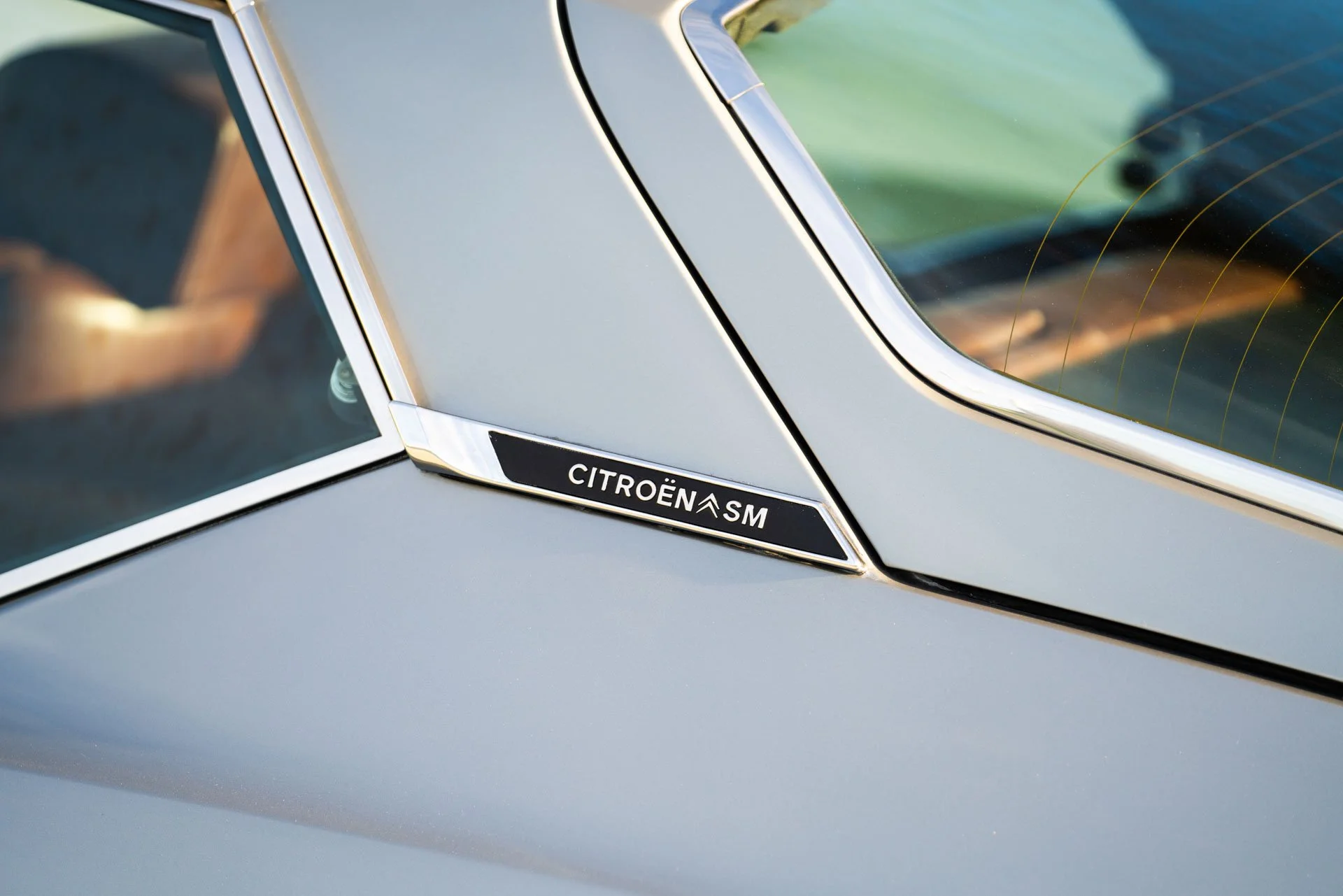
Fast forward to the late 1960s. Citroën acquired Maserati, aiming to combine their sophisticated suspension technology with Maserati’s high-performance engines. The result was the Citroën SM, a high-performance grand tourer that debuted at the 1970 Geneva Motor Show. The origin of the model name “SM” remains a mystery. Some theories suggest it stands for “Systeme Maserati” or “Sports Maserati.”

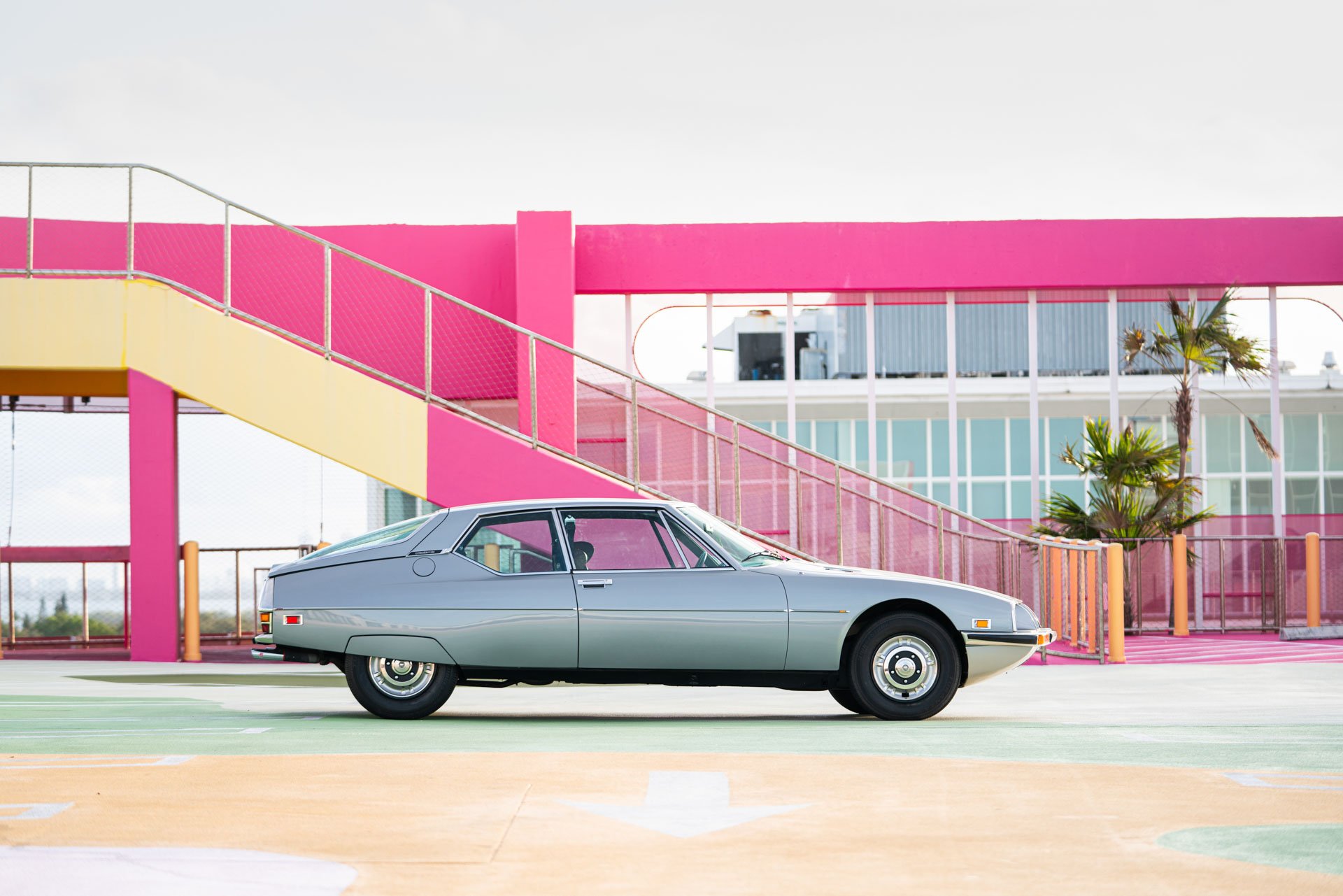
Citroën’s in-house designer Robert Opron crafted the SM’s stunning and aerodynamically tapered, teardrop-shaped, two-door body. He had convinced management that it would be a good idea to build a prestige GT at the top-end of the market, even though Citroën was known for its passenger cars. It ended up competing with, and holding its own against, high-performance GTs from other manufacturers, including Jaguar, Lotus, Ferrari, Aston Martin, Alfa Romeo, Mercedes-Benz, and Porsche.
Among the many innovative features of the SM, two that stand out are Citroën’s renowned front-drive chassis and super-smooth hydropneumatic suspension, and the four-cam Maserati V6 engine, which delivered both performance and refinement.
Both the press and automotive community sang its praises. It placed third in the 1971 European Car of the Year contest and was the first foreign-brand winner of the prestigious Motor Trend Car of the Year award in 1972. At the time, Motor Trend Car of the Year judge Bill Milliken summed up the panel’s thoughts by saying, “Although the SM may represent a branch of automotive engineering design that may not survive and even be widely copied, it is nevertheless the kind of mutation which must appear if automobile design is not to slip back into a dark age of total safety and utility.”
It also has caught the eye of a wide variety of people in the public eye, from pop musicians to powerful dictators, SM owners have included The Rolling Stones’ Bill Wyman and U2’s Adam Clayton as well as the Shah of Iran and Uganda’s Idi Amin.
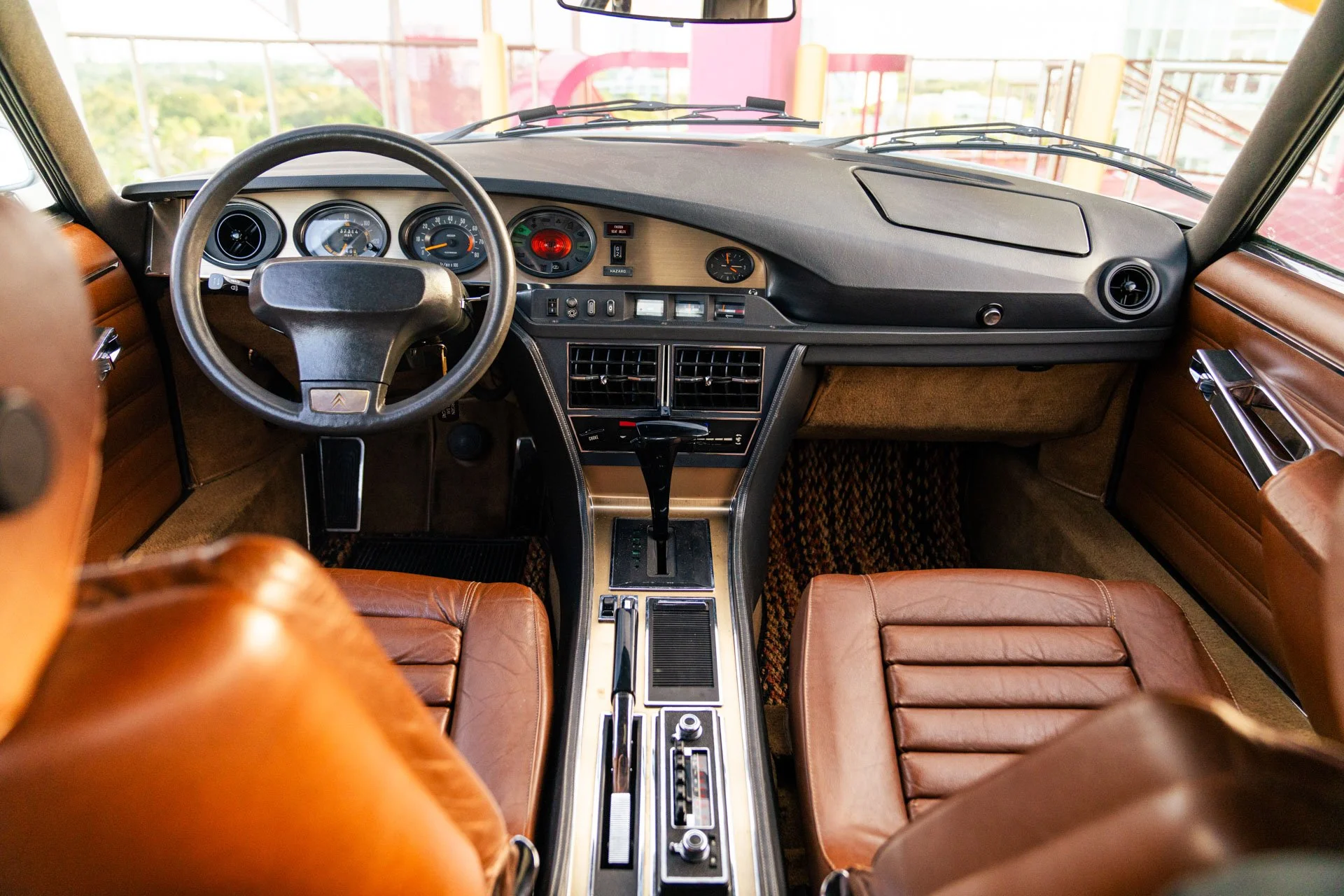
To call the SM driving experience unique would be an understatement. For starters, the V6 sounds a lot meaner than one would expect given the car’s civilized styling. Then the hydropneumatic suspension wakes up, pushing the car upwards into its normal height. This can be manually adjusted by a lever to the left of the driver. Next up, the self-centering steering. This means when you turn the steering wheel and let go, it returns to the center position on its own. Another anomaly is the brake pedal, or rather, the lack thereof. It’s a small rubber-covered button on the floor, with just millimeters of movement between no brakes and a full-bore tire screeching stop. The hydropneumatic system also keeps the car level, as the car glides smoothly over every road imperfection. The SM gets up to speed quickly, but cruising is where the SM really comes into its own, seemingly gliding over the pavement.
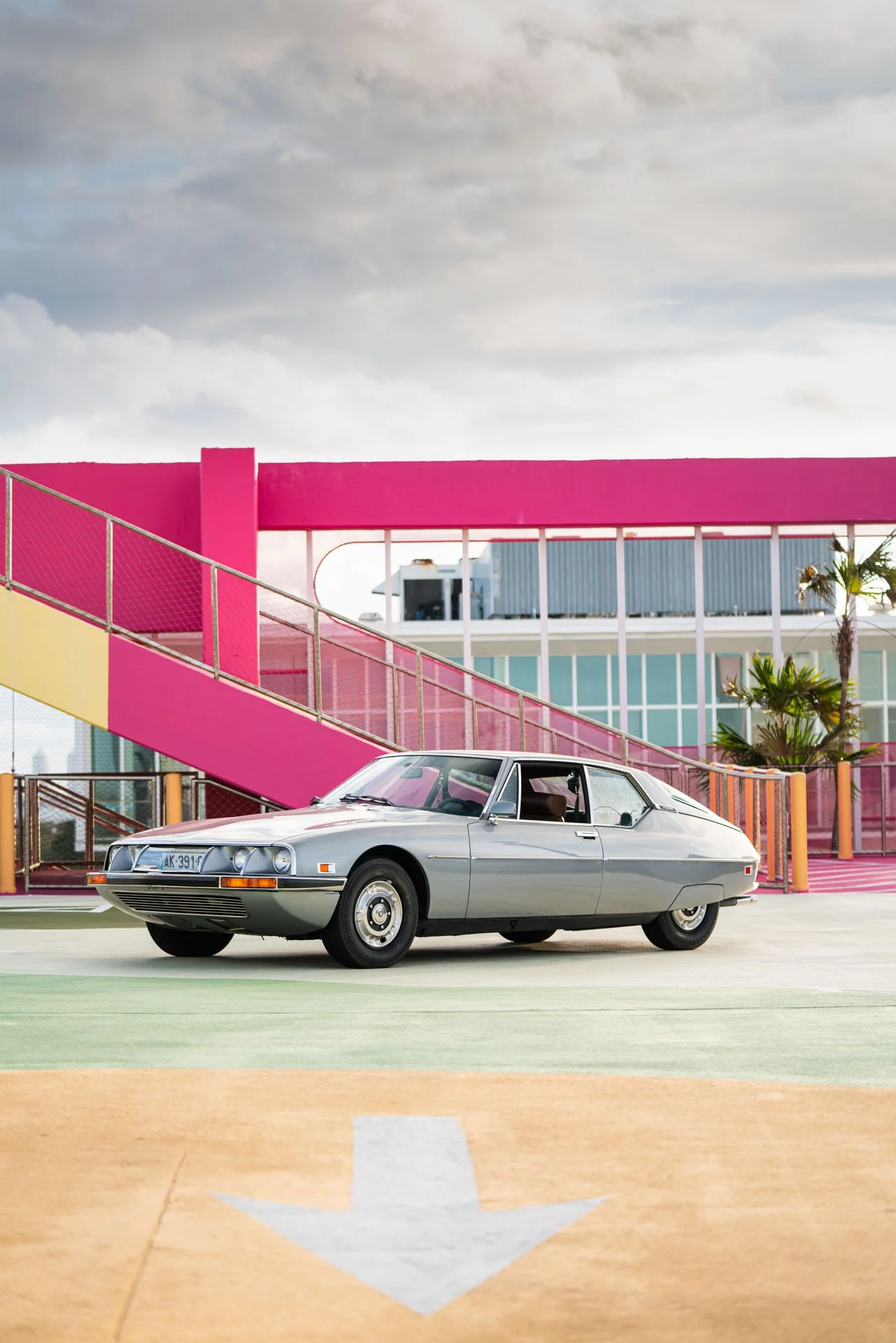
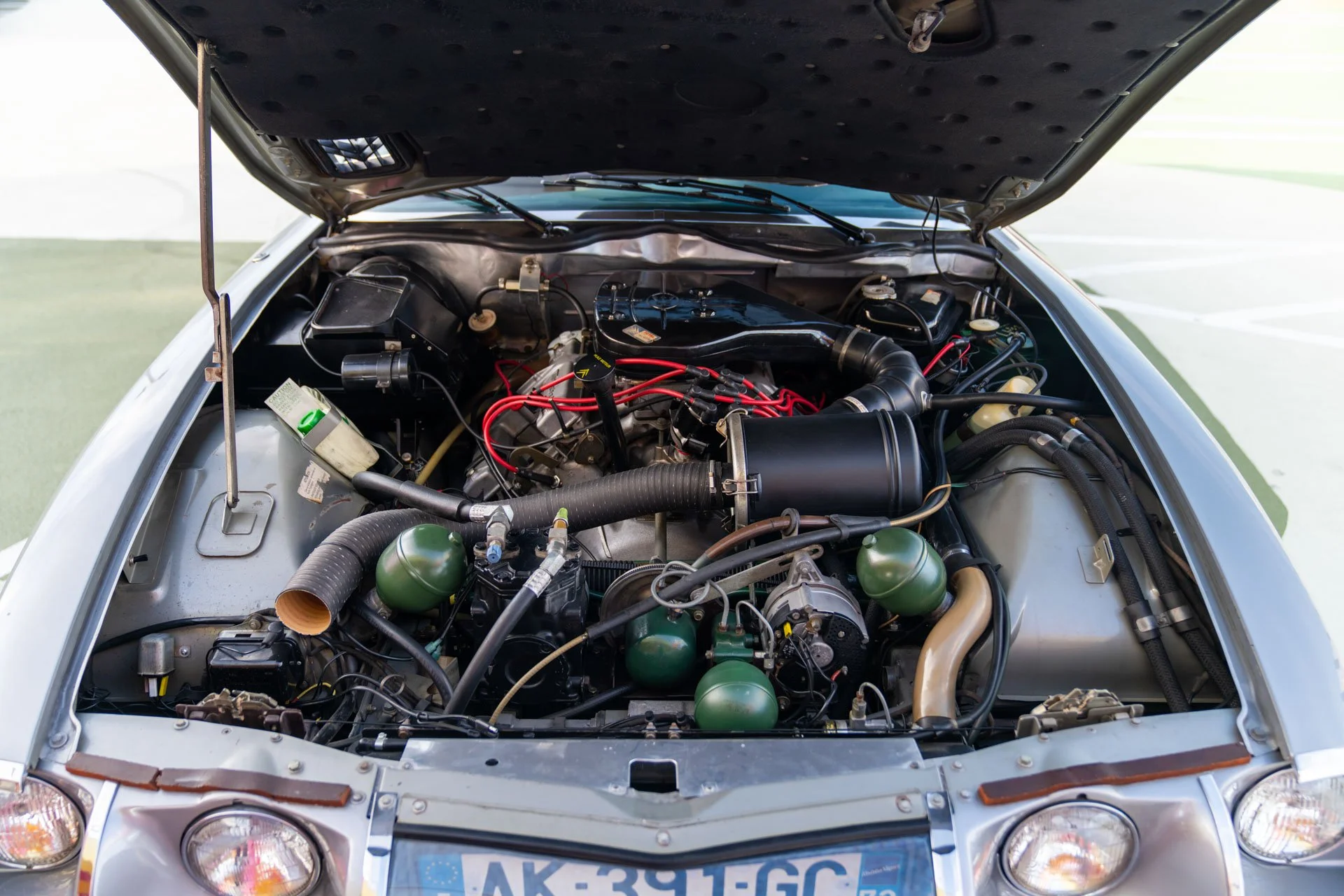
This SM is one of 134 examples originally built for the U.S. market that were instead sold new in Japan. Originally deemed by the NHTSA to be non-compliant with its five-mph impact regulation due to the SM’s adjustable suspension and resultant non-fixed bumper height, these cars were ultimately earmarked for the Japanese market, complete with USDOT-mandated fixed headlights. It eventually made its way to the U.S. and was recently sold by Gooding & Co.
The SM was more than just a car; it was a statement – a fusion of French ingenuity and Italian passion that left an enduring mark on automotive history. It remains a testament to the audacity of those who dared to dream beyond conventions, a place where innovation meets elegance.

